
An ESD wrist strap that has failed without anyone noticing is the biggest risk in an EPA: a cord broken internally, a loose snap, a band too loose to touch the skin. There are two ways to control this: daily testing with a tester or continuous monitoring with a monitor. This guide compares the two so you can choose based on product sensitivity and audit requirements.
- Minimum standard: test wrist straps (and footwear) daily while worn using a wrist strap tester, and log the results.
- Highly sensitive parts, high cost of failure: a continuous ESD monitor at each workstation.
- Audit: a daily test log or the monitor’s data log is mandatory evidence.

What a wrist strap tester checks
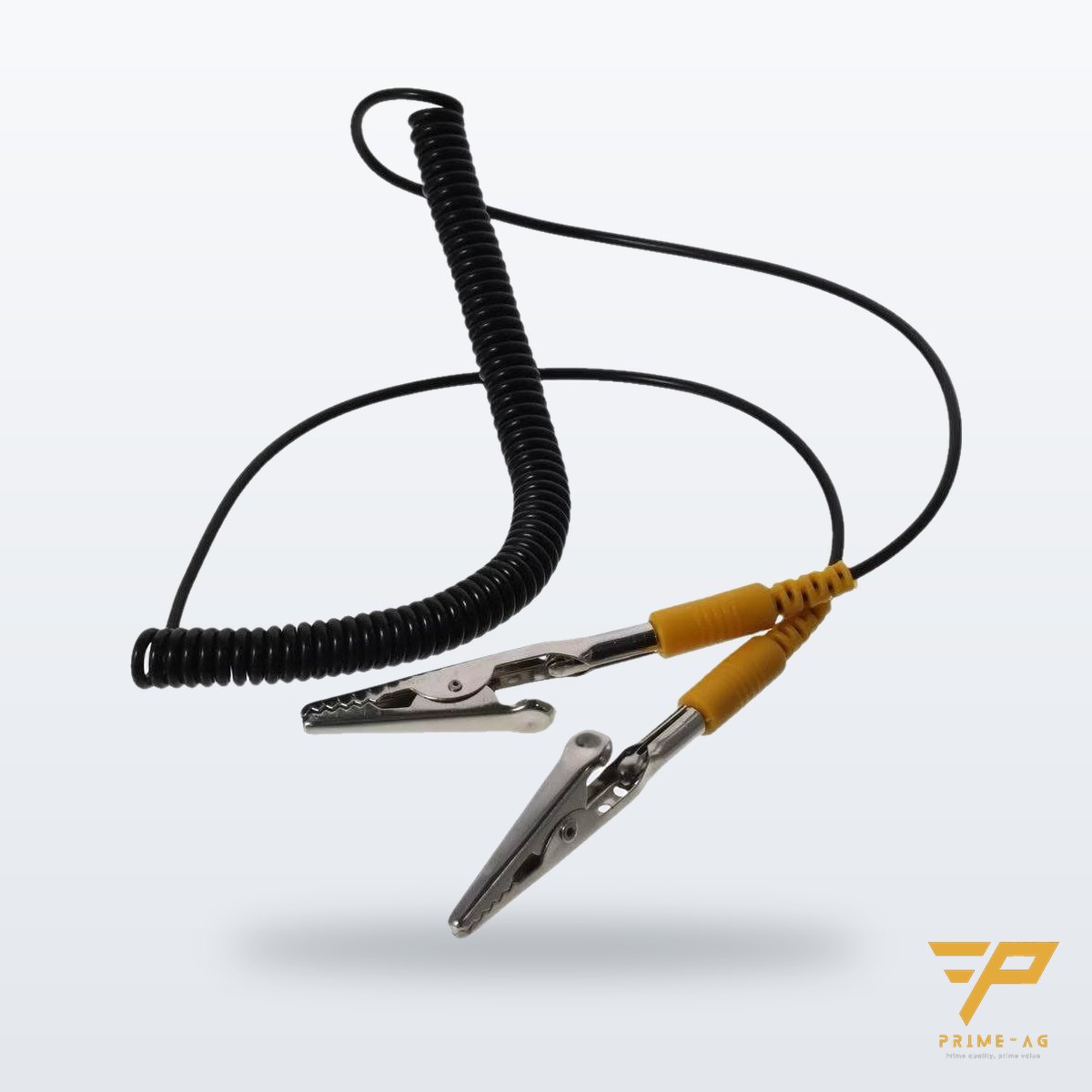
With the operator wearing the strap, plugging the cord into the tester and touching the electrode, the tester measures the whole circuit: connector, coiled cord, 1 MΩ resistor, band and skin contact. Per ANSI/ESD S1.1, if no continuous monitor is used, wrist straps must be tested daily while worn. The tester is usually placed at the EPA entrance, used once per shift with results logged; models with a foot plate can also test ESD footwear.
How a continuous monitor differs
A monitor is mounted at the workstation, tracks the person–wrist strap–ground circuit throughout the working time, and triggers a light and alarm as soon as the circuit opens. Its advantage is detecting failures mid-shift (cord pulled loose, band slipping off) – something a start-of-shift test cannot catch. Some monitors also track the work surface ground connection.
Comparison
| Start-of-shift test | Continuous monitor | |
|---|---|---|
| Detects mid-shift failure | No | Yes, immediate alarm |
| Equipment cost | 1 tester for the whole area | 1 unit per workstation |
| Audit evidence | Signed daily test log | Data log (depending on model) |
| Best for | General assembly, basic EPA | Highly sensitive parts, demanding end customers |
Don’t forget calibration
Both testers and monitors need periodic verification. The wrist strap testers and resistance meters PRIMEAG supplies come with a 12-month calibration certificate on request, and PRIMEAG can send them out for calibration on your behalf. For acceptance testing of mats, floors and benches, see Resistance testing for ESD material acceptance.
Frequently asked questions
How often should wrist straps be tested? Per ANSI/ESD S1.1: daily while worn, if no continuous monitor is in place.
With a monitor, do we still need a start-of-shift tester? A continuous monitor can replace daily wrist strap testing; you should still keep a tester for ESD footwear and for checks when a fault is suspected.
Do testers need calibration? Yes, usually every 12 months; keep the calibration certificate in your ESD records.
Email: info@primeag.vn · Phone/Zalo: +84 906 108 292
Written by the PRIMEAG engineering team