E-commerce and logistics warehouses tend to run into the same four problems: picking from the wrong location, slow picking, goods damaged by stacking and excessive PE stretch film use. None of them usually needs a big investment; most are solved by reorganizing racks, tables, trolleys and location conventions. This guide summarizes the approach from warehouse projects PRIMEAG has installed.
- Wrong-location picks: a location code for every rack bay, floor marking lines for each zone, labels facing the picker.
- Slow picking: fast movers within arm’s reach, close to the packing table; use a FIFO flow rack for items picked by the carton.
- Stacking damage: separate levels with a pallet rack instead of stacking cartons directly; move goods internally on a multi-tier trolley.
- PE film waste: a pallet stretch wrapping machine for the outbound line, reusable pallet wraps for internal transfer routes.
1. Wrong-location picks: give every rack bay an address
Mis-picks are rarely caused by careless staff; they usually happen because racks have no clear addresses and similar items sit next to each other. The simple fix: code locations by aisle – bay – level (for example A-03-2), put labels on the shelf edge at eye level, and mark floor lines for the receiving, storage, packing and shipping zones. Items with similar codes should be placed far apart.
Related products: floor marking tape, floor marking paint, labels and printing paper.
2. Slow picking: shorten walking distance and reach
Most picking time is spent walking, bending and reaching. Slot items by pick frequency: the fastest movers go between hip and shoulder height, close to the packing table; slow movers go on the top level and at the end of the aisle. For items picked in small cartons, a gravity flow rack is loaded from the back and picked from the front; cartons slide forward on their own, so first-in stock is always picked first.
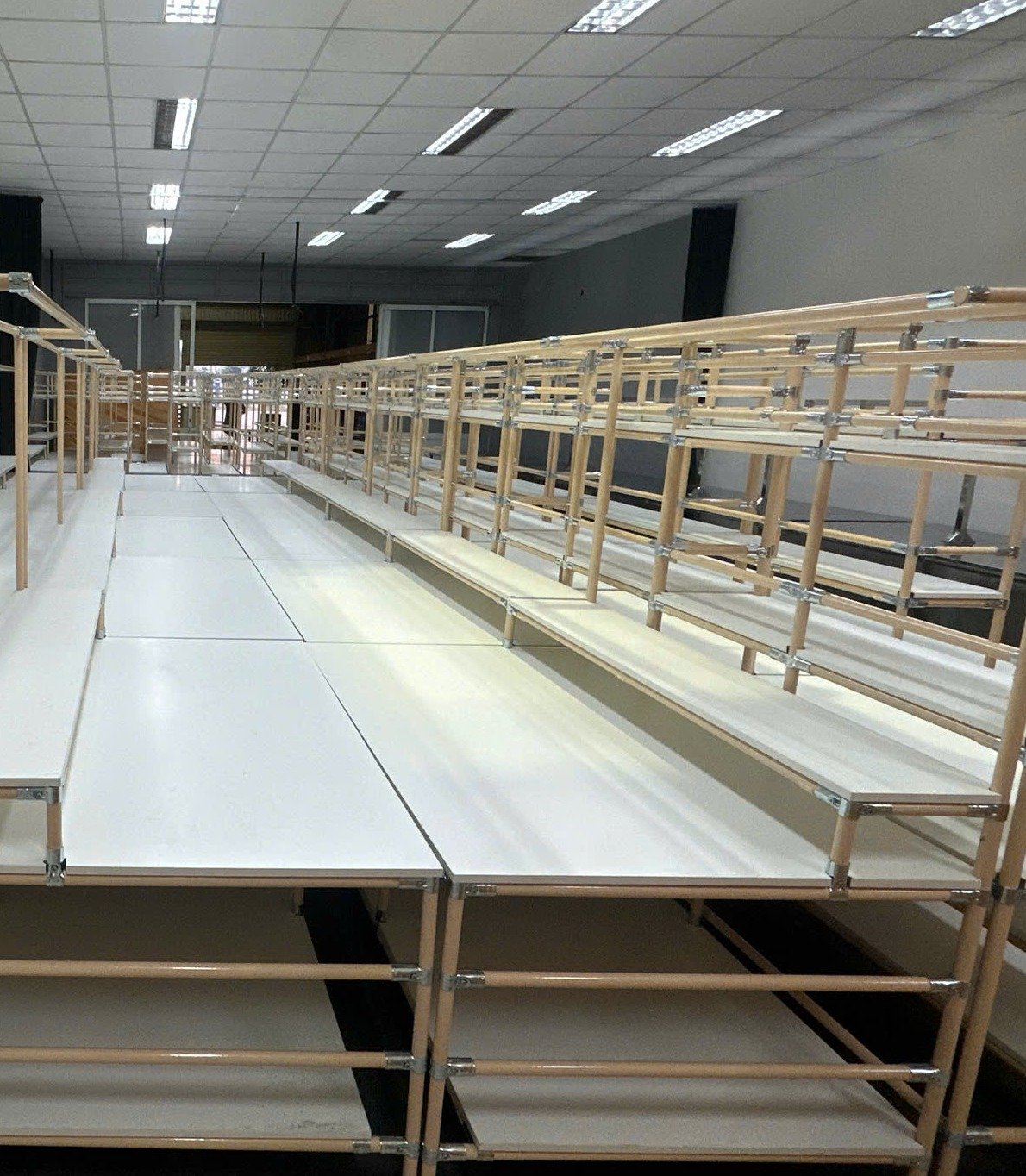
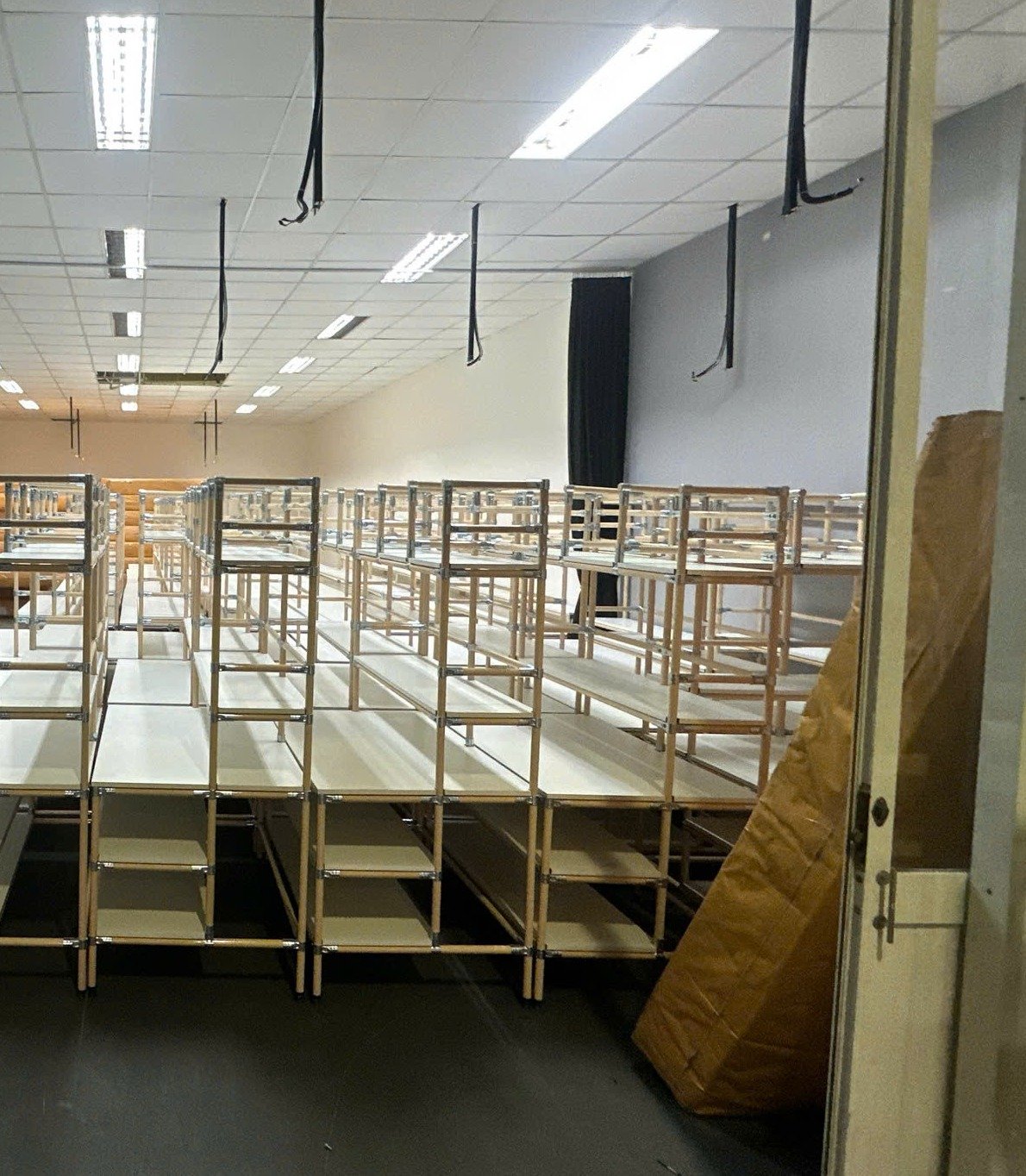
Packing tables should have an upper shelf for supplies (cartons, tape, bubble wrap) and a light, with the height set for standing work. PRIMEAG builds plastic-coated steel pipe tables to each warehouse’s dimensions; shelves, hooks and casters can be added later without replacing the table.
3. Stacking damage: separate levels and use dedicated trolleys
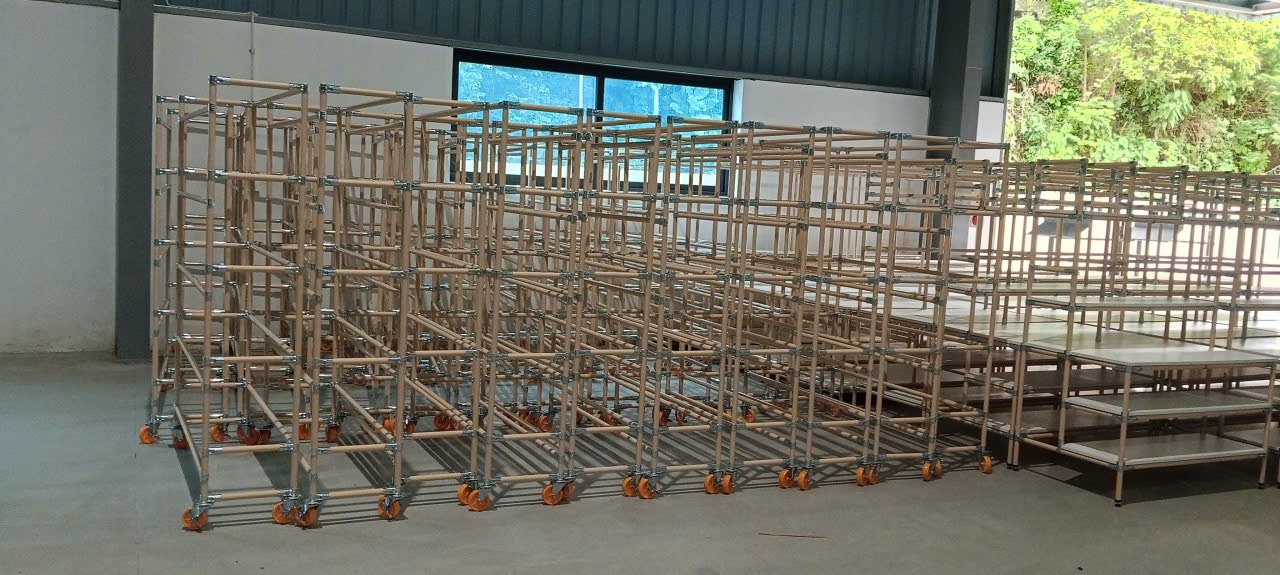
Cartons stacked high directly on each other get crushed at the bottom, especially in the humid season. Spread the load with heavy-duty pallet racks or medium-duty racks (heavy-duty racks with 90×60 uprights carry about 1,000 kg/level; medium-duty racks 200–500 kg/level), and do not let cartons overhang the pallet edge. When moving goods between zones, use a multi-tier trolley (about 100–150 kg/level) or a compact trolley for narrow aisles instead of hand-carrying or stacking on a flatbed cart.
4. PE film waste: wrapping machines and reusable wraps
Hand wrapping usually uses more film because the layers overlap unevenly. A pallet stretch wrapping machine controls film tension and the number of wraps, and suits warehouses shipping pallets every day. For internal transfer routes (between warehouses, or between warehouse and plant), reusable pallet wraps can be used many times and cut plastic waste; goods shipped to customers should still use PE stretch film.
Real projects
| Project | Scope | Lead time |
|---|---|---|
| Singapore-invested e-commerce transit warehouse, Ho Chi Minh City (09/2026) | 50 tables 1200×750, 30 tables 1500×750, 4 stainless steel 304 tables 1200×2400 | 10 days production, 2 days installation |
| Chinese-invested logistics and distribution center, Phú Thọ (07/2026) | 30 trolleys, 32 tables 1200×750, 6 tables 1500×1000, 5 stainless steel 304 tables 1200×2400 | — |
Customer names are withheld by agreement. See more on the Projects page.
A 15-minute warehouse self-check
- Pick 10 random orders from yesterday: how many required walking past more than 2 rack aisles?
- Which level are your 10 best-selling SKUs on, and how far are they from the packing table?
- Are any cartons on the bottom level crushed?
- How many meters of PE film does one outbound pallet use?
Send PRIMEAG a photo of your warehouse layout and your answers to these 4 questions via Zalo 0906 108 292 – our engineering team will propose a rack, table and trolley layout with drawings.
Frequently asked questions
Small warehouse with no WMS yet – where should we start? Start with a location code for every rack bay and floor marking lines. An Excel sheet listing item code – location is enough to eliminate most mis-picks; software can come later.
How is a flow rack different from a standard rack? A flow rack is loaded from the back and picked from the front; cartons slide forward on rollers, so first-in stock is always picked first (FIFO) with no need to rotate stock.
Can reusable pallet wraps fully replace PE film? They work best on internal transfer routes or between warehouses of the same company, where the wraps are returned. Goods shipped to customers or exported should still use PE film.
Does PRIMEAG build packing tables to fit our warehouse? Yes. Plastic-coated steel pipe tables and 304 stainless steel tables are built to each warehouse’s dimensions, height and number of shelves; standard designs take about 5–7 days to produce, new designs 10–15 days.
Email: info@primeag.vn · Phone/Zalo: +84 906 108 292
Written by the PRIMEAG engineering team