
Cleanroom nitrile gloves tearing at the fingertips across a whole line? The usual causes are gloves a size too small, a thickness that does not suit the task, a lot aged by a hot warehouse, or pulling gloves on by the fingertips. Stations handling sharp parts should switch to gloves with 0.14–0.15 mm fingertips; PRIMEAG sends sample bags from 3 brands for a 1-week trial.
The line leader reports gloves tearing at the fingertips again and again; on some shifts one person goes through 3–4 pairs. Blaming a bad glove lot is the usual reaction, but it is rarely the right answer straight away. Order of elimination: tear location → size → thickness → donning method → storage.
- Record the tear location first: at the nail means size/fingernails; on the palm side of the fingertip means thickness; tearing while donning means donning method or ageing.
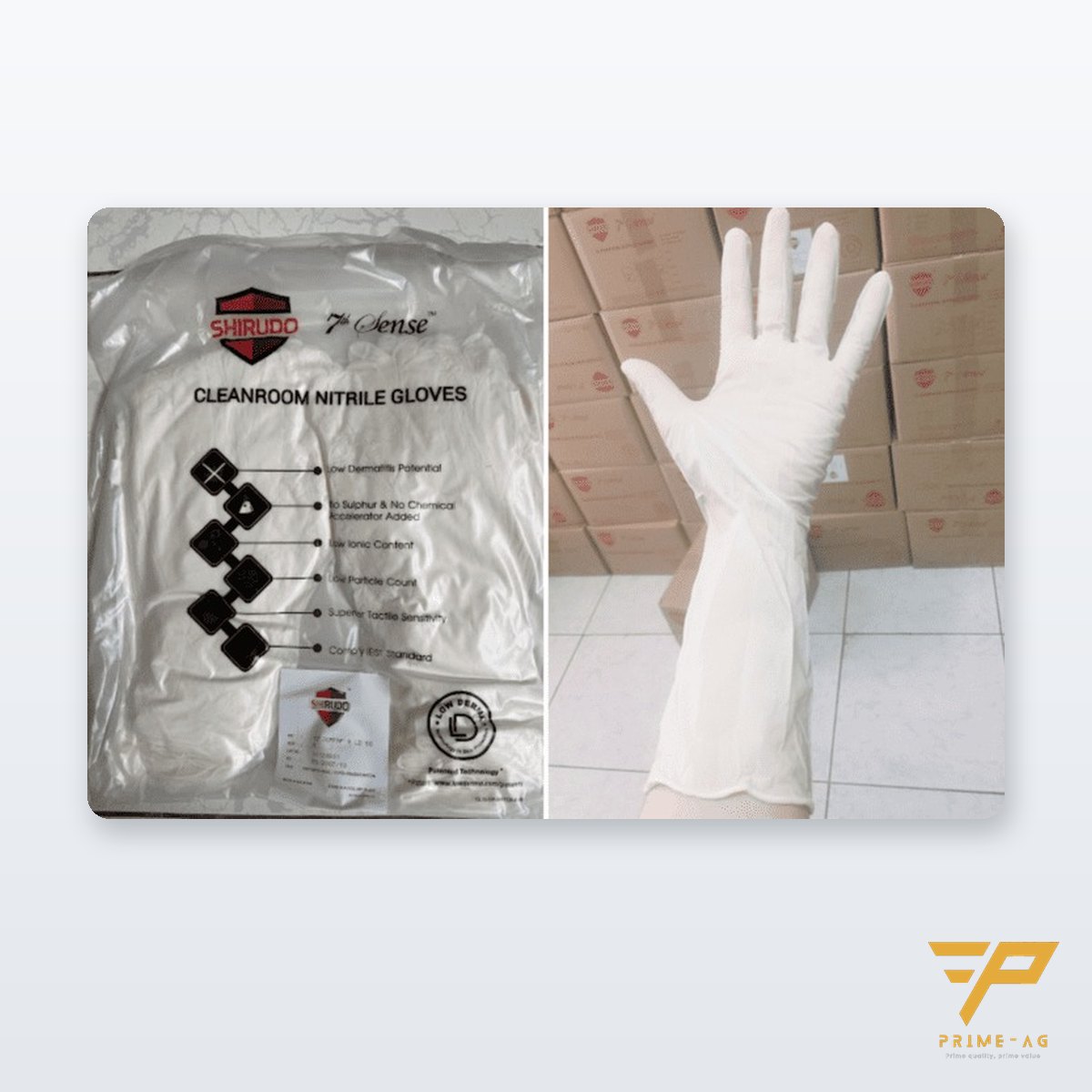
- Thickness of the 3 brands differs by almost double: Shirudo 0.08 mm, Nitrilstat 3.5 mil ≈ 0.09 mm, ASAP 5.5 mil 0.14–0.15 mm.
- The 3-year shelf life only holds in cool, dark storage; trial 1 sample bag of each type for 1 week before switching the whole factory.

1. Record where and when gloves tear
Collect 10–20 torn pairs during one shift and record the tear location, wearing time and hand size.
| Symptom | Common cause | Action |
|---|---|---|
| Arc-shaped tear right at the nail edge, thumb and index finger | Long nails, or a tight size stretching the fingertip | Check nails at shift start; try 1 size up |
| Puncture on the palm side of the fingertip after 1–2 hours | Thin glove meeting sharp edges, tweezers, component leads | Trial a thicker type at that exact station |
| Long tear along the finger right while donning | Pulled on by the fingertips, or the nitrile has become brittle | See sections 4 and 5 |
2. Glove size: too tight is culprit number one
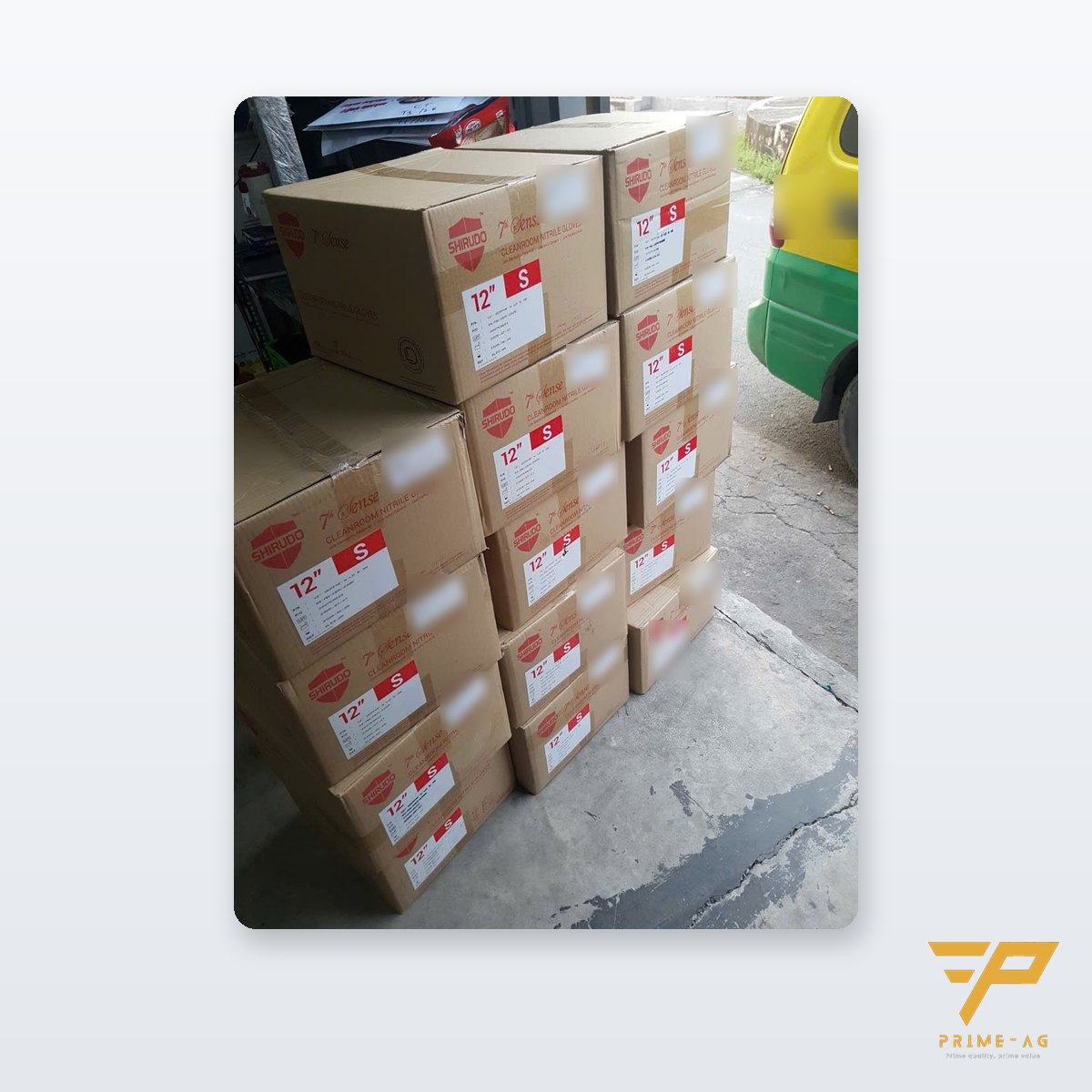
When a size L hand wears an M glove, the pulling force concentrates at the fingertips, the thinnest part; the nail presses in and the glove tears. Signs: the glove is shiny and taut over the finger joints, and the cuff cannot be pulled up the full 12 inches. All three brands come in S, M and L; keep stock by size. When double-gloving: outer layer 1 size up.
3. Thickness must match the process step
Choose by what the hands have to do, not only by cleanroom class:
| Product | Fingertip thickness | Suitable for | Tears easily when |
|---|---|---|---|
| Shirudo 7th Sense (DC/OC) | Minimum 0.08 mm; palm 0.06; cuff 0.05 | Picking small components; workers with skin irritation from accelerators | Handling sharp metal housings, long solvent wiping |
| Nitrilstat SF1 / LE | 3.5 mil ≈ 0.09 mm | SMT assembly, visual inspection; LE for ion-sensitive products | Pointed tweezers, PCB edges |
| ASAP 5.5 mil | 0.14–0.15 mm (measured on lot 12/2024); palm 0.10–0.11 | Sharp-edged parts, IPA wiping, packing | Tears least; less tactile feel |
One line can use two types: thin gloves at component picking stations, ASAP at housing assembly and packing; fewer pairs are changed per shift, so total cost is usually lower. Full comparison: Nitrilstat, Shirudo or ASAP?
4. Donning method and fingernails
Pinching the fingertips to pull a glove on is the fastest way to tear a thin glove. The right way: pull by the cuff, then smooth each finger from the base to the tip. With nails longer than 1–2 mm, no glove will last a full shift. Post an instruction photo at the glove cabinet; it costs nothing.
5. Glove lots aged by storage
Nitrile becomes brittle with heat and light. The 3-year shelf life printed on the carton label (Nitrilstat, ASAP) assumes cool, dark storage; cartons left in a sun-exposed container for several months can turn brittle before expiry: gloves tear as soon as they are pulled from the bag, with yellowish stains. How to check: compare production dates and trial 1 bag from a different lot at the same station. PRIMEAG sends the CoA for each delivered lot on request.
Where to start
- Week 1: collect torn gloves, record tear location and hand size; check nails, donning method and storage. Week 2: change sizes for the group with the most tears; trial sample bags of a thicker type at stations with sharp edges.
- Send PRIMEAG a photo of the bag label you use now and the process step: quotation for 3 brands within 30 minutes with sample bags; stock gloves are delivered in 24–48 hours in Ho Chi Minh City, Binh Duong and Dong Nai.
See also choosing gloves by process step and the page on 12-inch cleanroom nitrile gloves.
Frequently asked questions
- Are our cleanroom gloves tearing at the fingertips because the lot is bad? — Not necessarily. A tight size and a thickness that does not suit the process are more common than lot defects. Trial 1 bag from another lot at the same station before concluding; if it still tears, the cause is not the lot.
- How thick a nitrile glove should we switch to so they stop tearing? — For handling sharp-edged parts and IPA wiping, gloves with 0.14–0.15 mm fingertips such as ASAP 5.5 mil are clearly more durable than 0.08–0.09 mm types. Small-component picking stations should keep thin gloves so as not to lose tactile feel.
- Does double-gloving cause more tears? — Yes, if the outer layer is the same size as the inner one: the outer layer is stretched and rubs constantly. The outer layer should be 1 size up; if the procedure does not require it, drop the second layer.
Mon–Sat, 8:00–17:00 (GMT+7) · Phone/Zalo: +84 906 108 292 · Email: info@primeag.vn
Start where it suits you: Free technical advice · Send a drawing or layout · Get a quote within 30 minutes
Written by the PRIMEAG engineering team
Updated: 2026-10-22