
Operators who stand all shift on concrete floors often complain of sore feet and back fatigue by mid-shift – which is also when handling errors rise. According to the Canadian Centre for Occupational Health and Safety (CCOHS), frequent and prolonged standing can cause foot pain, swollen legs, varicose veins, muscle fatigue and low back pain. The fixes are not expensive: mats, seating, table height and allowing posture changes.
- Hard floors: 14 mm anti-fatigue mats for most standing positions, 20 mm for cold concrete floors.
- Alternating standing and sitting: compact stools that slide under the bench.
- Seated all shift: chairs with backrests, height adjusted to the bench.
- Table height: build a height-adjustable sample table for operators to try first.
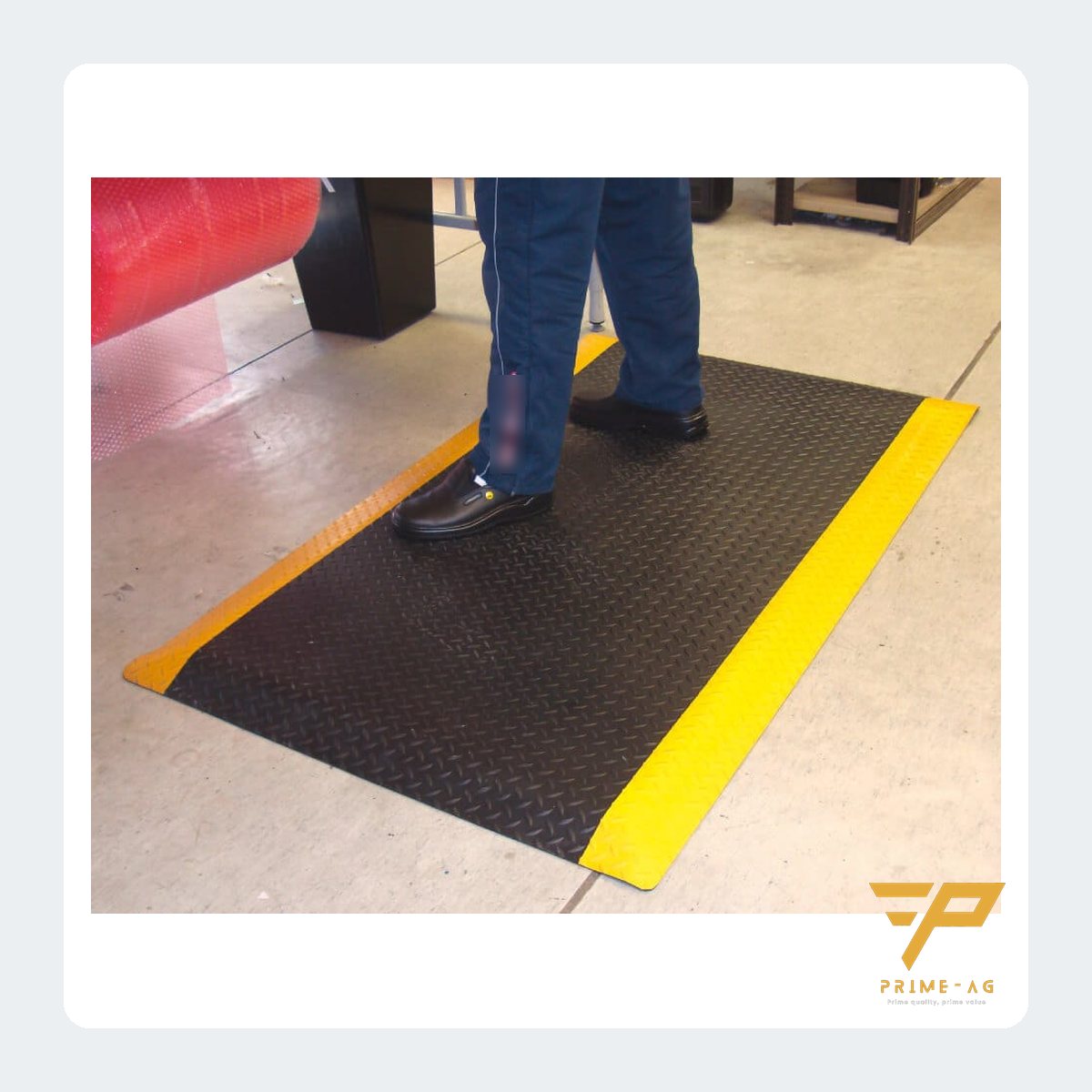
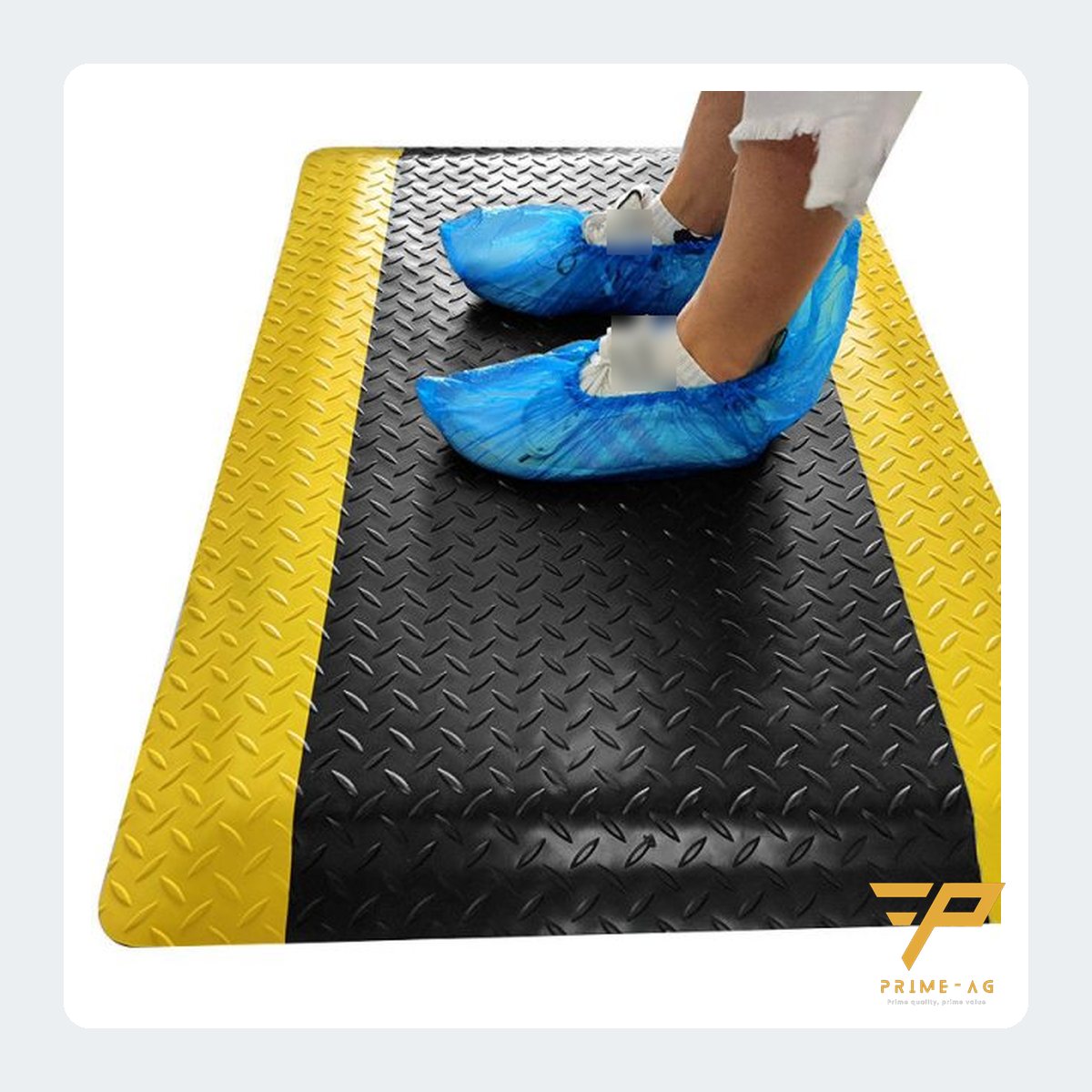
How anti-fatigue mats help
When standing still for long periods, blood flow to the loaded muscles is poor, so they tire quickly. A mat with moderate elasticity makes the leg muscles keep making small adjustments instead of holding one rigid posture. CCOHS recommends avoiding standing directly on concrete or metal. Note: a mat that is too thick or too soft can increase fatigue – let shift workers try it before equipping the whole line. EPA areas use ESD anti-fatigue mats (10⁶–10⁹ Ω) with a grounding snap and cord.
Choosing a mat
| Position | Suggestion |
|---|---|
| Standing at a machine or bench all shift, normal floor | 14 mm thick |
| Cold concrete floor, warehouse | 20 mm thick |
| Electronics EPA | ESD version + grounding cord |
| Paths used by hand trolleys | Beveled edges, rated for hand trolleys (not forklifts) |
Seating and posture changes
Holding one posture for long – standing or sitting – causes fatigue; operators should be free to change posture when needed. Benches 900–1,000 mm high (standing lines) can be paired with tall chairs and a foot ring for alternating sitting. Stools have no backrest, so they should not be used at positions seated all shift.
Table height
The right height depends on the task: work requiring close viewing and precise handling needs a higher surface; force-intensive work needs a lower one. With operators of different heights, a bench with adjustable feet or a modular frame such as a plastic-coated steel pipe workbench can be adjusted on site. See also: Lean workstation improvement.
Frequently asked questions
How thick should an anti-fatigue mat be? Most all-shift standing positions use 14 mm; cold concrete floors use 20 mm. A mat that is too thick or too soft can make fatigue worse, so try it first.
Can anti-fatigue mats be used in ESD areas? Yes – choose the ESD version (10⁶–10⁹ Ω) and ground it with a snap and grounding cord.
Can forklifts drive over anti-fatigue mats? No; the mats are rated for foot traffic and hand trolleys, not forklifts.
Email: info@primeag.vn · Phone/Zalo: +84 906 108 292
Written by the PRIMEAG engineering team