Stainless steel tables, racks and trolleys in food, pharmaceutical and cosmetics plants are often “shiny on delivery, stained a few months later”. The most common cause is the wrong grade – 201 instead of 304 – used in a humid environment with cleaning chemicals. Stains and pitting rust get written up as findings in GMP and HACCP audits. This guide explains the difference and how to check.
- Wet areas, frequent washdown, food or chemical contact: 304 stainless steel.
- Dry areas, sealed finished-goods storage: 201 may be acceptable to save cost.
- Hygienic design: fully sealed welds, polished weld seams, no crevices where water collects.
Why stainless steel resists rust – and why it still rusts
Stainless steel resists rust thanks to a very thin chromium oxide film on its surface; this film regenerates when scratched, provided the steel contains at least 10.5 % chromium. 304 stainless has about 18 % chromium and 8 % nickel; 201 replaces most of the nickel with manganese and has less chromium, so it is cheaper (about 25 %) but its protective film is weaker and it stains more easily in humid environments, around salt, or with chlorine-based cleaning chemicals.
| 304 stainless | 201 stainless | |
|---|---|---|
| Main composition | ~18 % Cr, ~8 % Ni | Lower Cr, low Ni, replaced by Mn |
| Humid, chemical environments | Durable, rarely stains | Stains and pits easily |
| Price | Higher | About 25 % cheaper |
| Recommended for | Processing and washdown areas, pharma cleanrooms, labs | Dry areas, tight budgets |
Checking the stainless grade on delivery
- Request material CO/CQ certificates stating the steel grade of the tube and sheet batch.
- A stainless test solution (nickel reagent) gives a quick on-site result; a handheld XRF analyzer gives a more accurate one.
- A magnet test is not enough to tell 304 from 201, as both are almost non-magnetic before cold working.
Designing for easy cleaning and passing audits
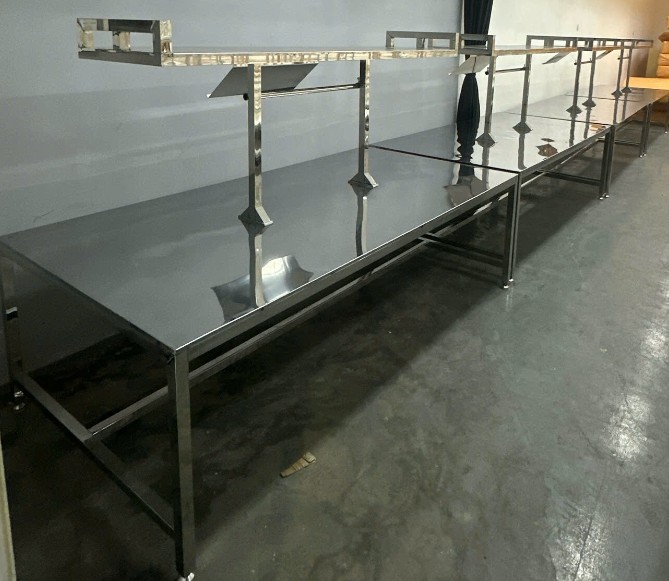
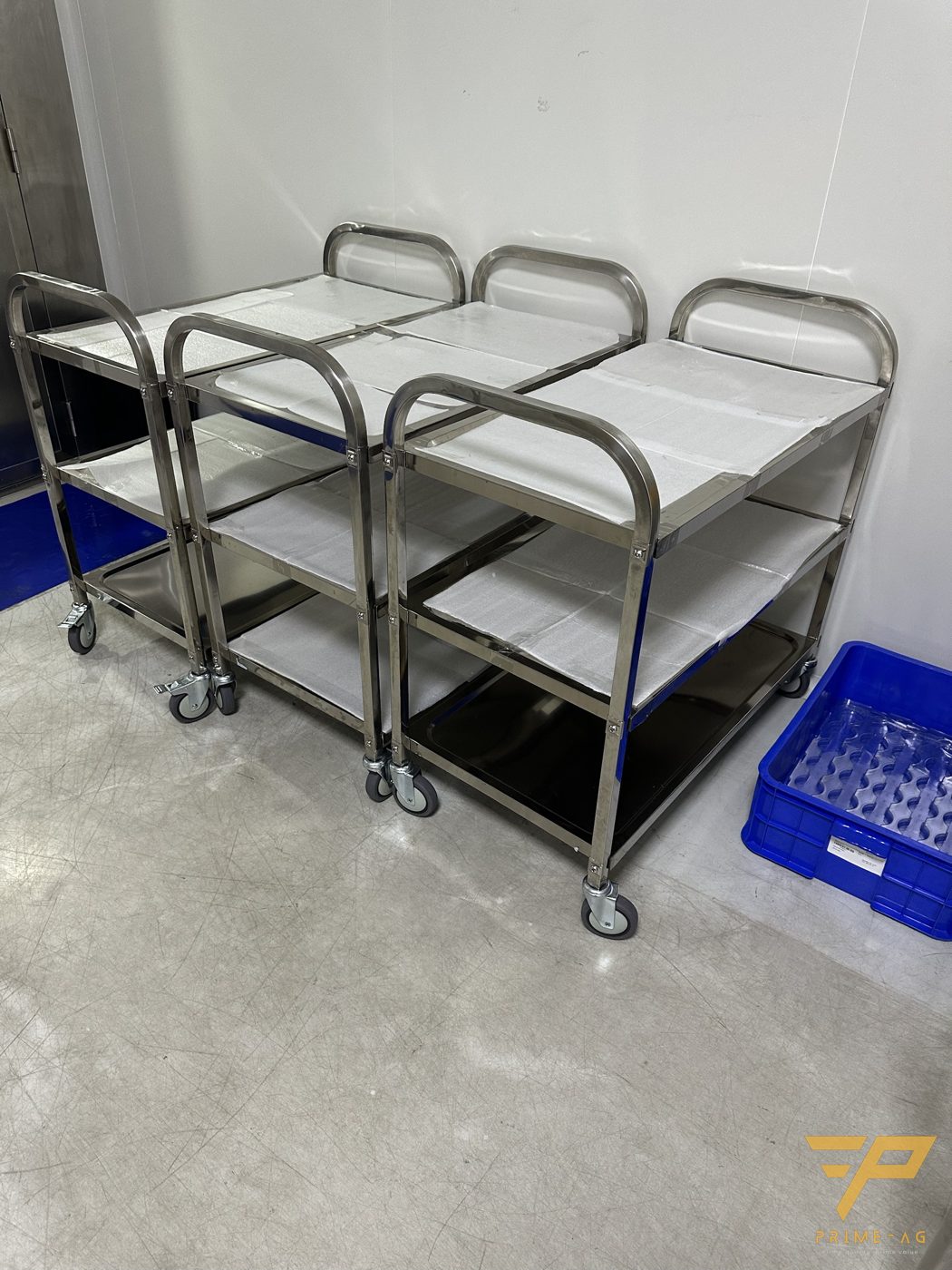
Beyond the grade, construction determines how easy cleaning is: polished TIG welds, sealed tube ends, no crevices where water collects, adjustable feet so the underside can be wiped, and grid or perforated shelves in wet areas. PRIMEAG’s 304 stainless steel frame bench uses 40×40 box tube, 1.2 mm thick, with polished TIG welds, built to room dimensions; 304 stainless racks and trolleys are made to order.
Frequently asked questions
Does 304 stainless steel rust? Much less than 201, but it can still stain after prolonged contact with concentrated chlorine, salt or iron particles from ordinary steel tools; wipe it dry and use suitable cleaning agents.
Can a magnet identify the stainless grade? Not reliably. The quick method is a nickel test solution; the accurate methods are material CO/CQ certificates or an XRF analyzer.
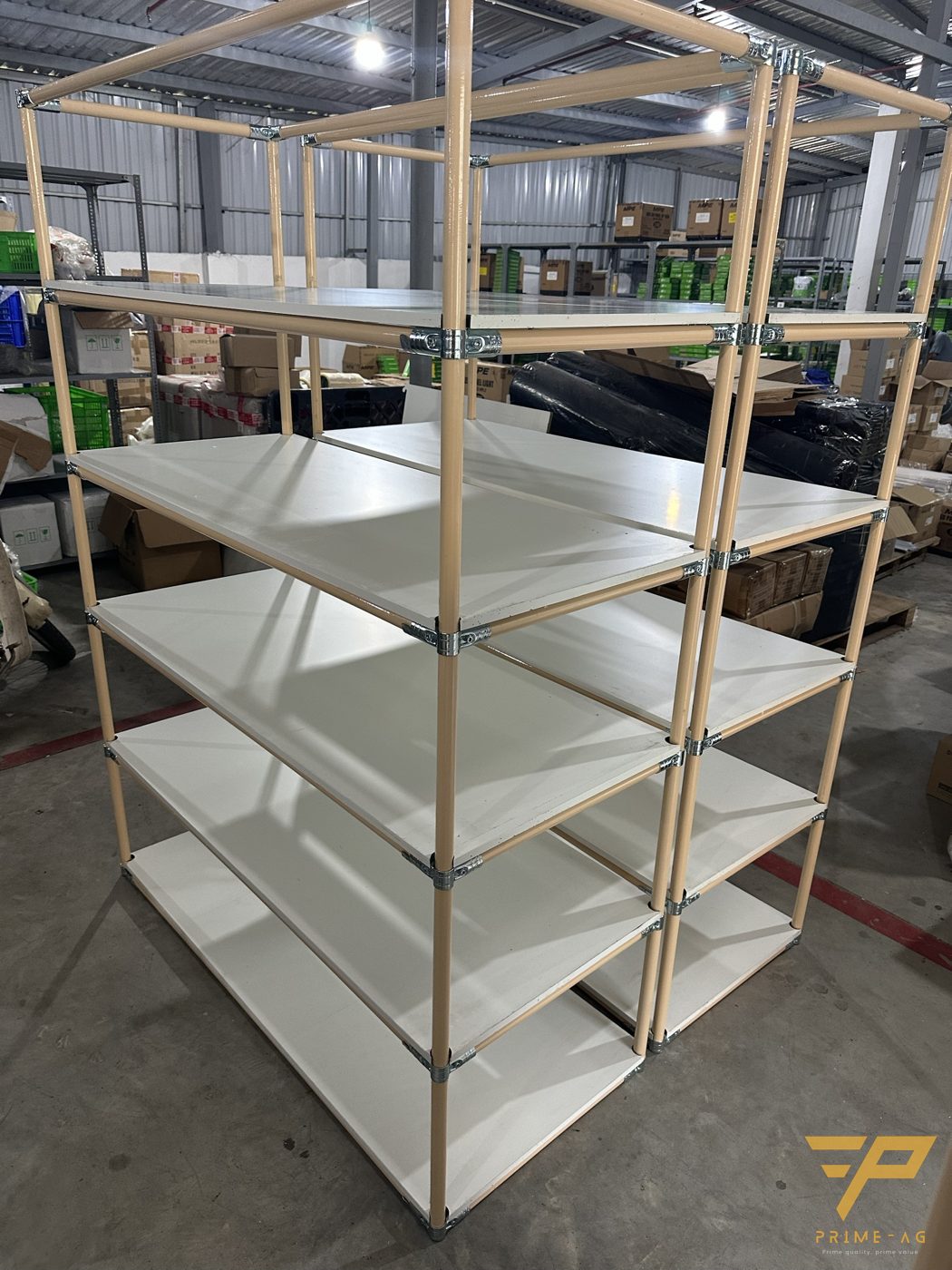
Do you build 304 stainless racks and trolleys to size? Yes. PRIMEAG builds 304 stainless tables, racks and trolleys to drawing; standard designs take 5–7 working days to produce, new designs 10–15 working days.
Email: info@primeag.vn · Phone/Zalo: +84 906 108 292
Written by the PRIMEAG engineering team