
Choose the right syringe system first, then 1 of 4 needle types to suit the adhesive. Identify the system by the syringe shoulder: US is blunt and square, JP and Musashi are tapered and round. Anaerobic adhesives such as Loctite threadlockers use tapered plastic tips, not metal needles. PRIMEAG sends samples of 10 syringes and 10 needles for testing.
Inconsistent shot volume, adhesive stringing at the tip, needles clogging mid-shift, an adapter leaking air — most of these dispensing problems do not come from the controller but from choosing the wrong syringe barrel and needle. The two most common root causes: mixing JP and US barrel systems, and using one needle type for every adhesive. This guide shows how to identify a barrel system by eye and pick the right one of the four dispensing needle types for each adhesive.
- Identify the barrel system by shoulder and color: US has a blunt, square shoulder; JP has a rounded, tapered shoulder and a frosted white body; Musashi (MSS) has a rounded shoulder and an amber, black or green body.
- Caps and pistons are not interchangeable across systems: changing the barrel system means changing the adapter too.
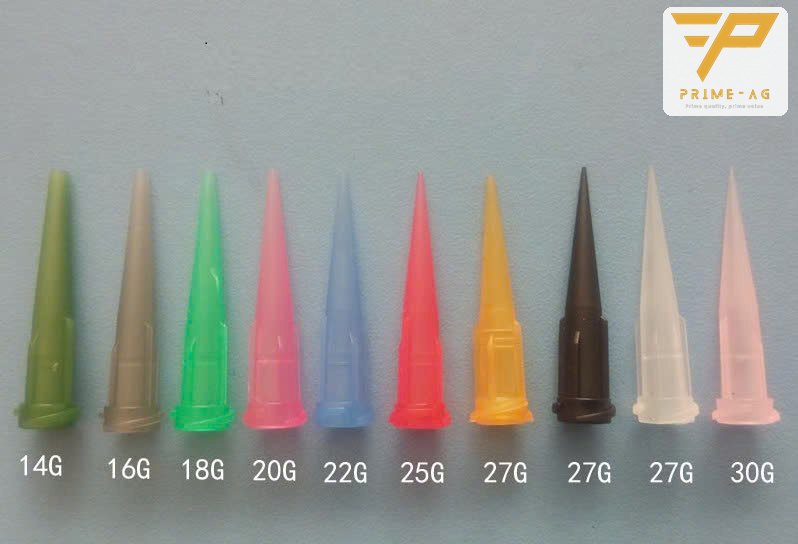
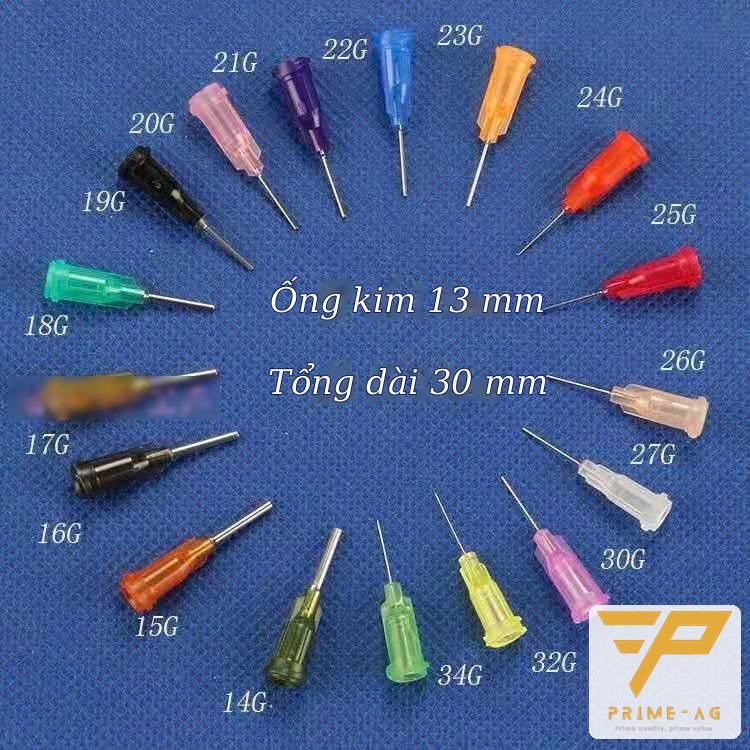
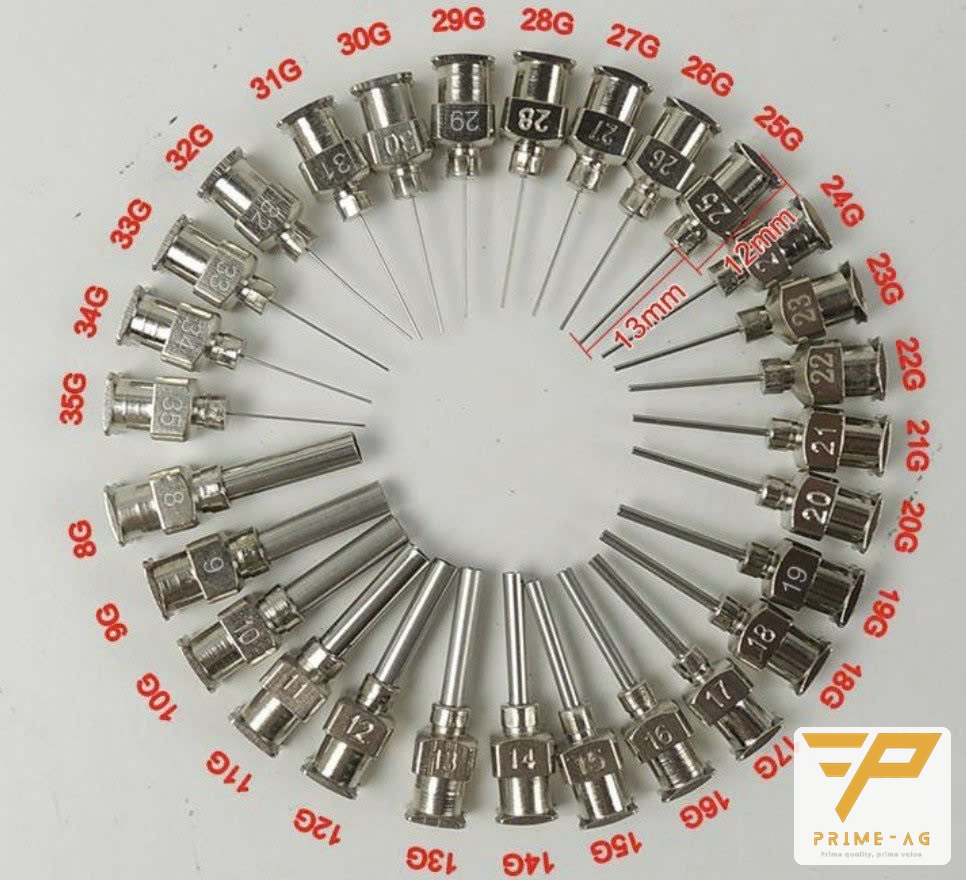
- 4 needle types: tapered plastic, plastic-hub stainless, plastic-hub long-tube and all-metal — each suits one group of adhesives.
- Anaerobic adhesives (Loctite threadlockers) take tapered plastic tips, not metal needles.
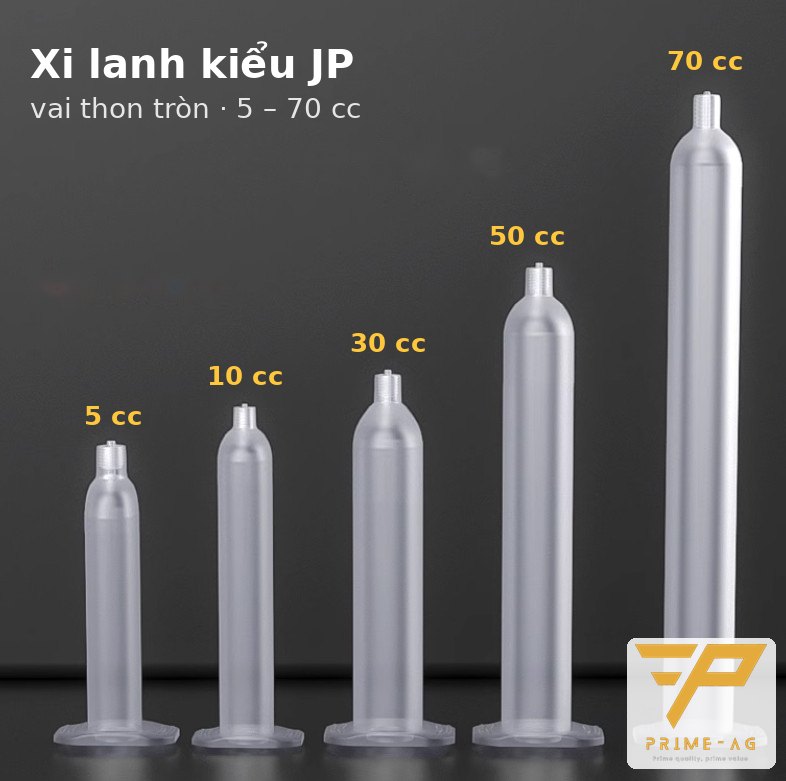
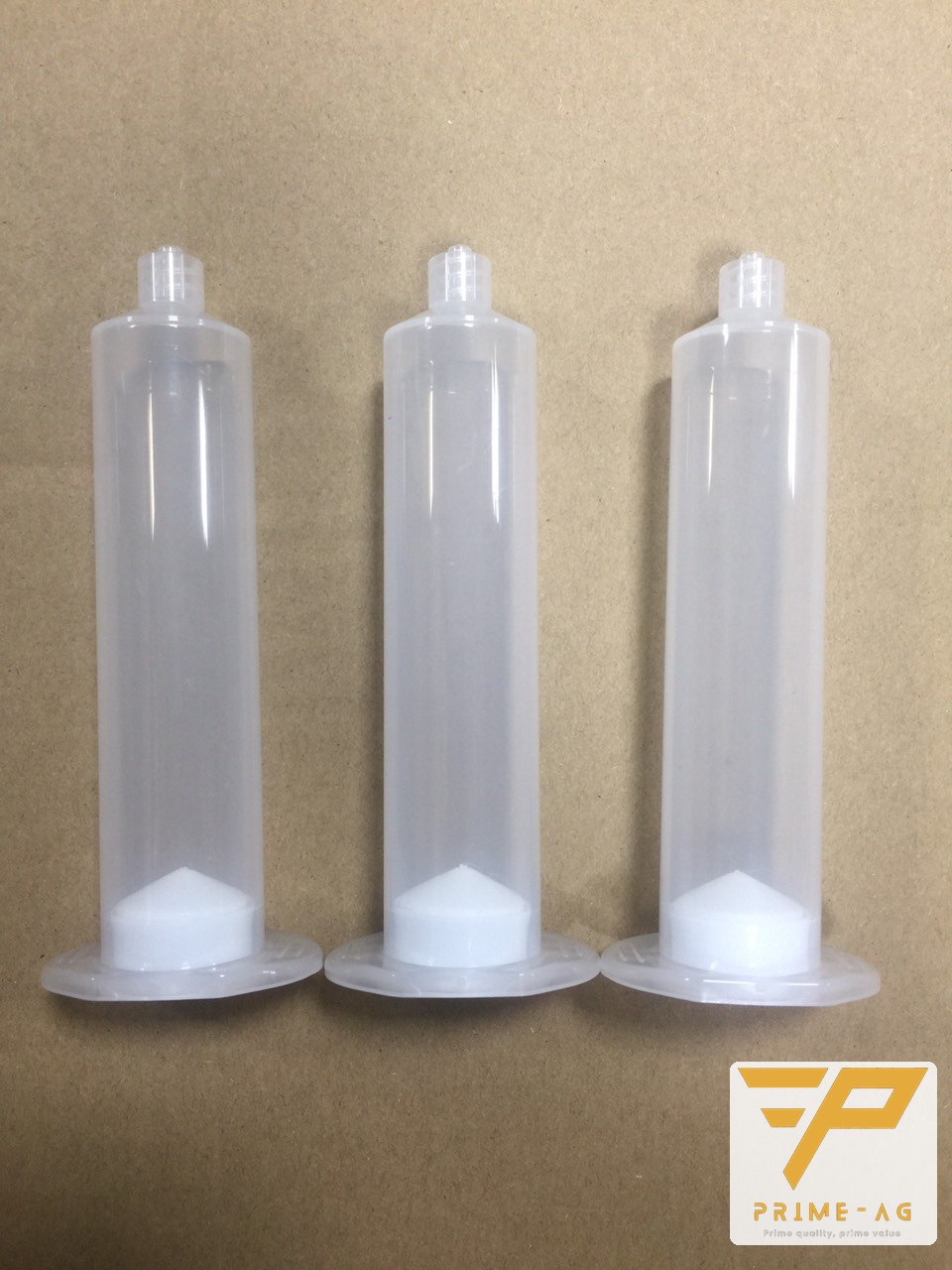
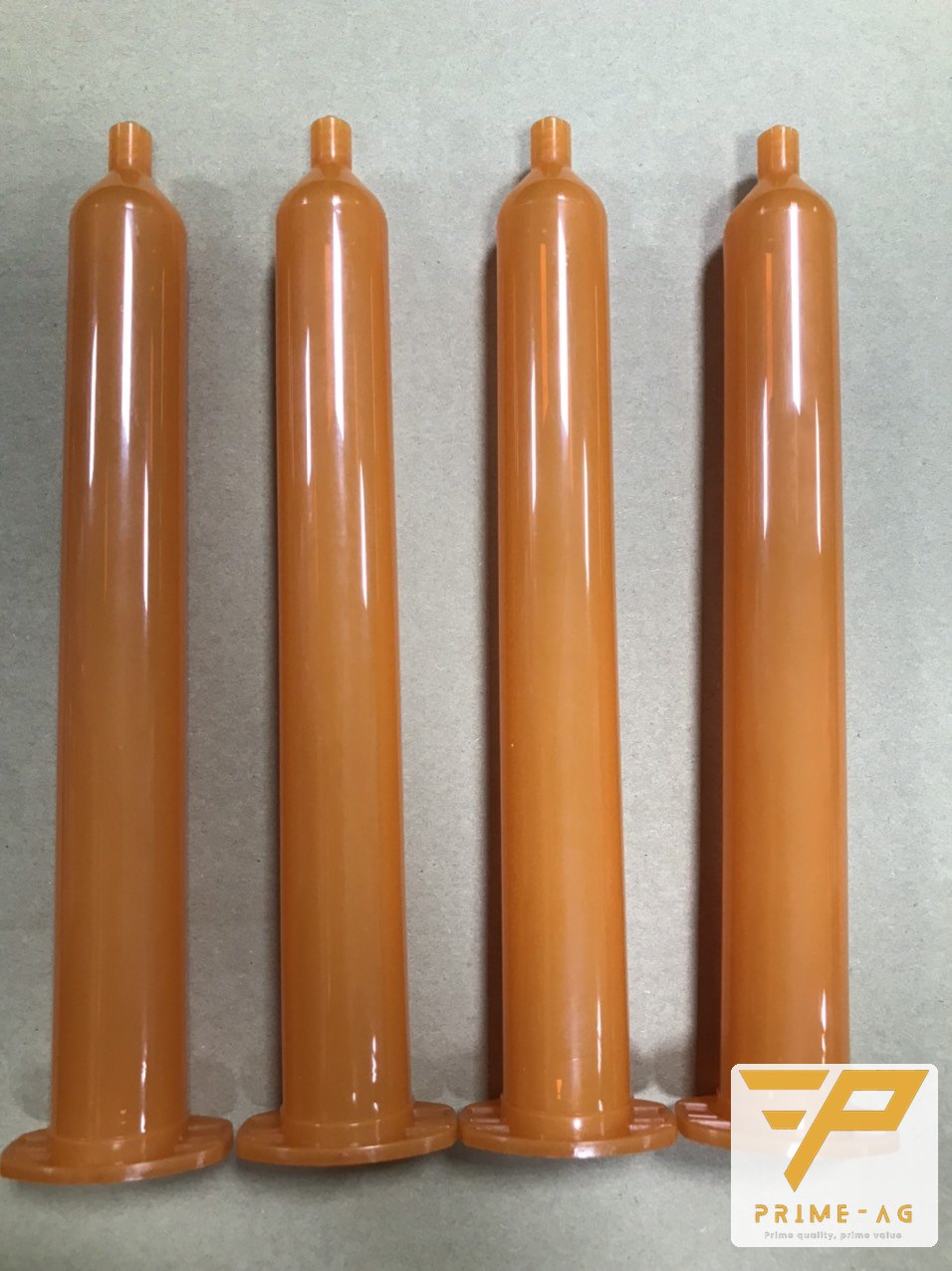
1. Identify the barrel system before you buy
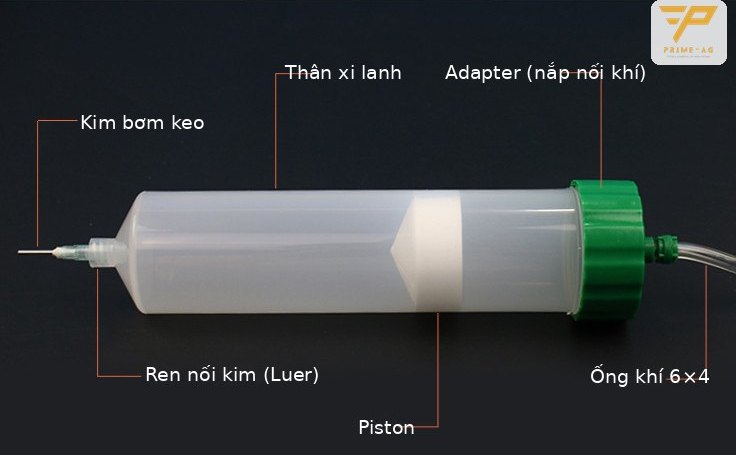
A pneumatic dispenser pushes adhesive with air pulses through an adapter (air cap) fitted on the barrel opening. Each system has its own barrel and piston diameter: for example, a 30 cc barrel measures 25.7 mm outside diameter in the US system, 26 mm in JP and 26.2 mm in MSS. The difference is only a few tenths of a millimeter, but it is enough for the adapter to leak air, for adhesive to back up into the air hose, or for the piston to jam.
| Feature | US system | JP system | MSS system |
|---|---|---|---|
| Barrel shoulder | Blunt, almost square | Rounded, tapered | Rounded, ribbed base |
| Body color | Translucent | Frosted white, tall body | Amber / black / green |
| Capacity | 3 · 5 · 10 · 30 · 55 cc | 5 · 10 · 30 · 50 · 70 cc | 5 · 10 · 30 · 50 · 70 cc |
| Overall length, 30 cc | 118.15 mm | 130 mm | 129.7 mm |
Quick tip: an amber, black or green body with a ribbed base is the Musashi (MSS) system; a 3 cc or 55 cc barrel is the US system; a 50 cc or 70 cc barrel is the JP or MSS system. When ordering, a photo of the adapter cap you currently use is enough to identify the system. A full dimension table for each part number (tolerance ±0.1 mm, virgin PP) is on the dispensing syringes, needles and dispensers page.
Colored MSS barrels each have a purpose: amber blocks UV light, black blocks light completely for UV-curing and light-sensitive adhesives, and green color-codes adhesives so the wrong one is not loaded when one station uses several. High-volume lines use 100–500 cc barrels to cut the number of changes per shift.
2. The four dispensing needle types and what each one does
| Needle type | Strengths | Avoid for |
|---|---|---|
| Tapered plastic (TT) | The bore narrows gradually, so thick and filled adhesives flow smoothly at low pressure with little stringing; no metal | Very small dots that must be placed right next to components |
| Plastic-hub stainless, 13 mm tube | The most common type; dots and beads of low- to medium-viscosity adhesives; color-coded by gauge | Anaerobic adhesives; very thick adhesives in small gauges |
| Plastic-hub long tube | Reaches into deep gaps, holes and spots hidden behind tall components | Thick adhesives — the long tube adds flow resistance |
| All-metal | Reusable, solvent-cleanable, tolerates heating; holds position firmly on robots; 8G–13G for grease and sealants | Anaerobic adhesives; applications needing constant needle changes |
The higher the gauge number, the smaller the bore: 14G has an inside diameter of about 1.54 mm, 25G about 0.25 mm. Hub colors are each manufacturer’s own convention, so always read the gauge on the package.
3. Choosing needle and barrel by adhesive type
| Adhesive type | Needle | Barrel |
|---|---|---|
| UV-curing, light-sensitive adhesives | Black/amber tapered plastic, or plastic-hub stainless 21–25G | Black or amber, never a clear barrel |
| Instant adhesives (Loctite 401, 406) | Plastic-hub stainless 21–25G | 10–30 cc, filled to about 1/2 |
| Anaerobic adhesives (Loctite threadlockers 222, 243) | Tapered plastic | 10–30 cc |
| Silicone, epoxy | Tapered plastic 16–18G | 30–50 cc, filled to about 2/3 |
| Solder paste, thick filled adhesives | Tapered plastic 14–15G | 50–70 cc |
| Grease, sealants in large volumes | All-metal 8G–13G | 100–500 cc |
Solder paste must be stored cold and thawed properly before loading; see also the guide on soldering defects, soldering tips, temperature and solder paste storage.
4. Four common problems at a dispensing station
- Shot volume drops as the barrel empties: the air space above the piston keeps growing. Do not overfill; use a smaller barrel or readjust the dispense time when little adhesive is left.
- Adapter leaks air, adhesive backs up into the air hose: JP and US systems have been mixed. Check the barrel shoulder and the adapter part number.
- Adhesive cures inside the needle: an anaerobic adhesive is running through a metal needle. Switch to a tapered plastic tip.
- UV adhesive cures inside the barrel: a clear barrel is being used under shop lighting. Switch to a black or amber barrel.
Barrels, pistons and plastic needles are single-use consumables; do not heat barrels above 38 °C. If the dispensing station sits inside an EPA, lay it out following the guide on setting up an EPA for an SMT line.
Where to start
Prepare 3 pieces of information: a photo of the adapter or barrel you use now, the adhesive name, and the application (dots, beads, deep gaps). PRIMEAG sends a sample of 10 barrels and 10 needles to test with your plant’s adhesive before you order by the carton; stock items ship in 24–48 hours, ordered items in 3–7 working days.
Frequently asked questions
How can I tell whether my dispenser uses JP or US barrels? Look at the barrel shoulder: JP is rounded and tapered, US is blunt and almost square. A 3 cc or 55 cc barrel is the US system; 50 cc or 70 cc is the JP or MSS system. The adapter cap and piston must belong to the same system as the barrel.
Which needle should be used for Loctite threadlockers? Use tapered plastic tips. Anaerobic adhesives cure on contact with metal in the absence of air, so they easily clog the bore of a stainless needle.
Can dispensing needles be reused? All-metal needles can be cleaned with solvent and reused. Tapered plastic tips and plastic-hub stainless needles are single-use; washing them for reuse makes the shot volume inconsistent.
Email: info@primeag.vn · Phone/Zalo: +84 906 108 292
Technical advice · Send photos or drawings · Quote within 30 minutes
Written by the PRIMEAG engineering team
Updated: 2026-10-21