
Cleanroom boots that crack at the toe, peel at the sole or slip in wet areas usually come down to the wrong size, a sole that does not suit grease or chemicals, and drying too hot. Check foot size, sole material, washing and drying, the floor and then the fabric shaft, in that order. PRIMEAG in Ho Chi Minh City, Vietnam supplies boots with PVC or PU soles in sizes 36–48.
Boots issued only a few weeks ago already show a crosswise crack where the toe folds. In the tray-washing and frying areas, the sole gradually opens at the heel, and then someone slips next to a sink. These failures tend to be lumped together as “poor boots”, yet each one has a cause you can check.
- Cracked toe: re-measure foot size first; boots that are too large form a deep crease and crack right along it.
- Peeling, hardened or crumbling sole: check whether the PVC or PU sole suits grease, hot water and cleaning chemicals.
- Slipping: check the sole tread and any oil or water film on the floor before changing the boot model.
- Shaft slipping down: tuck the trousers into the shaft, close the zipper and pull the drawstring; if the zipper is broken, replace the pair.
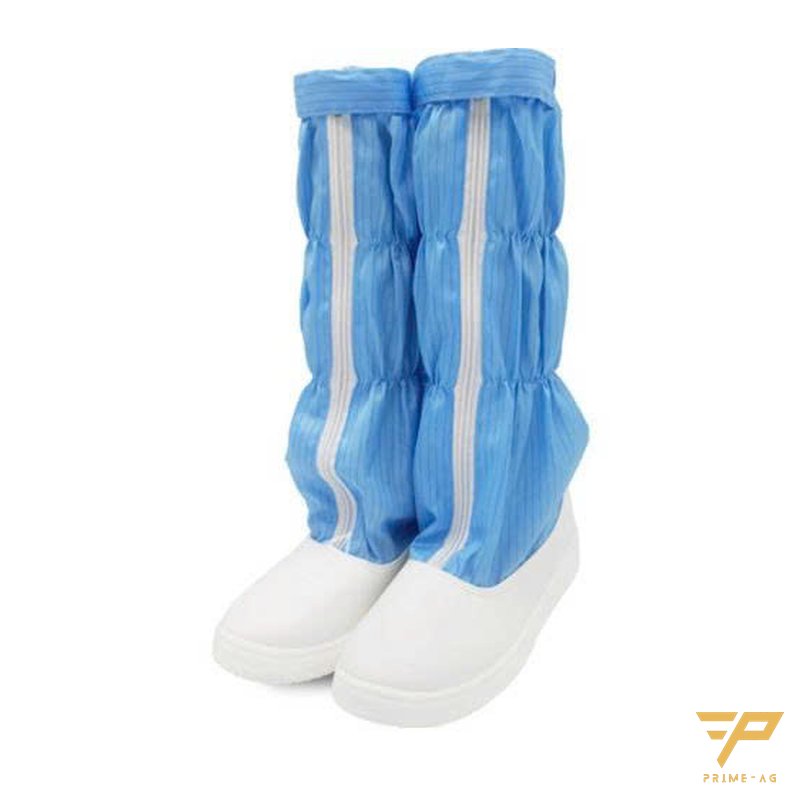
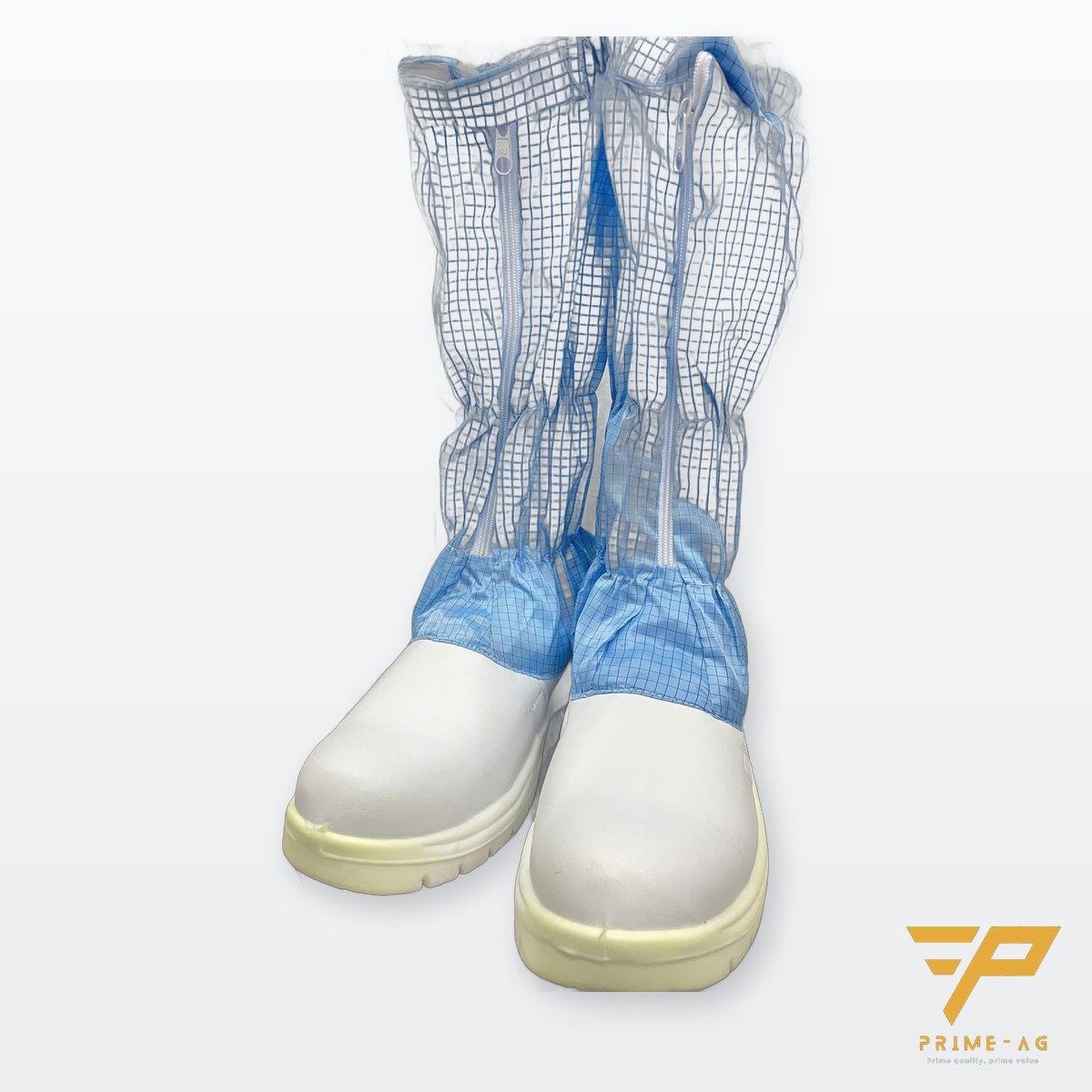
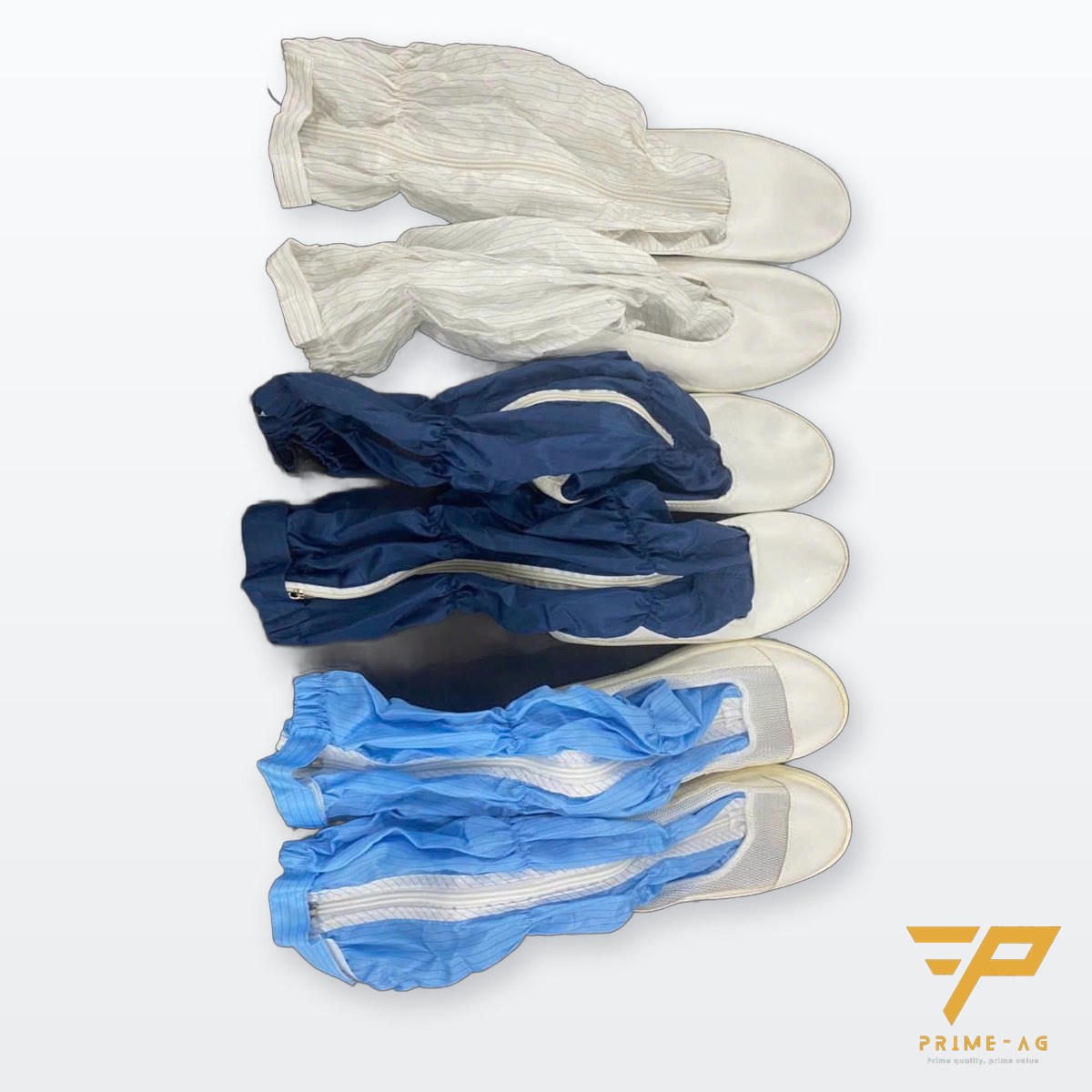
Check in order: from boot size to fabric shaft
1. Wrong boot size creates a deep crease at the toe
If the boot is too large, the toe folds into one deep crease at every step. Thousands of flexes per shift concentrate on a single line, so the crack opens exactly there. If the boot is too tight, it pinches the toes, the wearer shuffles and the heel wears quickly. Measure foot length at the end of the shift, when the feet have swollen, and compare it with the 36–48 (230–290 mm) size chart of the cleanroom boots with PVC or PU sole.
2. Sole material does not suit the environment
PVC soles resist acids and alkalis well, but their flexibility depends on the plasticizer; after long contact with grease or solvents they gradually harden and crack at the flex point. PU soles are light, comfortable for long shifts and more resistant to grease. The weak point of PU is hydrolysis under prolonged heat and humidity: the sole turns crumbly, brittle and delaminates.
3. Washing and drying too hot
Wash the fabric shaft following the cleanroom garment procedure; wipe the sole with IPA only and do not soak it in hot water for long. Drying next to a steam pipe or in a tumble dryer makes the sole shrink and harden and weakens the bond between shaft and sole, so peeling starts at the heel. Air-dry the boots in a ventilated place before storing them.
4. Floor with oil and a water film
Slips come from the floor more often than from the boots; a thin layer of oil under water is almost invisible. Turn the sole over: if the tread is still well defined, deal with the floor first using squeegees and scheduled degreasing. If the tread is worn flat, the sole can no longer channel water away and must be replaced. Place the 600×900 sticky mat at the dry doorway after the changing room, not where water pools, because a wet adhesive surface loses its tack.
5. Fabric shaft slipping down, zipper broken
A slipping shaft exposes the trouser leg; the fabric edge drags on the wet floor and carries dirty water into the clean area. Put the boots on after the coverall, with the trouser legs inside the boot shafts, close the zipper and pull the drawstring snug around the calf. Short-term visitors can use disposable cleanroom shoe covers and hoods instead of dedicated boots.
Reselecting the sole by area
| Area conditions | Recommended sole | Note |
|---|---|---|
| Grease, frying, butter, solvents | PU | Dry thoroughly; do not store while damp |
| Washing with alkaline or acid chemicals | PVC | Watch for the sole gradually hardening |
| Long standing shifts, a lot of walking | PU | Light, elastic, reduces fatigue |
When to replace a pair
- The crack at the crease has gone right through and water seeps inside.
- The sole has separated from the fabric shaft at the heel or toe.
- The tread is worn smooth.
- The shaft fabric is frayed or torn, or the zipper no longer closes fully.
Where to start
- Collect the damaged pairs and record the defect: cracked toe, peeling sole, worn tread or broken zipper.
- Re-measure the feet of the people whose boots cracked at the toe.
- Record the grease, wash-water temperature and cleaning chemicals in each area; review where the boots are dried.
- Reselect the sole using the table above.
Cleanroom boots and garments come in a full range of sizes and colors; stock items are delivered in 24–48 hours in Ho Chi Minh City, Binh Duong and Dong Nai, and ordered items in 3–7 working days. Send the number of people and their foot sizes via the consultation page. For separating people and material flows, see the article on preventing cross-contamination in pharmaceutical and cosmetics packing areas.
Frequently asked questions
Why do new cleanroom boots crack at the toe after only a few weeks? Usually because the boots are larger than the foot, so the toe folds into a deep crease at every step. Re-measure foot length at the end of the shift and switch to the correct size; if the size is right and the boots still crack, check whether the PVC sole is in contact with grease.
PVC or PU soles for cleanroom boots in an oily food processing area? Choose PU soles: they resist grease better and are lighter and more comfortable. Dry them thoroughly after washing and do not store them damp in a closed cabinet, to prevent hydrolysis of the sole.
Can cleanroom boots be dried in a hot tumble dryer? Not recommended. Heat makes the sole shrink and harden and weakens the bond between the fabric shaft and the sole. Wash the shaft following the cleanroom garment procedure, wipe the sole with IPA and air-dry in a ventilated place.
Updated: 31 Oct 2026 — PRIMEAG engineering team
Email: info@primeag.vn · Phone/Zalo: +84 906 108 292
Written by the PRIMEAG engineering team
Updated: 2026-10-31