
Choosing ESD carbon gloves for a factory in Vietnam: for picking small parts where you need fingertip feel, choose Carbon Top with PU coating on the 5 fingertips. For carrying trays, packing and heavy handling, choose Carbon Palm with palm coating, which lasts longer. Both only dissipate static when the wearer is grounded. PRIMEAG recommends measuring the resistance of each glove batch and trialling each type for 1 week.
Fingertip-coated and palm-coated ESD gloves share the same carbon-fiber liner; the difference is where the PU coating sits. PRIMEAG recommends choosing by task: for picking small components where touch sensitivity matters, use fingertip-coated; for heavy gripping, carrying trays and packing, use palm-coated, because the PU takes the abrasion instead of the fabric.
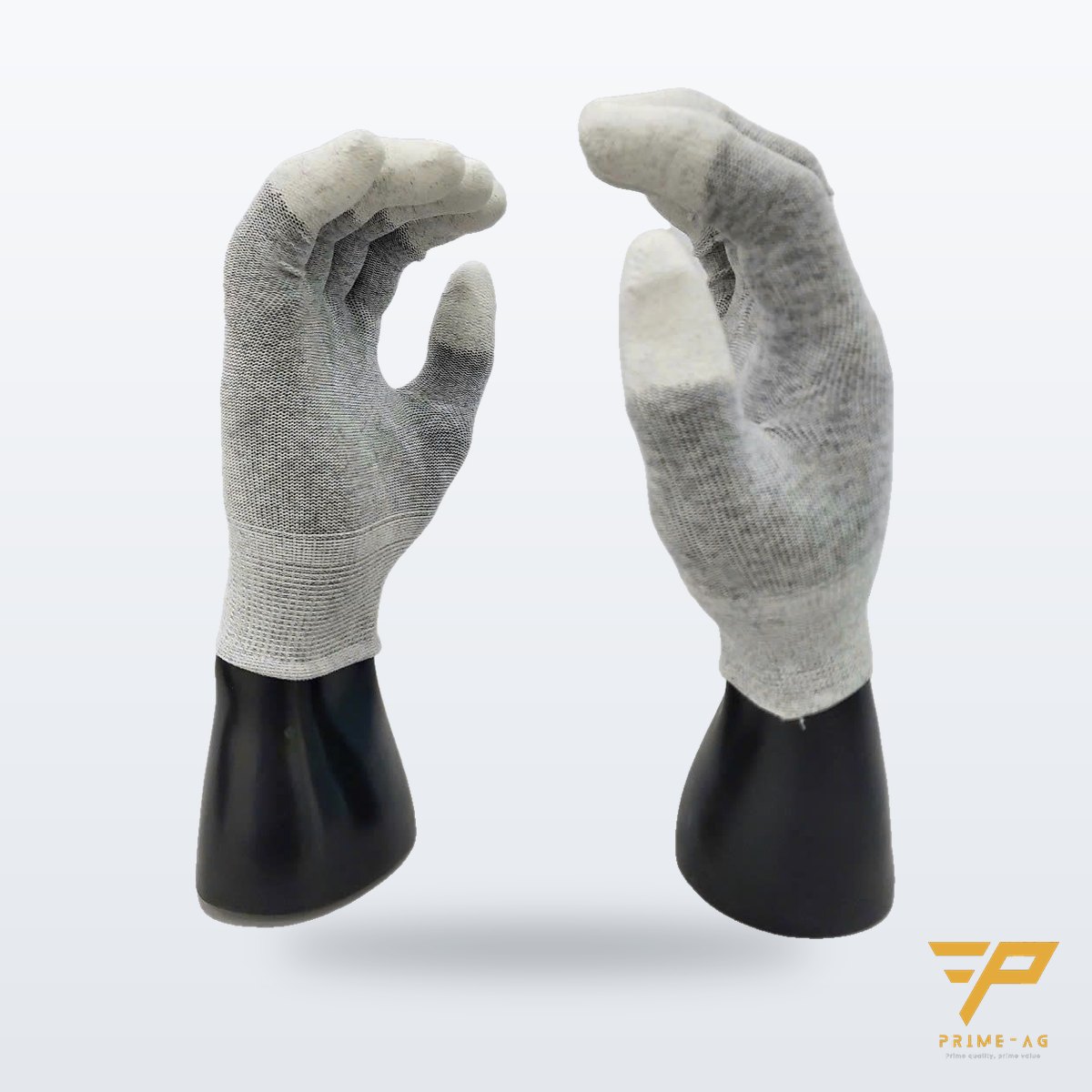
- Fingertip-coated (Carbon Top fingertip PU-coated gloves): SMT, PCB assembly, visual inspection; breathable, sensitive.
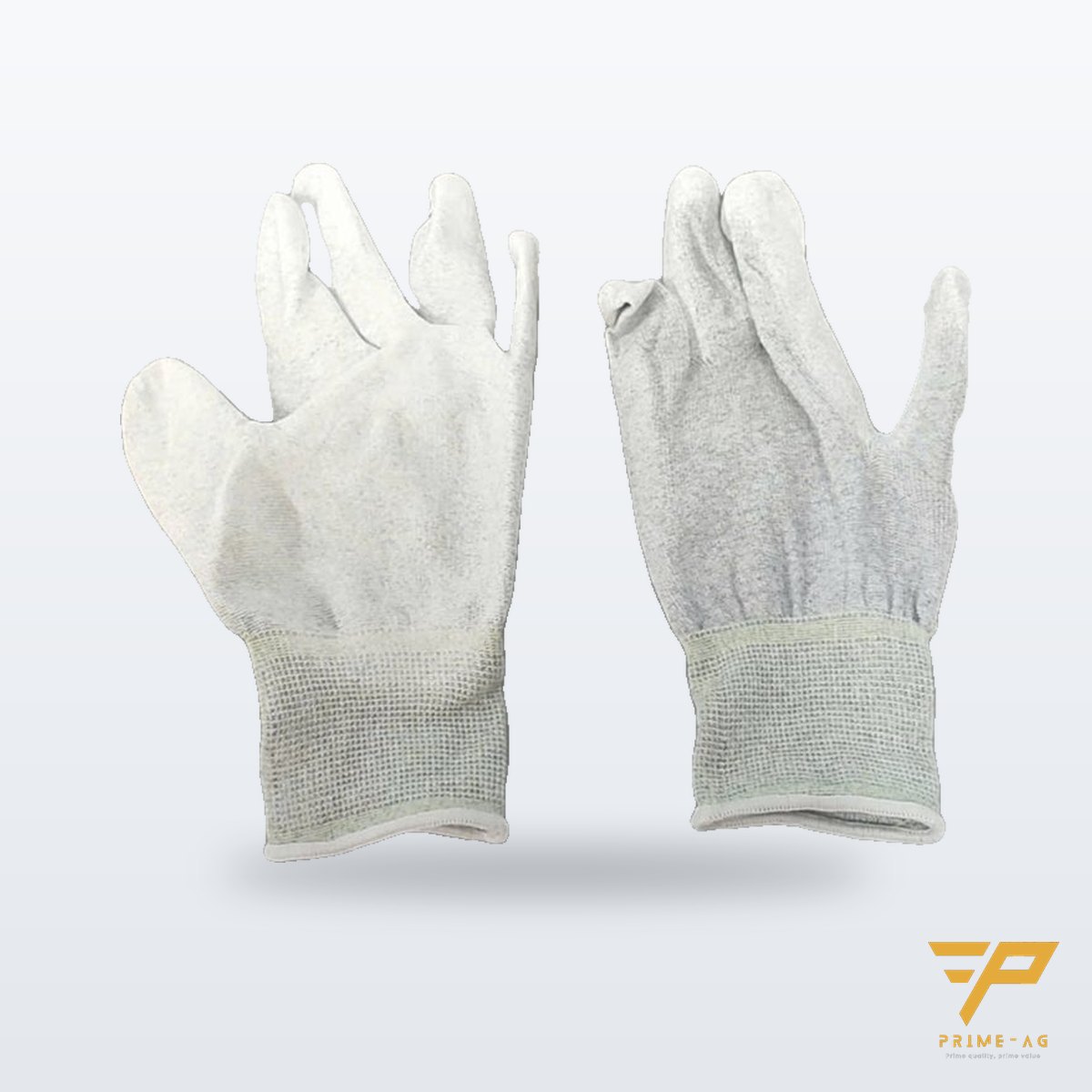
- Palm-coated (Carbon Palm palm PU-coated gloves): packing boards into bags, loading trays into cartons, component stores; better grip and longer life.
- Gloves only dissipate static when the operator is grounded: via a wrist strap, or ESD footwear and flooring.
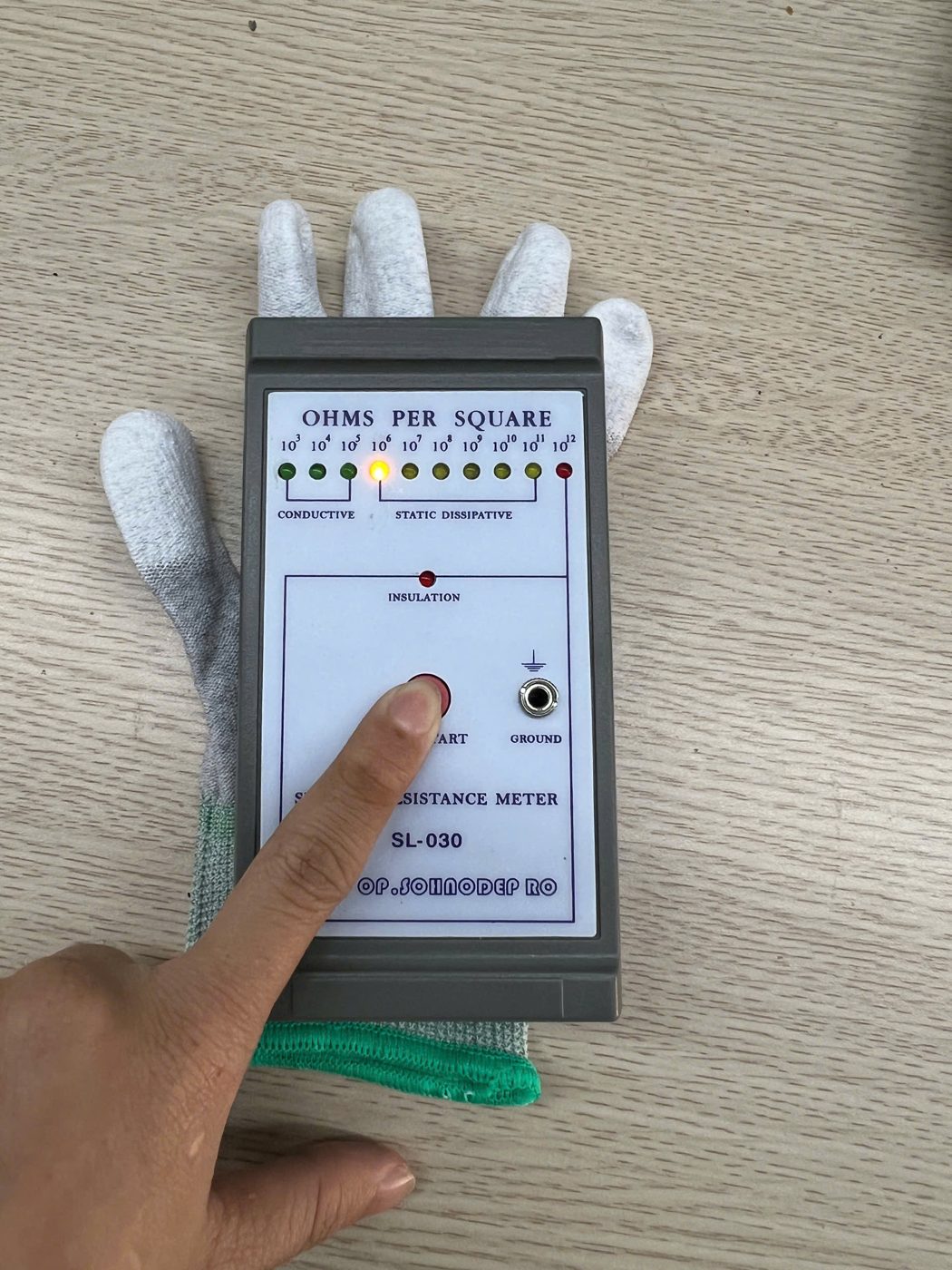
- Test per lot: measure glove resistance; do not rely on color or carbon stripes.
1. How the two types differ
Both use a seamless 13G polyester liner with conductive carbon fiber knitted through the glove, with overlock-stitched edges so no loose threads fall onto components. The difference is in the PU layer:
| Criterion | Carbon Top fingertip PU-coated gloves | Carbon Palm palm PU-coated gloves |
|---|---|---|
| PU coating area | 5 fingertips | Whole palm and inner side of all 5 fingers |
| Touch sensitivity | Highest; picking small components, tweezers, screws | Lower at the palm; fingertips still sensitive enough for normal tasks |
| Breathability over a full shift | Breathable, less sweating | Warmer at the palm |
| Grip on smooth objects | Fingertips only | Whole hand: plastic trays, ESD bins, shielding bags |
| Durability | Palm is bare fabric and wears quickly with heavy gripping | PU takes the abrasion instead of the fabric; lasts longer with gripping |
| Typical processes | SMT, PCB assembly, visual inspection, rework | Packing, tray loading, component stores, sub-assembly |
2. Choose by task, not by area
The same line may need both types. A quick way to choose: observe one operator for 10 minutes and note what the hands do most.
- Mostly picking, adjusting and holding small parts with the fingertips → fingertip-coated.
- Mostly whole-hand gripping: carrying trays, pressing boards into bags, pulling bins → palm-coated.
- Near bare-hand feel needed (lenses, very small parts) → ESD finger cots on 2–3 fingers instead of gloves.
- Oil, chemicals or high-grade cleanrooms → nitrile gloves; see Nitrilstat, Shirudo and ASAP cleanroom nitrile gloves.
Outside the EPA, where nothing is static-sensitive, non-carbon Grey Top gloves are cheaper and sufficient. A glove selection table for the whole factory by process is in choosing gloves by process in an electronics factory.
3. ESD gloves only work when the operator is grounded
The carbon fiber conducts charge away from the hand, but the charge needs a path to ground: through an ESD wrist strap or through ESD footwear and flooring. Under ANSI/ESD S20.20 and IEC 61340-5-1, grounding the operator is a basic requirement of an EPA; gloves are a supplementary layer and do not replace the wrist strap at seated stations.
4. Testing and replacing gloves
- Every incoming lot: measure glove surface resistance and keep the record. PRIMEAG measures the resistance of every lot of carbon gloves and ships the test sheet with the goods.
- Replace gloves when the PU peels, a fingertip is worn through, or they are oily: oily gloves conduct less and leave marks on boards.
- Washing: the PU layer and carbon fiber degrade with each wash; if gloves are reused, re-measure resistance after washing.
- Issue by shift and by size: loose gloves reduce touch sensitivity, tight gloves wear out at the fingertips faster.
Where to start
- List the processes in the EPA and the main task at each.
- Trial each type for 1 week with 2–3 operators; record pairs used and feedback.
- Fix the glove type per process and issue against a pairs/person/week allowance.
PRIMEAG supplies Carbon Top and Carbon Palm gloves in all sizes; stocked sizes ship within 24–48 hours (Ho Chi Minh City, Binh Duong, Dong Nai).
ESD gloves only make sense when the worksurface, mat and floor beneath them are also conductive; PRIMEAG’s free on-site measurement service checks the whole operator – glove – bench – ground chain in a single visit.
Frequently asked questions
What is the difference between fingertip-coated and palm-coated ESD gloves? Both use the same polyester liner blended with carbon fiber; fingertip-coated gloves have PU only on the 5 fingertips, so they are sensitive and breathable, while palm-coated gloves have PU over the whole palm, so they grip better and last longer with heavy handling.
Do I still need a wrist strap when wearing carbon gloves? Yes. Gloves only conduct charge away from the hand; the charge must go to ground through a wrist strap or ESD footwear and flooring. At seated stations in an EPA, a wrist strap is mandatory.
Can carbon gloves be washed and reused? Yes, but the PU layer and carbon fiber degrade with each wash; re-measure glove resistance after washing and discard gloves with peeling PU or worn-through fingertips.
Updated: 03/11/2026 — PRIMEAG engineering team
Mon–Sat, 8:00–17:00 (GMT+7) · Phone/Zalo: +84 906 108 292 · Email: info@primeag.vn
Start where it suits you: Free technical advice · Send a drawing or layout · Get a quote within 30 minutes
Written by the PRIMEAG engineering team
Updated: 2026-10-23