
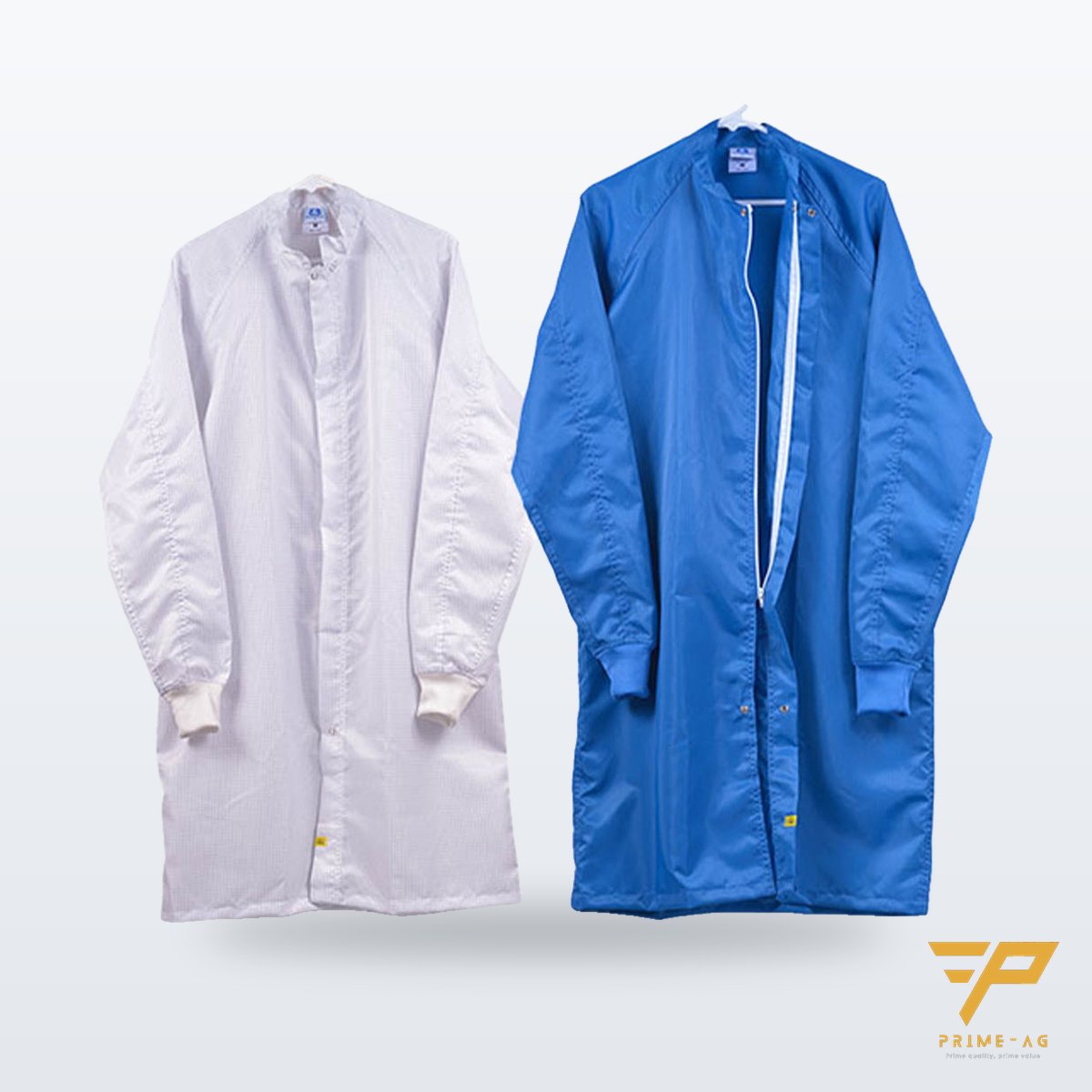
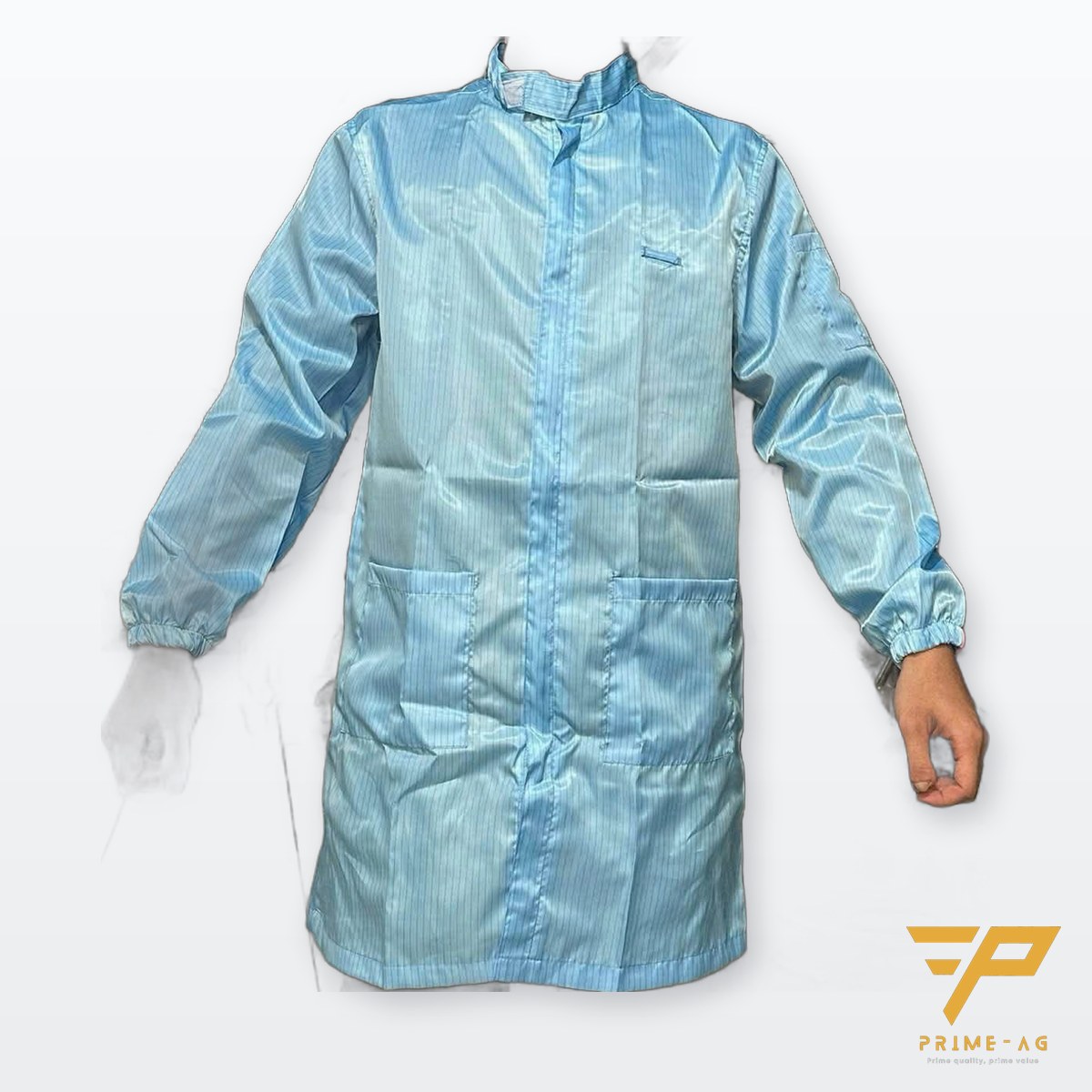
An ESD smock that reads above 10¹¹ Ω sleeve-to-sleeve exceeds the ANSI/ESD S20.20 limit for garments. PRIMEAG recommends re-measuring correctly first, then checking the sleeve-to-body seams, the carbon threads after washing and fabric softener residue. A smock washed correctly at 60 °C keeps its conductivity for at least 50 washes.
“The sleeves read 10¹² Ω — is the smock damaged or did we measure it wrong?” QC teams at factories in Vietnam often ask this after a periodic resistance check. Rule out measurement errors first, and only then conclude that the fabric is at fault.
- Limit: sleeve-to-sleeve must be below 1×10¹¹ Ω per S20.20.
- Re-measure first: smock laid flat on an insulating surface, clean electrodes, readings of 10⁶ Ω and above taken at 100 V.
- Suspect the fabric next: seams without conductive thread, broken carbon threads, a softener film coating the fabric.
- Replace the smock: when it still reads above 10¹¹ Ω after correct measurement.
What reading counts as a pass
ANSI/ESD S20.20 does not certify smocks; it sets a point-to-point resistance limit for garments, measured per ANSI/ESD STM2.1: sleeve-to-sleeve below 1×10¹¹ Ω. Garments used to ground the wearer have a tighter limit, below 3.5×10⁷ Ω. PRIMEAG anti-static smocks are woven from 98 % polyester + 2 % carbon; new fabric measures 10⁶–10⁹ Ω per IEC 61340-4-9, well clear of the reject threshold.
What to check, in order, when sleeves exceed 10¹¹ Ω
1. Measurement method
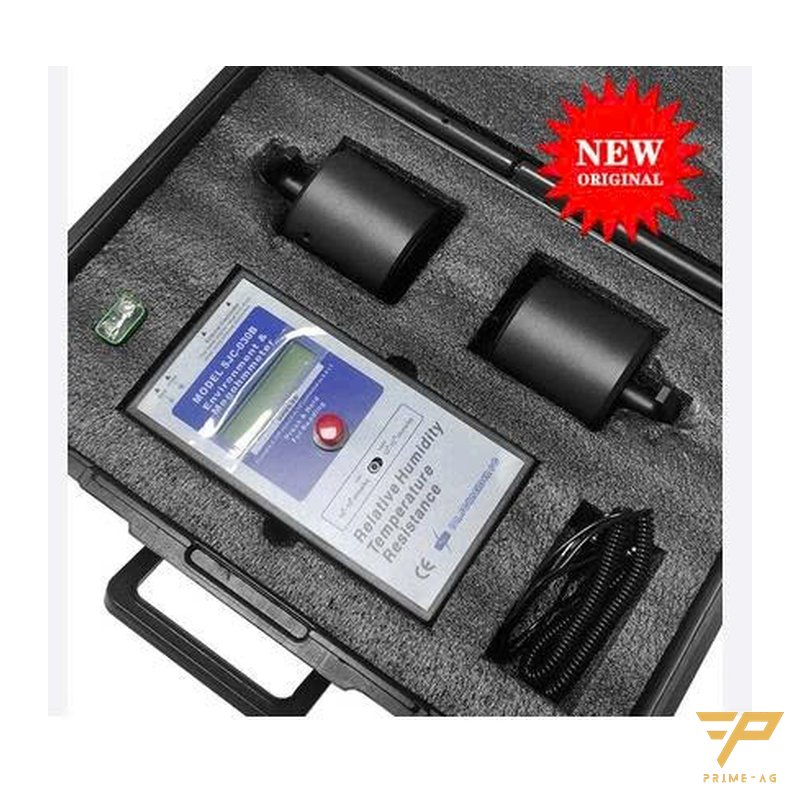
Lay the smock flat on an insulating surface; placing it on a conductive mat gives falsely low readings that hide faults. Do not measure smocks that are stacked or wrinkled; wipe the electrodes clean. With the TR1800 digital surface resistance meter (range 10³–10¹² Ω), results of 10⁶ Ω and above must be measured at 100 V; measuring at 10 V easily gives wrong readings.
2. Sleeve-to-body seams
If each sleeve passes on its own but sleeve-to-sleeve fails, the break is at the seam: it was sewn with ordinary thread, or the carbon stripes do not run across the edge.
3. Carbon threads broken after washing
Water that is too hot, chlorine bleach and high-temperature drying break the conductive threads. Wash at 60 °C, without bleach, separately — never together with ordinary clothing.
4. Fabric softener
Softener coats the threads with an insulating film. Rewash in clean water, then measure again.
5. Snap buttons and worn areas
Oxidized snap buttons raise the contact resistance between the two front panels; worn or torn elbows break the carbon thread grid.
| Sleeve-to-sleeve result | Meaning | Action |
|---|---|---|
| Below 10⁹ Ω | Clear pass | Keep the test interval |
| 10⁹ to below 10¹¹ Ω | Still passing, but rising | Review washing, test more often |
| Above 10¹¹ Ω, each sleeve passes alone | Open circuit at the seam | Replace the smock, change seam construction |
| Above 10¹¹ Ω, passes after rewashing in clean water | Softener film | Remove softener from the washing process |
| Above 10¹¹ Ω after correct re-measurement | Carbon threads damaged | Replace the smock |
When to replace the smock
Test every 6 months; replace when measurement errors and softener have been ruled out and the reading is still above 10¹¹ Ω. Areas that need fuller coverage can switch to the two-piece anti-static cleanroom garment set (top and trousers) in the same fabric. For washing and replacement cycles, see ESD cleanroom garment lifecycle, washing and replacement.
ESD garments are stock items, delivered within 24–48 hours in Ho Chi Minh City, Binh Duong and Dong Nai. For factories registered as export processing enterprises (EPEs), orders from VND 20 million are invoiced at 0 % VAT, and PRIMEAG prepares the on-the-spot import/export customs declaration free of charge.
Where to start
- Set aside the failing smocks and record the date of their last wash.
- Re-measure each sleeve separately, then sleeve-to-sleeve, on an insulating surface.
- Check the laundry chemicals in use and drop the fabric softener.
- Compare your method with the article resistance testing for incoming inspection of ESD materials.
No meter yet? Factories in Ho Chi Minh City, Binh Duong and Dong Nai can invite PRIMEAG for free on-site ESD resistance testing (Monday–Saturday) with a TR1800 and 5 lb electrodes, including materials bought from other suppliers, with no purchase obligation. A PDF report with photos by location is sent within 3–5 working days; it is for reference only and cannot be used as audit documentation.
To replace a batch of smocks or buy a meter, send quantities and sizes via the quote request form; pricing comes back within 30 minutes.
Frequently asked questions
- Can an ESD smock replace a wrist strap? — No. A standard smock only reduces the electric field from the clothing underneath; the operator must still be grounded with a wrist strap or ESD shoes on an ESD floor.
- How often should ESD smocks be resistance tested? — Every 6 months is the recommended interval for smocks; high-risk areas can test more often according to factory rules.
- Can ESD smocks be washed in a household washing machine? — Yes, if they are washed separately at 60 °C, with no chlorine bleach, no fabric softener and no high-temperature drying.
Updated: 29/10/2026 — PRIMEAG engineering team
Email: info@primeag.vn · Phone/Zalo: +84 906 108 292
Written by the PRIMEAG engineering team
Updated: 2026-10-29