
A garment factory fabric warehouse in Vietnam stops getting crushed rolls, mold at the roll ends and mixed shade lots once fabric rolls are lifted off the floor onto horizontal racking, with one location per shade lot and a tag showing the receiving date. PRIMEAG makes medium-duty racks at 200–500 kg per level and heavy-duty racks at about 1,000 kg per level, and advises on cantilever racks and roll carts to suit the warehouse layout.
In many garment factories, incoming fabric rolls are piled on pallets or on the floor. The bottom rolls get crushed cores, the fabric face takes creases, and a length has to be cut off when it is spread on the cutting table. Roll ends against the wall develop mold spots after the rainy season. Two dye lots with the same color code get mixed, and garments reach the line with body and sleeves in different shades. New rolls bury old ones, so FIFO exists only on paper.
- Lift fabric rolls off the floor: on pallets or the bottom rack level, kept away from the wall.
- Store rolls horizontally and limit the number of layers: cantilever racks, medium-duty racks with support bars, or pallet racks if the warehouse uses forklifts.
- One location per shade lot: tag with fabric code, shade lot, meters, receiving date; scan the code at issue.
- Monitor humidity with data: thermo-hygrometers at several points, a dehumidifier when the customer’s threshold is exceeded.
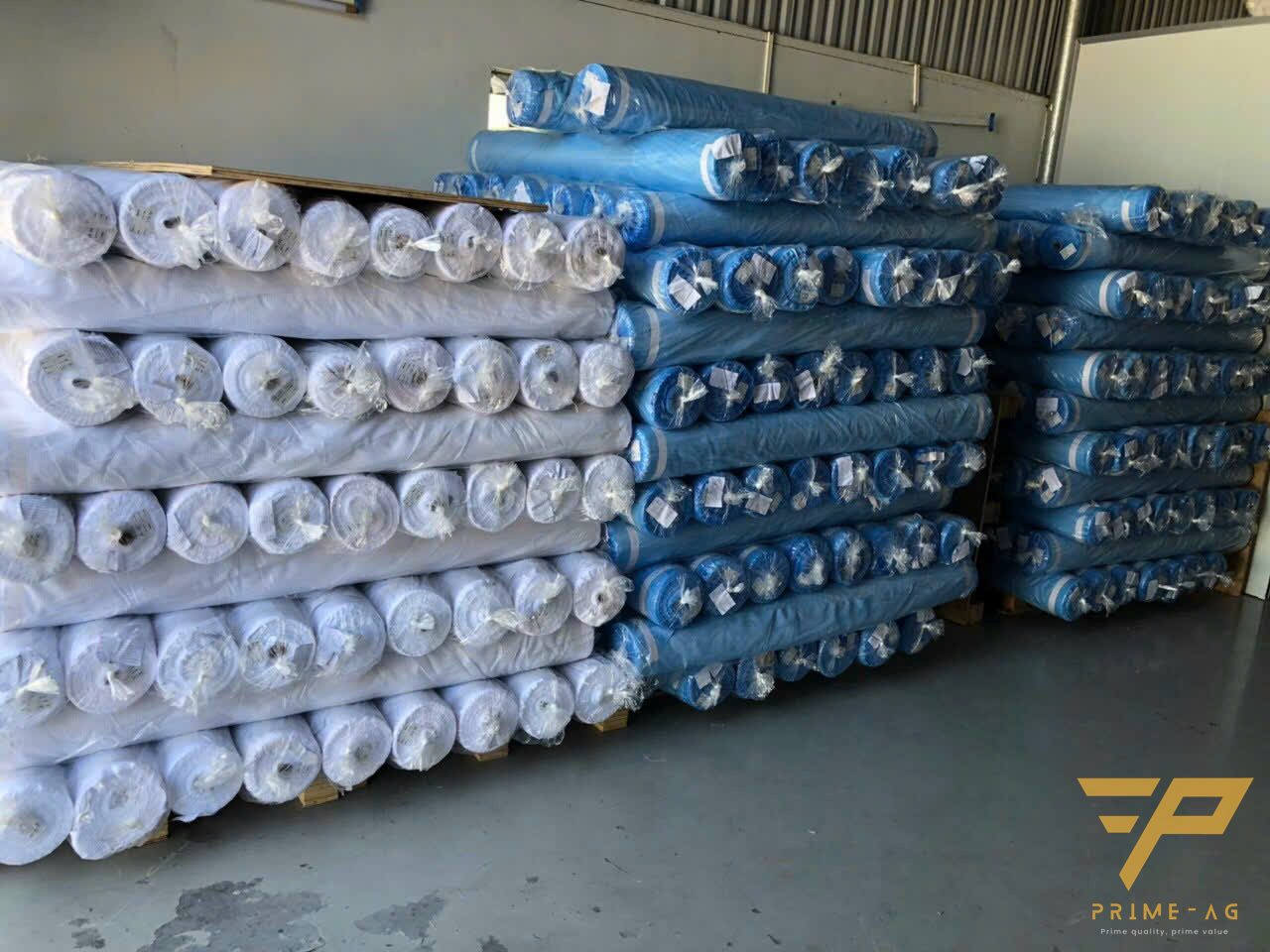
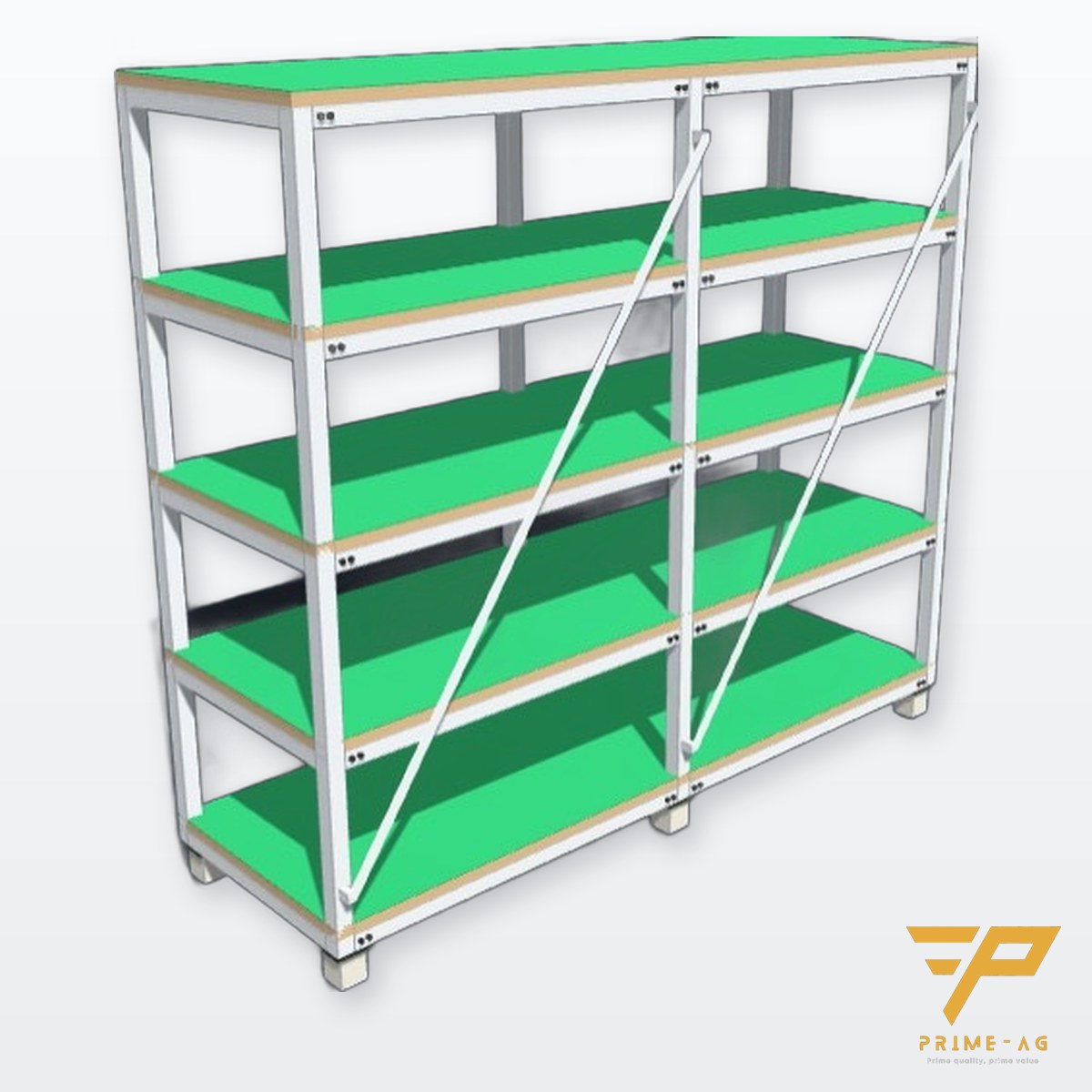
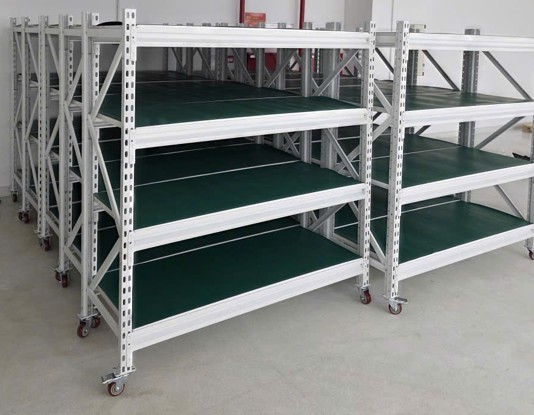
Check in order: why fabric rolls get damaged in storage
- Contact with floor and walls: concrete floors hold moisture for a long time, and outer walls easily collect condensation.
- Too many layers: the upper rolls concentrate their load on a few points of the lower rolls, and the cores gradually flatten.
- No location for each lot: different dye lots end up in the same pile.
- Later receipts on top of earlier ones: warehouse staff take the top roll because it is quicker.
Lifting off the floor and choosing racks for horizontal storage
Cantilever racks for long rolls
A cantilever rack has columns on one side and arms reaching out to support the rolls; there are no front columns, so access is easy. Each arm holds only a few layers, so lower rolls are not crushed. PRIMEAG supplies this type but has no dedicated product page yet: ask about cantilever racks for fabric storage with the roll length and weight per roll.
Medium-duty racks with support bars
For warehouses that pick by hand with moderate roll sizes: medium-duty racks at 200–500 kg per level, steel or moisture-resistant MDF shelves, with the shelf depth matched to the roll length. Support bars divide each level into lanes so rolls cannot roll off, one lot per lane. For rack sizes and level spacing, see choosing a 250 kg medium-duty rack.
Pallet racks when the warehouse uses forklifts
For fabric received on full pallets in large volumes: the heavy-duty warehouse rack (selective pallet rack) takes about 1,000 kg per level with 90×60 uprights, 2 pallets of 1,000×1,200 mm per level, made to order in 2–3 weeks. Still limit the number of roll layers on each pallet.
| Warehouse situation | Recommended | Note |
|---|---|---|
| Long rolls, many codes, picked roll by roll | Cantilever rack | Calculate the load per arm |
| Medium rolls, picked by hand | Medium-duty rack 200–500 kg per level with support bars | One shade lot per lane |
| Full-pallet receipts, forklift available | Heavy-duty pallet rack | Fit upright protectors along forklift aisles |
Shade lot labels, receiving dates and FIFO
The tag at the edge of each lane shows fabric code, color, shade lot, meters, PO and receiving date. Two dye lots never share a lane. Put a barcode on the tag and scan it with a barcode scanner at issue to catch a cutting order that receives two lots. To run FIFO, assign locations by month of receipt (one tag color per month) and require the lane with the oldest tag to be picked first.
Controlling humidity by measurement
The relative humidity threshold should follow the requirements of the customer or the fabric manufacturer. Place thermo-hygrometers (in the measuring and inspection equipment range) near the door, against the outer wall and in the middle of the warehouse, and log readings twice a day. When readings exceed the threshold for several days in a row, install a dehumidifier sized to the warehouse volume. Plastic wrap keeps dust off rolls, but if a roll is already damp, wrapping it only traps the moisture inside.
Moving rolls to the spreading table
Rolling fabric along the floor soils it and dents the edges. Use a roll cart with cradles supporting both ends of the core, at a height close to the spreading table so rolls can be transferred without lifting. Buttons, thread and labels are covered in another guide: untidy garment trims storage.
Where to start
- Count the fabric codes, the lots in stock and the average number of rolls per lot.
- Weigh the heaviest roll and measure roll length and diameter.
- Measure the warehouse: length, width, ceiling height, column positions, doors, forklift aisles.
- Send the data and photos of the warehouse through the layout drawing request; PRIMEAG quotes within 30 minutes, and rack frames carry a 3-year warranty.
Frequently asked questions
Should fabric rolls be stored upright or horizontally? Horizontally on arms or rack levels is the common method; stored upright, the bottom edge is easily crushed and rolls tip over easily.
How many fabric rolls can one medium-duty rack level hold? Divide the level load of 200–500 kg by the weight of one roll and allow a margin; still keep few layers so the lower rolls are not crushed.
What humidity should a fabric warehouse in Vietnam be kept at? There is no single figure for all fabrics; use the threshold given by the customer or the fabric manufacturer, monitor it with thermo-hygrometers and run a dehumidifier when it is exceeded.
Updated: 31 Oct 2026 — PRIMEAG engineering team
Email: info@primeag.vn · Phone/Zalo: +84 906 108 292
Written by the PRIMEAG engineering team
Updated: 2026-10-31