
Written by the PRIMEAG engineering team — 10 years fitting out electronics factories and cleanrooms. Updated 09/2026.
Summary: Workbenches for electronics lines come in three frame types — plastic-coated steel pipe (lean pipe), aluminium profile, and painted box-section steel / stainless steel — which differ in price, rigidity, how easily you can modify them yourself, and how well they suit a cleanroom. This article gives the 5 parameters to fix before you ask for a price, a comparison table of the three types, and 6 design mistakes that mean a brand-new bench needs rework.
1. Five parameters to fix before asking for a price
- Top size and working height: typically 1,200–1,800 × 600–750 mm; height 750 mm (seated), 850 mm (high stool / standing), 900 mm (standing). Set it by process step, not “the same everywhere”.
- Actual load: weigh the machines, fixtures and bins that will sit on it; ≤100 kg → 1.0 mm lean pipe is enough; 150–300 kg → 40×40 aluminium or box-section steel.
- ESD or not: in the EPA → dissipative laminate top 10⁶–10⁹ Ω + grounding point + ground bus bar. Outside the EPA → standard melamine, 30 % cheaper.
- Power, air, lighting: number of sockets, compressed air, LED lights, signal tower, tool rail, spring balancer — factory-fitted is cheaper than retrofitted.
- How often the layout changes: product changeover every 6–12 months → a frame that can be taken apart (lean pipe/aluminium); stable for years → welded steel is fine.

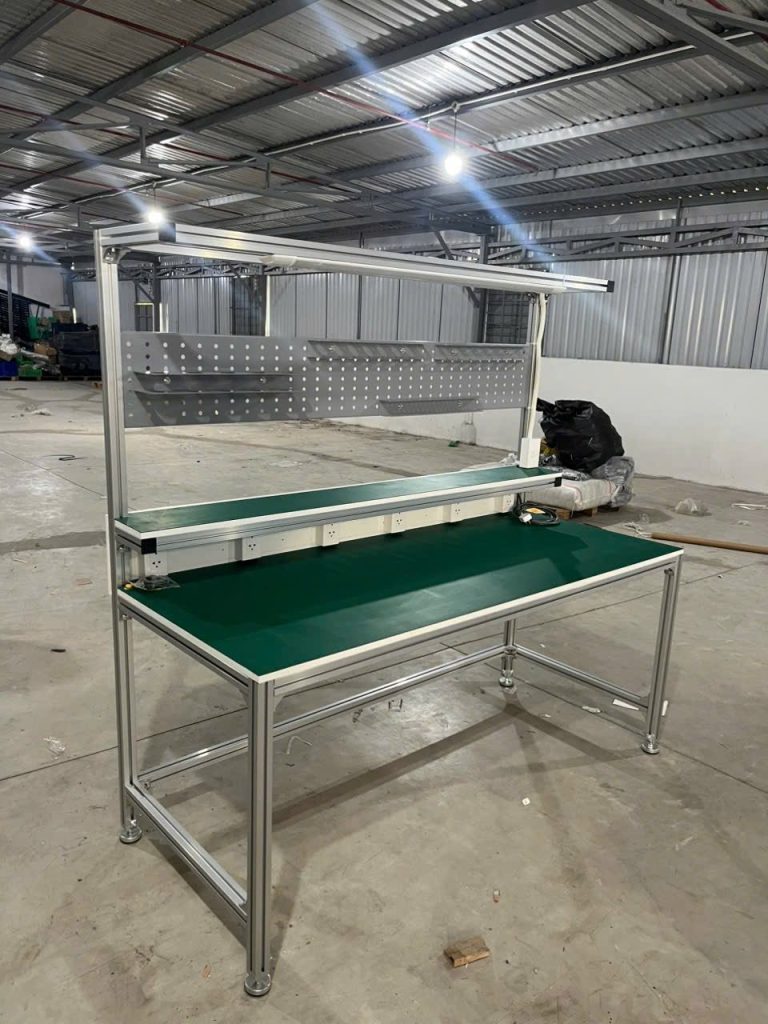
2. The three frame types compared
| Criterion | Plastic-coated steel pipe Φ28 | 40×40 aluminium profile | Painted box-section steel / SUS304 stainless |
|---|---|---|---|
| Relative price | 1× | 1.3–1.5× | 0.9× (painted steel) / 2× (stainless) |
| Worktop load | 100–150 kg | 200–300 kg | 300 kg+ |
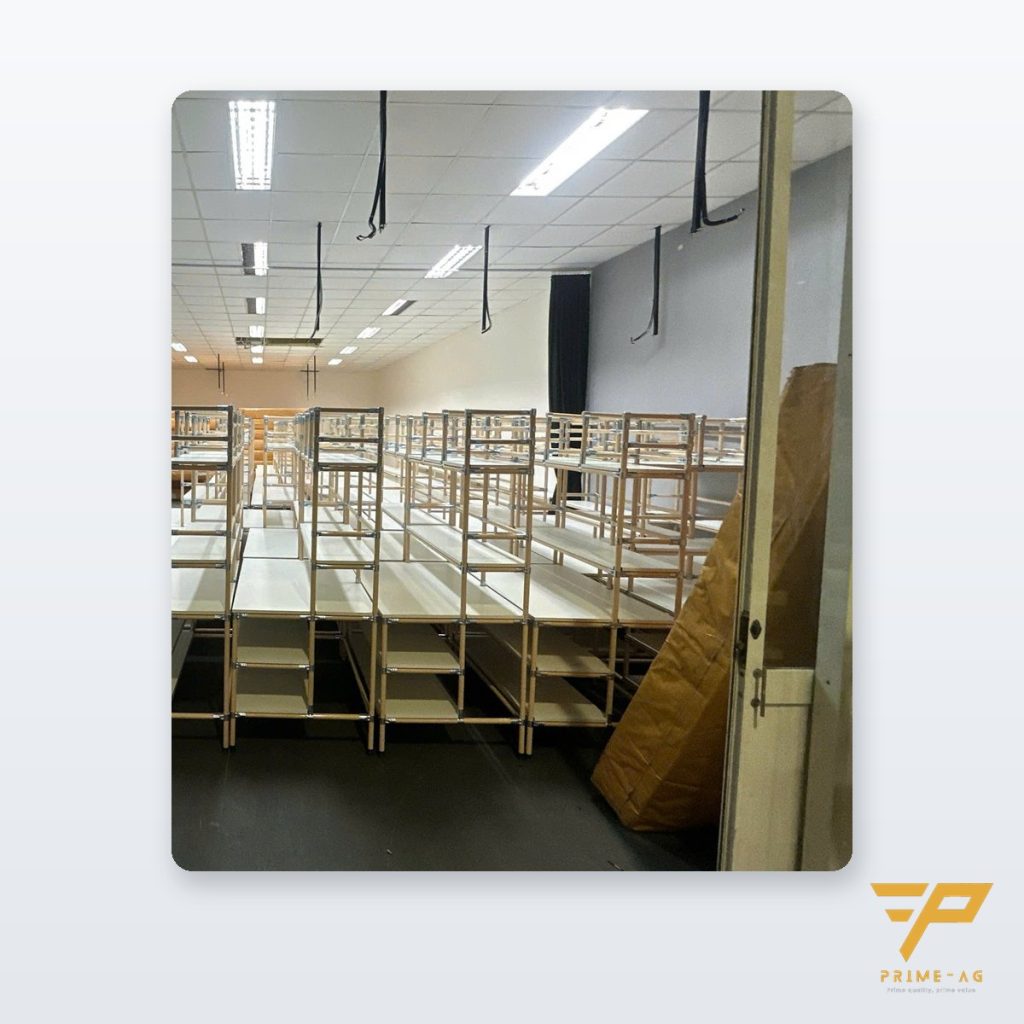
| Self-modification, adding shelves | Very easy — 5 mm hex key, joints sold individually | Easy — T-bolts, corner brackets | No (welded) |
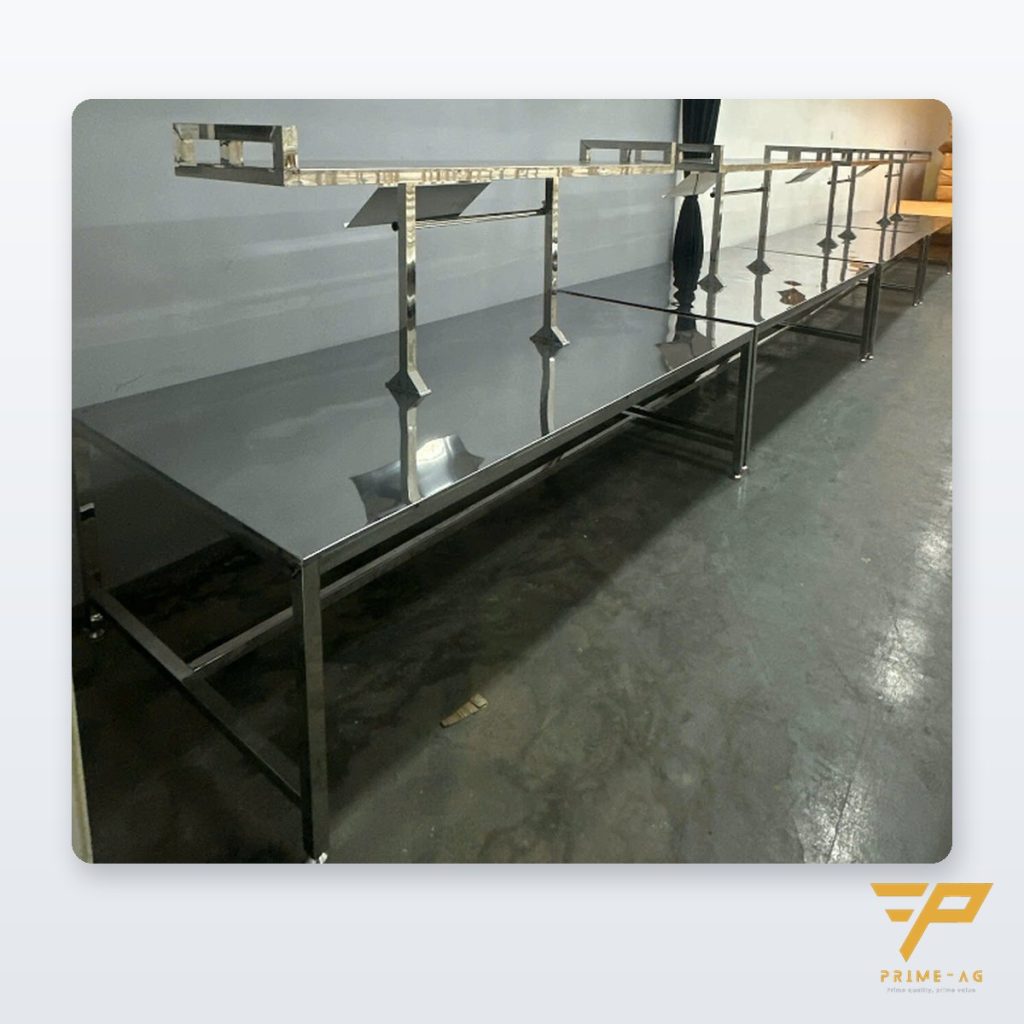
| Cleanroom | ISO 7–8 (coating does not flake) | ISO 5–8 (anodized, unpainted) | Stainless: ISO 5; painted steel: ISO 8 |
| Appearance | Industrial, ivory/black | Clean, modern | Solid, heavy |
| Lead time | 5–7 days | 5–7 days | 7–10 days |
| Best for | Assembly lines with frequent product changes, shelving, long lines | Benches carrying equipment, SMT/test lines, Japanese/Taiwanese customers | Lab benches, machining, wash areas |

3. Six common design mistakes
- ESD top but no grounding point → operators have nowhere to plug in their wrist straps, and the bench is just an ordinary bench. Every bench needs at least one 2-position grounding point + a 1 MΩ cord to the ground bus bar.
- Upper shelf too high or too low: the lowest shelf should be 350–400 mm above the worktop so there is room for hands and a monitor; the light fitting goes under the shelf and must not shine into the operator’s eyes.
- Levelling feet with too little travel: a shop floor that is 10–20 mm out of level is normal; you need ±30 mm feet to level an entire row.
- Castors on a fixed bench: castors make the bench vibrate when screws are driven, and they cost more than feet. Only use castors when the bench genuinely moves, and then with double-locking castors.
- Sockets under the worktop: cables wrap around the legs and the area is hard to clean. Mount sockets on the shelf or on a rear rail, 150–200 mm above the worktop.
- Standard MDF top: a few months of wet wiping and it swells. Use moisture-resistant MDF (green core) with PVC edging on all four sides, or ESD laminate for the EPA.
4. Buy off the shelf or made to measure?
A “standard size” bench from stock is usually the supplier’s 1,200 × 600 × 750 — nobody knows whose line it actually fits. A bench made to fit your line (aisle width, distance to the conveyor, socket positions) costs no more because it uses the same materials; it just takes 2 extra days of drawing. Ask your supplier to send drawings and a BOM before production — adding shelves, moving sockets or relocating the shop later all depend on them.
5. Frequently asked questions
1.0 mm or 1.2 mm lean pipe? 1.0 mm for light benches and racks; 1.2 mm when the load exceeds 100 kg per shelf or for heavy trolleys.
30×30 or 40×40 aluminium? 30×30 for trolleys and light frames; workbenches use 40×40 so they don’t vibrate when screws are driven.
Is an aluminium bench ESD? The anodized frame is insulative; the discharge path runs through the ESD laminate top → ground bus bar → ground. Ask your supplier to measure it and provide a test report at delivery.
Send the dimensions, number of benches and photos of your line through the contact form — PRIMEAG will send drawings and a quote the same day, with production in Ho Chi Minh City in 5–7 days.