
Stocked item: delivered in 1–2 working days in Ho Chi Minh City, Binh Duong and Dong Nai; free delivery for orders from VND 20,000,000; defective items exchanged within 7 days. Shipping & return policy
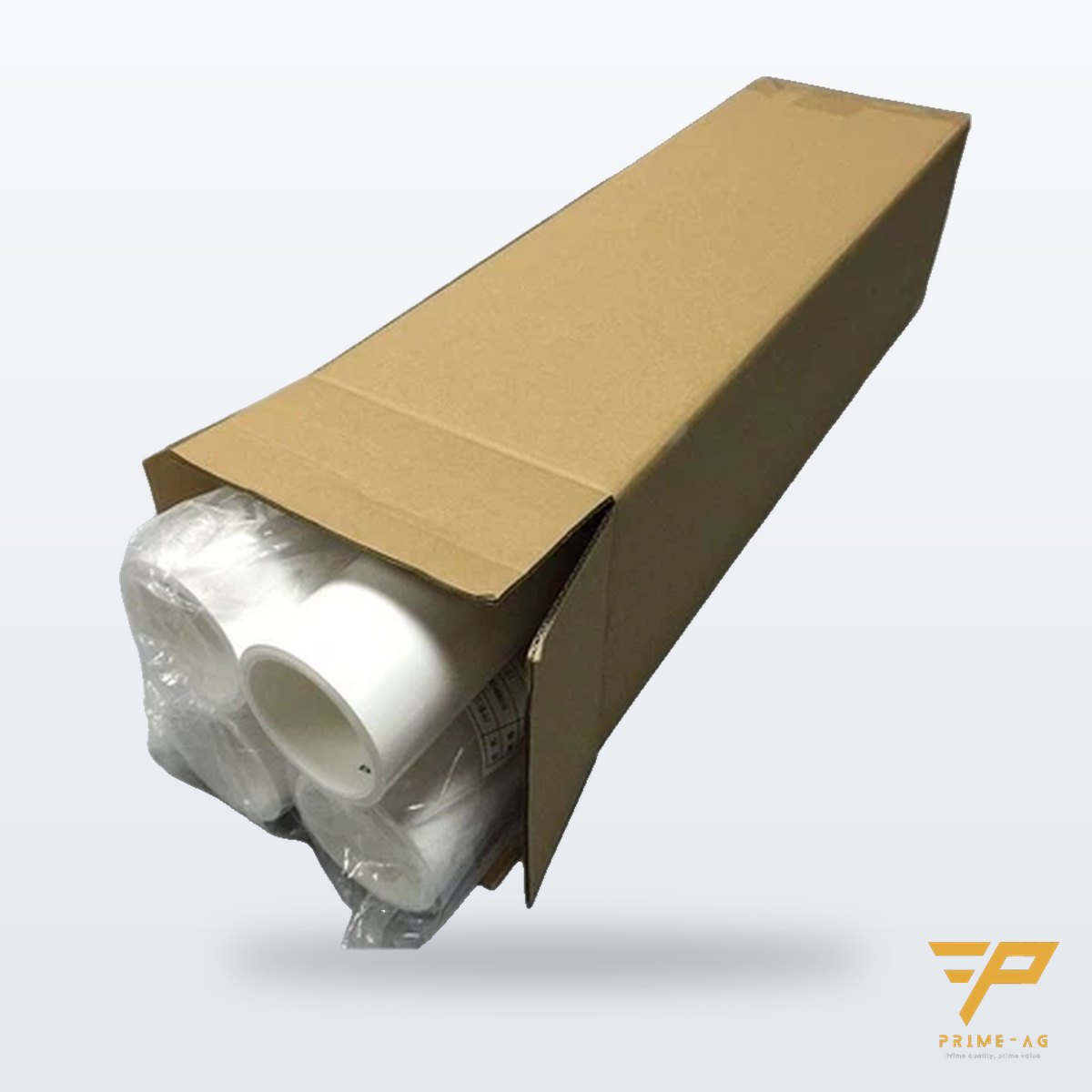
Product code: SR-1700 · Specification: PP sticky roll (adhesive roll) for contact-cleaning roller machines
PP Sticky Roll for Cleaning Machines
The PP sticky roll is fitted to dust-removal roller machines / panel surface cleaning machines: the adhesive on the roll picks up the dust, fibres and debris that the machine’s silicone roller has just lifted from the surface of PCBs, glass, displays, film, plastic sheet and metal sheet. Peel off the dirty layer and a fresh, clean layer is ready.
Equivalent to: “1300 sticky roll”, “1480 sticky roll”, “1700 knife-free sticky roll”, “PP machine sticky roll” — what is different: 51 width specifications, cut to the size you require, 76.5 mm core, with or without pre-cut perforations, made to fit the customer’s machine shaft.
Common specifications: 1300, 1700.
Delivery: in stock, delivered within 24–48 hours (Ho Chi Minh City, Binh Duong, Dong Nai); lead time for bulk orders is confirmed with the quotation.
Applications
A dust-removal roller machine uses a silicone roller (or a lightly tacky rubber roller) that rolls directly over the product surface to pick up dust, lint, plastic debris and metal debris. The PP sticky roll is pressed against the silicone roller and continuously “takes back” the dust from it, keeping the roller clean at all times. When the outer layer is dirty, peel it off and a new layer is exposed.
- Electronics: cleaning PCBs, FPCs and substrates before SMT, solder paste printing and component placement.
- Displays, glass, touch panels: cleaning glass sheets, polarizer sheets and panels before film lamination and glass bonding.
- Film, membranes, printing: cleaning film rolls, optical films and printing sheets before coating, laminating and printing.
- Plastic, acrylic, aluminium and stainless steel sheet: cleaning before applying protective film, painting or coating.
- Batteries, solar, optical components: cleaning electrodes, solar cells and lenses.
Result: fewer dust defects (spots, bubbles during film lamination, shorts caused by debris), no need for manual solvent wiping, and no scratching of the surface.
General specifications
| Item | Value |
|---|---|
| Film material | PP 0.03 mm |
| Adhesive | Water-based acrylic, odourless, no adhesive residue |
| Width | 50 – 1,750 mm, cut to order (see the size table below) |
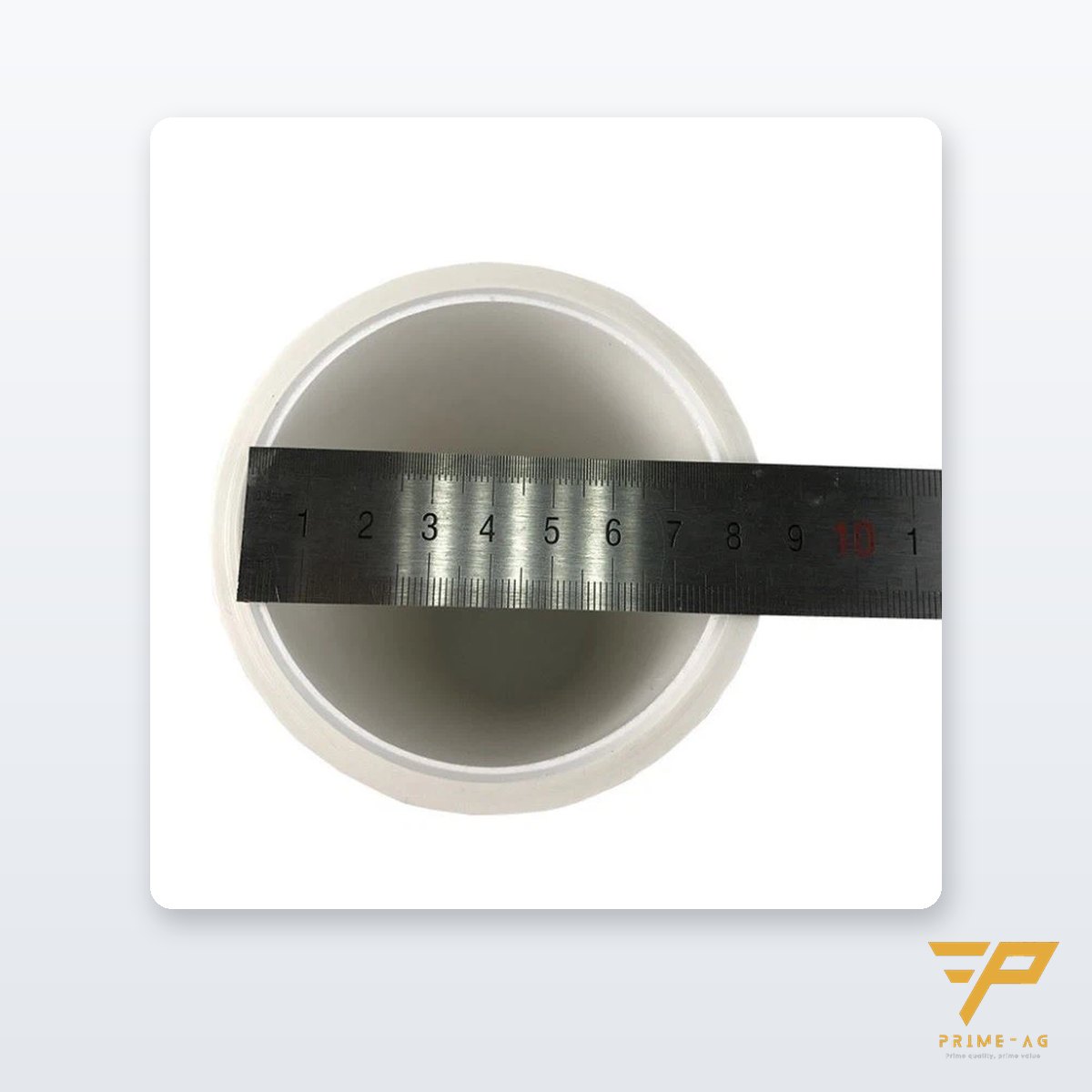
| Core | 76.5 mm (3″) — state the machine model when ordering |
| Number of layers | 600 – 1,200 layers/roll, typically 800 layers |
| Pre-cut | Each layer perforated, peel by hand without a knife |
| Tack | Low–medium (D/M/H options to suit the surface) |
| Colour | Clear, blue (yellow optional) |
| Packing | 1 roll/carton, PE wrapped |
| MOQ | 20 rolls |
Dimensions
| Parameter | Specification |
|---|---|
| Width (roll length) | 50 – 1,750 mm, 51 common widths; most popular 1,300 / 1,480 / 1,700 mm |
| Cut to order | Cut exactly to your machine’s shaft width, including odd widths not on the list |
| Core diameter | 76.5 mm (3″ core); other cores to suit the machine shaft |
| Number of layers | 600 – 1,200 layers/roll |
| Layer type | Pre-perforated (peel by hand) or continuous |
| Tack | Low (D) / medium (M) / high (H) |
Not sure which width you need? Send the machine model, the silicone roller width, or a photo of your current roll with a measuring tape — PRIMEAG will identify the specification for you.
Selection by machine / surface
– 1.6–1.8 m panel roller machines (large PCBs, glass) → 1700.
– 1.3–1.5 m machines → 1300 / 1480.
– Painted surfaces, thin films → low tack (D); metal, glass → medium (M).
– Hand rolling of electrical cabinets and floors → hand-held sticky paper roller (SR-PAPER).
Documents per lot: tack test sheet, odourless/VOC, RoHS; a 1-roll sample is available for a machine trial.
Scheduled orders: following your machine schedule (usually monthly), price held for 6 months, minimum stock of 10 rolls kept for regular customers.
FAQ
– What does “knife-free” mean? — Each layer is already slit, so it comes away when peeled by hand; standard rolls have to be cut with a knife, which easily tears the next layer.
– What information is needed to order the right roll? — Core diameter, machine width, the maximum outer diameter the holder accepts, and the surface to be cleaned.
– Does the adhesive leave residue on the panel? — Water-based acrylic, no adhesive transfer at room temperature; do not use on surfaces that are already hot >60 °C.
– How many panels can one roll clean? — It depends on the dust load; on average 800 layers × 3–5 roller passes per layer.
Where the sticky roll sits in a contact cleaning machine
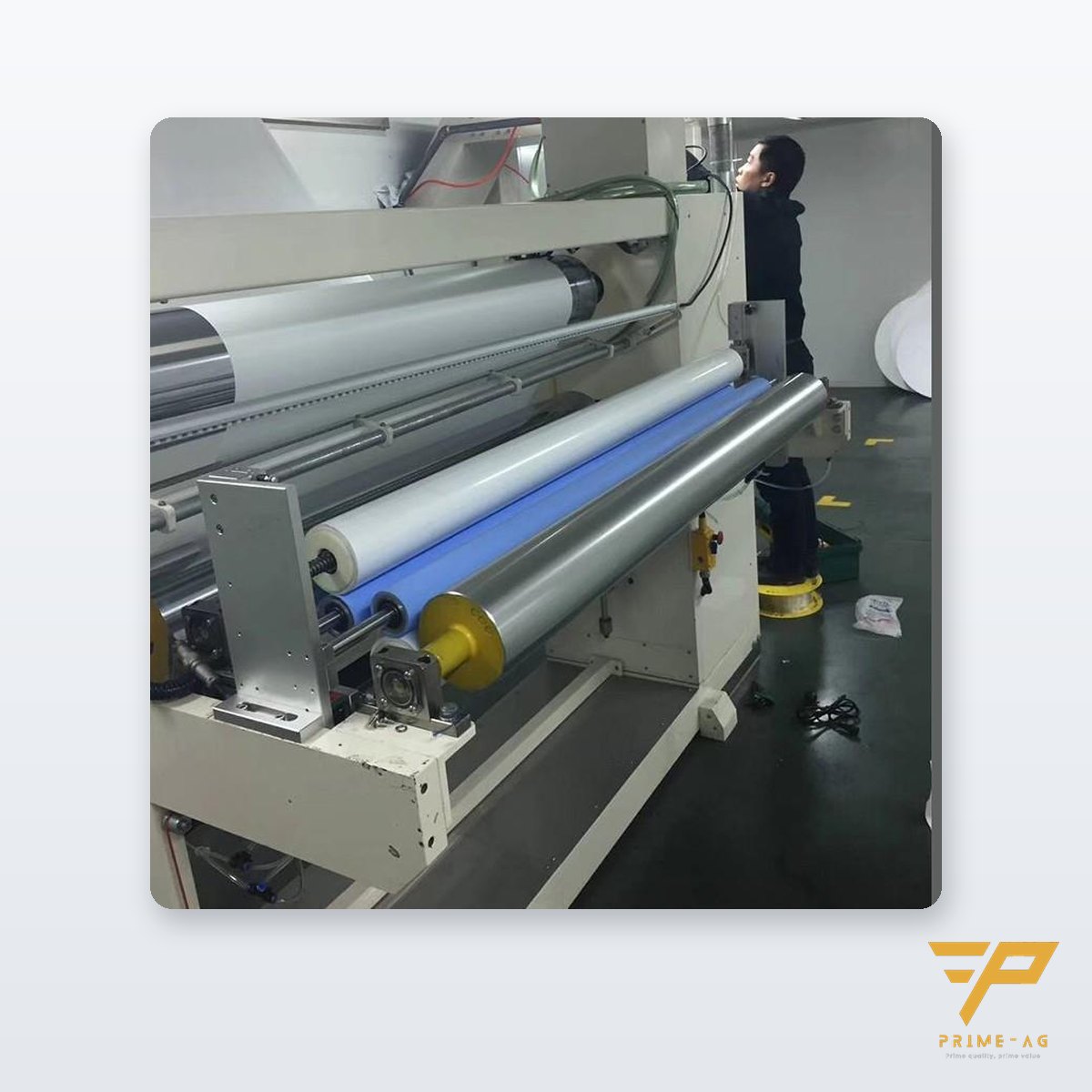
In a dust-removal roller machine, the product never touches the adhesive roll. Dust is transferred in three stages:
- Product surface (PCB, glass, film) – the least tacky.
- The machine’s elastomer roller – high surface energy; it rolls directly over the product and lifts the dust, fibres and debris.
- The adhesive roll pressed against the elastomer roller – the most tacky; it holds the dust permanently. When the outer layer is loaded with dust, it is peeled off.
According to Teknek, this type of system can capture particles down to about 1 µm. Performance is maintained only as long as the adhesive roll stays “cleaner and tackier” than the roller; once the adhesive layer is covered with dust, the roller is no longer cleaned and starts transferring dust back onto the product.
Construction of the adhesive roll
- Base film: PRIMEAG uses 0.03 mm PP film — thin, tough and lint-free. On the international market there are also rolls with an antistatic cleanroom paper base (for example METOCLEAN DTS-AR).
- Acrylic adhesive, reverse-wound (adhesive facing out): Teknek describes the adhesive rolls used on its machines as “heavy-coated, reverse-wound”. A thick adhesive layer holds more dust per layer. For example, METOCLEAN states an adhesive layer of 35–38 µm.
- Core: 76 mm (3″) cores are common. METOCLEAN uses a ground-smooth PP core so the roll can be used down to the last layer. PRIMEAG makes 76.5 mm cores or cores to suit the machine shaft.
- With or without pre-cut perforations: pre-cut (sheeted) rolls are peeled layer by layer by hand; continuous rolls have to be cut with a knife.
- Silicone-free: Teknek’s machine adhesive roll ranges are stated to be silicone-free — important when the product is subsequently painted, coated, laminated or printed.
Choosing tack D / M / H
The tack of the adhesive roll must match the tack of the elastomer roller on the machine, not just the product surface:
- Roll too weak relative to the roller: dust does not transfer to the roll and the roller gradually gets dirty.
- Roll too strong: layers are hard to peel and the next layer tears easily; with soft rollers, check that the adhesive does not damage the elastomer surface.
- When switching to a roller of a different hardness (machine makers typically offer grades of around 20, 25 and 45 Shore), run a new trial with a sample roll.
Correct installation and layer changing
- Check the width, core diameter and the maximum outer diameter of the holder before installing.
- Install in the correct direction: adhesive side facing the elastomer roller, with even pressure along the full length.
- Peel layers on a fixed schedule (by number of panels or by shift); do not wait until the adhesive is completely covered with dust.
- When peeling, pull the adhesive layer away from the machine and do not let the adhesive edge touch the roller or the product again.
- Do not touch the fresh adhesive surface with bare hands.
Static electricity and operating environment
Peeling adhesive layers, rolling, and separating the roller from film or glass all generate static charge. On Teknek machines there is always an antistatic bar after the roller unit to neutralise the charge on the material. In SMT and display assembly areas, check the machine’s ionizer bar regularly at the same time as changing the roll.
Storage
- Keep the roll in its sealed bag until installation. METOCLEAN packs each roll in a plastic bag to protect it from moisture.
- Store in a dry, cool place away from sunlight; do not stack heavy loads on the rolls, which can dent the core.
- Partly used rolls: re-wrap when the machine is stopped for a long time to prevent dust settling on the outermost adhesive layer.
Common mistakes
- Ordering a roll by width without measuring the core and outer diameter — the roll does not fit the holder.
- Extending the layer-change interval to save money — the roller gets dirty and the dust defect rate rises.
- Using ordinary adhesive tape (packing tape) instead of a dedicated roll — unsuitable adhesive that can easily damage the roller.
Technical references
- Labels & Labeling – Teknek contact cleaning (elastomer roller + reverse-wound adhesive roll)
- Cleanroom Technology – Teknek contact cleaning systems
- METOCLEAN – Adhesive roll DTS-AR-0622 (acrylic adhesive, 76 mm core)
- Labels & Labeling – Teknek EcoFilm adhesive rolls (silicone-free, sheeted)
- Simco-Ion – Teknek adhesives & elastomer rollers
Price: from 150,000 VND (excl. 8% VAT).
REQUEST A QUOTE: send your machine model or a photo of your current roll, plus the number of rolls per month — PRIMEAG quotes within 30 minutes.
Hotline/Zalo +84 906 108 292 · info@primeag.vn
Written by the PRIMEAG engineering team.
Related guides:Static on plastic film causing print defects and blocking:…Paper Dust Hickeys in Packaging Printing Plants in Vietnam:…
Related products:Paper Sticky Lint Rollers & HandlesSilicone Sticky Roller (Dust Cleaning Roller)
Updated: 2026-10-24
Giao tận nhà máy TP.HCM, Bình Dương, Đồng Nai, Long An, Tây Ninh · Kèm biên bản đo điện trở ESD theo lô · Hotline 0906 108 292