
Plastic film (PE, PP, PET, BOPP) is an insulator, so grounding the machine cannot remove the charge on the film. The correct fix is an ionizing bar (static eliminator bar) 300–1,500 mm long, installed across the film width where the charge is generated, combined with voltage measurement before and after. PRIMEAG supplies ionizing bars, meters and sticky rolls for printing and winding machines.
- Symptoms: ink smearing, print streaks or spots, film sticking together at the stacker, misaligned rolls, dust attraction, operators getting shocks.
- Causes: film separating from rollers, friction with idler rollers, high-speed unwinding; dry air makes it worse.
- Solution: ionizing bars across the film width at the separation point, before the print station and before the winding/stacking point.
- Verification: measure the film surface voltage with a static meter before and after installation.
1. Where charge on the film is generated
Charge is generated mainly when two surfaces separate: film leaving the unwind roll, leaving an idler roller, leaving the printing plate, or film peeled from a liner. The higher the speed and the lower the air humidity, the higher the voltage. On the film, charge causes four defects: ink is attracted off-target, causing smearing, feathering and print streaks; airborne dust settles on the film before printing or laminating; cut sheets stick together and are hard to stack and count; operators get shocks on contact, and in some places there is a risk of sparks near solvents.
2. Why grounding the machine is not enough
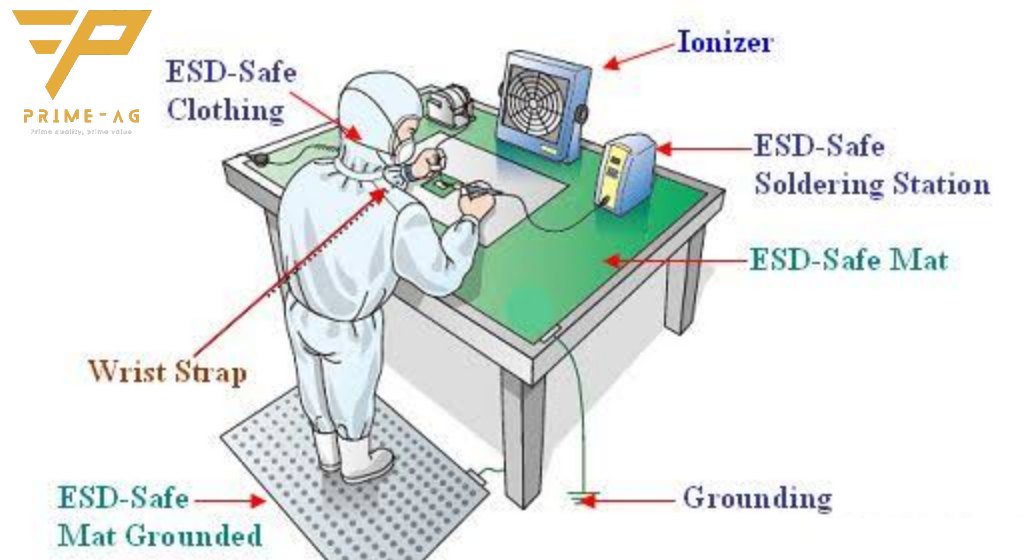
Grounding only drains charge from conductors such as metal rollers and the machine frame. Plastic film does not conduct, so the charge stays put on the surface. An ionizing bar emits positive and negative ions; ions of opposite polarity are attracted to the film and neutralize the charge. The principle is the same as an ionizing blower on an electronics bench, explained in the article choosing an ionizing blower, ionizing gun or ionizing bar. Copper tinsel and carbon brushes help partly at low speed, but cannot neutralize low charge levels and are unstable when the film runs fast.
3. Where to install ionizing bars
- Right after the unwind roll: handles charge generated as the film leaves the roll.
- Before the printing or laminating station: so ink is not attracted off-target and dust is not drawn onto the film.
- Before the stacker and before the finished-roll rewinder: cut sheets do not stick together and rolls do not misalign.
The bar should be slightly longer than the film width to cover both edges. The distance from bar to film and the bar type (AC, DC, pulsed) follow the manufacturer’s datasheet; too far reduces effectiveness, too close to the metal frame and the ions are lost to it. Static eliminator bars and the KESD KE-36X models in 300–1,500 mm are in PRIMEAG’s ionizing blowers, ionizing guns and ionizing bars range.
4. Combine with dust removal
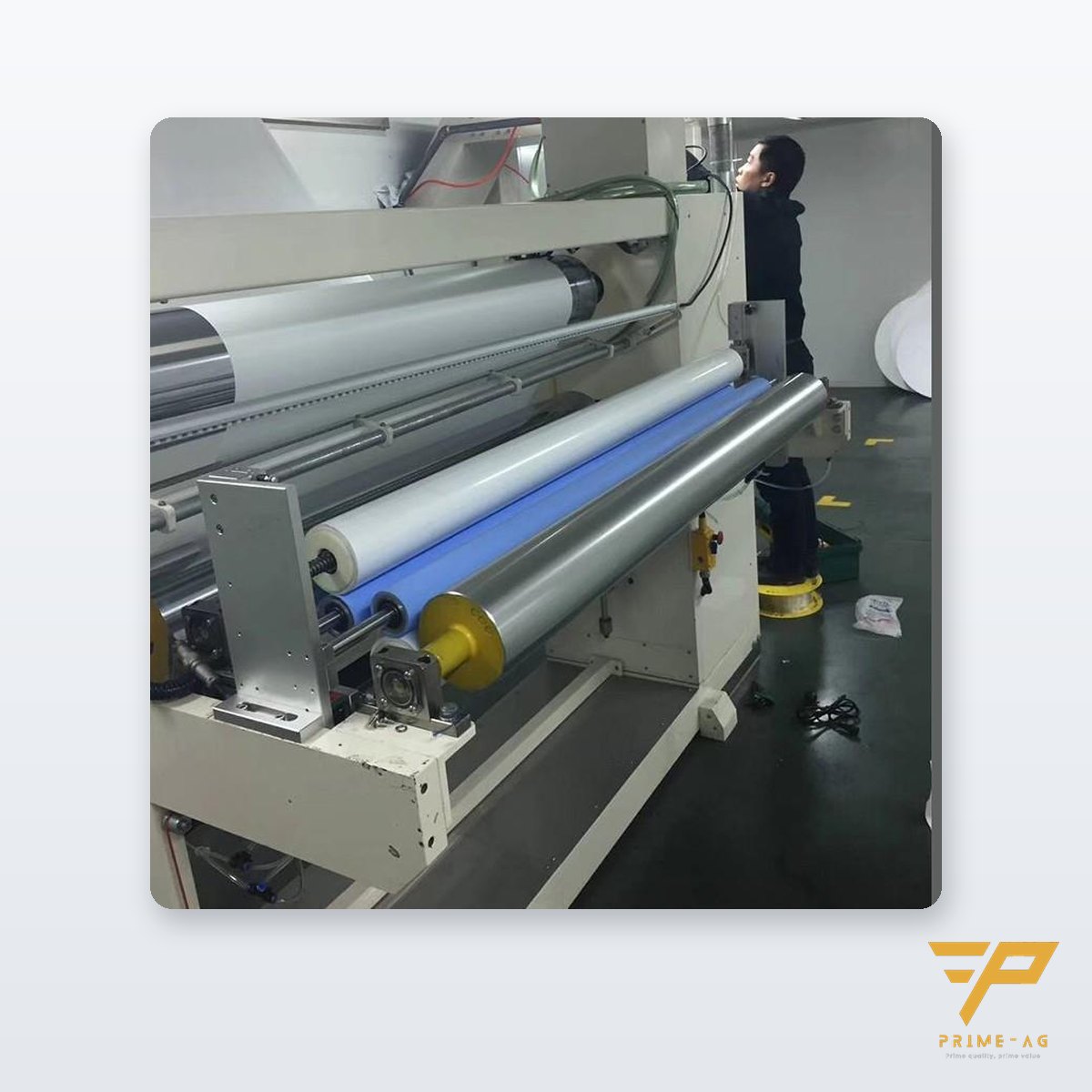
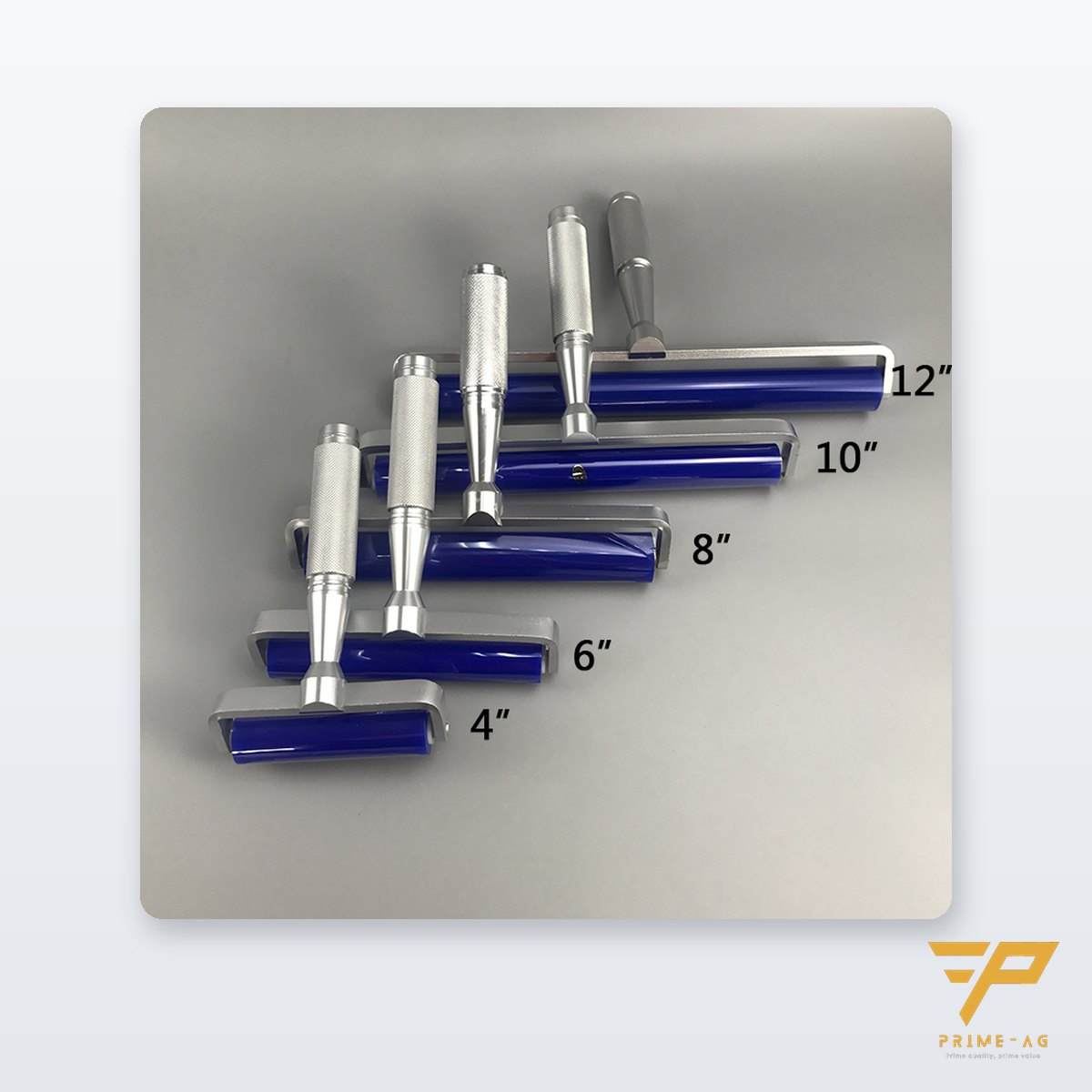
Ionizing bars keep dust from being re-attracted, but dust that has already settled must be removed. Before the printing and laminating stations, use a dust removal machine with a PP sticky roll for dust removal machines cut to the roller width; for small sheets and manual inspection tables, use a silicone roller with stainless handle.
Quick selection table
| Symptom | Where to treat | Equipment |
|---|---|---|
| Ink smearing, streaks, print spots | Before the print station | Ionizing bar across the width + dust removal |
| Film sheets sticking together at the stacker | Before the cutter, before the stacker | Ionizing bar |
| Misaligned finished rolls, operators getting shocks | Before the rewinder | Ionizing bar |
| Dust on the film before laminating | Before the laminating station | Dust removal machine + ionizing bar |
| Local neutralization, narrow gaps | Manual handling points | Compressed-air ionizing gun |
Measure, install, measure again
- Measure the film surface voltage at each suspect point with a static voltage meter (0–20 kV range), recording machine speed and room humidity.
- Install an ionizing bar at the point with the highest voltage first, then measure again after installation.
- Clean the bar’s emitter pins with IPA on a schedule; ink and dust on the pins gradually reduce effectiveness.
Ionizing bars are ordered to width, delivered in 5–7 working days; stocked meters are delivered within 24–48 hours in Ho Chi Minh City, Binh Duong and Dong Nai. Equipment carries a 12-month warranty. Installation distance and decay time data per each model’s datasheet.
PRIMEAG can handle the “measure before” step: free on-site surface resistance measurement for the printing area, film cutting area and roll store, with photos of the measuring points in the PDF report.
Frequently asked questions
Does grounding the printing machine rollers remove static from the film? No. Grounding only drains charge from conductors; plastic film is an insulator, so an ionizing bar is needed to neutralize the charge on the film surface.
Where should static eliminator bars be installed on printing and winding machines? Across the film width, after the unwind roll, before the printing or laminating station, and before the stacker or finished-roll rewinder, prioritizing the point with the highest measured voltage.
How do we know the ionizing bar is working? Measure the film surface voltage with a static meter before and after installation, at the same machine speed and room humidity, then re-measure periodically.
Updated: 28/10/2026 — PRIMEAG engineering team
Mon–Sat, 8:00–17:00 (GMT+7) · Phone/Zalo: +84 906 108 292 · Email: info@primeag.vn
Start where it suits you: Free technical advice · Send a drawing or layout · Get a quote within 30 minutes
Written by the PRIMEAG engineering team
Updated: 2026-10-23