
Stocked item: delivered in 1–2 working days in Ho Chi Minh City, Binh Duong and Dong Nai; free delivery for orders from VND 20,000,000; defective items exchanged within 7 days. Shipping & return policy
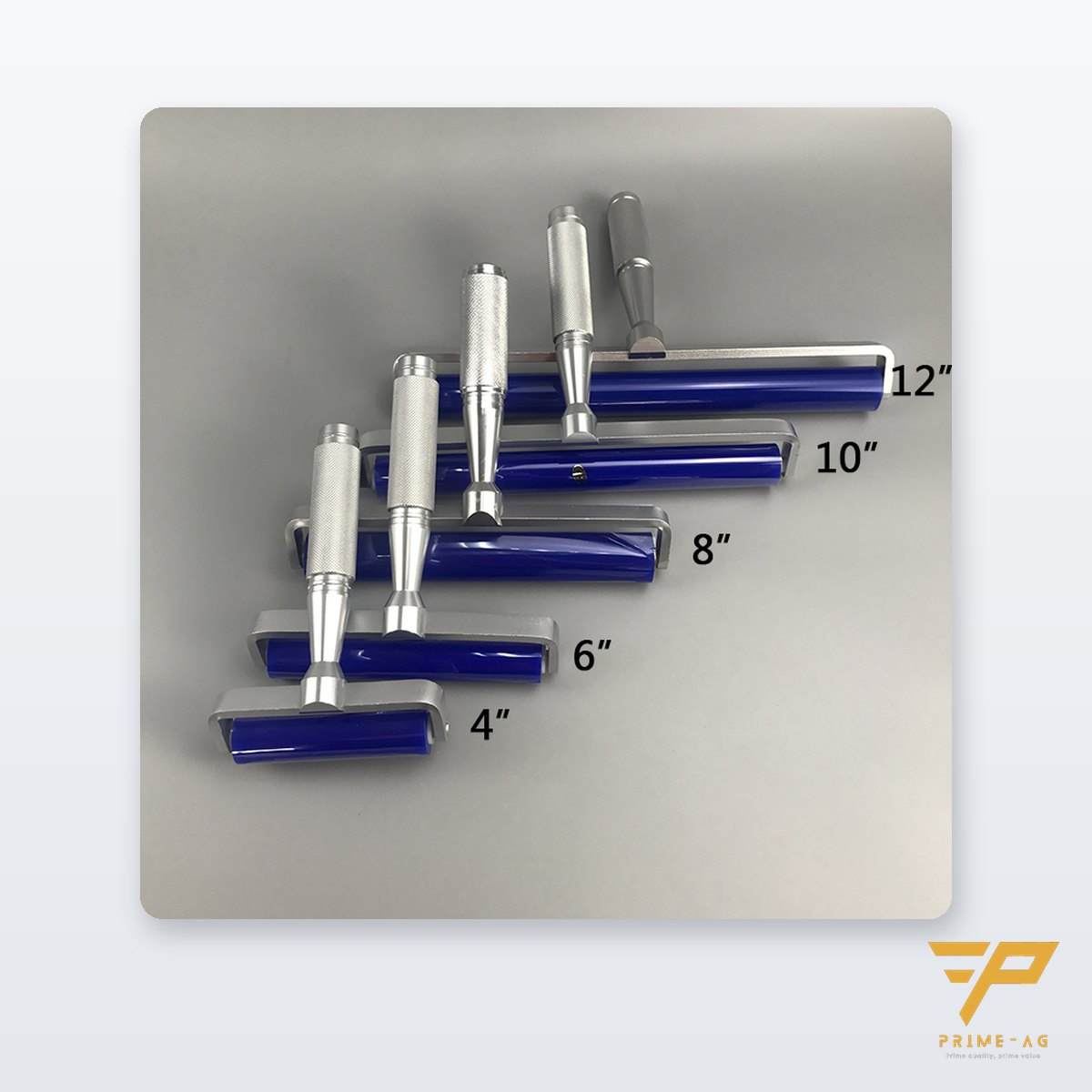
Product code: SR-12 · Specification: Silicone sticky roller with stainless steel handle
Silicone Cleaning Roller
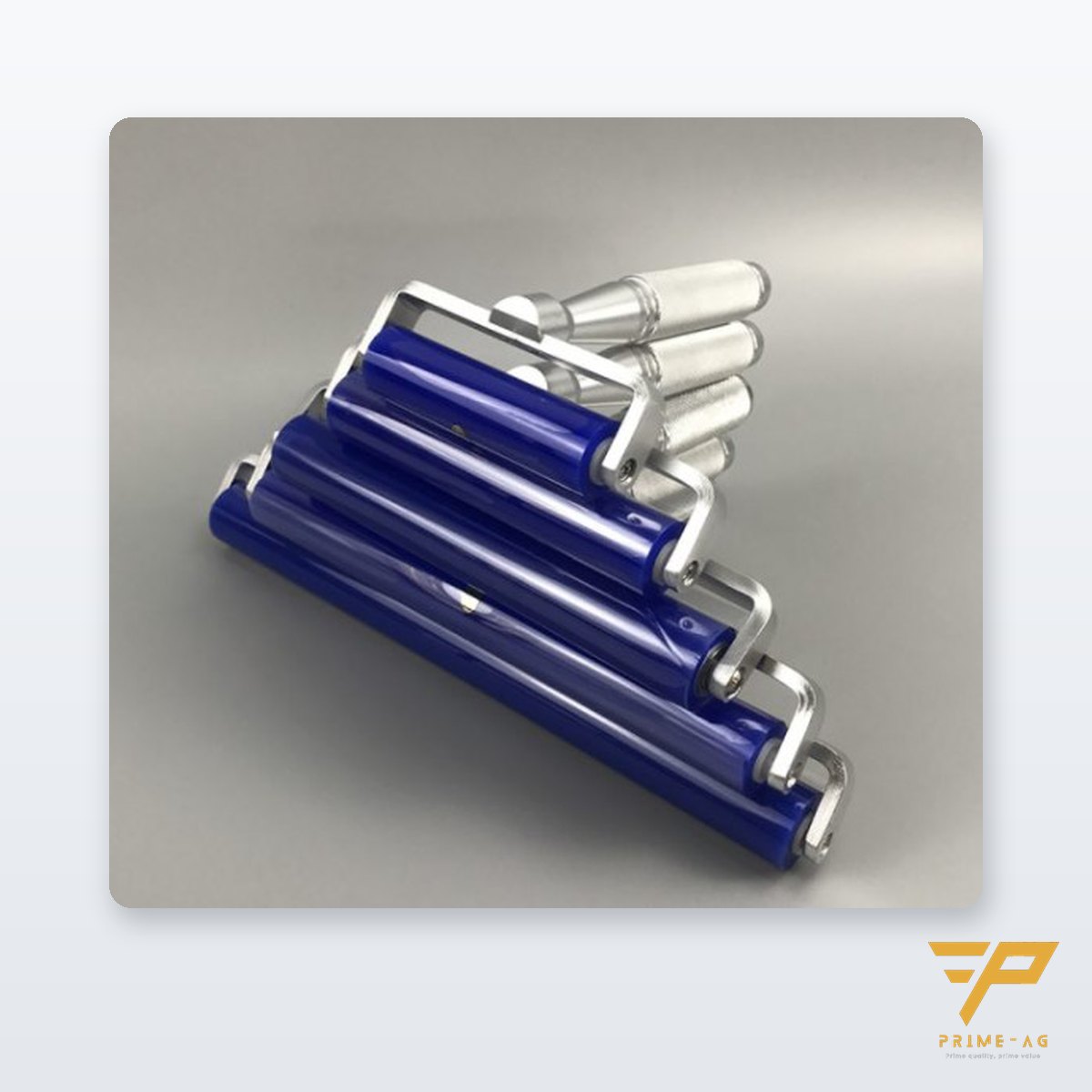
Equivalent names: “12 inch silicone roller”, “PCB dust cleaning roller” — difference: the silicone roller is reusable thousands of times with a DCR pad, has a replaceable core and a stainless steel handle.
Most common sizes: 6/8/12″.
Delivery: in stock, delivered within 24–48 hours (Ho Chi Minh City, Binh Duong, Dong Nai); lead time for bulk orders is confirmed with the quotation.
| Item | Value |
|---|---|
| Material | Silicone core (standard version; ESD version on request), stainless steel 304 handle, plastic wheels |
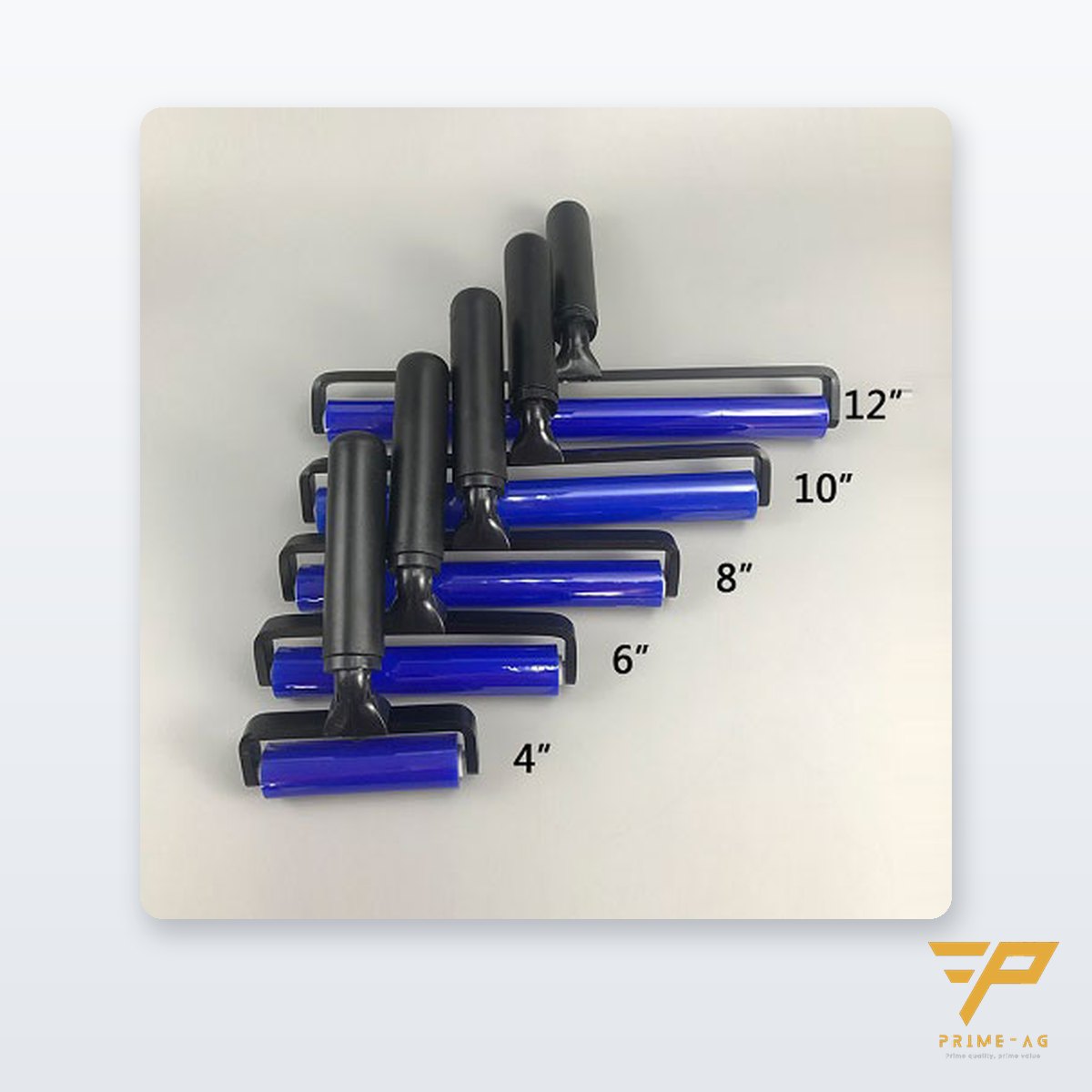
| Width | 6 / 8 / 12 in (150–300 mm); ask before ordering 10 in width |
| Tack | Low (silicone), captures dust ≥ 5 µm |
| ESD | ESD version made to order, with the supplier’s resistance test sheet |
| Service life | Thousands of passes; replace the core when it glazes |
| Packing | 1 pc/box |
| MOQ | 1 pc |
Selection by use
– Hand rolling PCBs, glass, film before lamination → silicone roller + DCR pad.
– Large-panel dust-cleaning machines → PP rolls to machine width (1300/1480/1700 — see SR-1700).
– Clothing, cabinets, floors → regular paper sticky lint roller (ordered separately).
– Trays/bins, uneven surfaces → wipers + IPA.
Per-lot documents: tack test sheet, RoHS; 1 pc/1 roll sample for trial runs.
Recurring orders: price held for 6 months, minimum stock of 10 rolls in frequently used widths.
FAQ
– How do I clean a silicone roller? — Roll it over a DCR pad; if it is oily, wipe with a cleanroom wiper moistened with IPA diluted in water (or wash in warm water + mild soap), and let it air dry.
– How often should the silicone core be replaced? — When the surface glazes and no longer picks up (6–12 months), replace the core and keep the handle.
– Apart from width, how do 1300 and 1480 rolls differ? — They don’t; choose by machine shaft length, and measure the shaft before ordering.
– Are there pre-perforated rolls that need no knife? — Yes (such as SR-1700), order in advance.
The contact cleaning principle
A silicone roller cleans by a “tack ladder”: the product surface is the least tacky, the roller’s elastomer core is tackier, and the DCR adhesive pad is the tackiest. As it rolls, the high-surface-energy elastomer pulls particles, fibres and debris off the product. The roller is then rolled over the DCR pad, the dust transfers to the adhesive layer, and the roller is clean again for further use.
The difference from a regular paper sticky roller: the elastomer core has no adhesive layer, so it leaves practically no adhesive residue on the product. According to Teknek – the developer of contact cleaning systems – a standard hand roller picks up particles down to about 1 µm. Some European manufacturers (METOCLEAN) state about 0.5 µm. PRIMEAG states dust capture ≥ 5 µm for SR-12 as a safe figure for real-world use, with oily dust and shop-floor humidity.
Materials and construction
- Silicone elastomer core: its inherent tack depends on hardness. Softer cores are tackier; harder cores last longer and are less likely to grab thin films. For example, METOCLEAN recommends a core of about 25 Shore for hard surfaces such as glass, laminate and PCBs; very thin films and foils use medium- or low-tack versions, or the ESD version.
- “Free-silicone-free” silicone: reputable makers stress that the core contains no unbound silicone. This matters if painting, coating, plating or adhesive bonding follows the rolling step.
- Shaft and bearings at both ends: the roller turns smoothly without the shaft rubbing, minimising self-generated wear debris.
- Stainless steel 304 handle: rust-free, can be wiped with alcohol, suitable for cleanrooms.
The matching DCR pad
A DCR pad (Dust Cleaning Roller pad) is a stack of cleanroom paper or film sheets coated with acrylic adhesive; each sheet is peeled off once it is full of dust. The pad’s tack is matched to the tack of the core: strong enough to “strip” dust from the roller without damaging the elastomer surface. METOCLEAN warns not to use adhesive tape or ordinary self-adhesive film to clean the roller — adhesive residue can chemically damage the elastomer layer.
Correct rolling procedure
- Before each shift, roll the roller over a fresh DCR pad to clean it completely.
- Place the product on a flat surface; roll in one direction with light, even pressure, overlapping the passes.
- Do not roll back and forth over the same spot once the roller is dirty — dust can be redeposited on the surface.
- After each product or a few passes, roll over the DCR pad again; peel off the sheet when its adhesive surface is fully covered with dust.
- Rest the roller on a stand or in a box; never lay the elastomer face down on the bench.
Static during rolling
Rolling and separating the roller from films, PET or polyimide is a contact–separation process that readily charges insulating materials. Teknek developed its NanoCleen line specifically for thin, charge-prone materials and fits a static-elimination bar after the roller assembly on its machines. For manual work in an EPA:
- The operator wears a grounded wrist strap; use the conductive-core (ESD) version when rolling boards and components.
- For film, glass and insulating plastic sheets, also use an ionizing blower or ionizing bar — according to ESDA, insulators cannot dissipate charge through grounding and must be neutralised by ionisation.
Cleaning, storage and service life
- Besides rolling over the DCR pad, wipe the core periodically with a cleanroom wiper moistened with IPA diluted in water (Teknek and METOCLEAN both use IPA/water wipes to restore the elastomer surface and remove fingerprints and oil marks).
- Oil glazes the core surface and reduces tack faster than dry dust. Do not touch the core with bare hands.
- Store in a closed box or bag, away from dust and sunlight.
- When wiping no longer restores the core’s tack, simply replace the core and keep the handle.
Common mistakes
- Using masking tape or clear tape to “strip” dust off the roller instead of a DCR pad.
- Sharing one roller between dirty areas (cutting, grinding) and clean areas.
- Rolling over surfaces still wet with solvent or undried paint.
- Choosing an overly tacky core for thin film — the film gets lifted, wrinkles or becomes heavily charged.
Technical references
- Cleanroom Technology – Teknek products keep contact surfaces clean
- Labels & Labeling – Teknek contact cleaning principle (elastomer roller + adhesive roll)
- METOCLEAN – DCR hand roller HDHR-A12 (hardness, DTS pads, cleaning method)
- Simco-Ion – Teknek elastomer rollers, adhesives & Tekwipes
- ESDA – Fundamentals of ESD, Part 3 (insulators and ionization)
Price: from 290,000 VND (excl. 8% VAT).
REQUEST A QUOTE: send the machine width/core diameter or a photo of the old roll, and the number of pieces/rolls per month — PRIMEAG quotes within 30 minutes.
Hotline/Zalo +84 906 108 292 · info@primeag.vn
Written by the PRIMEAG engineering team.
Related guides:Dust Nibs in PU Wood Finishes: Find and Block…
Related products:Paper Sticky Lint Rollers & HandlesPP Sticky Rolls for Dust-Removal Roller Machines
Updated: 2026-10-24
Giao tận nhà máy TP.HCM, Bình Dương, Đồng Nai, Long An, Tây Ninh · Kèm biên bản đo điện trở ESD theo lô · Hotline 0906 108 292