
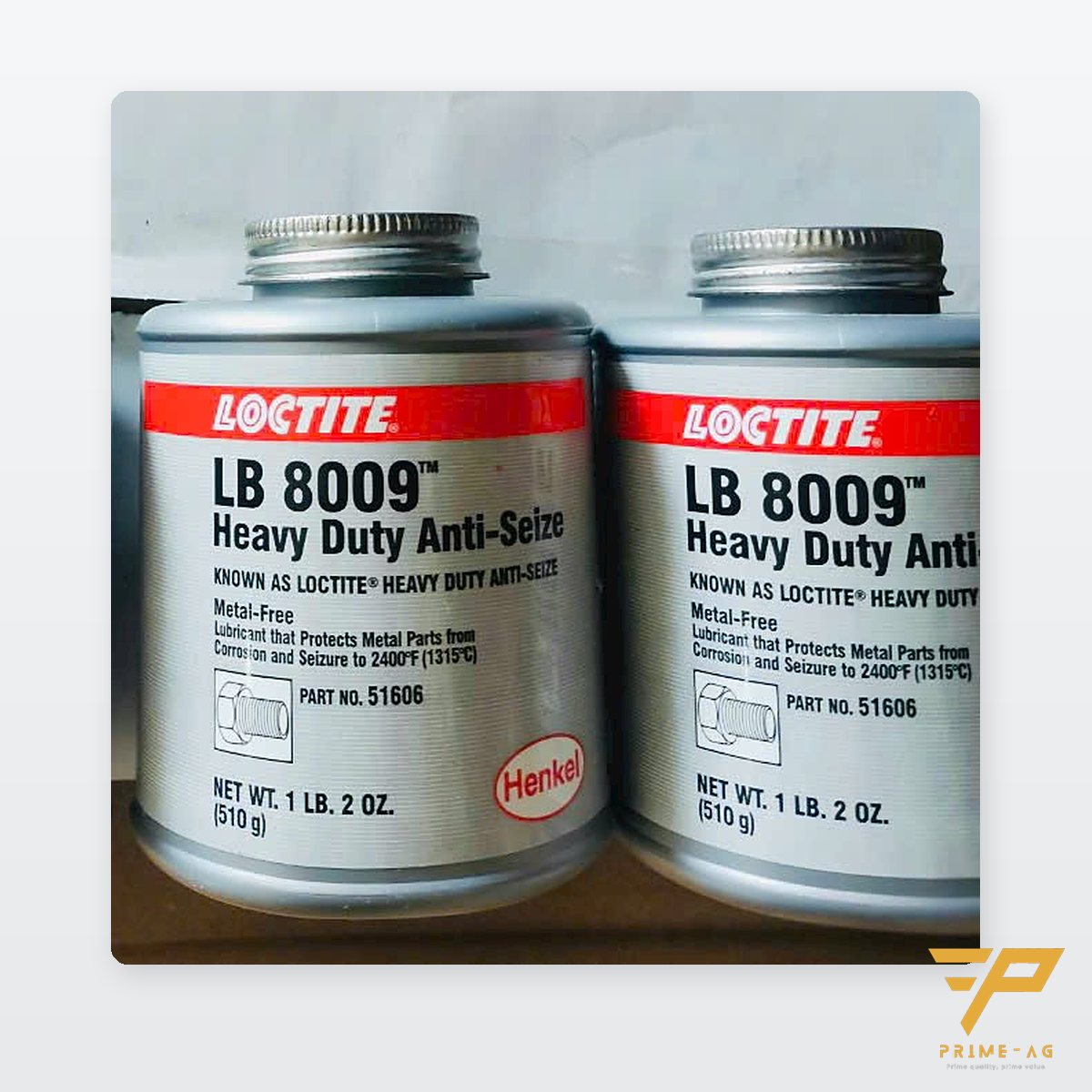
A stainless steel bolt in your Vietnam factory that seizes halfway is galling: two threads of the same metal stick together when the thread is dry, dirty or tightened too fast. How to stop it: clean the thread, brush a thin coat of anti-seize onto the male thread and tighten slowly. For stainless steel and aluminium, PRIMEAG recommends metal-free Loctite LB 8009, rated up to 1,315 °C.
A familiar scene for the maintenance crew: a stainless nut runs smoothly for a few turns, then stiffens, and forcing it locks it solid. On removal the thread tears off in flakes, and in the end the bolt has to be cut and the whole assembly replaced. The fault is common on stainless pipe flanges, aluminium frames and covers of steam equipment.
- Root cause: metal sticking to metal; stainless–stainless and aluminium–aluminium pairs are the most prone.
- Contributing factors: high-speed air guns, dry threads, threads with burrs or dust.
- Prevention: clean threads, a thin layer of anti-seize covering the thread roots, torque raised gradually.
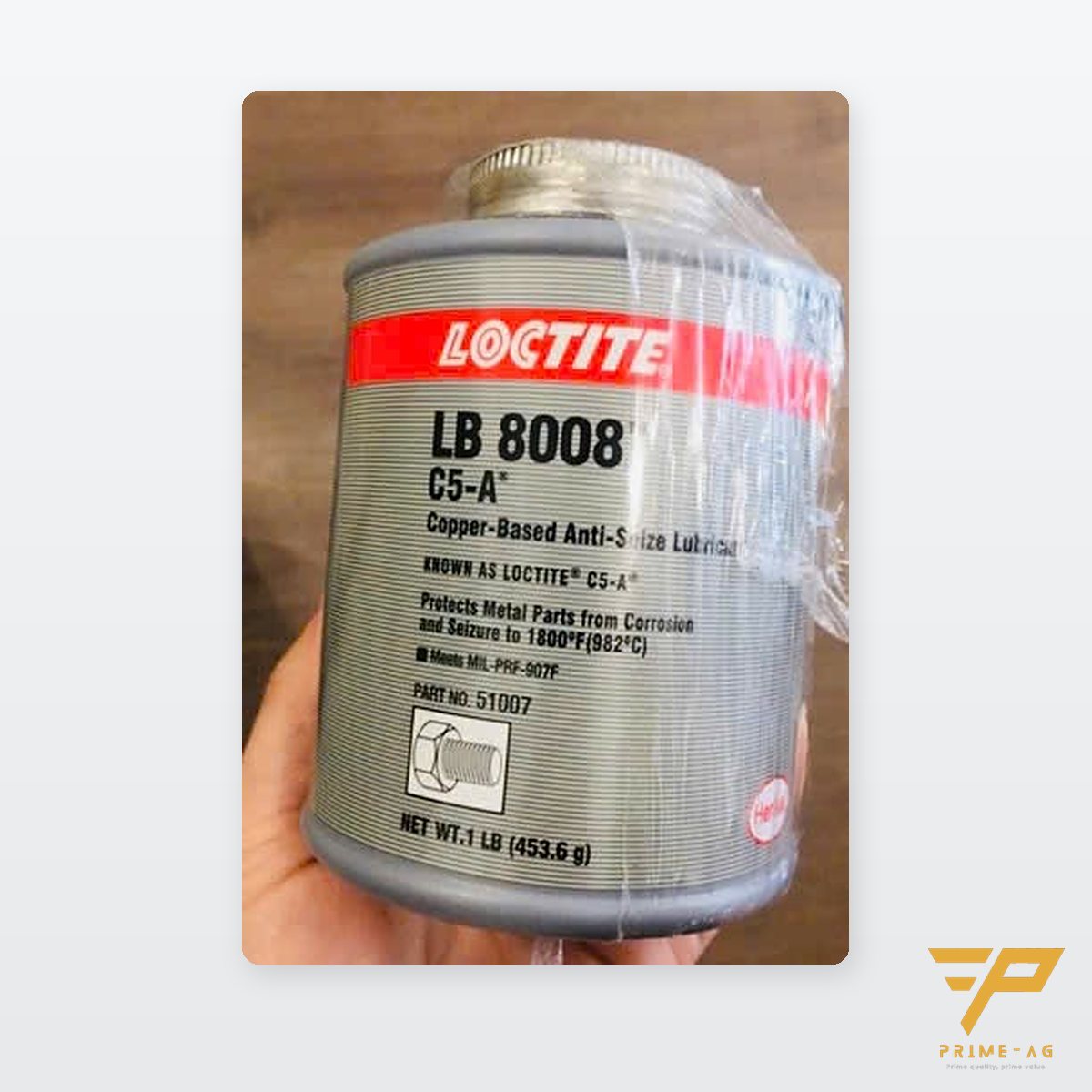
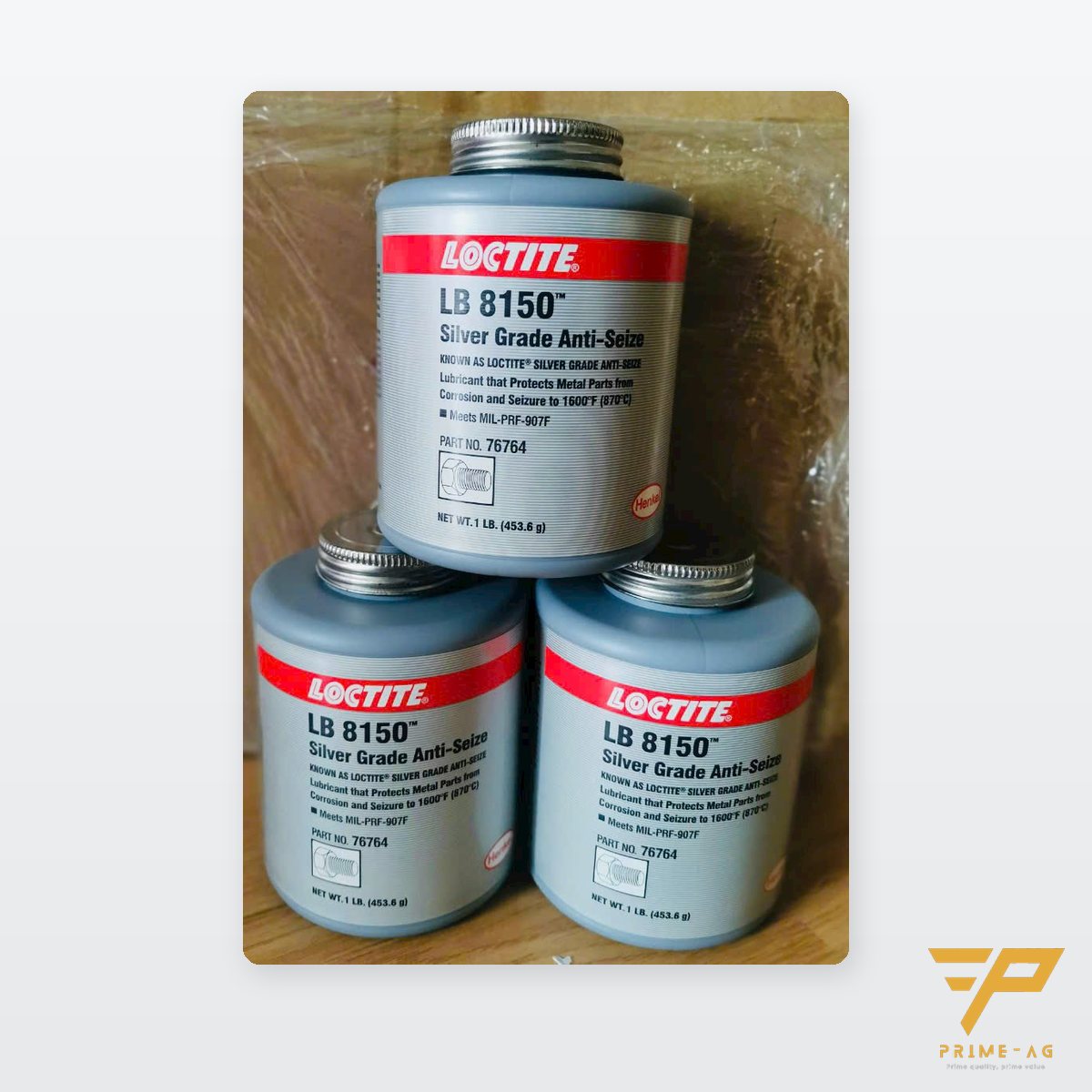
- Choosing the code: LB 8009 for stainless steel and aluminium; LB 8008 C5-A for carbon steel in very hot zones; LB 8150 for general maintenance.
1. Why stainless bolts seize: check the causes in order
- Same-metal pairing. Stainless steel and aluminium are protected by a very thin oxide layer. When two thread flanks slide under pressure this layer breaks, bare metal touches bare metal and the surfaces weld together.
- Tightening too fast. Air guns and high-speed nutrunners heat the thread quickly, so it seizes sooner.
- Dirty threads with burrs. Dust, chips and burrs are where the scoring starts.
- Dry threads. There is no layer to stop the two metal surfaces from touching directly.
- Thermal cycling and steam. The joint heats and cools repeatedly, with moisture and rust on top, so it becomes very hard to undo later.
2. On-the-spot fix: clean, lubricate, tighten slowly
Brush the thread clean and wipe off all old oil and loose rust. If the thread has burrs or is already scored, replace the bolt instead of trying to reuse it. Brush a thin coat of Loctite anti-seize onto the male thread, covering the thread roots; the female thread does not need coating. A coat that is too thick only collects dust. Tighten by hand or slow the nutrunner down, raising torque evenly to the end. If the design allows, switching the bolt or nut to a different material grade also reduces the risk of seizing.
3. Choosing the right anti-seize code
| Code | Solid base | Max. temperature (per label) | Suitable for | Pack size |
|---|---|---|---|---|
| LB 8009 Heavy Duty | Metal-free: graphite + calcium fluoride | 1,315 °C | Stainless steel, aluminium, soft metals; where metal powder is not allowed | 510 g (P/N 51606) |
| LB 8008 C5-A | Copper + graphite | 982 °C | Carbon steel and cast iron on exhaust pipes, furnace flanges, thermal equipment | 453.6 g (P/N 51007) |
| LB 8150 Silver Grade | Aluminium + graphite + EP additives | 870 °C | General maintenance: bolts, studs, pins, bushings, press fits | 453.6 g (P/N 76764) |
For stainless and aluminium threads, LB 8009 is the safe choice because it contains no copper or aluminium. LB 8008 and LB 8150 state MIL-PRF-907F compliance on the label. All three codes are Henkel products with CO per lot; the cans have a lid with a brush, and orders start from 1 can.
4. Two points to note before applying
Clamp load changes for the same torque
Anti-seize reduces thread friction. At the same torque, the bolt clamp load will be higher than when tightened dry. Joints with strictly specified torque values must be adjusted according to the equipment’s technical instructions, not kept at the old figure.
Anti-seize and threadlocking are opposite jobs
Anti-seize makes disassembly easy, while threadlocker keeps the thread from loosening by itself. Threads under vibration need Loctite threadlocker instead of anti-seize; how to choose by locking strength and thread size is covered in the guide choosing a threadlocker for bolts that loosen under vibration. Pipe threads that must be gas-tight and water-tight are a job for pipe thread and flange sealants.
Self-check before assembling stainless threads
- Threads clean, free of chips and burrs.
- Anti-seize brushed onto the male thread in a thin coat covering the roots.
- Nutrunner slowed down, or final tightening done by hand.
- Joints with specified torque recalculated for lubricated threads.
Frequently asked questions
- What should I do when a stainless steel bolt seizes halfway? — Stop tightening immediately, because the harder you force it the more the thread tears. Usually the bolt has to be removed or cut off; inspect the female thread, fit a new bolt and reassemble with a clean thread and a thin coat of anti-seize.
- What is the difference between anti-seize and ordinary grease? — Ordinary grease stops working when it gets hot. Anti-seize contains solids such as copper, aluminium or graphite that keep metal from sticking to metal even after the base oil has evaporated.
- Does PRIMEAG sell single tins of Loctite anti-seize in Vietnam? — Yes. All three codes LB 8009, LB 8008 C5-A and LB 8150 can be ordered from 1 tin; they are Henkel products with CO per lot.
Email: info@primeag.vn · Phone/Zalo: +84 906 108 292
Written by the PRIMEAG engineering team
Updated: 2026-10-28