
For 900–1,000 mm high benches in Vietnam, choose an ESD stool with a tall gas lift and a foot ring, or a chrome-plated ring base, so the knees bend at about 90° and the feet never dangle. Use conductive glides for fixed seating and casters only where the operator must roll back and swivel; PRIMEAG measures seat-to-ground resistance per batch, below 1×10⁹ Ω.
An assembly line switches to 900–1,000 mm high benches so operators can alternate between standing and sitting, but the stools are still the ones used at 750 mm benches. A few weeks later the team leader reports: seated operators have to stand on tiptoe, the stools roll back on their own, and in the ESD audit some stools fail the limit.
- 900–1,000 mm benches: tall gas lift, always with a footrest.
- Seated in one place: glides; casters only when rolling and swiveling is needed.
- Glides, casters and base are all conductive versions, placed on an ESD floor.
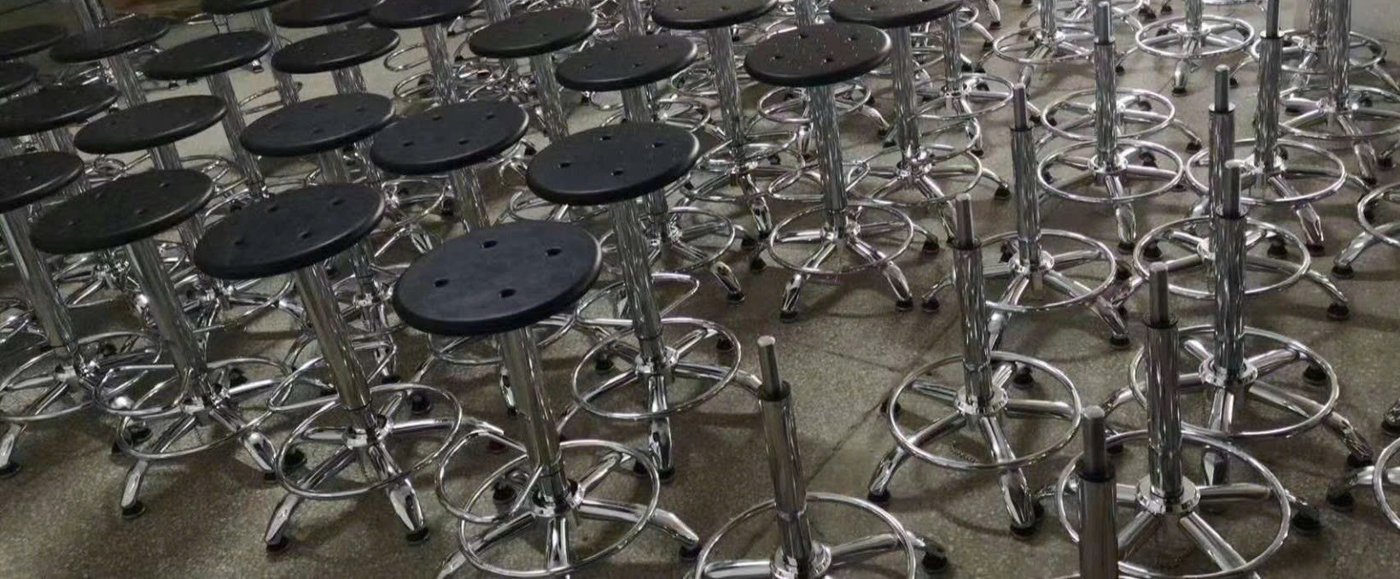
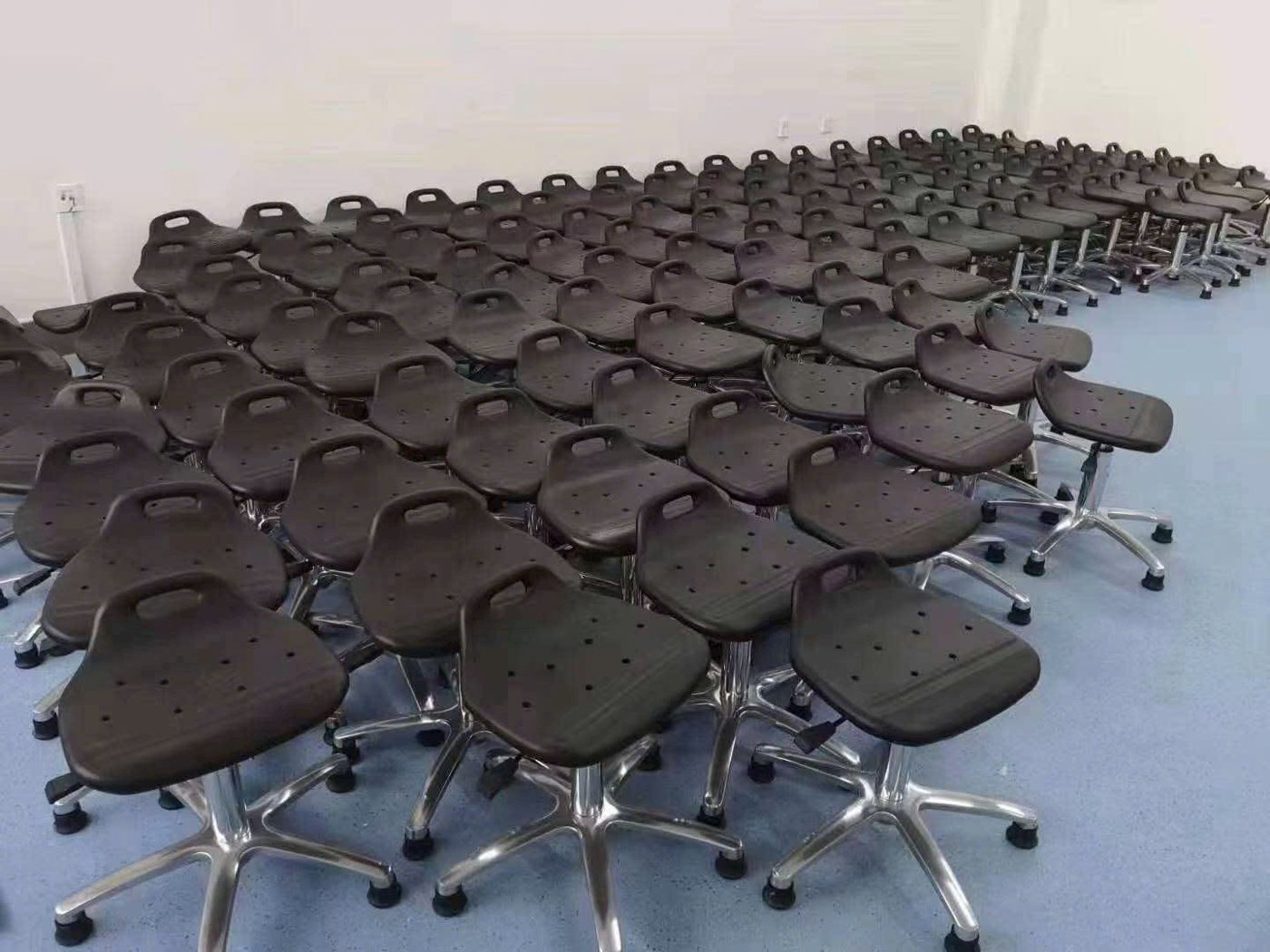
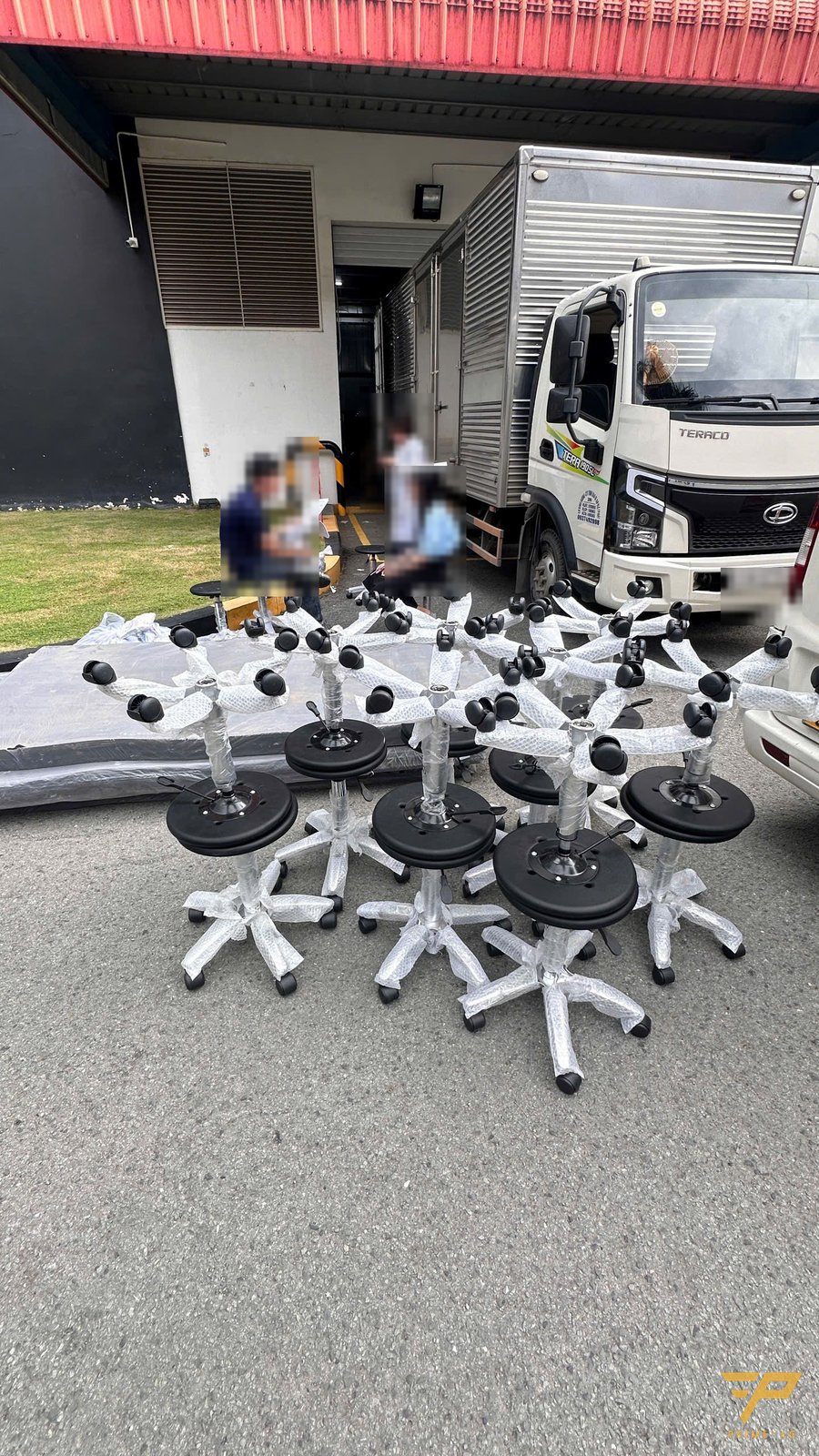
ESD stools for high benches: check three faults in order
- Dangling feet: the seat is raised so the elbows are level with the bench, but the feet rest on nothing. The seat edge presses into the back of the thighs.
- Rolling stool: a tall stool fitted with casters rolls back every time the operator pushes off to stand up, especially on slippery PVC floors.
- Lost ground path: the discharge path from seat through gas lift, base and glides to the floor is broken: worn glides, casters replaced with standard ones, a standard plastic cover over the gas lift, or a stool standing on ceramic tiles.
Choosing the base and footrest
Tall gas lift with foot ring
The standard configuration for sit-stand benches. The ESD stool with PU seat is available with a cast aluminum base or a 5-star chrome-plated steel base with foot ring.
Chrome-plated steel ring base
A horizontal ring welded to the base, suited to stools that rarely move on long lines. The round-base version with foot ring has no casters and suits inspection counters or areas where the floor must stay clean.
Glides or casters
Stools are often dragged, so glides wear faster than casters; once the conductive layer wears off, resistance rises.
Selection table by position
| Position | Bench height | Base type | Glides/casters | ESD note |
|---|---|---|---|---|
| Assembly line, fixed seating | 900–1,000 mm | Tall gas lift + foot ring, or chrome-plated ring base | Conductive glides | Check glide wear |
| Rolling back and swiveling between two machines | 900–1,000 mm | 5-star cast aluminum with foot ring (confirm when quoting) | Conductive casters | Replace with the correct caster type, then re-measure |
| Inspection counter, clean-floor area | 900–1,000 mm | Round base with foot ring | No casters | Measure where it stands |
Seat to ground Rg < 1×10⁹ Ω (ANSI/ESD S20.20); qualify samples per STM12.1 including the foot ring, and check periodically per TR53.
Keeping the ground path
The stool discharges through conductive glides or casters into a grounded ESD floor or mat. On an ordinary floor it does nothing. Do not add foam pads or fabric seat covers over the PU seat; clean with IPA and avoid silicone-based polishes.
Stainless steel, FRP and saddle chairs are not part of the ESD range; do not use them in an EPA.
When to switch to a chair with backrest
A stool gives no lower-back support. If operators sit for almost the whole shift, choose an ESD chair with backrest; the M11, M12 and M13 series all have a tall gas lift version with foot ring.
For choosing bench height see standing and sitting bench heights for workstations. If a chair fails measurement, troubleshoot with ESD chair fails the resistance test.
Quick self-check
- Measure the bench top height at each position.
- Have someone sit on it: elbows level with the bench, feet resting fully on the foot ring.
- Turn the stool over and check whether the glides, casters and gas lift cover are conductive versions.
- Invite PRIMEAG to your factory in Ho Chi Minh City, Binh Duong or Dong Nai (Mon–Sat) to measure the resistance of your chairs, floors and benches free of charge, including chairs bought elsewhere, using a TR1800 meter with 5 lb electrodes; no purchase required, and within 3–5 working days you receive a PDF with readings for each position and photos, for reference only.
- Send the quantity, bench height, seat, base and glide type via the quote form: orders from 2 stools, quote within 30 minutes, chairs carry a 12-month warranty.
Frequently asked questions
Does a 1 m high bench need a different ESD stool than a 900 mm bench? It is still the tall gas lift group; have someone sit on it to check that the feet rest fully on the foot ring.
Should a tall ESD stool have casters? Only when the operator must move constantly; when seated in one place, fixed glides roll away less.
If operators sit on ESD chairs, can they skip the wrist strap? No. The chair is only one discharge path through the ESD floor; anyone handling static-sensitive components must still wear a grounded wrist strap.
Updated: 01/11/2026 — PRIMEAG engineering team
Email: info@primeag.vn · Phone/Zalo: +84 906 108 292
Written by the PRIMEAG engineering team
Updated: 2026-11-01