
An ESD chair fails when the resistance from seat to ground is 1×10⁹ Ω or higher. The fault usually lies in a seat cover, a dirty PU seat, casters or glides replaced with ordinary ones, or a non-conductive floor. PRIMEAG recommends measuring segment by segment to know whether to replace casters, glides or the whole chair.
At the end-of-quarter audit in a factory in Vietnam, the QA team put red tags on a whole row of chairs on the assembly line. No need to buy a new batch yet: a rejected chair usually has only one broken link.
- A chair only passes when the whole chain seat – gas lift – base – casters – floor is conductive.
- Two split measurements show whether the fault is in the chair body or below the base.
- Replace casters and glides first; replace the chair only when the seat or body is no longer conductive.
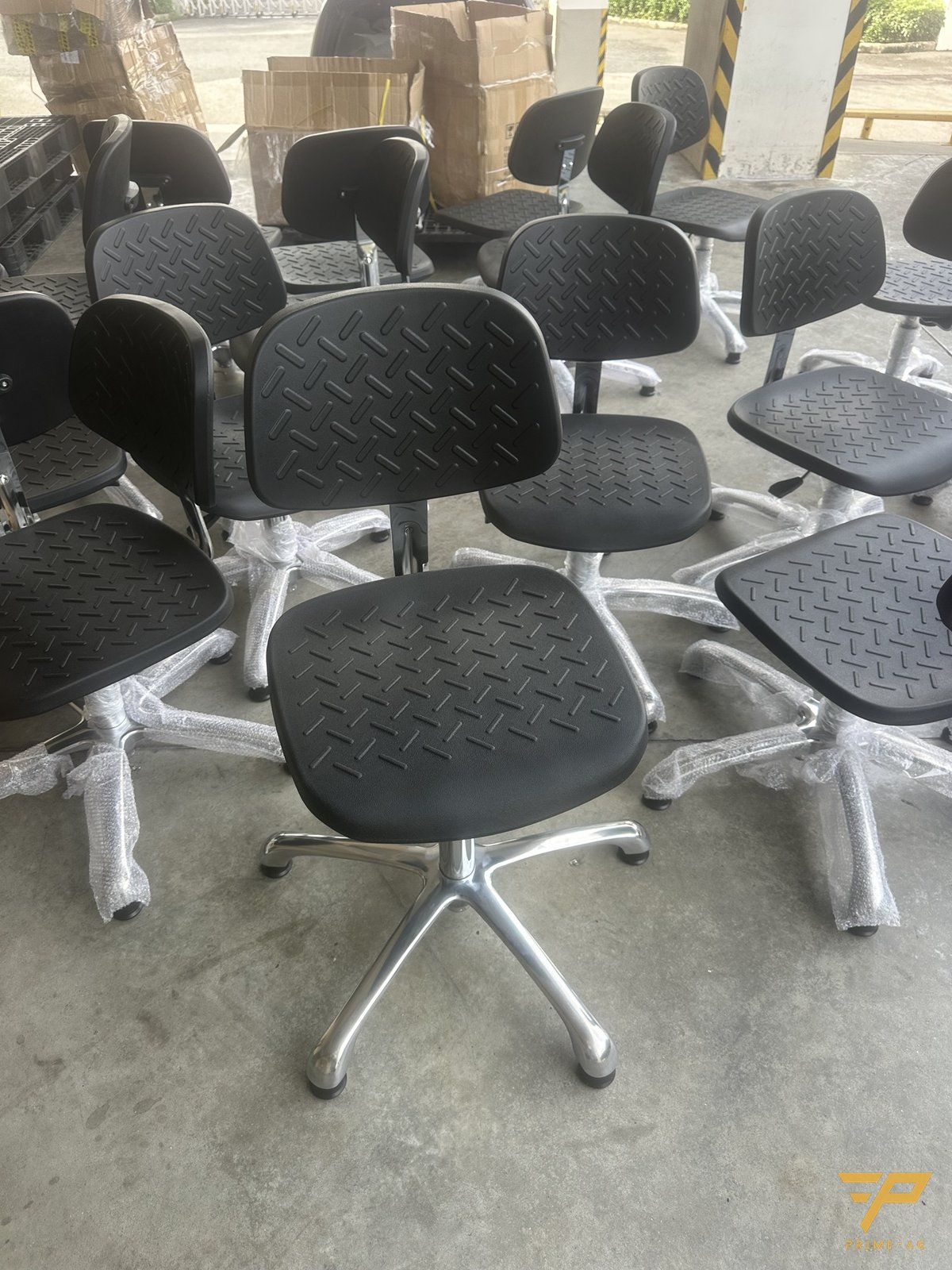
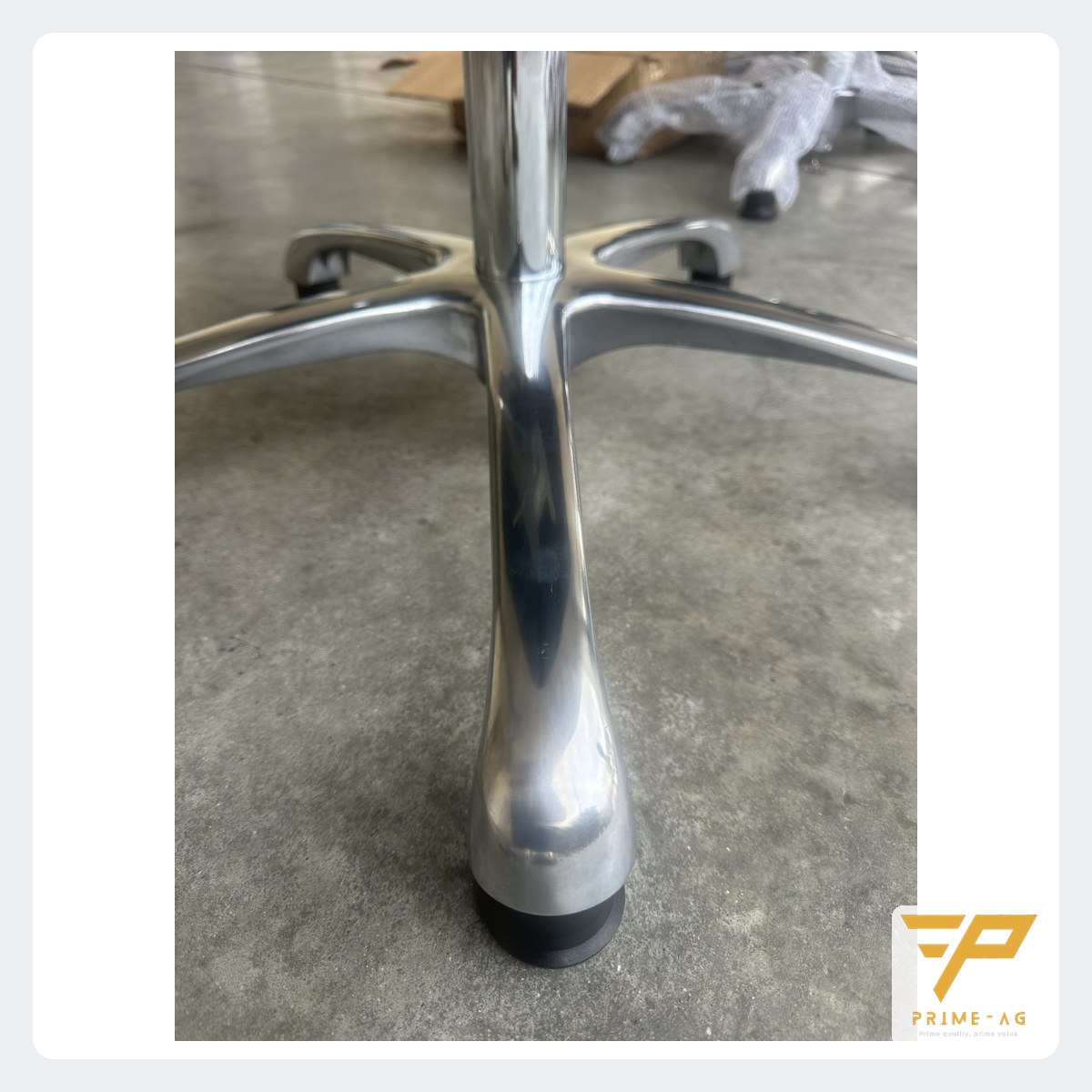
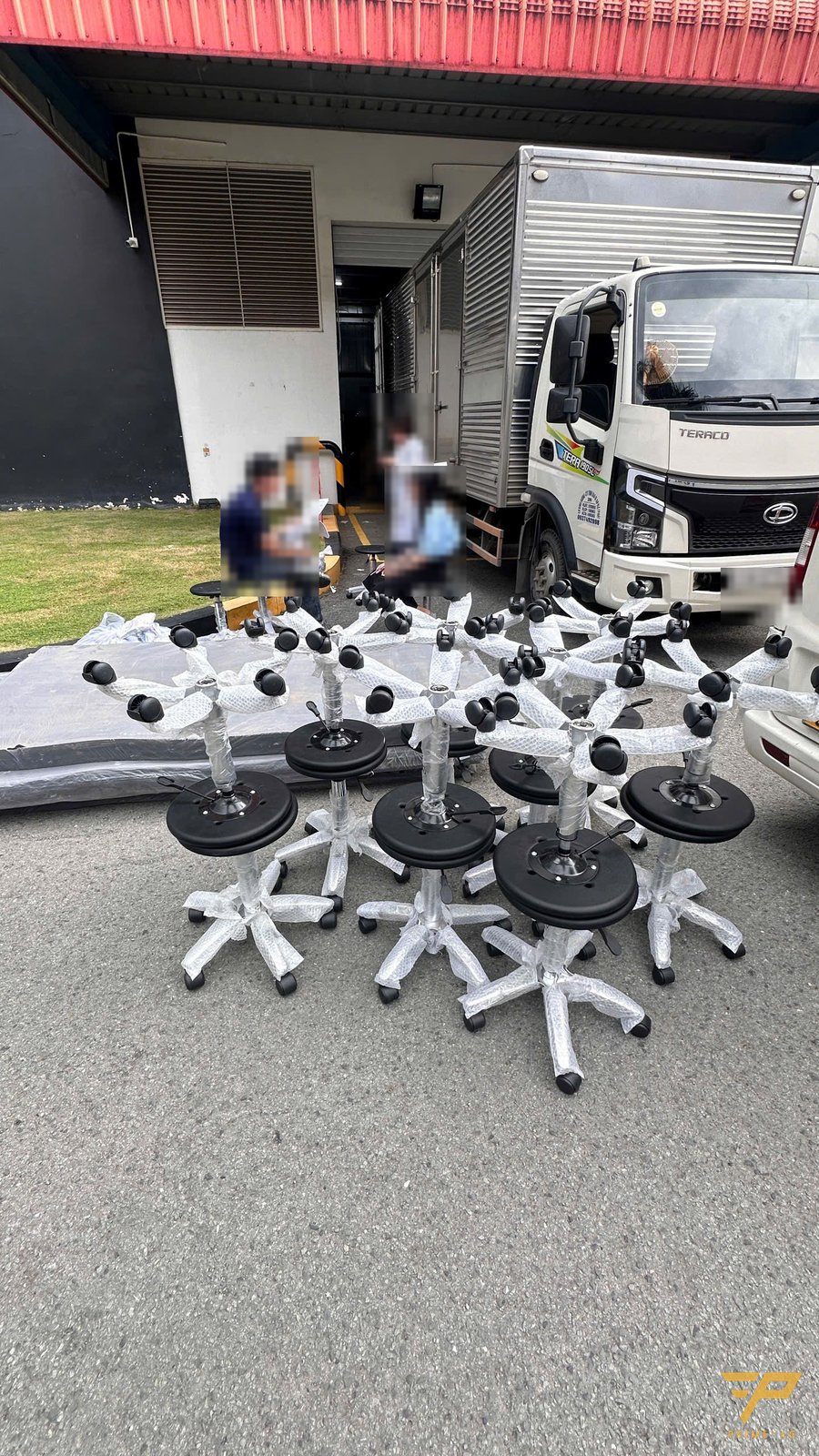
ESD chair fails the test: where the charge path runs
An ESD chair does not “absorb” charge; it provides a continuous path to ground: PU or ESD fabric seat → seat plate → gas lift → star base (aluminum, stainless steel or nylon) → conductive casters, conductive glides or drag chain → ESD floor → ground point. One insulating link breaks the whole chain.
Six things to check, in order
1. Anything covering the seat
Shipping plastic film not yet removed, chair covers, ordinary cushions brought in by operators. A common fault, fixable on the spot.
2. Dirty PU seat or cleaner residue
Hand oil, adhesive and dust build up into a film; some cleaners leave an insulating coating. Wipe clean, let dry and measure again.
3. Casters or glides replaced
Broken casters are often replaced with office-chair casters that look the same but do not conduct. Even the correct casters stop working when coated with adhesive or wrapped in thread.
4. Star base without a conductive path
A nylon base only conducts if it is made of conductive nylon or has a part connecting the gas lift to the casters; chairs assembled with mixed bases easily lose continuity here.
5. The floor underneath
Ceramic tiles, ordinary epoxy or a waxed ESD floor all block the path to ground. ESD PVC floor tiles 600×600 come in a conductive version of 10⁴–10⁶ Ω and a dissipative version of 10⁶–10⁹ Ω.
6. Measuring method
Measure to ANSI/ESD STM 12.1: a 5 lb electrode on the seat, with the chair standing on a grounded metal plate; measuring with the chair on the ESD floor tests the whole chair–floor system. Placing the electrode off-center on a plastic edge or measuring with the film still on gives wrong readings.
Isolating the fault with two split measurements
Use the TR1800 digital resistance meter with two 5 lb electrodes, measuring first seat → caster/glide, then caster/glide → floor.
| Segment | A high reading means | Fix |
|---|---|---|
| Seat → caster/glide | Fault in the chair body: covering, dirty seat, non-conductive casters/glides | Remove the covering, clean the seat, fit conductive casters or glides |
| Caster/glide → ground via floor | Non-conductive floor, wax coating, lost ground connection | Strip the wax, check the ground point, test the floor to STM 7.1 |
Replace casters, glides or the whole chair?
Conductive casters and glides can be replaced separately. Replace the chair only when the PU seat is cracked or torn, or the seat → base segment is still high after cleaning and changing casters. PRIMEAG chairs carry a 12-month warranty. The ESD chair with backrest and ESD stool ranges offer cast aluminum, chrome-plated steel or conductive nylon bases, with conductive casters or glides.
Self-check after the fix
- Log each reading with temperature and humidity.
For areas with dozens of chairs bought from several sources, PRIMEAG can visit your factory (Dong Nai, Binh Duong or Ho Chi Minh City) to measure seat-to-ground resistance of the whole row free of charge, including chairs not bought from PRIMEAG, and send a PDF with the readings and a photo of each chair, so you can see which ones only need new casters or glides (free on-site ESD resistance testing); results are for reference only and are not audit documents.
Similar faults occur with ESD trolleys failing the test after a few months, ESD shoes failing after washing and ESD bench tops failing in some zones.
Frequently asked questions
- What resistance should an ESD chair measure? — Seat to ground must be below 1×10⁹ Ω; when buying new chairs, choose materials of 10⁶–10⁹ Ω to keep a safety margin.
- How often should ESD chairs be re-tested? — ANSI/ESD S20.20 does not set a fixed test interval; high-risk areas usually test monthly or quarterly.
- Can stainless steel chairs or saddle stools replace ESD chairs? — No. Stainless steel, FRP and saddle chairs are not designed or tested to STM 12.1. If you need ESD seating, choose an ESD chair with backrest or an ESD stool.
Mon–Sat, 8:00–17:00 (GMT+7) · Phone/Zalo: +84 906 108 292 · Email: info@primeag.vn
Start where it suits you: Free technical advice · Send a drawing or layout · Get a quote within 30 minutes
Written by the PRIMEAG engineering team
Updated: 2026-10-25