
ESD shoes that FAIL after washing are usually not fully dry or are too cold, carry a film of soap or fabric softener, were washed hot, or the wearer has insulating socks or a dirty sole. PRIMEAG recommends wiping the soles, wearing the shoes for a few minutes and re-testing each foot; the person–footwear–floor limit is below 3.5×10⁷ Ω. If they still exceed it after cleaning, replace them.
The shoes pass the test gate as usual, then after the weekend wash the light turns red. Usually the sole is still fine; what has failed is another link in the chain skin → sock → insole → sole → floor.
- Re-test properly first: one foot at a time on the tester, after wearing the shoes for a few minutes.
- Usual culprits: fabric softener, soap containing silicone, hot washing, thick socks.
- Wash by type: PVC canvas shoes go in the washing machine at 40 °C; Linkworld PU-sole shoes are wiped only.
- Replace when: still failing after cleaning, sole worn smooth, cracked, or upper separating.
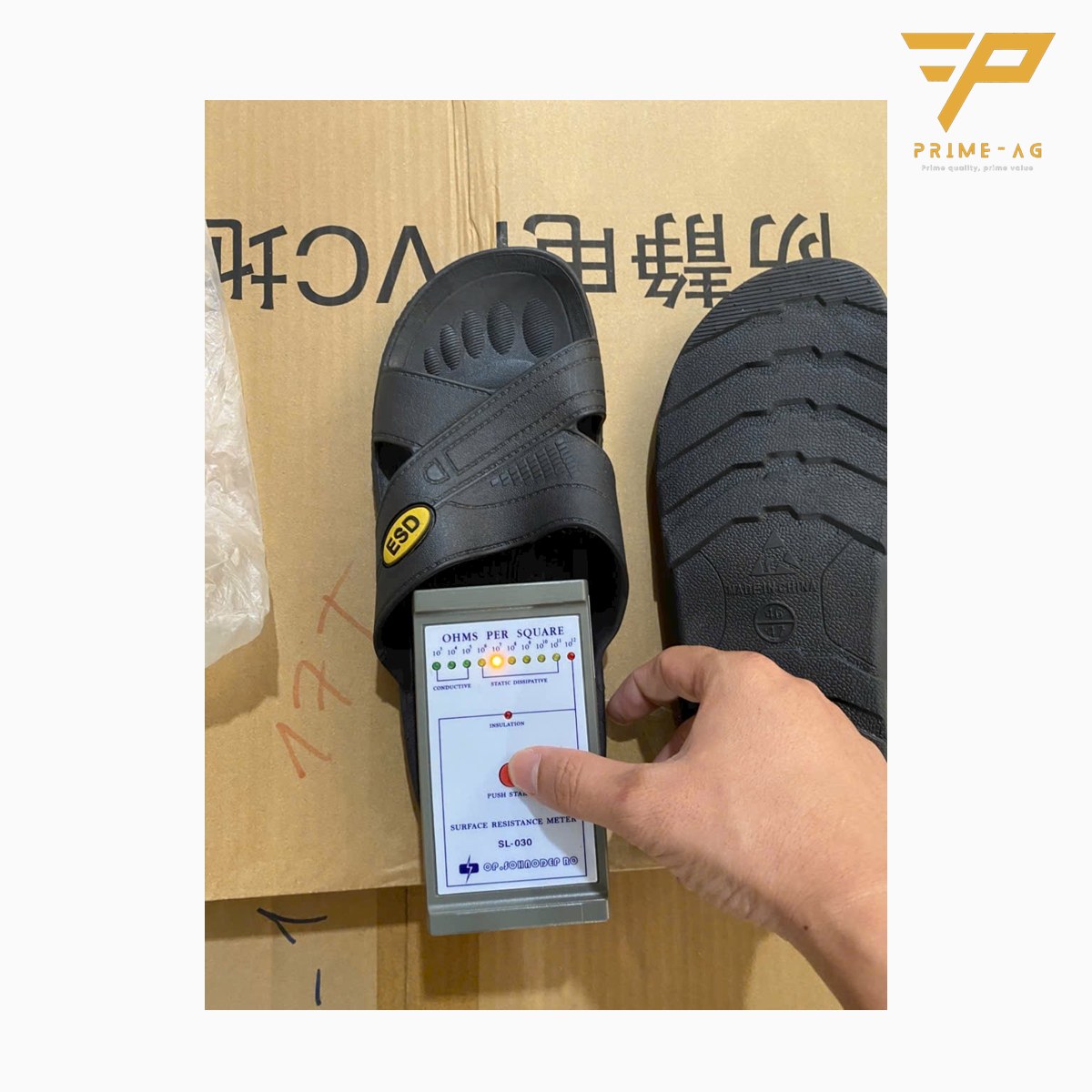
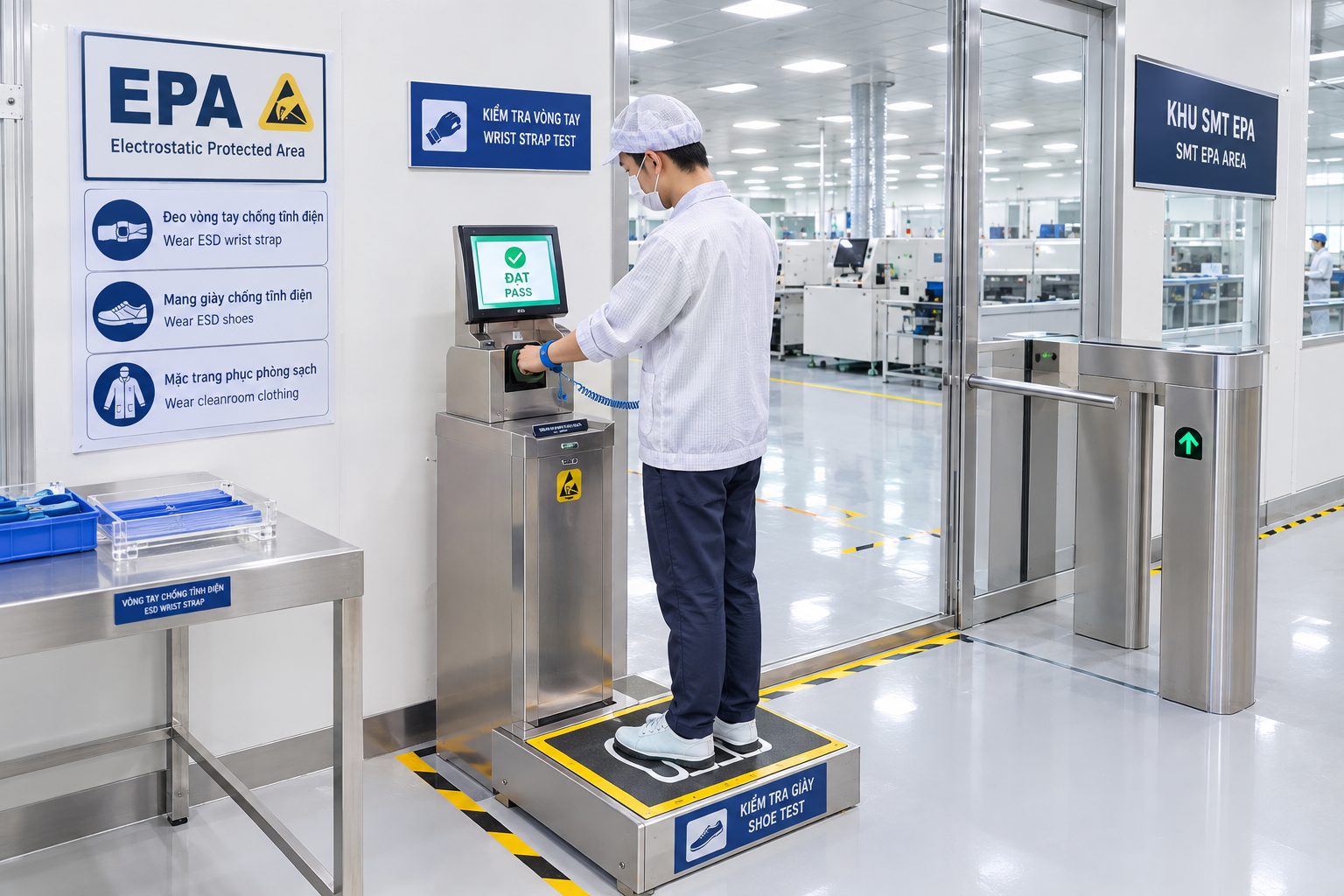
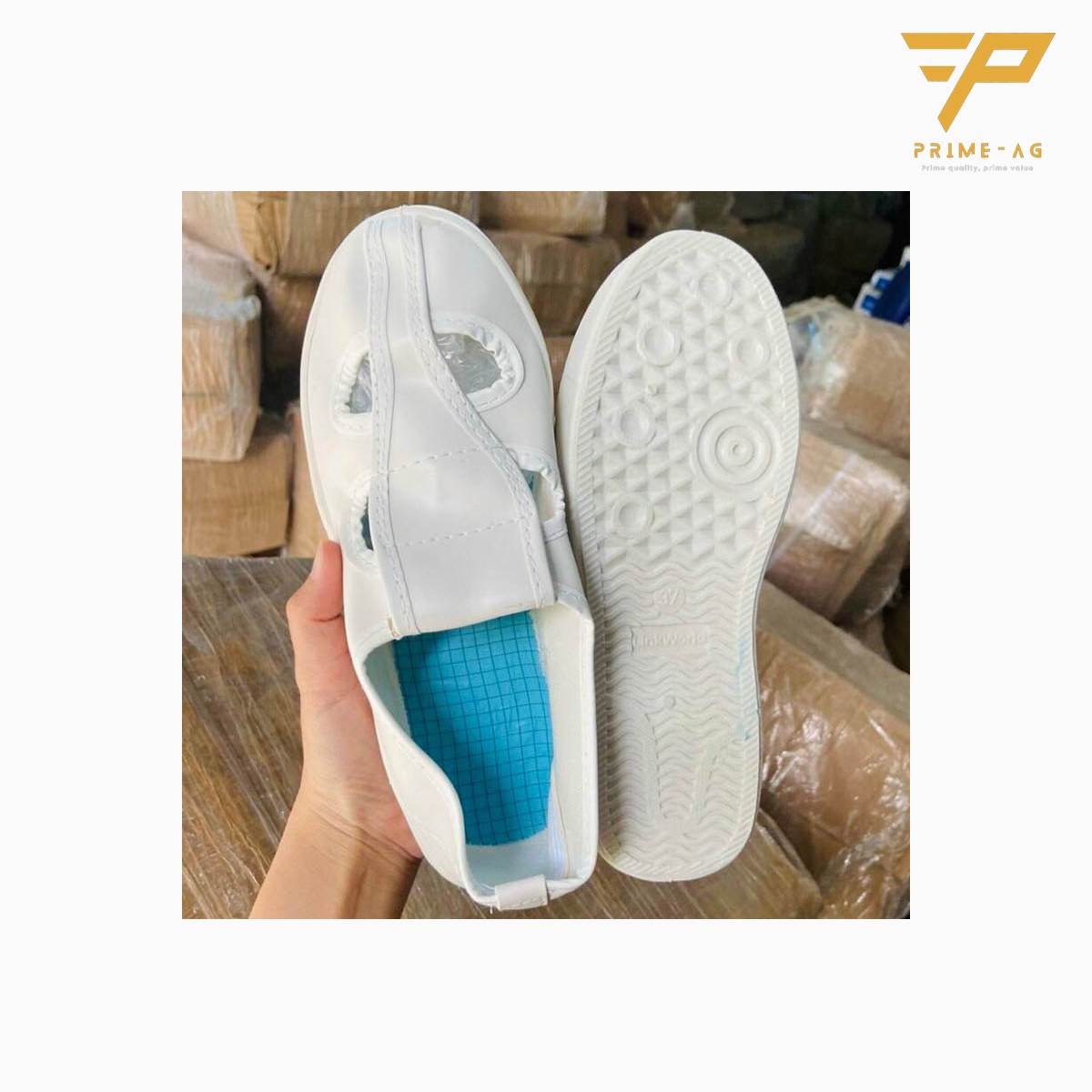
Why ESD shoes fail testing after washing: 5 causes in the order to check
PRIMEAG’s PVC and Linkworld shoes are specified at 10⁵–10⁸ Ω; when the tester reads over the limit, the cause is usually something other than the sole.
1. Shoes still damp, or too dry and cold
Wet shoes can read too low: the OTS1801D tester has a lower limit of 0.75 MΩ and flags a fail below it as well. Conversely, shoes left overnight in a cold room and put on with dry feet read high.
2. Soap film, fabric softener, silicone
Fabric softener and soaps containing silicone leave an insulating film on the insole and sole. Wash again with a mild detergent and rinse thoroughly.
3. Hot washing, hot drying, direct sun
Heat drives the plasticizer out of PVC soles, making them stiff and crack early; PU soles hydrolyze faster in hot, humid conditions. Conductive insoles can come loose or flatten after machine washing.
4. Thick socks, aftermarket insoles
Swapping in an ordinary foam insole or wearing thick socks for comfort cuts the path from skin to sole. Re-test with thin socks and the original insole.
5. Worn sole, glue or paint on the sole, or a dirty foot plate
Glue and paint marks on the sole form an insulating layer; removing them with acetone damages PVC soles. Clean the tester’s foot plate electrode as well.
Isolate the fault in 10 minutes
Test one foot at a time on the wrist strap and footwear tester and resistance meter, lifting the other foot off the electrode. If in doubt, step off with both feet, wait a few seconds and test again. One foot fails: the fault is in that shoe. A new pair from the same batch passes: the fault is in the old pair; it still fails: look at socks, skin, and the foot plate.
To compare readings across the whole area, PRIMEAG engineers visit your plant (Ho Chi Minh City, Binh Duong, Dong Nai; Mon–Sat) for free ESD resistance measurement with a TR1800 and 5 lb electrodes, measuring every material in use even if not bought from PRIMEAG, with no limit on test points, and send a PDF report within 3–5 working days for reference, not as a substitute for audit records.
How to wash each type correctly
| Type | How to wash | Do not |
|---|---|---|
| PVC cleanroom shoes, 4-hole, mesh upper | Machine wash at max. 40 °C, silicone-free detergent, air dry | Tumble dry hot, dry in strong sun, wipe with acetone |
| Linkworld shoes, PU sole | Wipe the sole with a damp cloth or IPA | Machine wash the whole pair, tumble dry hot |
| PVC and PU cleanroom slippers | Rinse with water and mild silicone-free soap, dry in a ventilated place | Strong solvents, hot drying |
Only wear shoes again once fully dry; rotate 2 pairs so no one wears damp shoes for a whole shift.
When to replace
Replace when daily testing still fails after cleaning; when the sole is worn smooth, hardened or cracked at the toe flex point, or separating from the upper; when the insole is flattened or torn. The 6–12 month mark is only for planning issue cycles. ESD footwear is part of our stocked range, delivered within 24–48 hours in Ho Chi Minh City, Binh Duong and Dong Nai. Export processing enterprises with orders from VND 20 million receive 0% VAT invoices, and PRIMEAG handles the on-the-spot import/export customs declaration at no charge.
If the test gate also fails wrist straps: wrist strap tester keeps showing red and continuous monitor or start-of-shift wrist strap test.
Frequently asked questions
- Can ESD shoes be machine washed? — Depends on the type. PVC canvas shoes can be machine washed at max. 40 °C; Linkworld PU-sole shoes should only be wiped with a damp cloth or IPA.
- ESD shoes fail the tester right after washing: are they damaged? — Not necessarily. Let them dry fully, wear them for a few minutes and re-test each foot; if they still exceed the limit, wash again with a silicone-free detergent and compare with a new pair from the same batch.
- What is the person–footwear–floor resistance limit? — Per ANSI/ESD S20.20: less than 3.5×10⁷ Ω; or less than 1×10⁹ Ω provided walking body voltage is below 100 V.
Email: info@primeag.vn · Phone/Zalo: +84 906 108 292
Written by the PRIMEAG engineering team
Updated: 2026-10-23