
Why does an analytical balance keep drifting in a pharma weighing room? Static is the cause when the reading drifts in one direction and powder clings to plastic cups. Rule out drafts, vibration and an off-center level bubble first. Then place an ionizer beside the draft shield, 150–600 mm from the sample, ionize the sample before weighing and have the operator wear a wrist strap. PRIMEAG recommends checking the ionizer every 6 months.
In pharmaceutical and cosmetics raw-material weighing rooms or food QC labs, a balance display that will not settle is a familiar problem. Fine powder flies off the spatula and clings around plastic cups and weigh boats, and a weighing batch takes twice as long. Static is usually blamed first, but air-conditioning drafts or a vibrating bench give very similar symptoms, so check in order.
- Rule out first: drafts into the draft shield, a vibrating bench, an off-center level bubble, a balance not yet warmed up, hot or cold samples.
- Signs of static: the reading drifts to one side, powder is attracted to or repelled from the spatula.
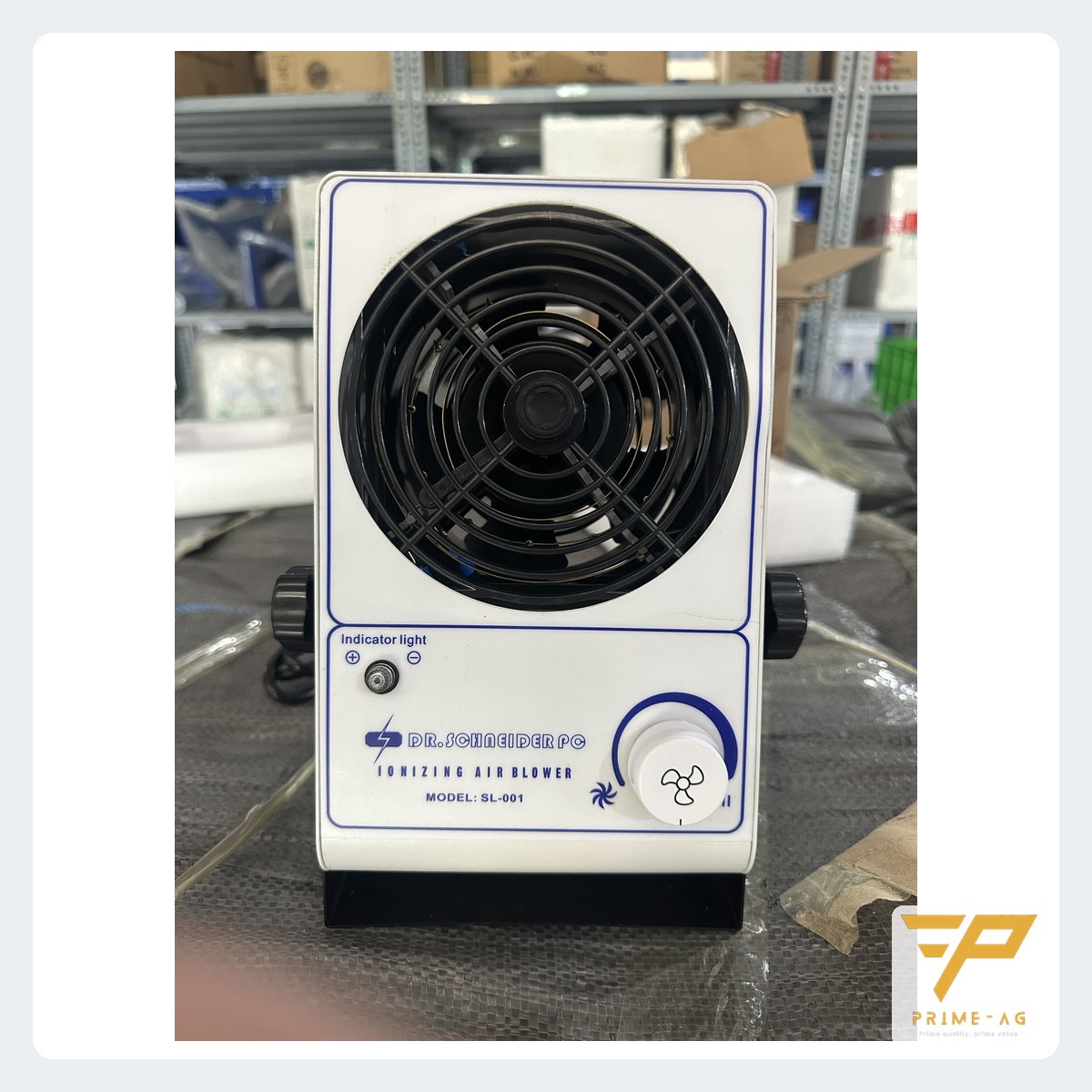
- Neutralize with ions: a mini 700 ionizer placed off-axis from the weighing pan; ionize the cup and sample first.
- Maintain: clean the emitter needles weekly, check the ionizer periodically with a charged plate.

1. Rule out other causes before concluding analytical balance drift is due to static
Readings that fluctuate in both directions around a value are usually caused by drafts or vibration. Check in turn:
- Air-conditioning vents or exhaust fans blowing into the draft shield.
- The bench vibrating from stirrers, compressors or footsteps.
- The level bubble off-center after the balance has been moved.
- The balance has just been switched on, is not yet warmed up or has not been calibrated in place.
- The sample has just come out of a refrigerator or drying oven.
2. Recognize the signs of static
Static makes the reading drift steadily to one side, and the reading changes when the spatula comes close even before it touches. Powder is drawn up the cup wall or jumps off the spatula. The drier the room, the more obvious this is.
3. Find what is charged
Common sources are plastic cups, weigh boats and spatulas. Next come nitrile gloves rubbing against clothing, synthetic garments and the operator moving around. Grounding only discharges conductors; plastic items must be neutralized with ions.
4. Neutralize static with ions beside the draft shield
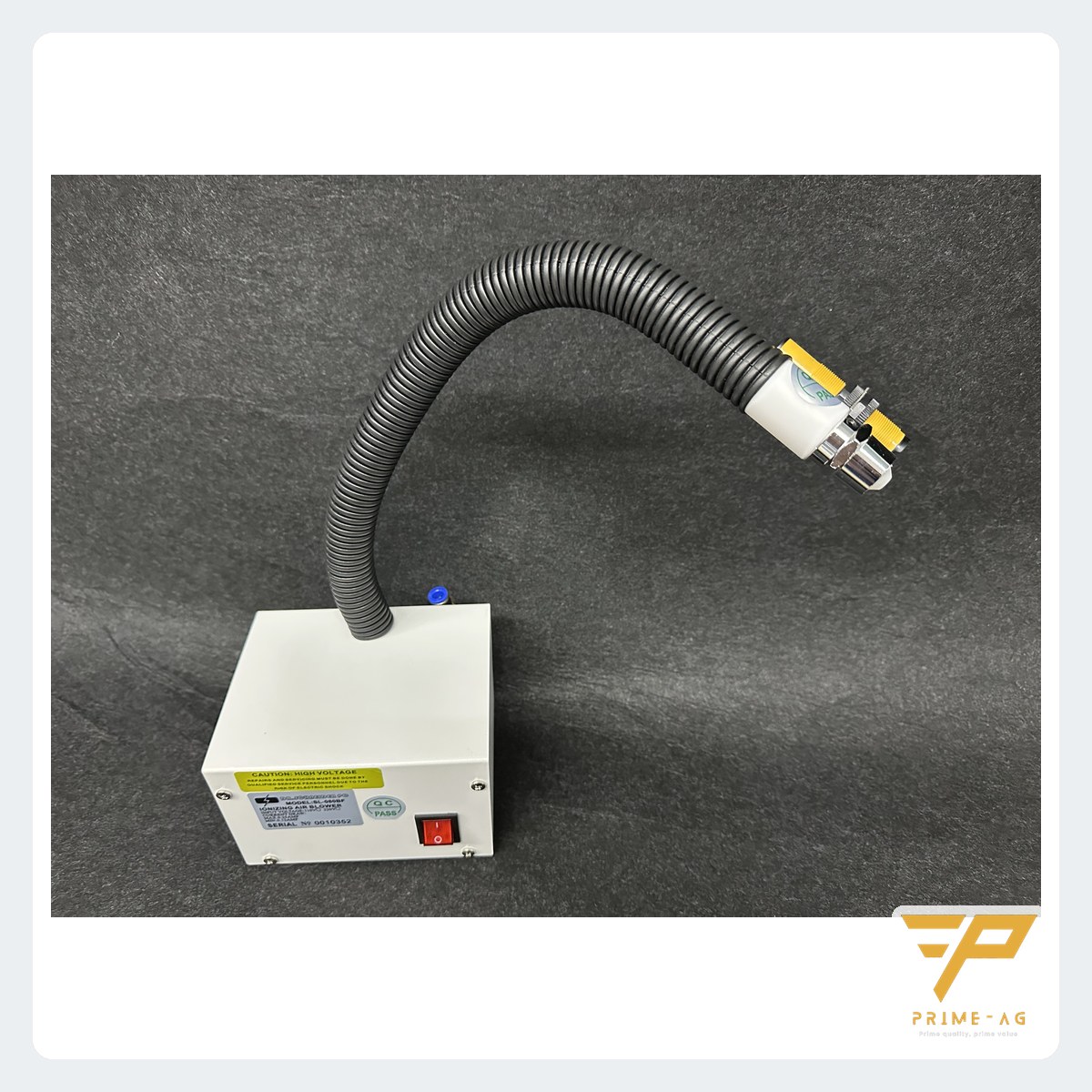
A single weighing position suits the mini 700 static-eliminating ionizer: a small fan head with a separate high-voltage unit. According to the catalogue: ion balance ≤ ±10 V, decay from ±1,000 V → ±100 V in ≤ 2.0 s at 100 mm, ozone ≤ 0.002 ppm, working distance 150–600 mm. To blow into a narrow spot, choose from the ionizing blowers and ionizing air nozzles range.
Ionized air is still air: blowing straight at the pan makes the reading jump again. Ionize the cup and sample first and then place them on the pan, or set the airflow low and angle the ionizer so it does not point at the weighing pan.
5. Ground the operator, change tools
The operator wears a coiled-cord anti-static wrist strap, plugged into a properly earthed ground point (a ground socket on the bench or a dedicated ground cord). Where the procedure allows, switch plastic tools to metal or static-dissipative materials. For precision balances, PRIMEAG offers Ohaus/Shinko electronic balances and measuring instruments in the 0.01 g class, and can send them for calibration on your behalf (12-month certificate).
| Symptom | Suspected cause | Action |
|---|---|---|
| Reading fluctuates both ways | Drafts, vibration | Move away from air vents, use a dedicated balance table |
| Reading drifts one way, powder clings to the cup | Static | Ionize, wrist strap, change tools |
| Reading jumps when the ionizer is switched on | Ionizer airflow hitting the pan | Reduce airflow, turn the ionizer |
6. Ionizer maintenance
Dirty needles shift the ion balance, and the ionizer ends up charging the sample. Switch off the power and clean the needles with an IPA-moistened swab every week. Measure with a charged plate kit for ionizer testing about every 6 months, at the same distance at which the sample sits in front of the ionizer. How to deal with out-of-spec readings is covered in ionizer balance exceeding ±35 V.
Where to start
- Record the drift pattern: both ways or one way.
- Shield from drafts, adjust the level bubble, weigh again.
- If it still drifts one way, ionize the cup and sample.
- If the weighing room has anti-static bench tops, mats or chairs, re-measure resistance to ground; PRIMEAG offers free on-site ESD resistance measurement in Ho Chi Minh City, Binh Duong and Dong Nai.
Frequently asked questions
- Can an ionizer make an analytical balance reading jump? — Yes, if the airflow goes straight onto the pan. Lower the fan speed and neutralize the container before placing it on the balance.
- If I wear an ESD wrist strap, do I still need an ionizer? — Yes. The wrist strap discharges the charge on the body, but plastic cups and spatulas do not conduct, so ions are needed.
- How do I check an ionizer in a weighing room? — Clean the needles every week; measure ion balance and discharge time with a CPM kit periodically, and repeat after replacing the needles.
Email: info@primeag.vn · Phone/Zalo: +84 906 108 292
Written by the PRIMEAG engineering team
Updated: 2026-10-28