
Office paper and paper-cover notebooks shed cellulose fibers and mineral dust when folded or torn; pencils and erasers leave loose particles. The fix is to switch to 72 g/m² cleanroom paper, plastic-cover notebooks and cleanroom pens, print outside, then bag the documents and bring them through the airlock. PRIMEAG supplies the full set of these items.
The particle counter in the packing room of a factory in Vietnam reads higher every day of the week, even though the filters were just replaced. Shining a flashlight across the bench, the QA team sees tiny white fibers around a batch record that has just been stapled. The culprit turns out to be in the hands of the person writing the records.
- Paper, cardboard, paper labels and pencils are particle sources that are often overlooked.
- Check in turn: batch records, labels, notebooks, pens, folders, then tearing, folding and stapling.
- Replace them with cleanroom paper, plastic-cover notebooks, label stickers and approved pens.
- Print outside the clean area, seal in bags, and open the bags only once inside.
How cleanroom paper differs from office paper
Office paper is made from wood pulp: short cellulose fibers with weak bonding, plus fillers such as CaCO₃ powder and TiO₂ to make the paper white and opaque. Every time a page is turned, its edges release both fibers and mineral dust, which is why many cleanrooms ban ordinary paper and cardboard altogether.
Cleanroom paper is impregnated with a synthetic polymer that “locks” the fibers, so it is tougher and sheds far fewer particles. The cleanliness class of the room is defined by ISO 14644-1; paperwork is only one particle source, but the easiest to cut.
Tracing the source of paper fibers, in order
- Forms and batch records: often printed on office paper and carried in.
- Labels: paper labels and paper tape stuck on trays or documents.
- Notebooks: hard paper covers with worn corners.
- Pens: pencils, cheap ballpoint pens, erasers.
- Folders: cardboard clipboards, colored paper folders.
- Handling: tearing paper, folding sheets, stapling or removing staples right on the workbench.
What to replace them with
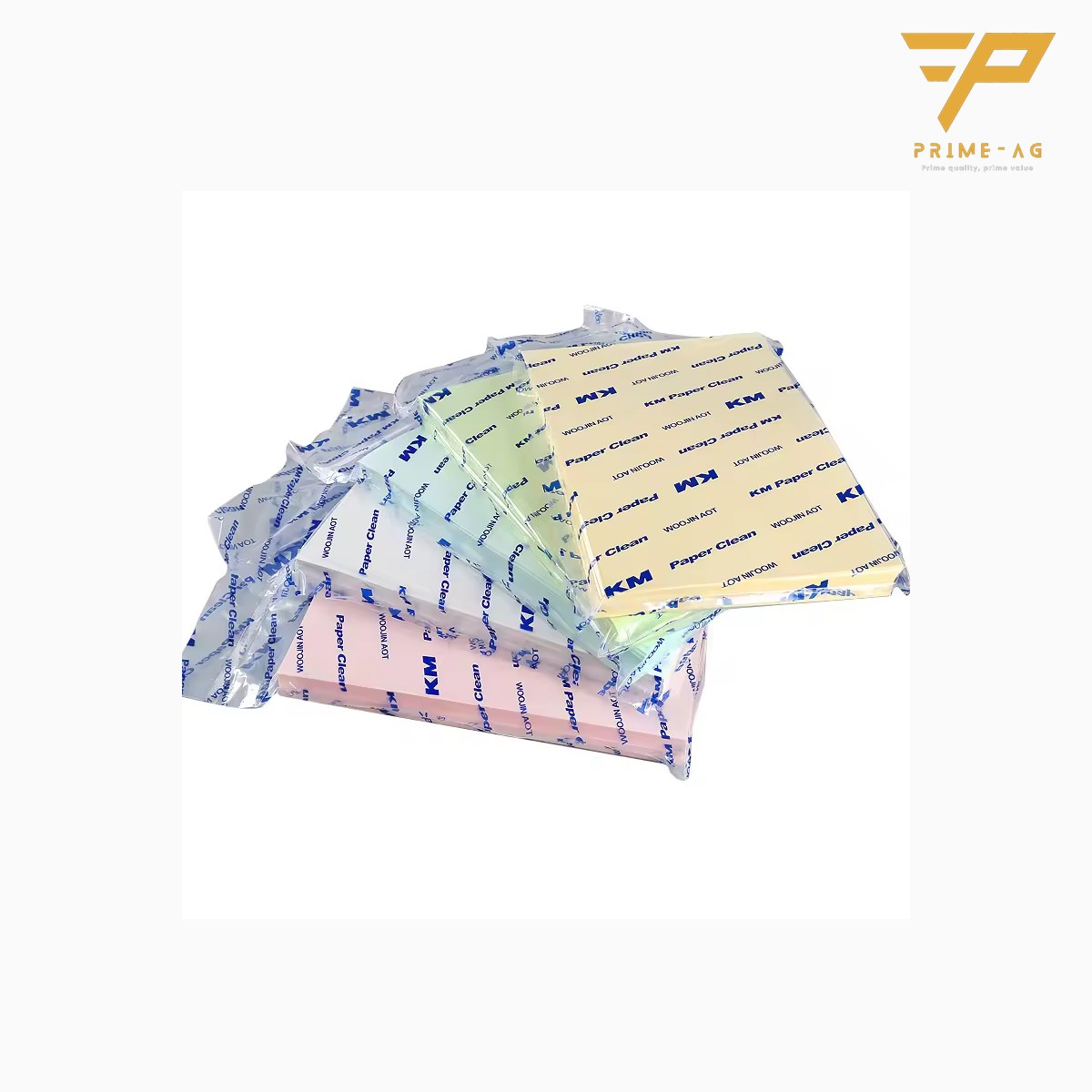
PRIMEAG cleanroom paper weighs 72 g/m²; A4 comes in five colors: white, blue, yellow, pink and green; A3 and A5 in the same weight; 250 sheets/ream, 10 reams/carton. The SGS report shows none of the 10 RoHS substances detected. Colors can be used to separate document types, for example yellow for checklists.
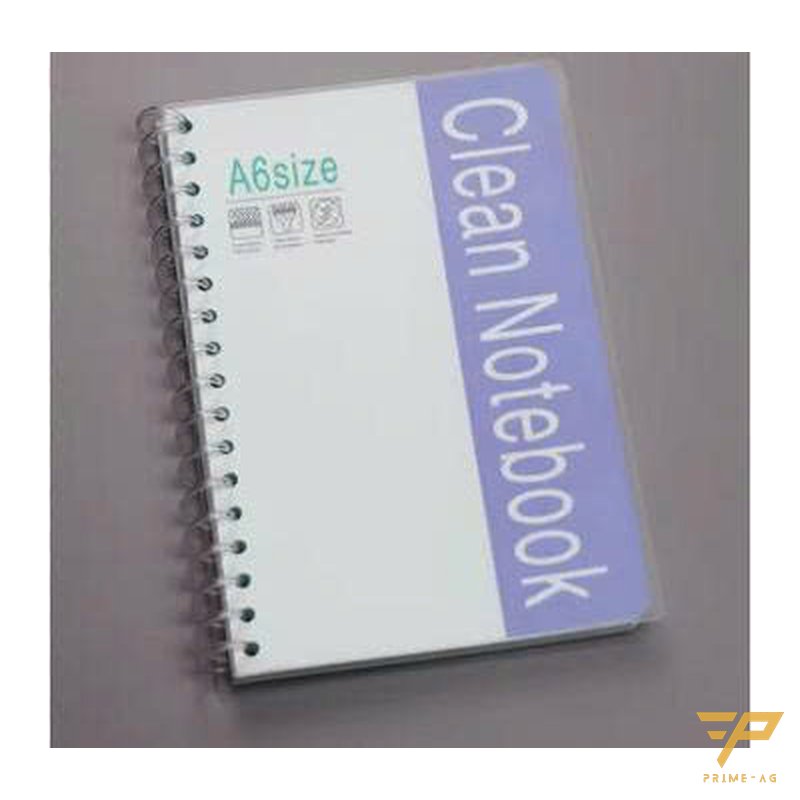
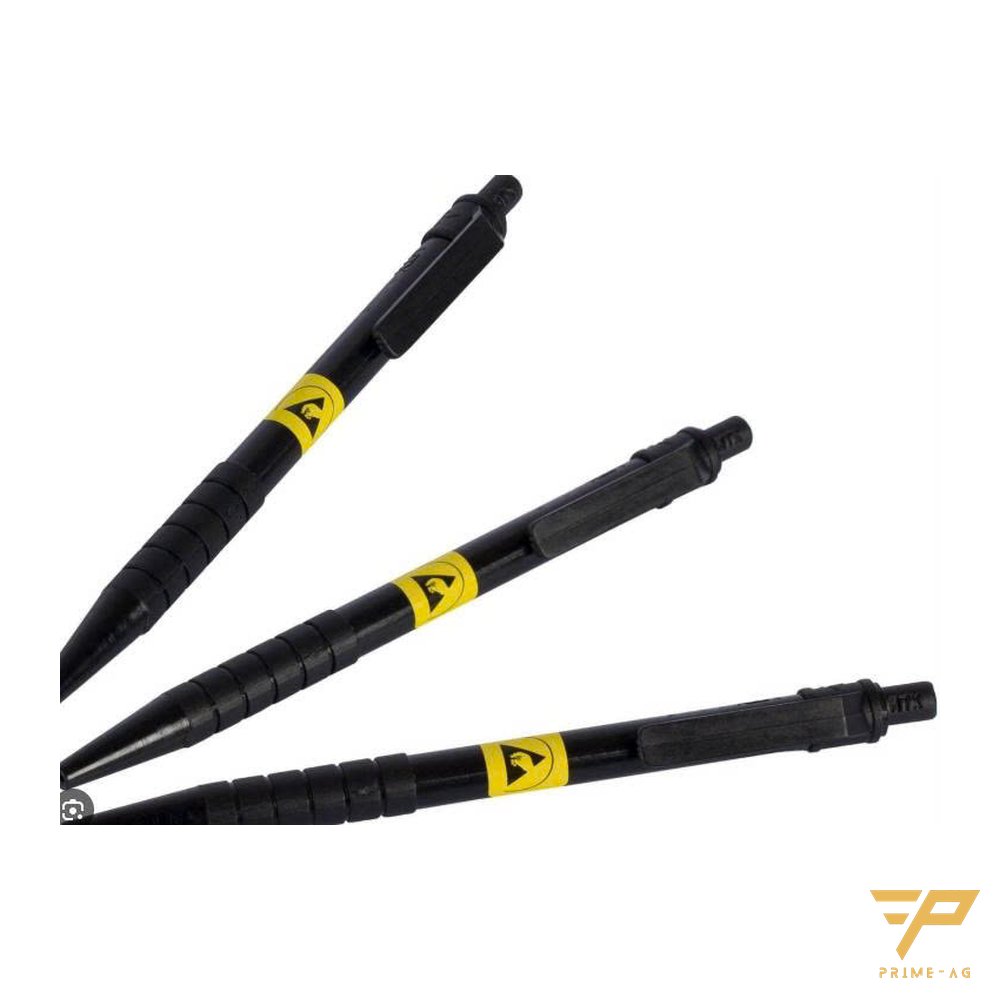
Switch notebooks to A4 or A5 cleanroom notebooks with 50 sheets and plastic covers. Switch labels to A4 label sticker sheets or TZe tape 12/18/24 mm. Use pens approved for the cleanroom; areas with ESD requirements can choose ESD ballpoint pens with carbon PP bodies.
| Currently used | Replace with | Note |
|---|---|---|
| Office printing paper | Cleanroom paper 72 g/m² | Laser printing and photocopying; for inkjet, test print first |
| Paper-cover notebook | Plastic-cover cleanroom notebook | Replace when the cover cracks or pages curl |
| Pencil, eraser | Cleanroom ballpoint pen or ESD ballpoint pen | Strike errors through with one line and sign |
| Paper labels, paper tape | Label stickers, TZe tape | Do not stick several layers on top of each other |
| Cardboard folder | Plastic folder | Wipe regularly like the bench top |
Rules for bringing paperwork through the airlock
- Print all forms outside, put them in sealed plastic bags, and open the bags only after passing the airlock.
- Do not tear or fold paper inside; replace torn or curled sheets, because torn edges shed the most fibers.
- Place a sticky mat 600×900 at the entrance to catch dust from shoe soles.
Wipe up fibers that have fallen on the bench with a 1009 polyester wiper in one direction, without scrubbing back and forth. If the wiper itself leaves fibers, read cleanroom wipers leaving lint and streaks on surfaces. To review all consumables by cleanliness class, see the cleanroom consumables list by class.
Where to start
Walk the area during a shift, list every sheet of paper, notebook, pen and label on the benches, and mark the items that came from the office. Send the list with weekly usage so PRIMEAG can quote a replacement set; after one week, compare the particle counts at the same locations.
Frequently asked questions
- Can cleanroom paper be printed on an office printer? — It prints well on laser printers and photocopiers. On inkjet printers the polymer-impregnated surface absorbs ink more slowly, so print a few test sheets and let the ink dry completely before stacking.
- Why are pencils and erasers not allowed in a cleanroom? — Graphite and eraser crumbs are loose particles that stick to benches and gloves and then reach the product. When you make a mistake, strike it through with a single line and sign it instead of erasing.
- Can we order a small trial quantity, and how fast is delivery? — Yes, the minimum order is 1 ream of paper. Cleanroom paper, notebooks and pens are delivered within 24–48 hours in Ho Chi Minh City, Binh Duong and Dong Nai; quotes within 30 minutes during working hours.
Mon–Sat, 8:00–17:00 (GMT+7) · Phone/Zalo: +84 906 108 292 · Email: info@primeag.vn
Start where it suits you: Free technical advice · Send a drawing or layout · Get a quote within 30 minutes
Written by the PRIMEAG engineering team
Updated: 2026-10-25