
Cleanroom wipers leaving lint or streaks are usually caused by the wrong wiper material, cut (unsealed) edges, wipers contaminated from an open bag, too much IPA, and wiping in circles. PRIMEAG recommends laser-edge polyester 1009 for low-lint surfaces and microfiber 8009 for glass; wipe in one direction and fold to a clean face after every stroke.
A hazy streak on glass or a single fiber stuck to a product housing is often blamed on the operator. In practice, the fault usually lies in the wiper type, how the bag is handled, or the amount of solvent.
- Lint: check the wiper material and edge type first.
- Streaks: check the amount of IPA, wiping direction and how many faces have been used.
- Glass, lenses: microfiber 8009, ISO Class 4–5.
- Equipment, liquid spills: wiping paper 0609 / 0606.
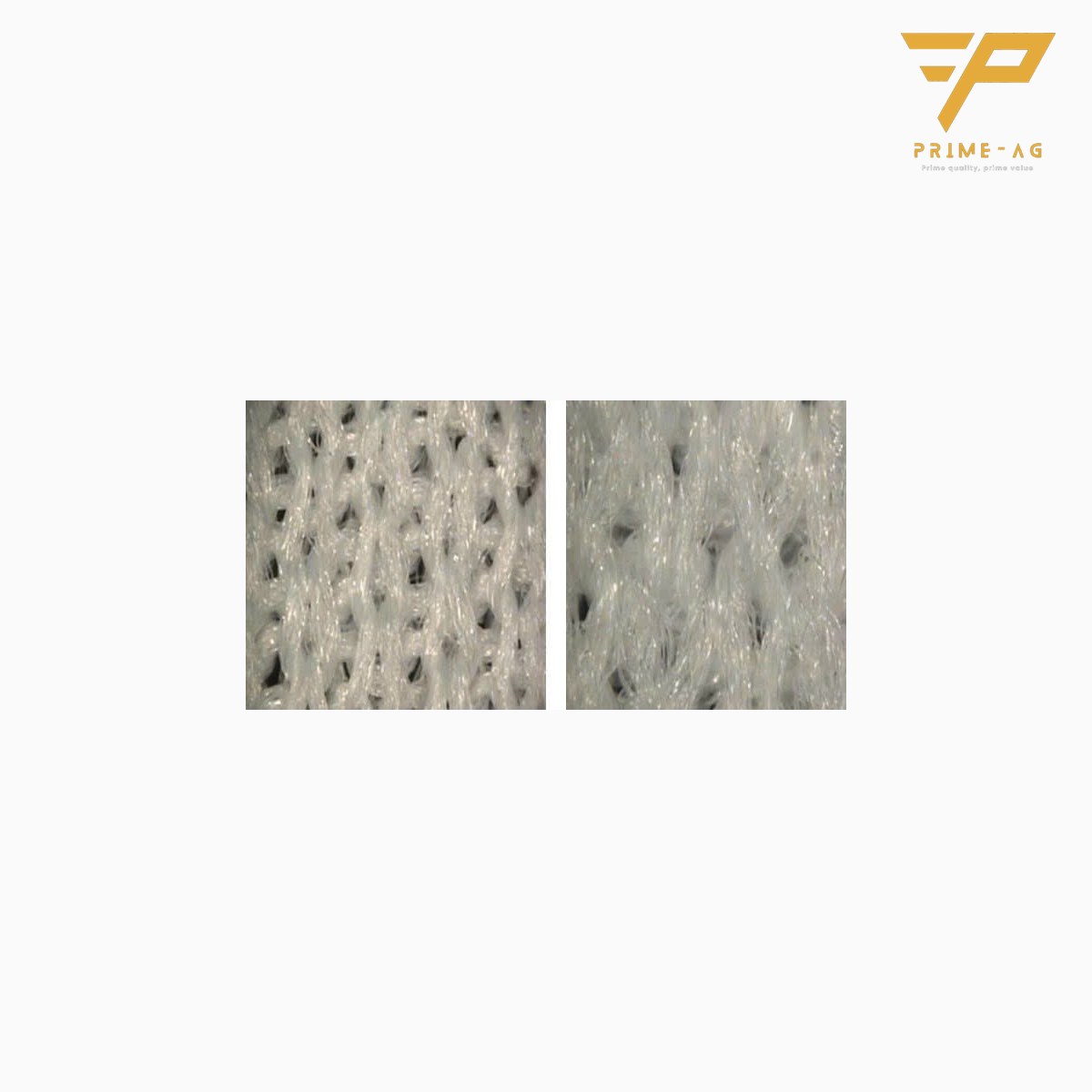
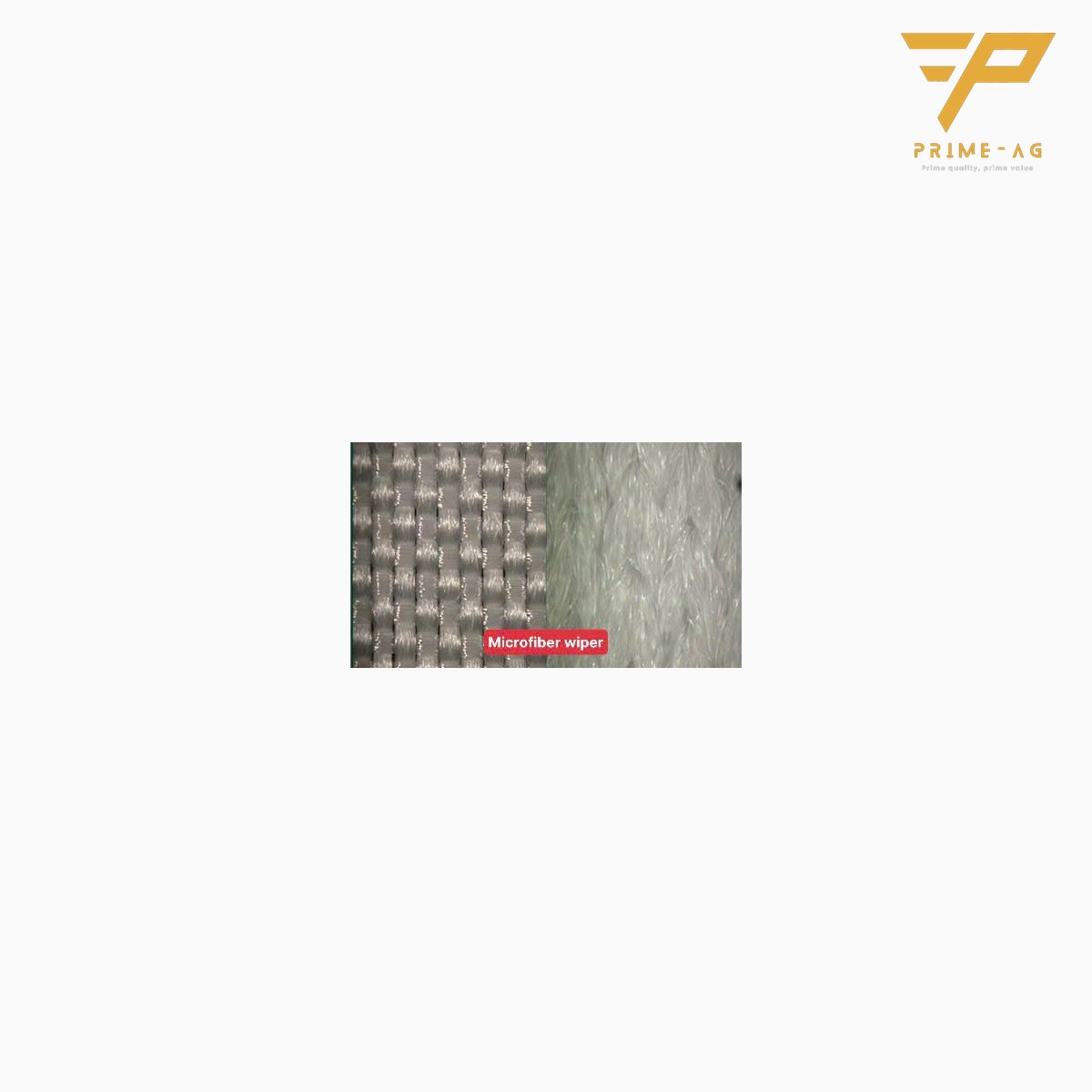
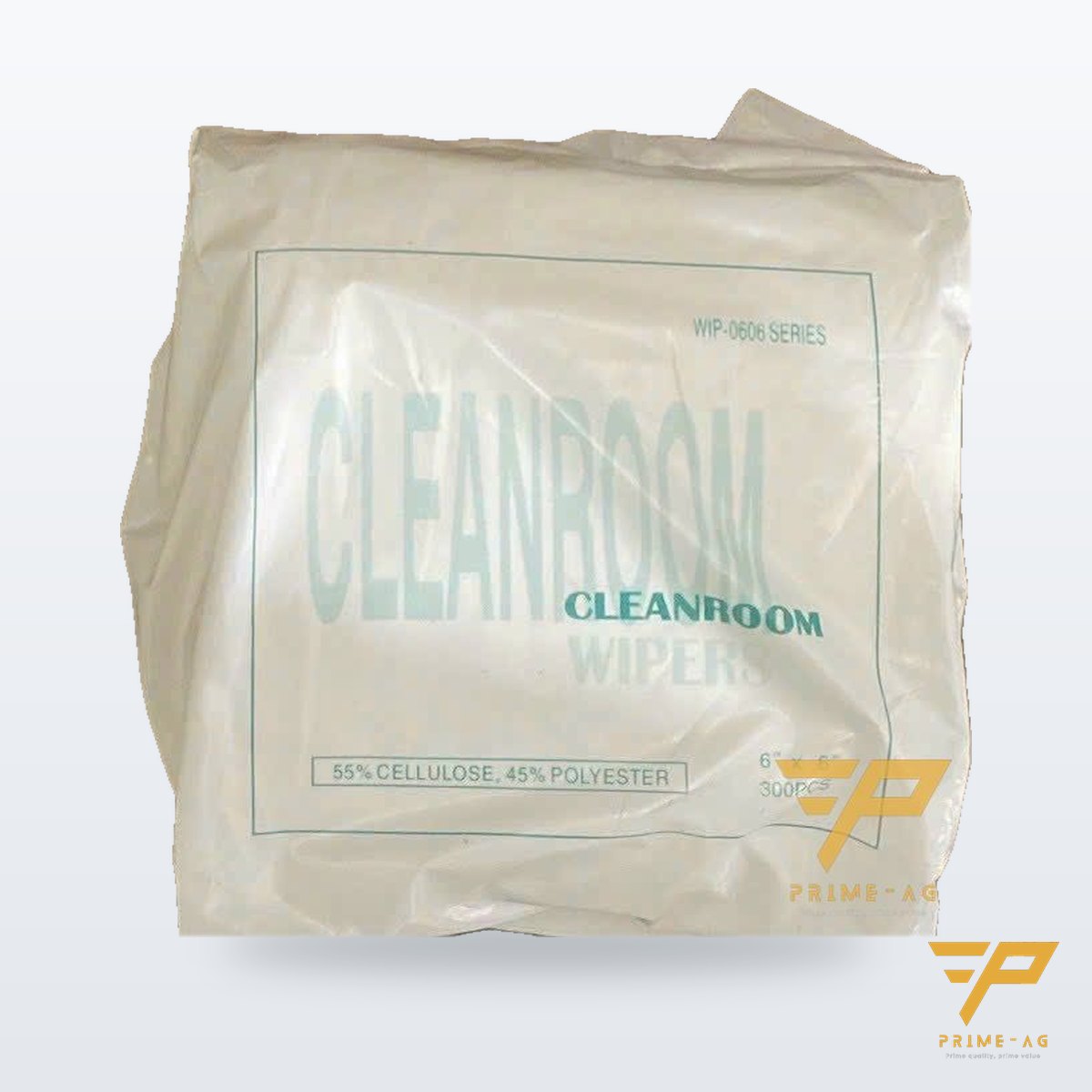
Check the causes in this order
1. Wrong material
Cellulose–polyester nonwoven wiping paper is made from short fibers with many free fiber ends: it absorbs fast and is cheap, but sheds more lint than knitted wipers. Where low lint matters, use continuous-filament polyester.
2. Cut edges
Knife-cut edges leave fiber ends exposed. Laser cutting melts and seals the fiber ends. According to Texwipe, cut edges suit ISO Class 6–8 and sealed edges ISO Class 5–7. The ISO classes in the table below are those declared by the supplier for each item; a sealed edge is necessary but not sufficient.
3. Wiper contaminated before use
A bag opened outside the clean zone, a wiper dropped on the bench, or handling with bare hands all carry particles onto the surface. Open bags inside the clean zone, wear gloves, and discard any wiper that touches the floor.
4. Too much IPA
A soaked wiper leaves a liquid film that dries into streaks and drags residue to the edge of the wiped area. Dampen the wiper with a spray bottle; do not pour from a large drum.
5. Wiping in circles
Circular strokes only move particles somewhere else. Wipe in straight, parallel strokes with 10–20% overlap, lifting the wiper at the end of each stroke.
6. Wrong folding, using one face too long
Fold in quarters with the open edges turned inward. Use a fresh face for every stroke; when no clean faces are left, discard it, do not launder.
Wiper selection table by surface and cleanliness class
| Type | Material, edge | Cleanliness class | Suitable for | Avoid |
|---|---|---|---|---|
| Polyester 1009 | Continuous-filament polyester, double knit, laser edge, 110–120 g/m² | ISO 4–6 | Molds, jigs, PCBs after rework; resists IPA, acetone | Absorbing large amounts of liquid |
| Microfiber 8009 | Fibers under 1 denier, laser edge, washed twice | ISO 4–5 | Glass, lenses, displays | Surfaces with hard particles |
| Wiping paper 0609 / 0606 | 55% cellulose – 45% polyester, cut edge, 60 g/m² | ISO 5–6 | Machine beds, trays, flux, spills | Optics |
| Bemcot M-3 II | Cupro nonwoven, binder-free, 250 × 250 mm | ISO 6–7 (PRIMEAG assessment) | Solvent wiping, near soldering irons | ISO 5 areas |
Class 10 / 100 / 1,000 (FED-STD-209E) correspond to ISO 4 / 5 / 6. A comparison of the three main lines is on the cleanroom wiper types page. For connector slots, use cleanroom swabs with 100 ppi PU foam tips.
Surfaces with metal chips or glass fragments: blow them off with filtered compressed air before using microfiber, because fibers that trap hard particles will scratch.
When to switch wiper type
If correct technique still leaves lint at visual inspection: move up from wiping paper to 1009; for optical surfaces, to 8009. If streaks remain after reducing IPA: try dry wiping with 8009, or Bemcot, which absorbs about 10 times its own weight.
When the lot or supplier changes, compare the CoA (particles, fibers, NVR). For a catalog by class, see the article cleanroom supplies for electronics factories by class; for stencil wiping on printers you need SMT stencil wiper rolls.
Quick self-check at the wiping station
- Is the bag opened inside the clean zone and resealed after taking a wiper?
- Is solvent sprayed onto the wiper, or poured from a shared drum?
- Straight one-direction strokes, lifting the wiper at the end?
- Is the wiper face changed after every stroke?
Send us a description of the surface and PRIMEAG will send samples to test. Lead time for wipers and wiping paper is confirmed when you order; quotations within 30 minutes, web prices excl. 8% VAT.
Frequently asked questions
- Is polyester 1009 cleanroom wiper absorbent? — No. Knitted polyester absorbs poorly; it suits dry wiping or use with fast-evaporating solvents. For absorbing a lot of liquid, choose 0609 wiping paper or Bemcot.
- Can cleanroom wipers be washed and reused? — Not recommended. Washing contaminates the wiper with fibers and ions, and it loses the cleanliness class it had when packed in the cleanroom.
- Which wiper is best for cleaning camera lenses? — Microfiber 8009, ISO Class 4–5, with soft fibers that do not scratch. Blow hard particles off the glass before wiping.
Email: info@primeag.vn · Phone/Zalo: +84 906 108 292
Written by the PRIMEAG engineering team
Updated: 2026-10-24