
Need SMT stencil wiper rolls in Vietnam for DEK, MPM, Yamaha, Panasonic or Fuji printers? Each brand uses its own roll width, core and length, so choose by the label on your current roll or by printer model. PRIMEAG supplies polycellulose rolls with SGS reports for RoHS 10 substances and halogens (Cl 73 mg/kg), order items 7–15 days, quotation within 30 minutes.
The stencil wiper roll is a consumable that the solder paste printer uses on its own: the under-stencil cleaning system pulls the paper across the underside of the stencil so the apertures do not clog with paste. Switching suppliers is easy to get wrong, because each machine generation takes a different roll.
- Width by machine: read the label on your current roll or send the printer model, and PRIMEAG will confirm the correct width, core and length.
- Polycellulose: absorbs IPA quickly, strong when wet, low lint; avoid paper with binders or fillers.
- Certification: SGS RoHS 10 substances Pass, halogens EN 14582 — certification records.
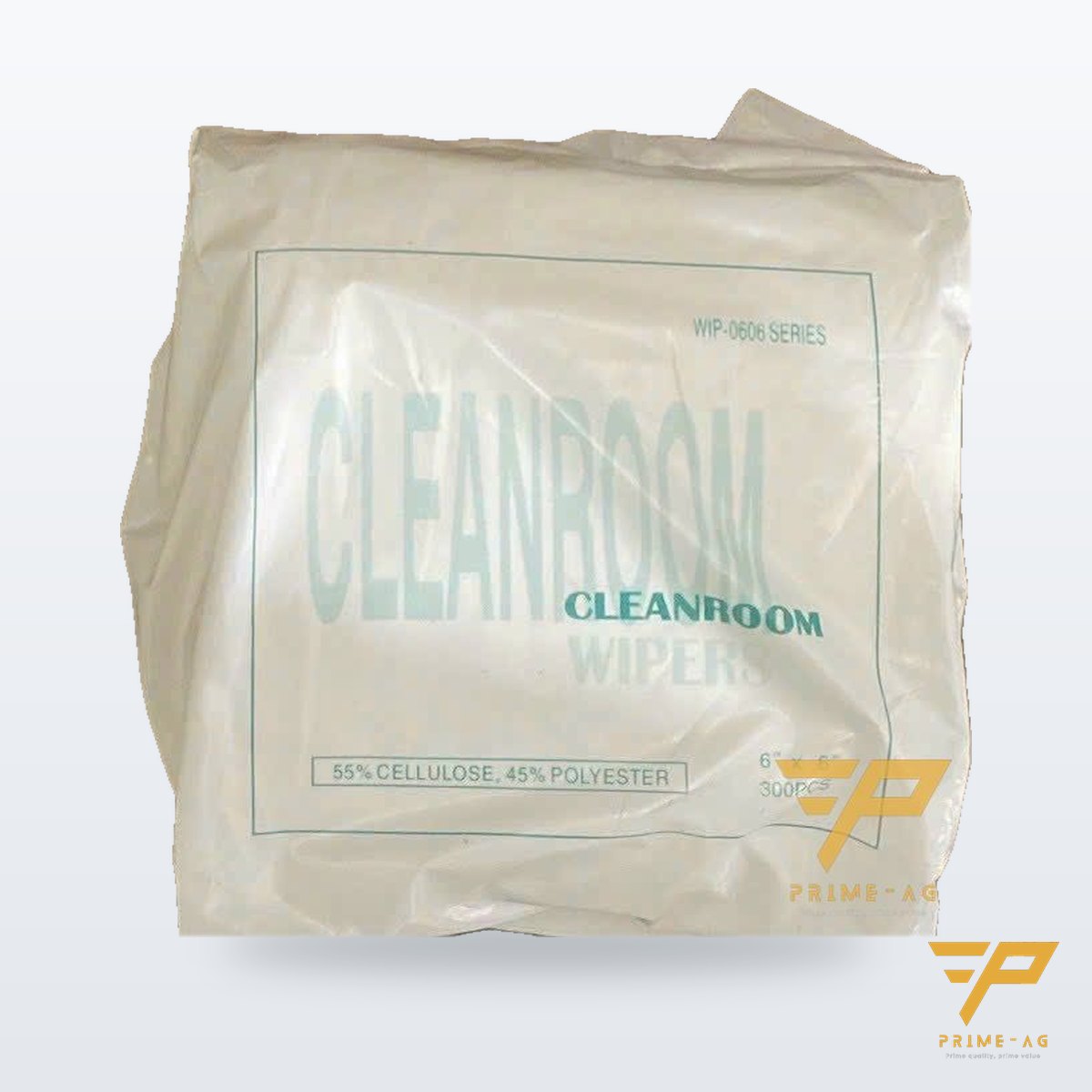
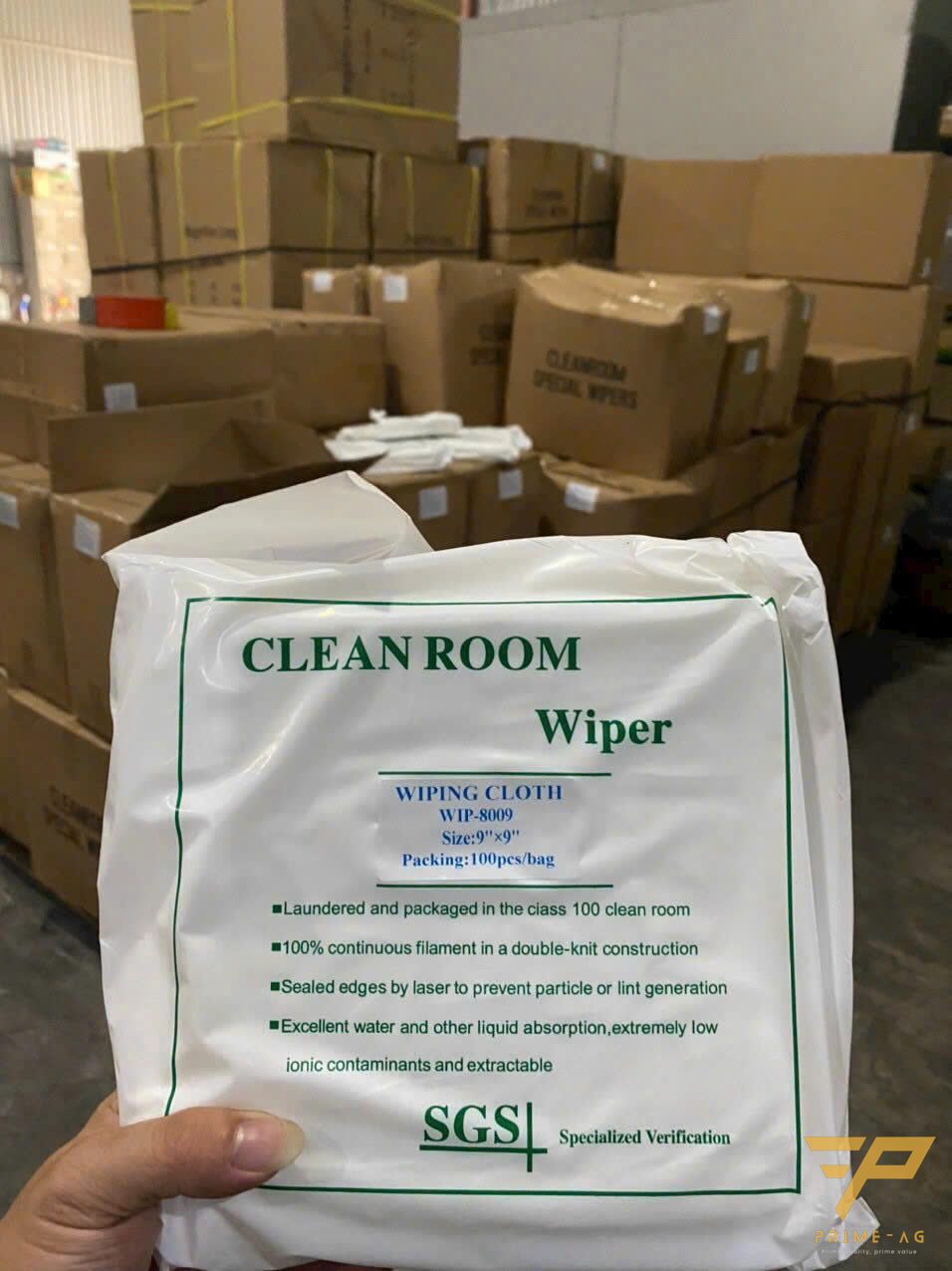
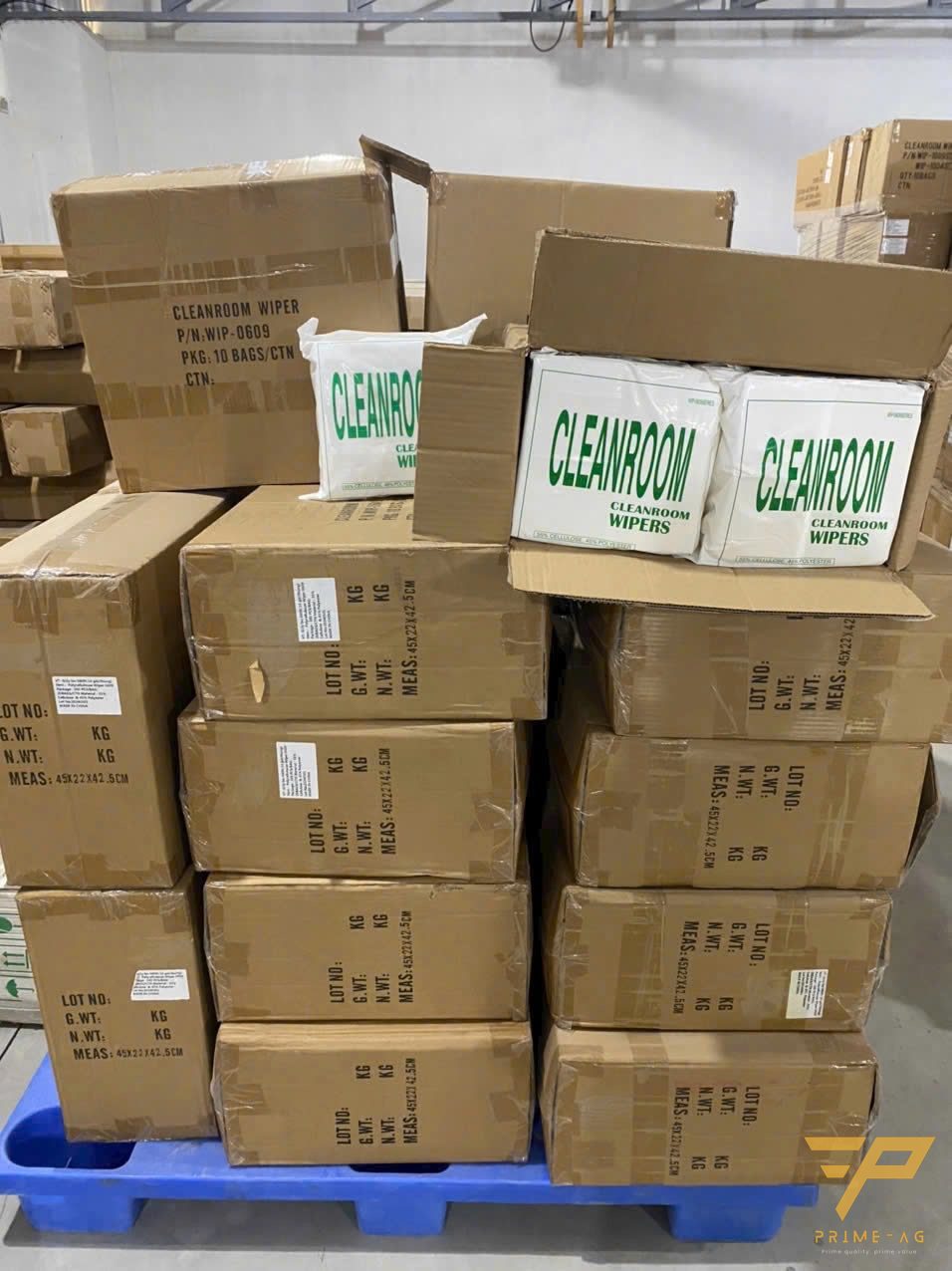
- Manual stencil wiping: 0609 cleanroom wipes with IPA, wiping in one direction.
1. Determine the roll size for the printer you use
The cleaning systems of DEK, MPM, Yamaha, Panasonic and Fuji each have their own roll spindle, so roll width, core, outer diameter and length all differ; even different generations from the same brand may differ. How to determine it:
- Read the label on the core or wrapper of the roll in use.
- No label left: measure the paper width, the inner diameter of the core and the outer diameter of a new roll; photograph the roll spindle and the paper path through the wiper head.
- Send the printer model and measurements; PRIMEAG cross-checks them and quotes within 30 minutes.
2. Material: why polycellulose
The rolls are made of polycellulose nonwoven: cellulose fibres absorb IPA quickly, while polyester fibres keep the paper strong when wet so it does not tear as the wiper head drags it across the stencil. Four criteria:
| Criterion | Requirement | Consequence if poor |
|---|---|---|
| Wet strength | Paper stays intact after soaking up solvent, does not crumble | Tears mid-cycle, machine stops |
| Lint shedding | Low lint, no binders or fillers | Fibres get into stencil apertures: insufficient paste, solder bridges |
| Solvent absorption | Even absorption | Wipe does not dry, paste smears on the underside |
| Core, winding direction | Solid core; wound in the direction the cleaning system requires | Roll slips, paper runs backwards |
For manually wiping the stencil underside, machine tables and fixtures, use 0609 wipes (9×9 inch, 300 sheets/bag) with the same cellulose-polyester base: fold the sheet into quarters, dampen moderately, wipe in one direction, turn to a clean face after each pass, and do not wipe in circles.
3. Certification supplied with the rolls
The polycellulose rolls supplied by PRIMEAG come with two SGS reports: RoHS 10 substances Pass, no. SZXEC23002744101 dated 10/11/2023; halogens EN 14582, no. CANEC23005275601 dated 04/07/2023: F, Br, I not detected, Cl 73 mg/kg (limit ≤900). The public copy masks the applicant’s name; the full copy is sent on request. See product certification and test records.
4. Roll change frequency and signs of a poor roll
The wiping cycle (number of prints between wipes, wet or dry, with or without vacuum) is set in the print program according to component pitch; how fast a roll is used up depends on that cycle. Change the roll when the sensor signals empty or only a few turns of paper remain. Signs of a substandard roll:
- Paper dust and fibres on the stencil underside or in the apertures; check with a magnifier in fine-pitch areas.
- Stencil still damp after a wet wipe, paste spreading at aperture edges on the next print.
- Paper tearing, wrinkling or jamming at the wiper head although the cycle has not changed; dented core, roll slipping on the spindle.
Where to start
- Photograph the label of the roll in use (or measure the width, core and outer diameter), and note the solder paste printer model.
- Note the number of rolls used per month and your end customer’s certification requirements.
- Send them to PRIMEAG via Zalo or email; quotation within 30 minutes, prices exclude 8% VAT. Machine-specific rolls are order items, 7–15 working days.
- New source: run one trial roll and inspect the stencil before buying in volume.
For the EPA around the printer on an SMT line, see the article on setting up an EPA for an SMT line.
Frequently asked questions
- The old roll label is gone. How do I find the right stencil wiper roll size for my printer? — Send PRIMEAG your solder paste printer model and a photo of the roll spindle; PRIMEAG cross-checks and confirms the correct width, core, length and winding direction.
- Do stencil wiper rolls need RoHS certification? — Factories producing RoHS goods usually require it. PRIMEAG polycellulose rolls have SGS reports for RoHS 10 substances Pass (SZXEC23002744101) and halogens EN 14582 (CANEC23005275601); the full copy is sent on request.
- What is the delivery time for stencil wiper rolls in Vietnam? — Machine-specific rolls are order items, delivered in 7–15 working days; 0609 hand wipes are usually delivered in 24–48 hours in Ho Chi Minh City, Binh Duong and Dong Nai; quotation within 30 minutes.
Mon–Sat, 8:00–17:00 (GMT+7) · Phone/Zalo: +84 906 108 292 · Email: info@primeag.vn
Start where it suits you: Free technical advice · Send a drawing or layout · Get a quote within 30 minutes
Written by the PRIMEAG engineering team
Updated: 2026-10-21