
ESD mat reading above 10⁹ Ω at the 6-month audit? In most cases it is not worn out: the usual causes are flux or oil on the surface, cleaning with silicone-based cleaners, the dry season, a loose ground snap, or measuring at 10 V instead of 100 V. PRIMEAG recommends re-measuring correctly, cleaning, then measuring a second time; replace only if it is still above 10⁹ Ω.
The conductive bottom layer of 10³–10⁵ Ω hardly degrades; what changes is the surface and the path to ground.
- Re-measure first: 5 lb electrode, 100 V, on both dirty and clean areas.
- Easiest to fix: flux film, oil, silicone and a loose ground snap.
- The dry season pushes readings up: record humidity when measuring.
- Replace when: still above 10⁹ Ω after cleaning, the surface is cracked or delaminated, or it is a single-layer mat.
1. Flux film, oil and solder dust on the mat surface
Soldering and repair benches leave rosin, oil and solder dust; a 5 lb electrode placed there measures the dirt film, not the rubber. Signs: high readings near the soldering iron while little-used corners still pass. Fix: wipe with neutral soap solution, rinse with clean water, let dry, then measure.
2. Cleaning with the wrong chemicals
Household floor cleaners, polishes and cleaners containing silicone or wax leave an insulating film, and the more you wipe, the higher the reading. 2-layer NBR rubber mats tolerate IPA and ethanol; thin vinyl mats warp with strong solvents. Use only neutral soap, ESD cleaning solution or IPA.
3. Dry air in the dry season
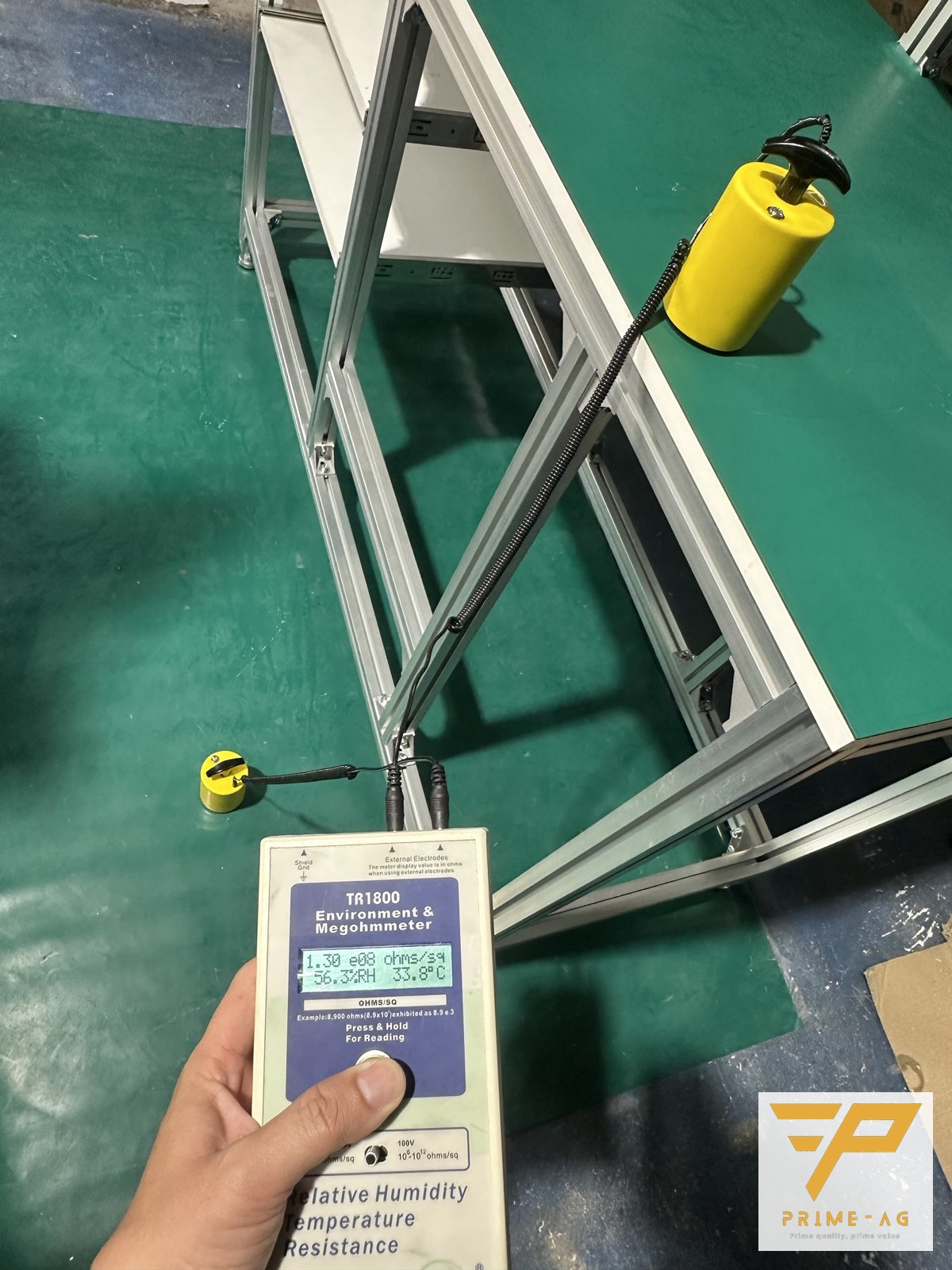
The resistance of dissipative materials rises as humidity falls: for example, a mat reading 5×10⁸ Ω in the rainy months may approach 10⁹ Ω in a dry month under air conditioning. Record temperature and humidity at every measurement (the TR1800 has this built in); if it only slightly exceeds the limit in the dry season, control workshop humidity instead of replacing the mat.
4. Loose ground snap and 1 MΩ cord
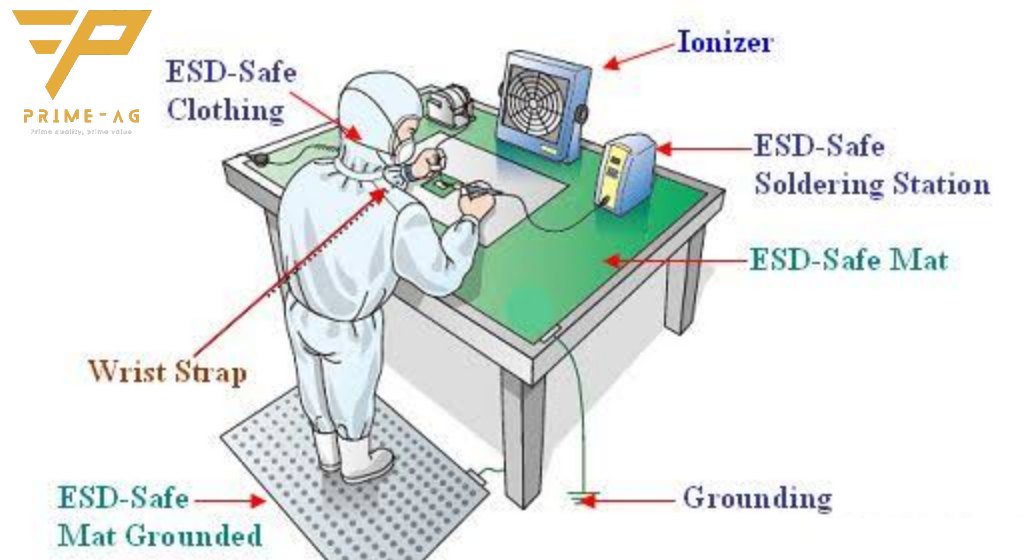
A point-to-ground measurement passes through the 10 mm snap, the 1 MΩ cord and the ground socket; a loose snap, a rusty terminal or a cord pulled out while clearing the bench all push the result to infinity. Test: measure point-to-point with two electrodes; if that passes but point-to-ground fails, the fault is in the path to ground.
5. Wrong test voltage or wrong electrode
Per ANSI/ESD S7.1, measure at 10 V first; at 10⁶ Ω or above, switch to 100 V. Multimeters, electrodes under 5 lb, or placing them right at the edge all skew results. Use a surface resistance meter with 5 lb electrodes, 10/100 V; for the method see the article on resistance acceptance testing of ESD supplies.
6. Cheap single-layer mats
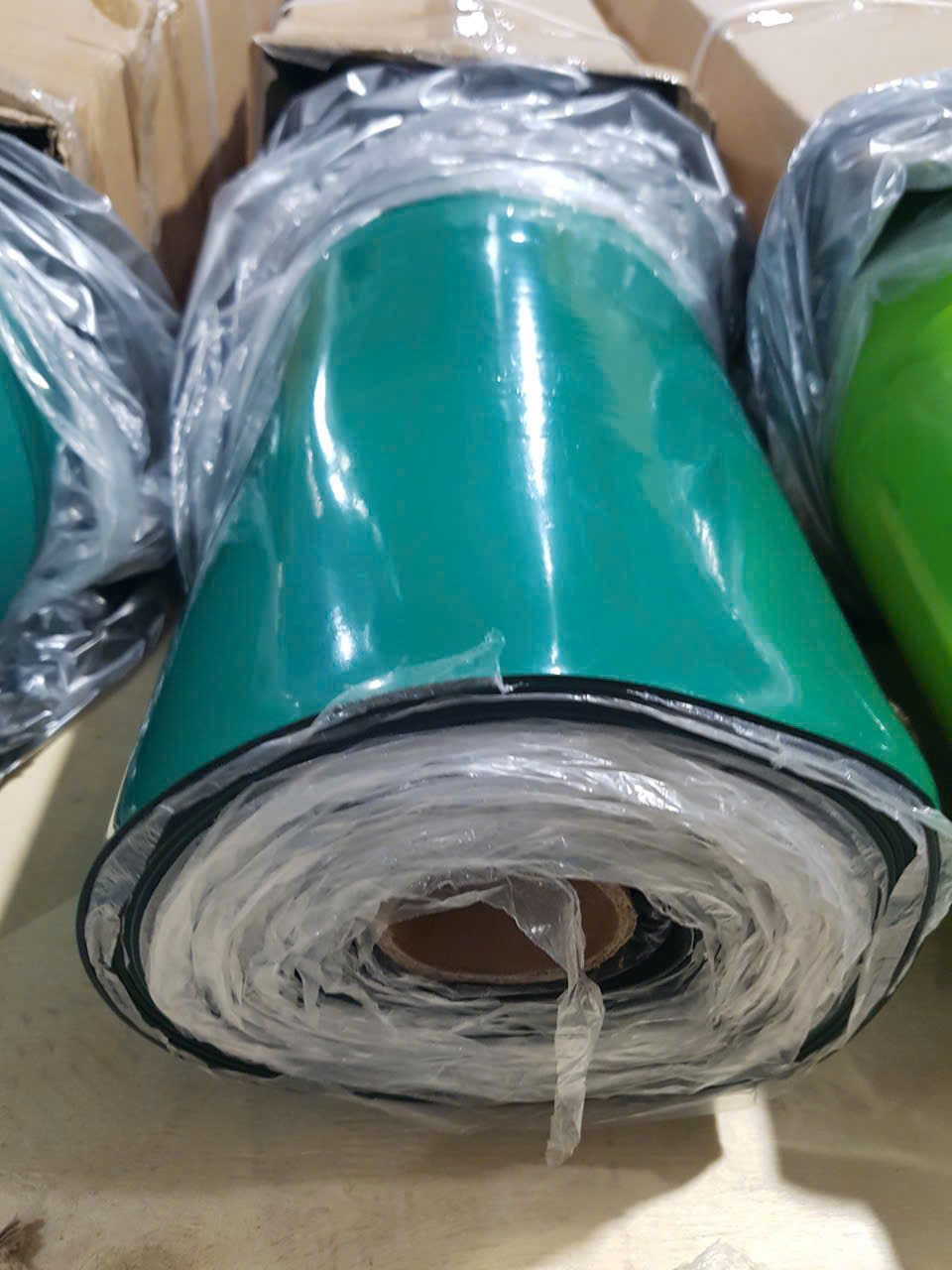
Thin single-layer mats with little carbon and no bottom layer to collect charge to the snap go out of spec early and do not recover with cleaning. PRIMEAG’s 2-layer ESD rubber mat 1.2 m × 10 m × 2 mm has a measured bottom layer of 8.90×10³ Ω (TR1800) and a 12-month ESD performance warranty.
4-step procedure: clean or replace
| Step | What to do | Result |
|---|---|---|
| 1. Re-measure | 5 lb electrode, 10 V then 100 V, including the dirtiest area | Pass → keep; fail → step 2 |
| 2. Check the ground path | Measure point-to-point, tighten the snap, check the 1 MΩ cord | Point-to-point passes → fix the cord; fails → step 3 |
| 3. Clean | Neutral soap or ESD cleaning solution, wipe with clean water, let dry completely | Back within 10⁶–10⁹ Ω → keep, clean weekly |
| 4. Replace | Still above 10⁹ Ω, cracked surface, delamination | 2-layer mat cut to bench size in 2 days, delivered in 24–48 hours |
Self-check before calling to buy
Three questions: does the mat surface have shiny marks or dull patches; what was used for the last cleaning; is the ground snap loose? If any answer is “yes”, clean, tighten the snap and re-measure first. If you do not have the right meter, PRIMEAG offers free on-site measurement at your factory in Ho Chi Minh City, Binh Duong and Dong Nai (Mon–Sat) of all ESD supplies in use, including items not bought from PRIMEAG, with a TR1800 and 5 lb electrode, within 3–5 working days, with no obligation to buy; the PDF report is for reference only, not a substitute for audit documents. If the floor fails too, see the article on choosing ESD flooring for factories.
Frequently asked questions
- Our ESD mat reads 2×10⁹ Ω at 100 V. Can we still use it? — It is too early to conclude; wipe with neutral soap, tighten the ground snap and re-measure at the same spot; replace only if it is still above 10⁹ Ω.
- Does cleaning an ESD mat with IPA destroy its ESD properties? — Not for 2-layer NBR rubber mats; what destroys ESD performance is wax, silicone and household floor cleaners.
- How often should ESD mats be tested? — ANSI/ESD S20.20 does not set an interval; typically mats and bench tops every 6 months, floors every 12 months. PRIMEAG measures every roll before delivery.
Mon–Sat, 8:00–17:00 (GMT+7) · Phone/Zalo: +84 906 108 292 · Email: info@primeag.vn
Start where it suits you: Free technical advice · Send a drawing or layout · Get a quote within 30 minutes
Written by the PRIMEAG engineering team
Updated: 2026-10-21