
Floor line marking paint that peels after a few months in Vietnam factories is usually caused by a damp or oily substrate, an old epoxy floor that was not sanded, paint that cannot withstand forklift abrasion, or a wrong mixing ratio for 2-component epoxy. PRIMEAG recommends checking the substrate first, sanding and priming again, choosing the right paint, then allowing full cure per the TDS.
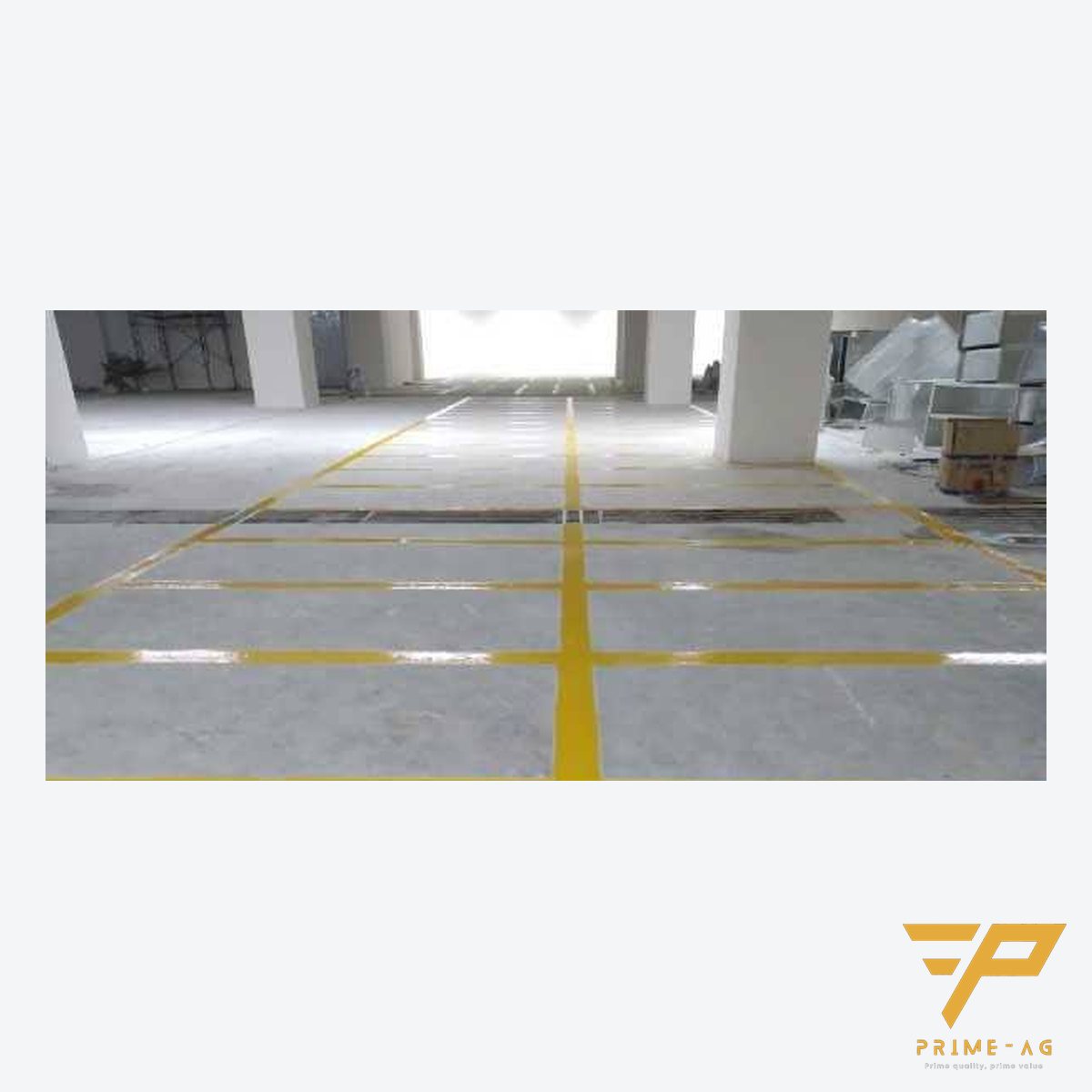
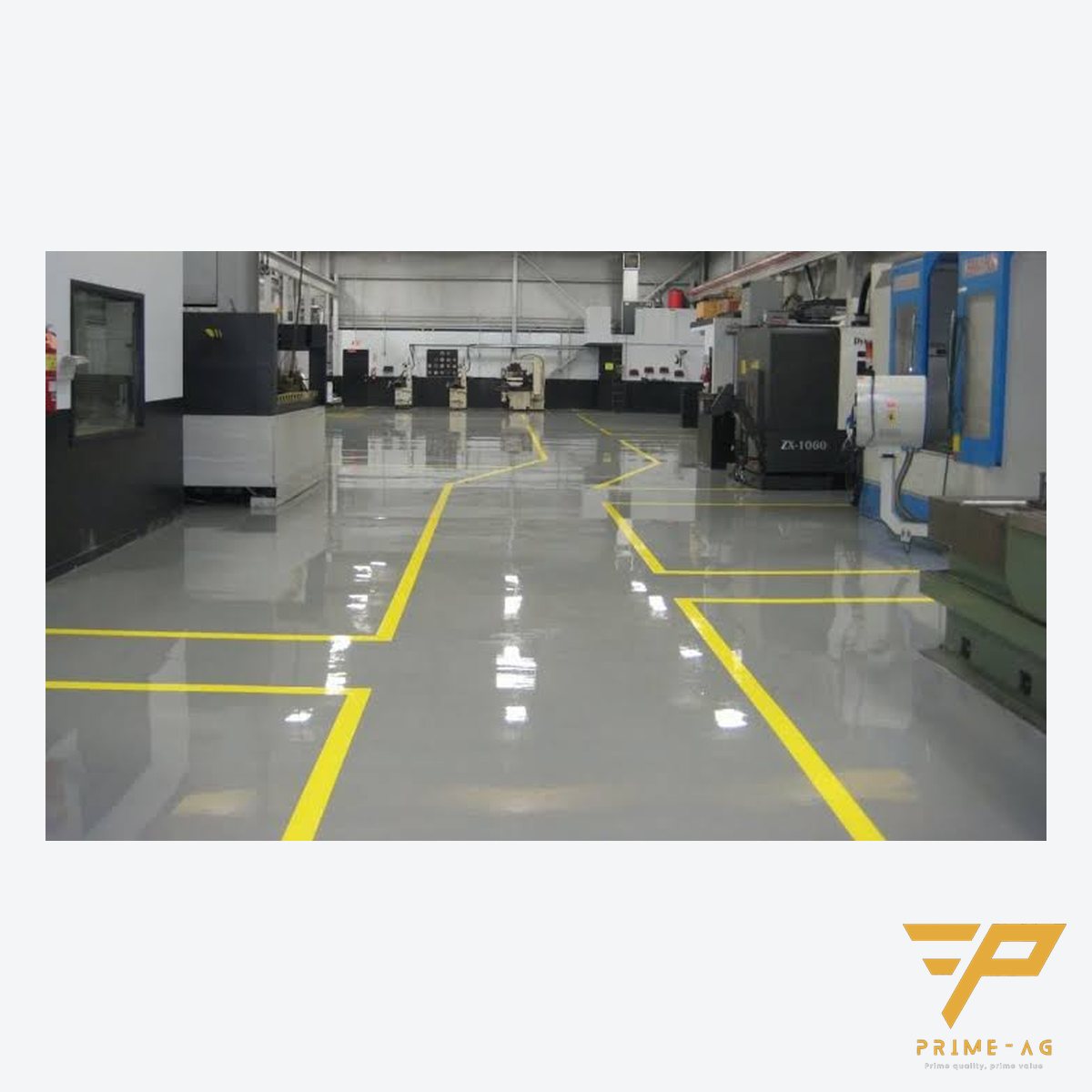
Freshly painted yellow lines, and a few months later the forklift aisle is peeling off in patches. Another coat goes on top and peels again in exactly the same spots. When failure keeps recurring in one place, the fault lies beneath the paint.
- Peeling in whole patches: adhesion failure from a damp, oily or dusty substrate or no primer.
- Wear along wheel tracks: paint too weak for the load.
- Soft, tacky to the touch: wrong mixing ratio, past pot life.
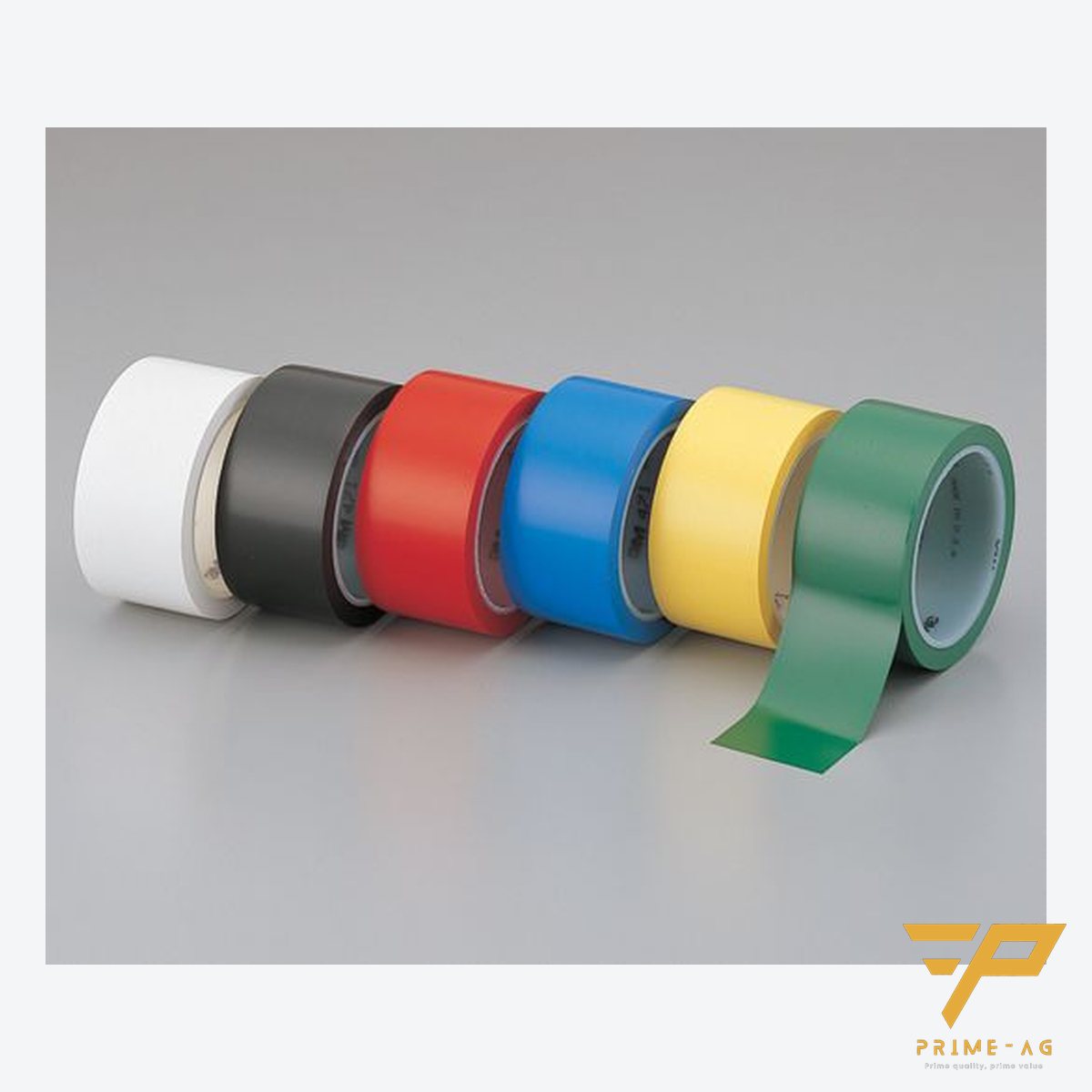
- Pedestrian walkways, frequently changing layouts: use floor marking tape.
Read the failure mode before repairing
Pry up a peeled patch and look at the underside. White dust stuck to it, bare concrete exposed: the paint never bonded to the substrate. Glossy old paint underneath: the new coat did not bond to the old one. Paint thinning along the wheel tracks: abrasion.
Check the causes in order
1. Concrete substrate still damp, with laitance, oil or dust
New concrete and ground-floor slabs that draw up moisture push water vapor upward, so the paint blisters and peels. Quick test: tape a plastic sheet to the floor overnight with all edges sealed; condensation on the underside means the substrate is still damp. Oil, grease and fine dust also break the bond.
2. No grinding, no primer
The cement laitance on the concrete surface is weak; paint bonded to it will peel off with it. Grind off the laitance, vacuum and apply the primer specified for the paint system.
3. Painting over glossy old epoxy
A glossy, smooth epoxy surface gives the new coat nothing to grip; paint applied over it will peel in patches. Sand the line marking area first.
4. Weak paint chosen for forklift aisles
Ordinary line marking paint is easy to apply but forms a softer film. Where forklifts turn and drag pallets, you need a paint whose TDS states forklift abrasion resistance, or lines on a 2-component epoxy system, where the resin and hardener react to form a hard film.
5. Wrong mixing, past pot life, uneven coats
Epoxy mixed “by eye” gives a soft, less durable film. Large batches generate heat and set quickly; material used past its pot life bonds poorly. Coats that are too thick or too thin both fail early. Take the ratio, pot life and film thickness from the TDS of the specific paint.
6. Put into service too early, chemicals and hot water
Letting vehicles drive on paint that has not cured enough leaves wheel marks and lifts the edges. In areas washed with hot water or cleaning agents, check the paint’s TDS for resistance. Sun-exposed areas should get an extra UV-resistant PU topcoat.
How to repaint for durability
- Scrape off the peeling paint back to where the paint is still firmly bonded.
- Degrease, wait for the substrate to dry (test again with plastic sheet), sand the edges of the old paint and glossy epoxy in small areas with sandpaper and sanding discs for handheld grinders; use a floor grinder for large concrete areas; wear a dust mask when grinding.
- Vacuum, wipe clean and apply primer.
- Paint the lines with yellow/white floor line marking paint or an epoxy system per the TDS; for 2-component types, mix only as much as can be used within the pot life.
- Fence off the area until fully cured per the TDS.
- When ordering epoxy, ask for the TDS/MSDS of the exact product; wear nitrile gloves and safety glasses during application.
When to switch to floor marking tape
| Area | Recommended | Notes |
|---|---|---|
| Aisles with frequent forklift traffic | Line marking paint with a TDS rated for forklifts, or on an epoxy floor | Or 3M 971 floor tape, 0.42 mm thick (special order) |
| Pedestrian walkways, hand carts, long-term lines | 3M 471 floor marking tape | Vinyl 0.14 mm, removes cleanly when the layout changes |
| Rack bays, parts placement areas, temporary lines | 3M 764 floor marking tape | 0.125 mm; not for forklifts |
| 5S walkway marking, no 3M brand needed | PVC floor marking tape 0.15 mm | 48 mm wide, also 24 / 72 mm |
| Wash areas, permanently wet floors | The right chemical-resistant paint | Tape needs a clean, dry floor when applied |
Conversely, if tape keeps tearing in forklift aisles, switch to paint. Problems specific to tape: floor marking tape peeling after 1 week.
Where to start
- Photograph the peeled areas and note the location: forklift aisle, wash area or walkway.
- Issue an internal color chart before repainting. Aisle lines 2 inches (about 5 cm) wide or more are accepted by OSHA.
Frequently asked questions
- Do I need to sand an old epoxy floor before painting lines on it? — Yes. A glossy epoxy surface does not let the new coat bond; sand it, vacuum and remove oil before painting.
- Paint or floor tape for forklift aisles? — Aisles with frequent forklift traffic should use line marking paint whose TDS states forklift abrasion resistance; 3M 471 and 764 tapes and 0.15 mm PVC tape suit walkways and hand carts, and should not be applied to paint that has not fully cured.
- Is there a mandatory standard for floor marking colors? — There is no general mandatory standard for floor line colors. OSHA 1910.144 only specifies the safety colors red and yellow; everything else follows your internal color chart.
Email: info@primeag.vn · Phone/Zalo: +84 906 108 292
Written by the PRIMEAG engineering team
Updated: 2026-10-27