
How are lean pipe workbenches, racks and carts made in Vietnam? At the PRIMEAG workshop in Thu Duc, Ho Chi Minh City, every workbench, rack or cart built from plastic-coated steel pipe goes through 5 steps: breaking the drawing down into a cut list, cutting the Φ28 pipe to that list, selecting and tightening DND joints to 8–10 N·m, fitting the worktop or shelf decks, then inspection and packing. Standard models ship in 5–7 working days; new designs take 10–15 days.
Factory customers ordering lean pipe workbenches for the first time usually ask two questions: “what is it made of?” and “how can you build it so fast?” This article answers both with photos taken in our workshop, following the exact sequence an order goes through.
1. Materials: Φ28 pipe and DND joints always on hand
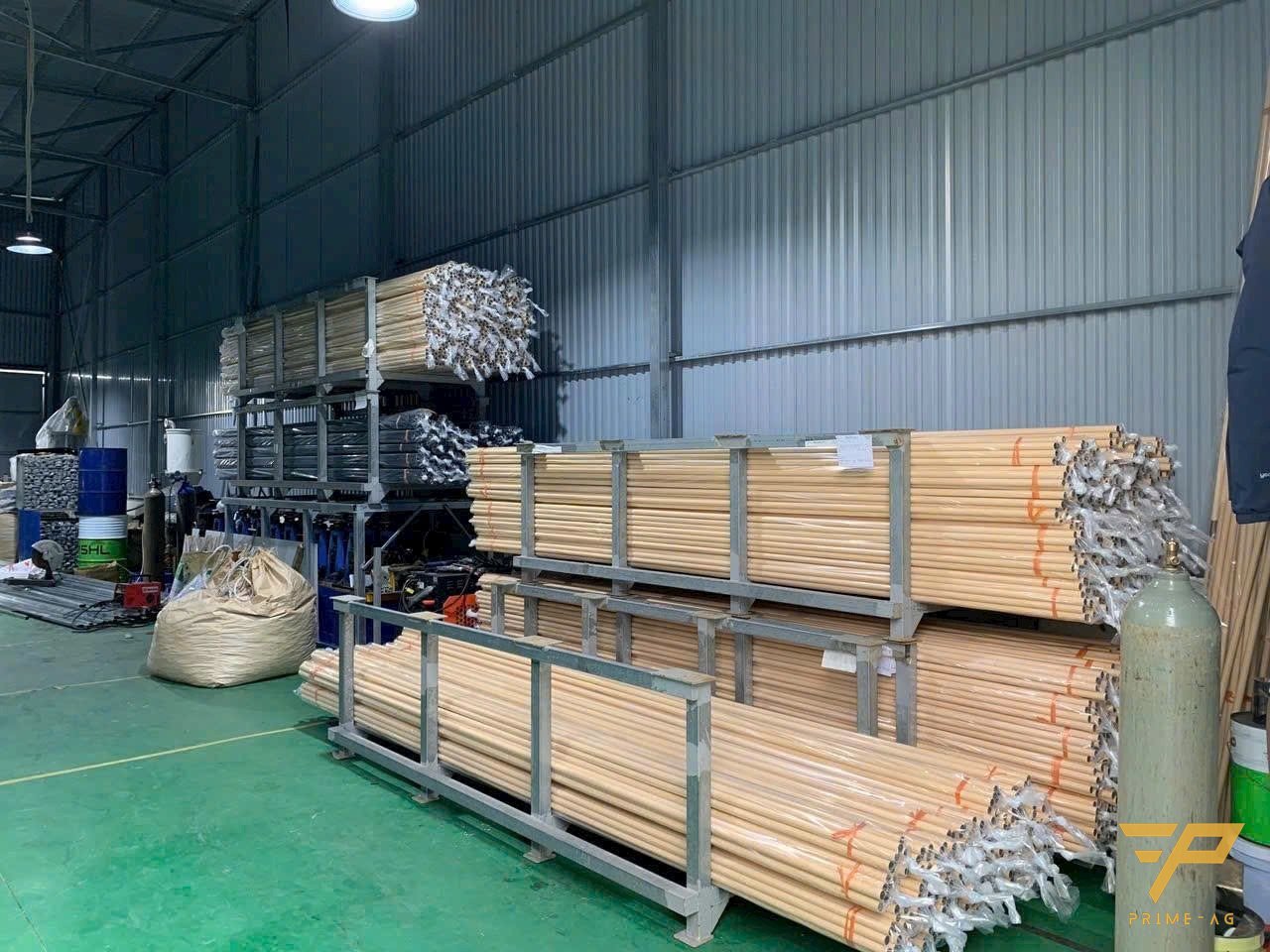
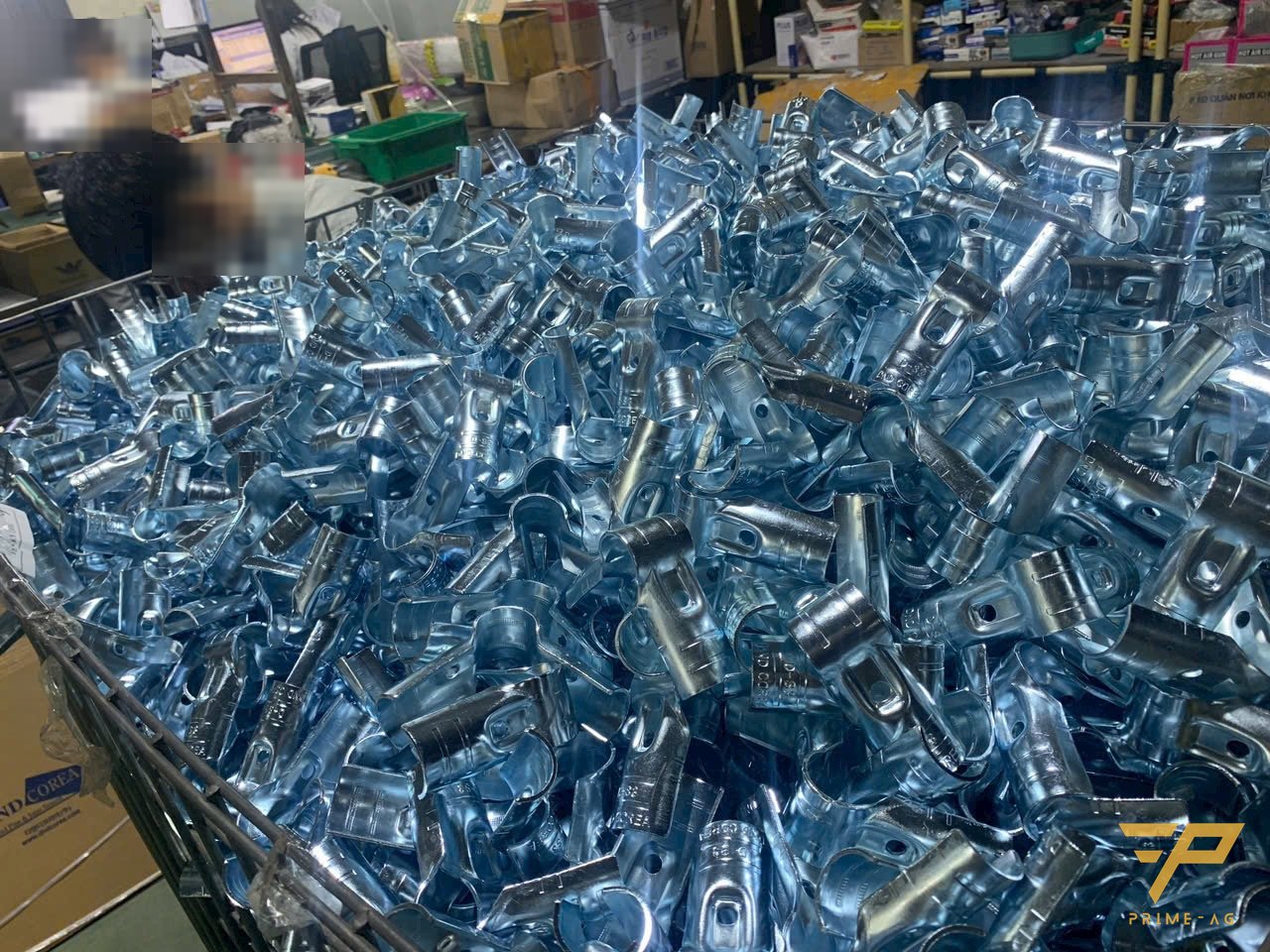
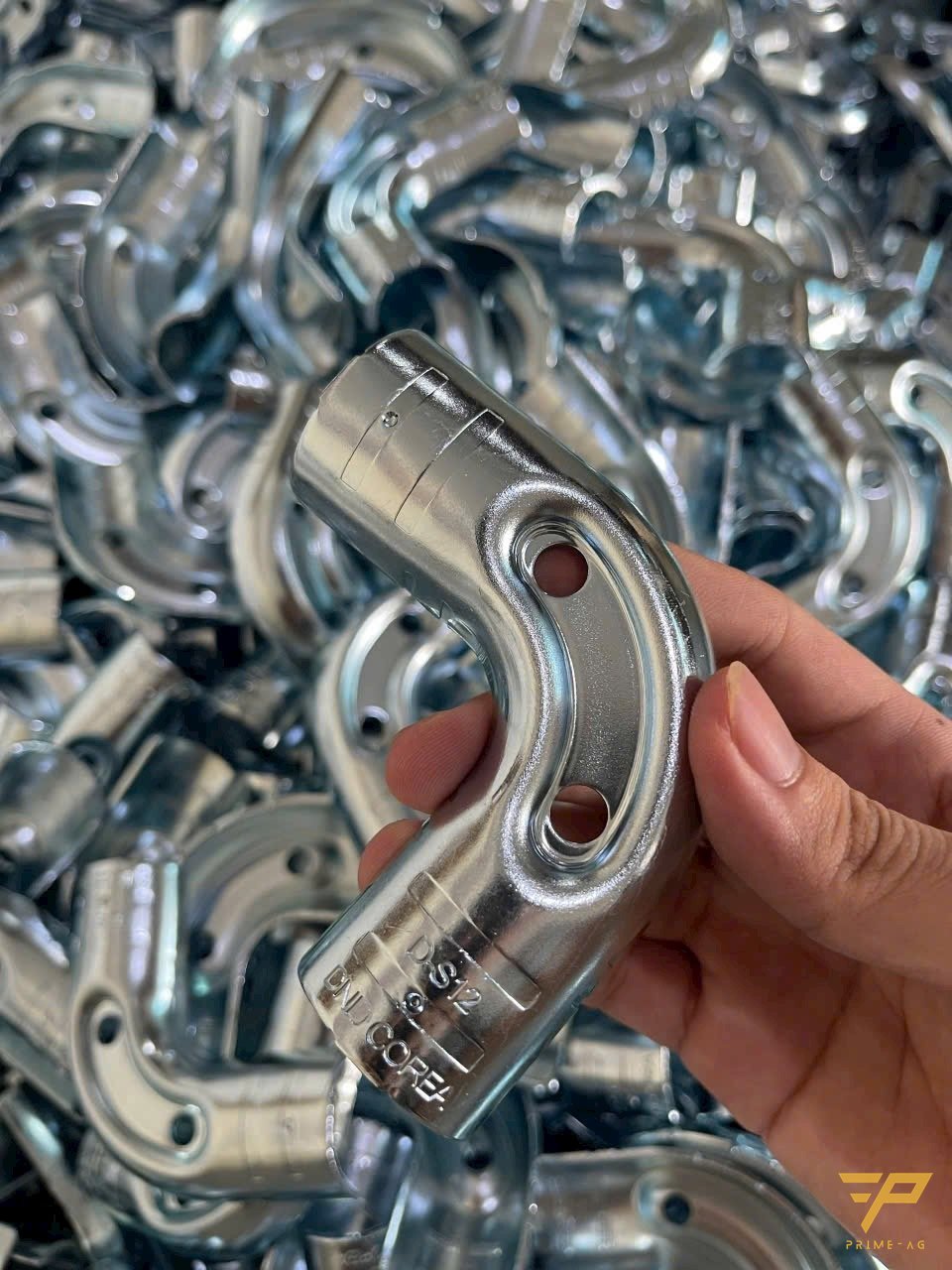
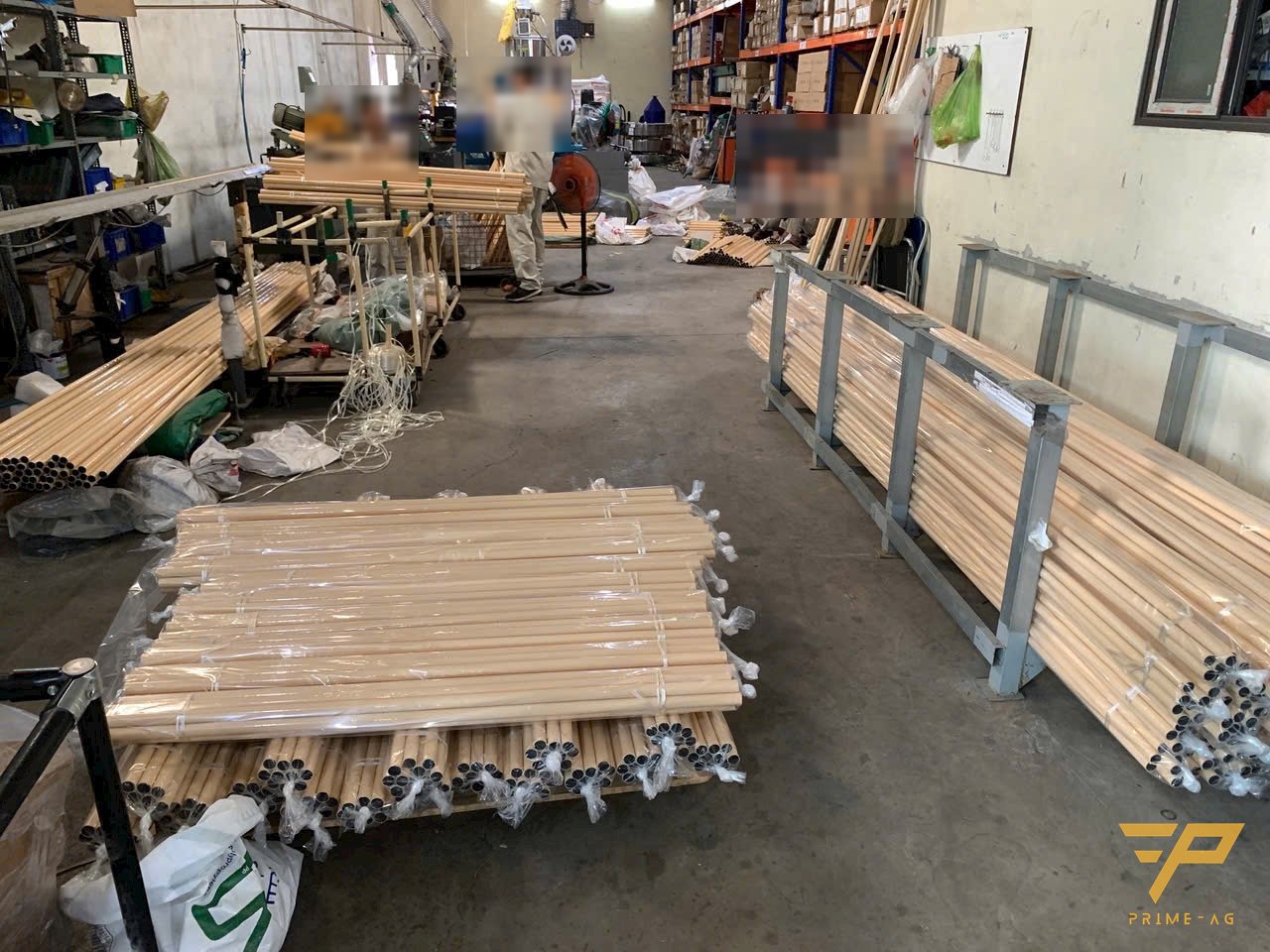
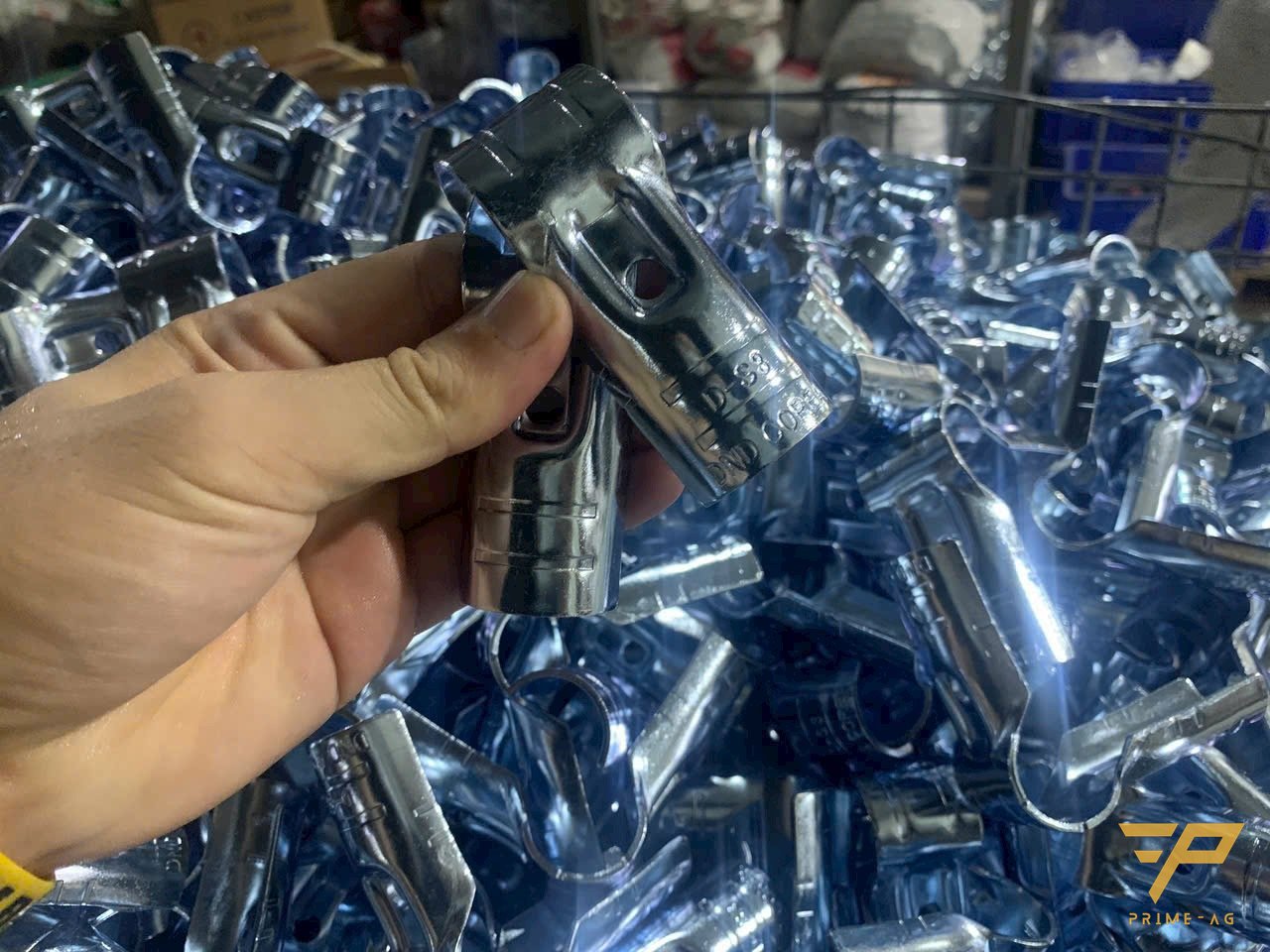
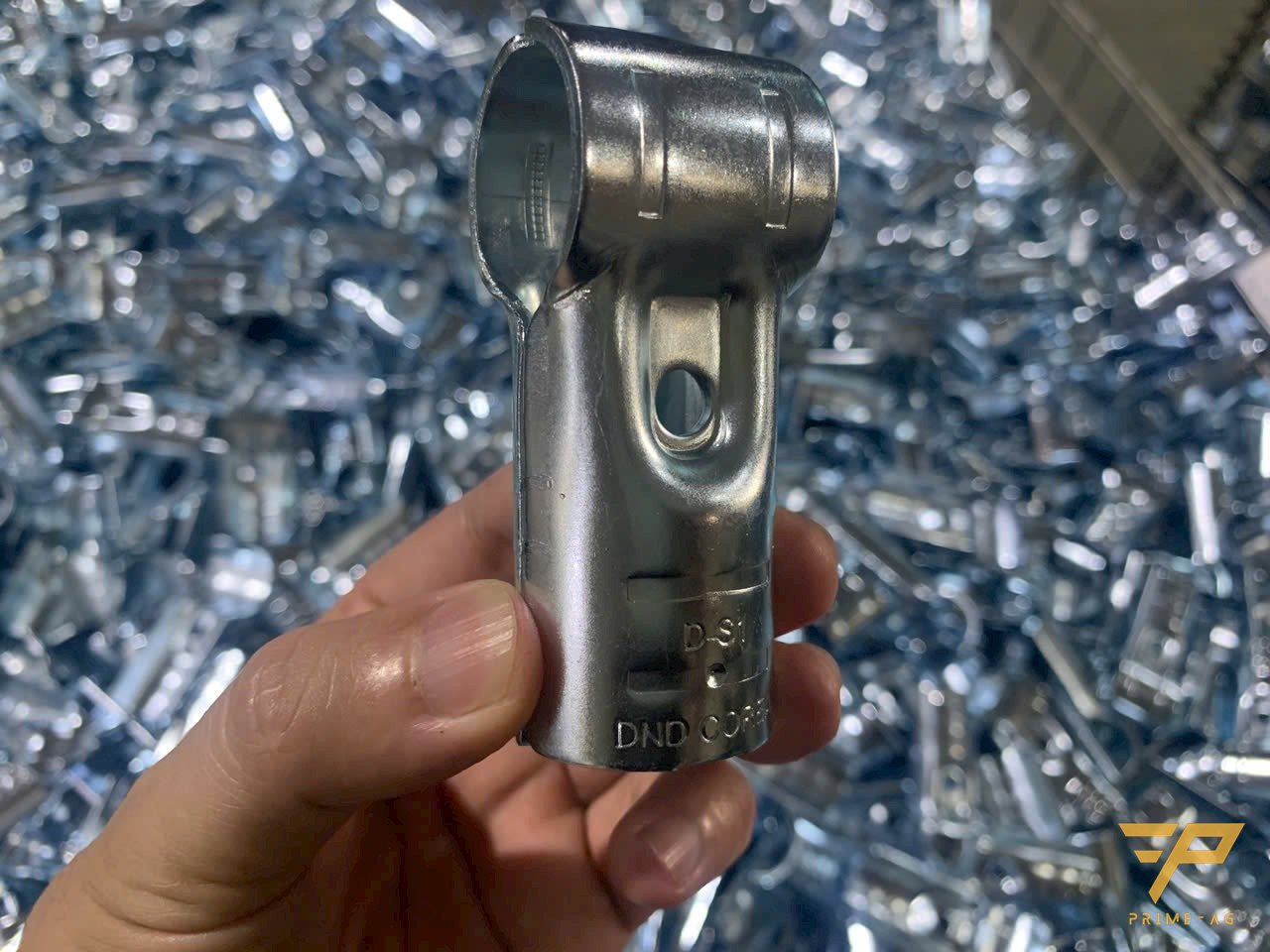
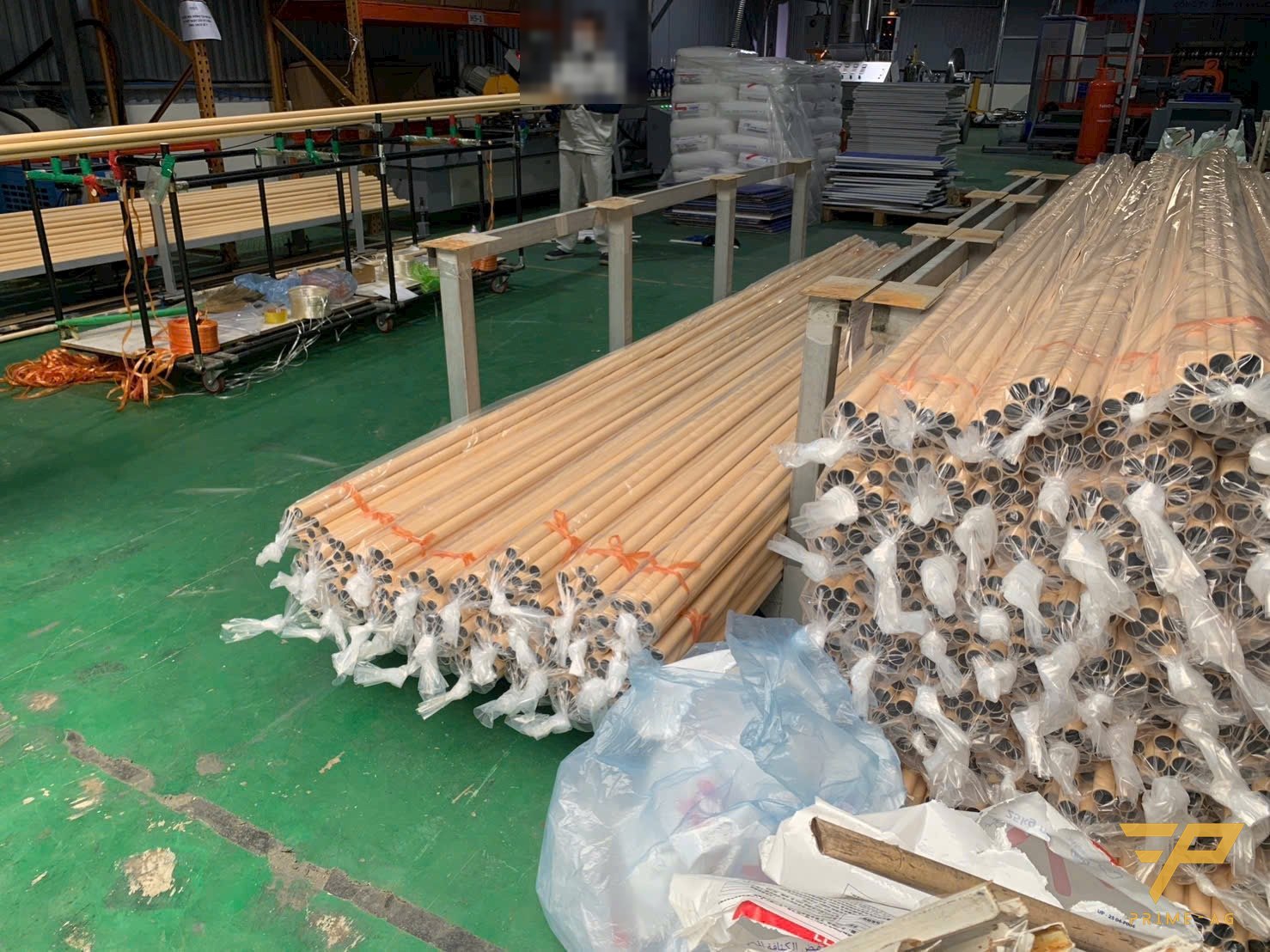
Plastic-coated steel pipe Φ28 (0.8–1.0 mm steel core, ABS/PE coating) arrives in 4 m lengths, bundled 10 pieces per bundle, with the pipe ends wrapped in plastic film against scratches, and is stored on racks ready for cutting. DND joints are stamped from steel sheet, zinc-plated and kept in wire baskets sorted by code: D-S1 straight connector, D-S3 T-joint, D-S12 corner joint, end caps and so on. Because the materials are kept on hand, standard-model orders never wait for imports.
2. Breaking the drawing down into a cut list
From the 3D drawing, our engineers prepare the cut list: for each pipe it states the length after deducting the joint allowance, the quantity and the mounting position. The cut list is the most important document in the order; one wrong pipe means a wrong frame. PRIMEAG sends the drawing and cut list with the quotation, free of charge, and the customer keeps them for reorders or for making changes later.
3. Cutting pipe to the cut list
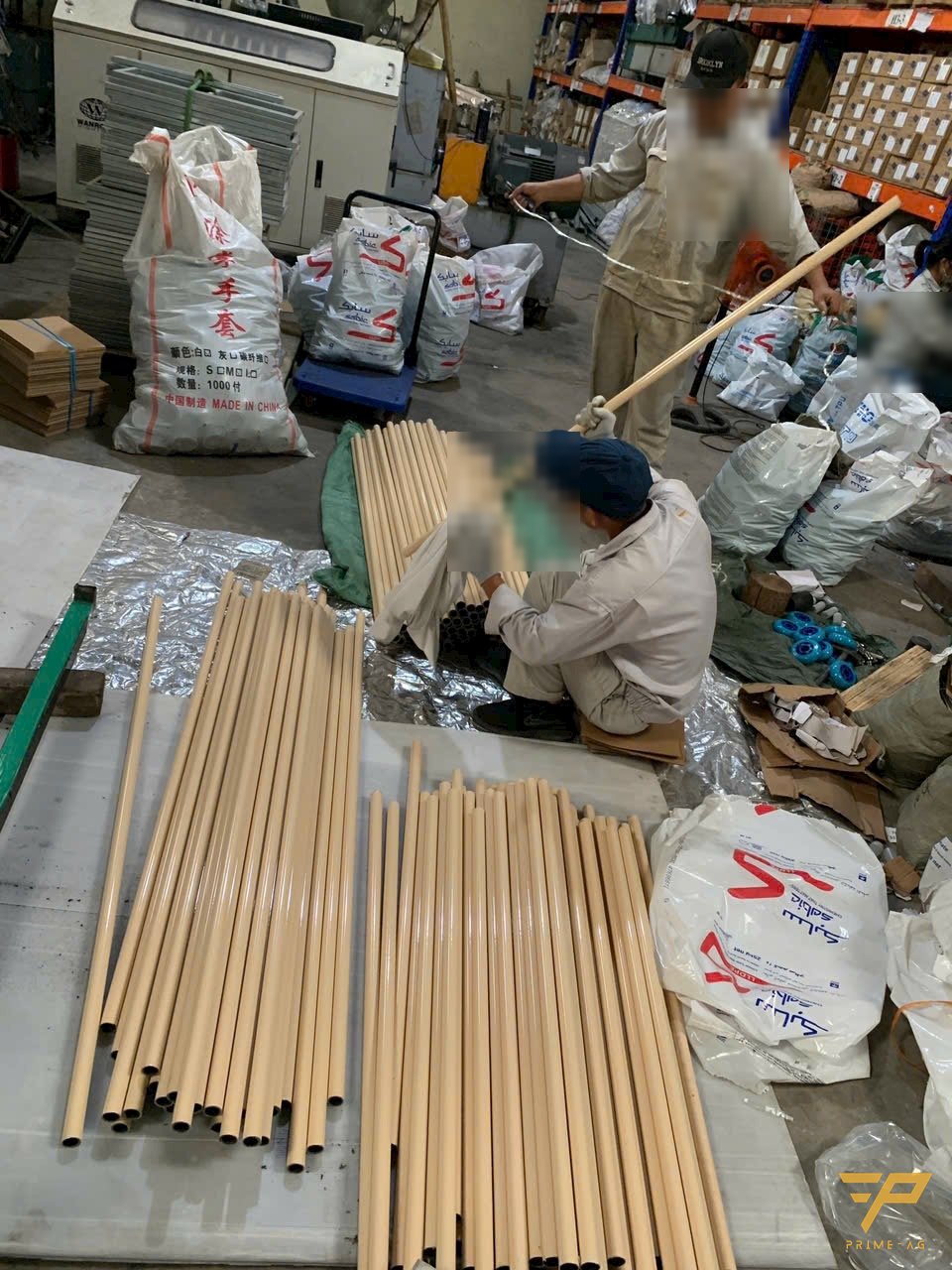
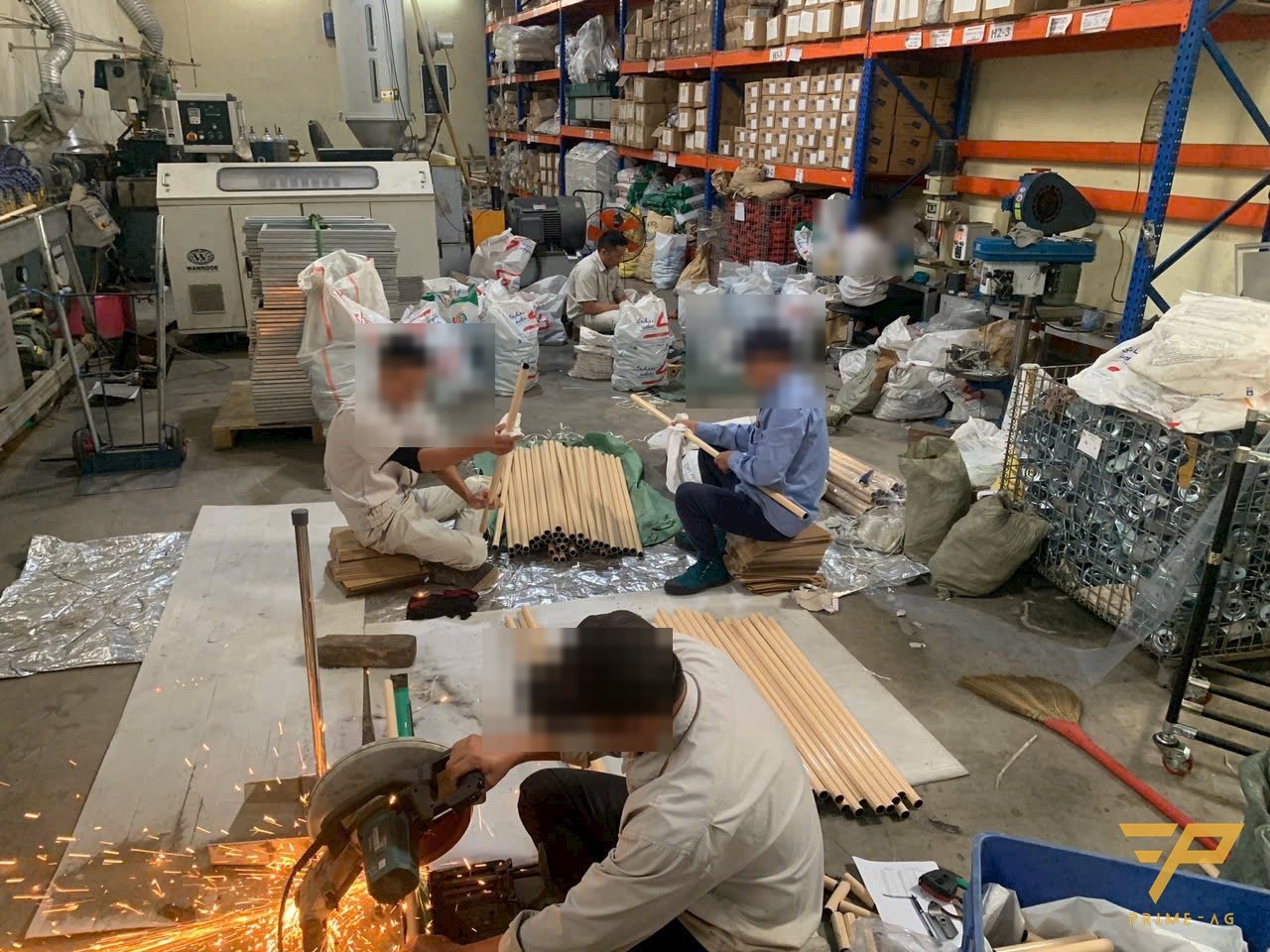
Pipes are cut on a circular saw; cut ends are deburred and wiped clean so the joints slide on smoothly. Length tolerance is ±2–3 mm; pieces of the same length are bundled separately and labeled per the cut list before moving on to assembly.
4. Frame assembly: tightening joints to the right torque
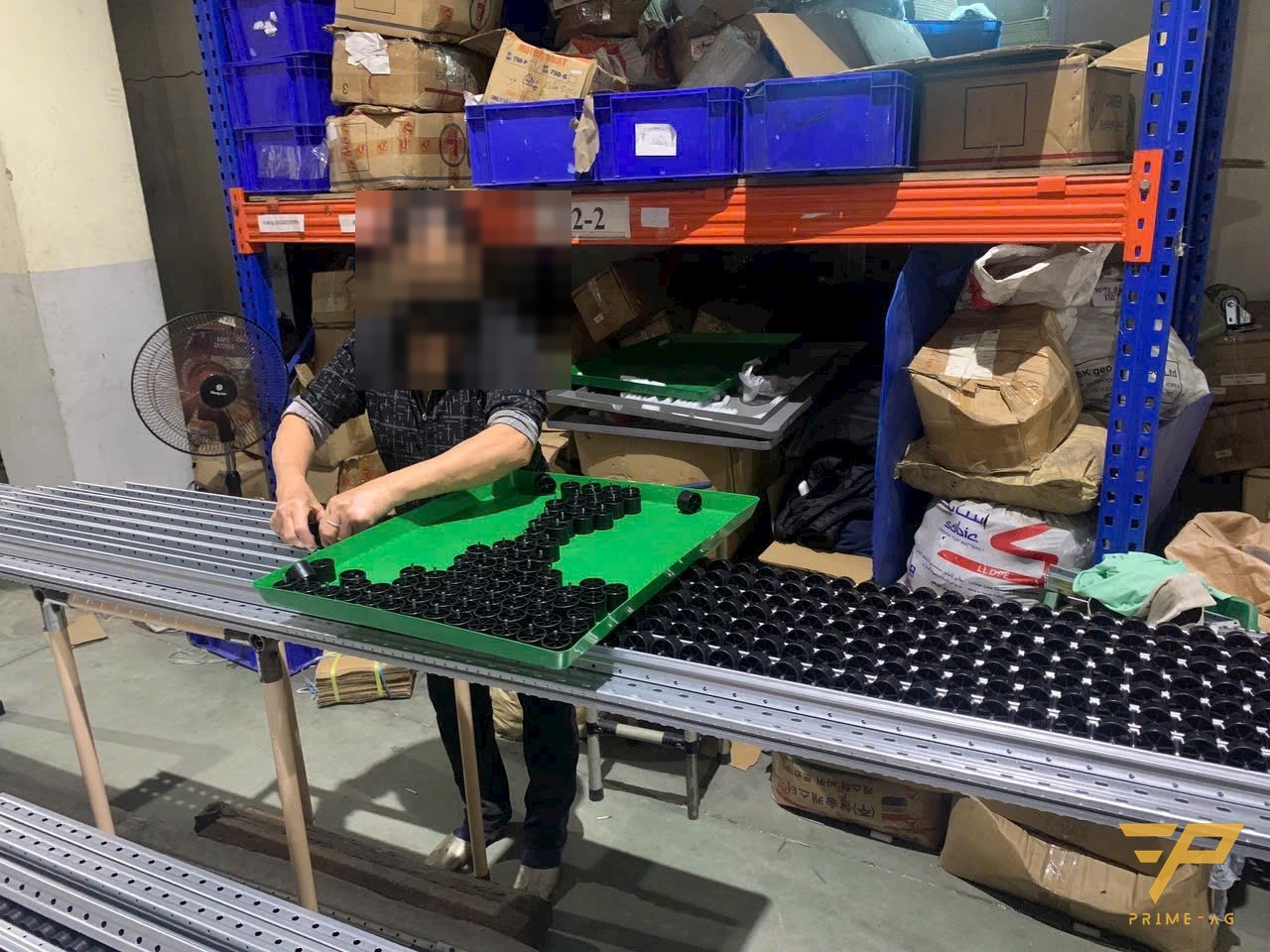
Frames are assembled from the bottom up: legs, lower level, uprights, upper level. Every DND joint has its M6 bolt tightened with a torque wrench to 8–10 N·m: any looser and the frame wobbles after a few months; any tighter and the pipe coating gets dented and the joint deforms. Worktops are moisture-resistant MDF or ESD rubber mat, shelf decks are boards or roller tracks, and PU or ESD casters mount onto the leg joints.
5. Inspection and packing
Before delivery, every frame is checked for squareness, wobble under a sideways push, caster rotation and locking, the ground wire, and ESD surface resistance (measured with a TR1800 meter, with a PAG-QA-ESD-01 report per lot). Workbenches and racks are delivered fully assembled or broken down into sub-assemblies to fit through factory doors; loose pipes and joints are bundled, with pipe ends wrapped in plastic film.
Lead times and commitments
| Order type | Lead time | Notes |
|---|---|---|
| Standard models (1200×750 workbench, 3-tier rack, 2–3-tier cart) | 5–7 working days | Materials on hand, cutting and assembly only |
| New design to customer drawing | 10–15 working days | Includes 3D drawing approval |
| Orders over 20 workbenches | 2–3 weeks | Delivered in batches, installed at the factory |
| Loose pipes, joints, casters | 24–48 hours | Ho Chi Minh City, Binh Duong, Dong Nai |
Workbench, rack and cart frames carry a 3-year warranty; ESD worktops, lamps, power outlets and casters 12 months. Welded, powder-coated square steel tube frames (heavy-duty carts, fixtures to drawing) are also fabricated in this workshop, with lead time quoted per order.
See the products
- Lean pipe workbench · ESD workbench price list 2026
- Multi-tier lean pipe cart · Gravity flow rack
- Φ28 pipe, DND joints and loose parts · Fabrication to drawing
Frequently asked questions
- What is the lead time for a standard lean pipe workbench or rack in Vietnam? Standard models 5–7 working days; new designs 10–15 days; orders over 20 workbenches 2–3 weeks, delivered in batches.
- DND metal joints vs plastic joints: what is the difference? DND joints are stamped from zinc-plated steel sheet and clamp the Φ28 pipe with an M6 bolt tightened to 8–10 N·m; they handle vibration and long-term loads better than plastic joints and can be taken apart and reassembled many times without losing grip.
- Can I buy loose pipes and joints and assemble the frames myself? Yes. PRIMEAG sells Φ28 pipe cut to length, DND joints, plastic joints, casters and boards individually, with a free drawing and cut list for self-assembly.
Email: info@primeag.vn · Phone/Zalo: +84 906 108 292
Written by the PRIMEAG engineering team
Updated: 2026-10-24