
An SMT area needs to keep relative humidity (RH) within a stable band: too humid and moisture-sensitive components and solder paste suffer; too dry and static increases. The floor life of MSL components under J-STD-033 is based on ≤30 °C/60 % RH. PRIMEAG supplies thermo-hygrometers, dehumidifiers and moisture-protection supplies for SMT areas.
- Set limits in writing: target RH band and alarm limits, checked against the solder paste datasheet and customer requirements.
- Measure in the right places: thermo-hygrometers at the paste printer, component store and entrance; log daily.
- High humidity: dehumidifier + less moist air leaking in through doors.
- Too dry: strengthen ESD controls, ionizing blowers for insulators.
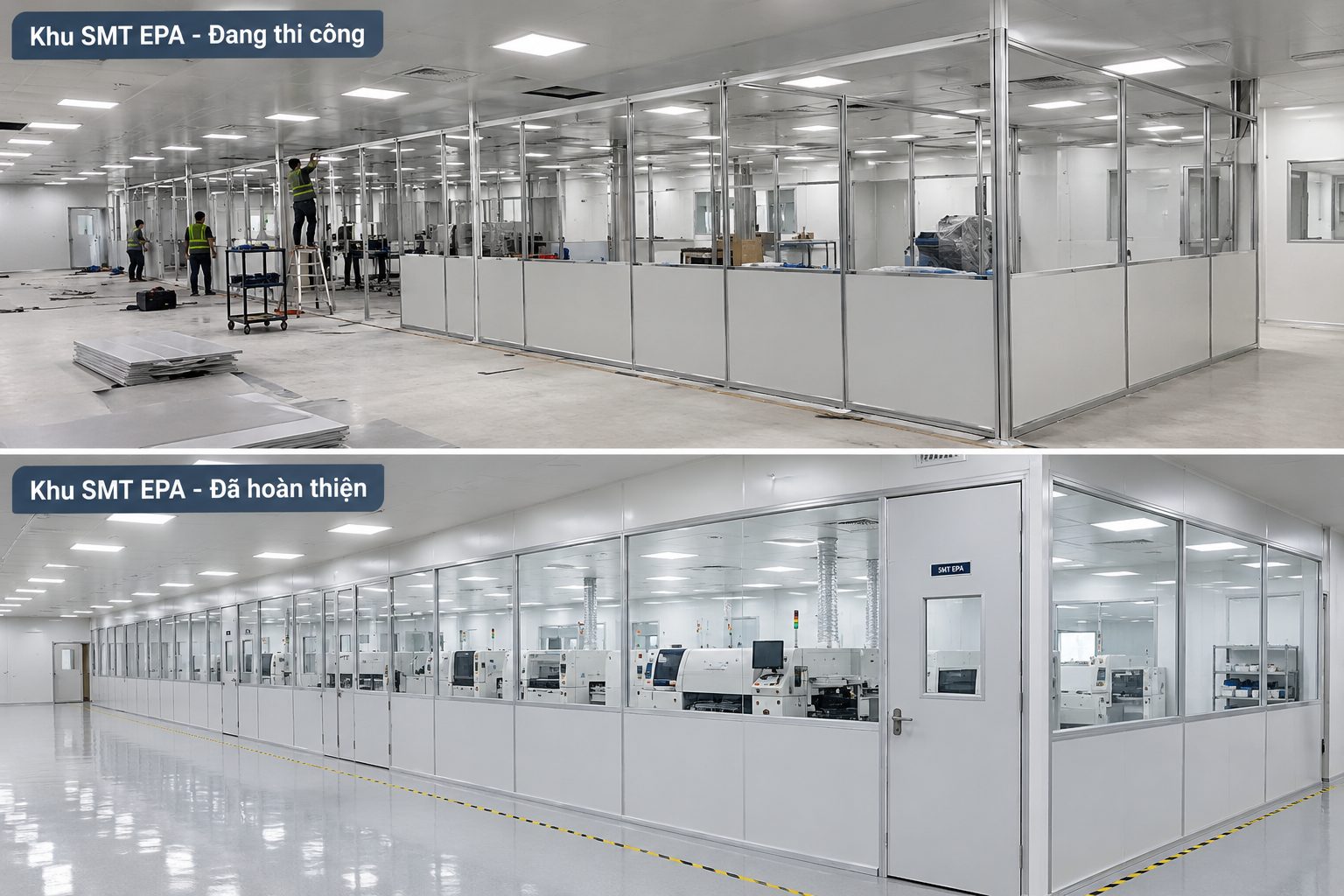
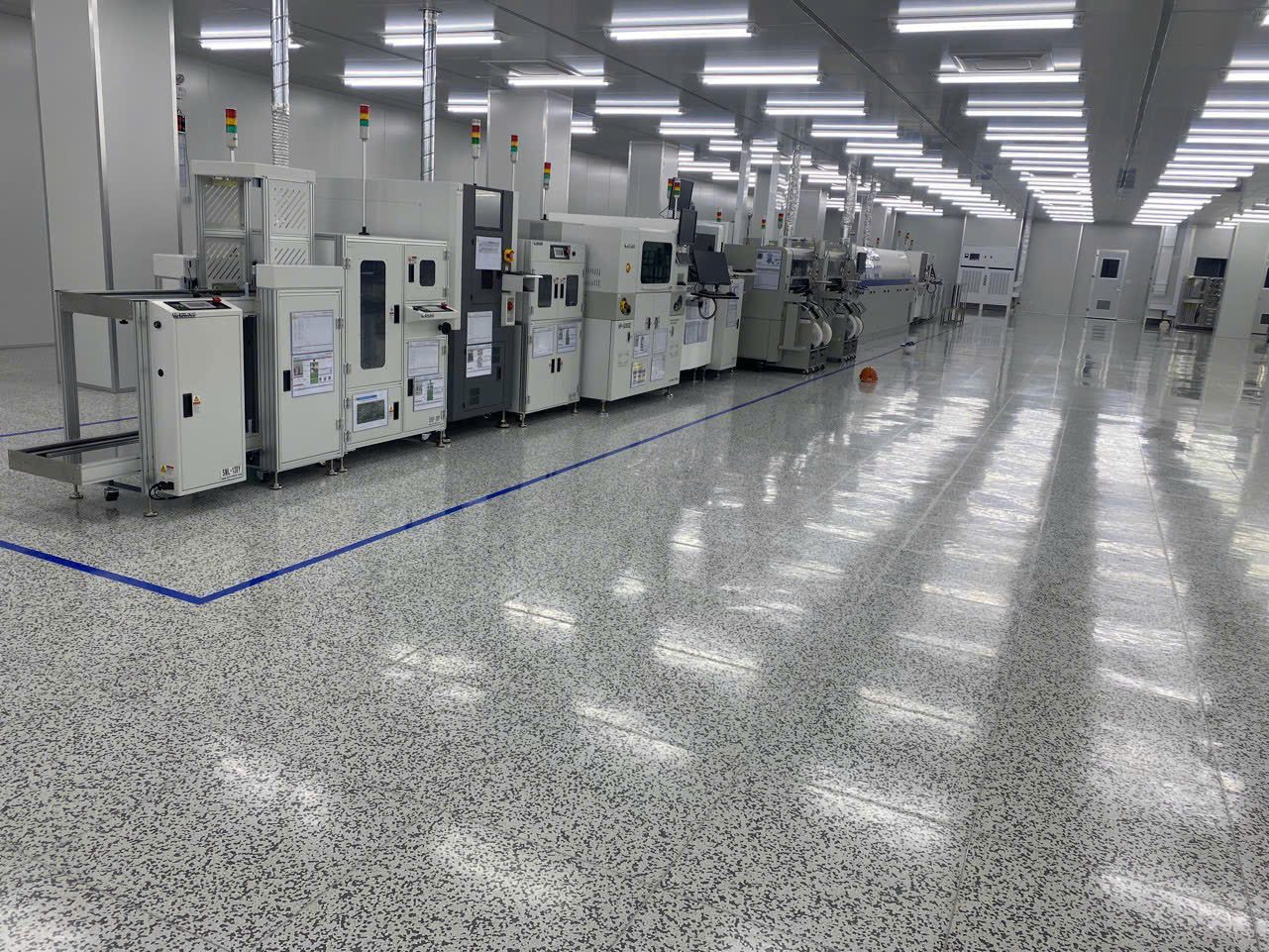
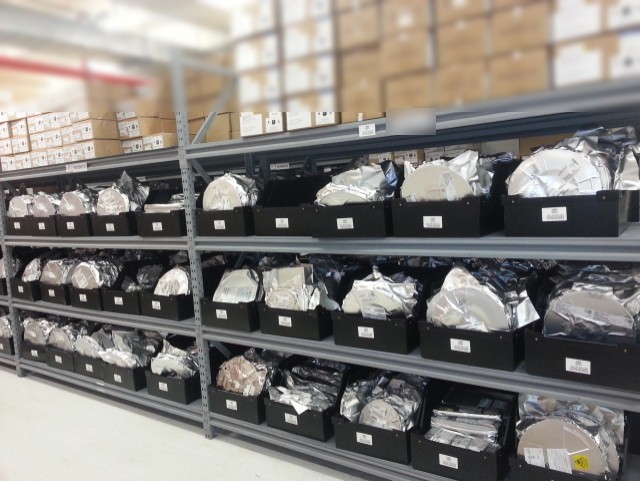
How humidity affects SMT
High humidity
Moisture-sensitive components (MSL 2–6) absorb water vapor once out of the bag. In the reflow oven the vapor expands and can crack the package or cause delamination (the “popcorn” effect). Solder paste left exposed to humid air also degrades more easily, affecting print quality and solder joints. PCBs, paper and cartons in the area absorb moisture too.
Too dry
Dry air makes insulating materials build up more charge when rubbed or separated. ANSI/ESD S20.20 does not require a specific humidity level, so an ESD program must not depend on humidity. When the SMT area is dry, it is even more important to make sure people are grounded and insulators are neutralized with ionization.
1. Set RH limits
There is no single figure for every factory. Use three sources: the solder paste datasheet (printing conditions), customer or corporate requirements, and the 30 °C/60 % RH limit used to calculate MSL floor life. Many factories set a target band, for example 40–60 % RH, with alarm limits at both ends. Write it into the procedure: who reads it, how many times per shift, and what to do when a limit is exceeded.
2. Place thermo-hygrometers correctly
At least one measuring point next to the paste printer, one in the component store and one near the entrance. Do not place them right at a cold-air outlet or next to the reflow oven. Data-logging units let you review the whole day, especially the night shift. Calibrate them periodically like any other measuring instrument.
3. Dehumidifiers and reducing moisture ingress
Size the dehumidifier by room volume, airtightness and how often doors open. Before buying a large unit, seal the moisture sources: doors left open, gaps in partitions, adjacent washing areas. Entrances can use an air shower or ESD PVC strip curtains to reduce outside air flowing in. PRIMEAG supplies industrial dehumidifiers for SMT areas – ask us to size a dehumidifier.
4. Protect components even when the room is in spec
A room within RH limits does not replace moisture-barrier packaging. MSL components must have their floor life tracked once the bag is opened; unused parts are resealed in a moisture barrier bag with desiccant and HIC cards.
What to do when limits are exceeded
| Situation | Action |
|---|---|
| RH above the upper limit | Check doors and dehumidifier; log it; review the floor life of opened MSL components |
| RH below the lower limit | Check wrist straps and ESD footwear; switch on ionizers where insulators are present |
| Large swings within a shift | Find the source: receiving door opening times, air conditioning switched off on night shift |
| HIC card changed color when the bag is opened | Handle per J-STD-033 (bake if required) before soldering |
How to get started
- Install 3 thermo-hygrometers and record data for 2 weeks, including night shifts.
- Compare with the target band and find the times and locations where limits are exceeded.
- Seal moisture sources first, then size the dehumidifier.
- Write a response procedure for out-of-limit conditions.
PRIMEAG supplies thermo-hygrometers; stocked items are delivered within 24–48 hours in Ho Chi Minh City, Binh Duong and Dong Nai, ordered items in 3–7 working days. Further reading: moisture in the component store: MSL, HIC cards, desiccant and setting up an EPA for an SMT line.
Low humidity makes the resistance of floors and mats rise sharply; in the dry season, have PRIMEAG re-measure free of charge to confirm the SMT area is still below 10⁹ Ω.
Frequently asked questions
What humidity should an SMT area be kept at? There is no universal figure; set it from the solder paste datasheet, customer requirements and the 30 °C/60 % RH limit in J-STD-033. Many factories use a target band such as 40–60 % RH with alarm limits.
Does low humidity increase static? Yes, dry air makes insulators charge more. That is why an ESD program must rely on grounding and ionization, not on humidity.
Where should thermo-hygrometers be placed? Next to the solder paste printer, in the component store and near the entrance; avoid cold-air outlets and the area next to the reflow oven. Log readings daily.
Updated: 22 October 2026 — PRIMEAG engineering team
Mon–Sat, 8:00–17:00 (GMT+7) · Phone/Zalo: +84 906 108 292 · Email: info@primeag.vn
Start where it suits you: Free technical advice · Send a drawing or layout · Get a quote within 30 minutes
Written by the PRIMEAG engineering team
Updated: 2026-10-23