
Pallet stretch film that breaks during hand wrapping is usually caused by sharp corners on cartons or pallet boards, jerky pulling at the corners, dented roll edges, rolls stored somewhere too hot or too cold, or heavy loads wrapped with too few layers. PRIMEAG recommends protecting corners first, pulling with steady tension and overlapping each wrap by half the film width (about 25 cm on a 50 cm film).
At the end of a shipping shift, the film rips halfway around the pallet and has to be cut off and redone. In most cases the fault is not the film roll but the pallet and the hand holding the roll.
- Film rips right at a corner: deal with sharp edges, steel strap ends and board nails first.
- Breaks in the middle of a flat face: check the pulling force and whether the roll edge is nicked.
- Film brittle or poor cling: check where the rolls are stored in the warehouse.
- Heavy loads: add wrap layers instead of trying to stretch harder.
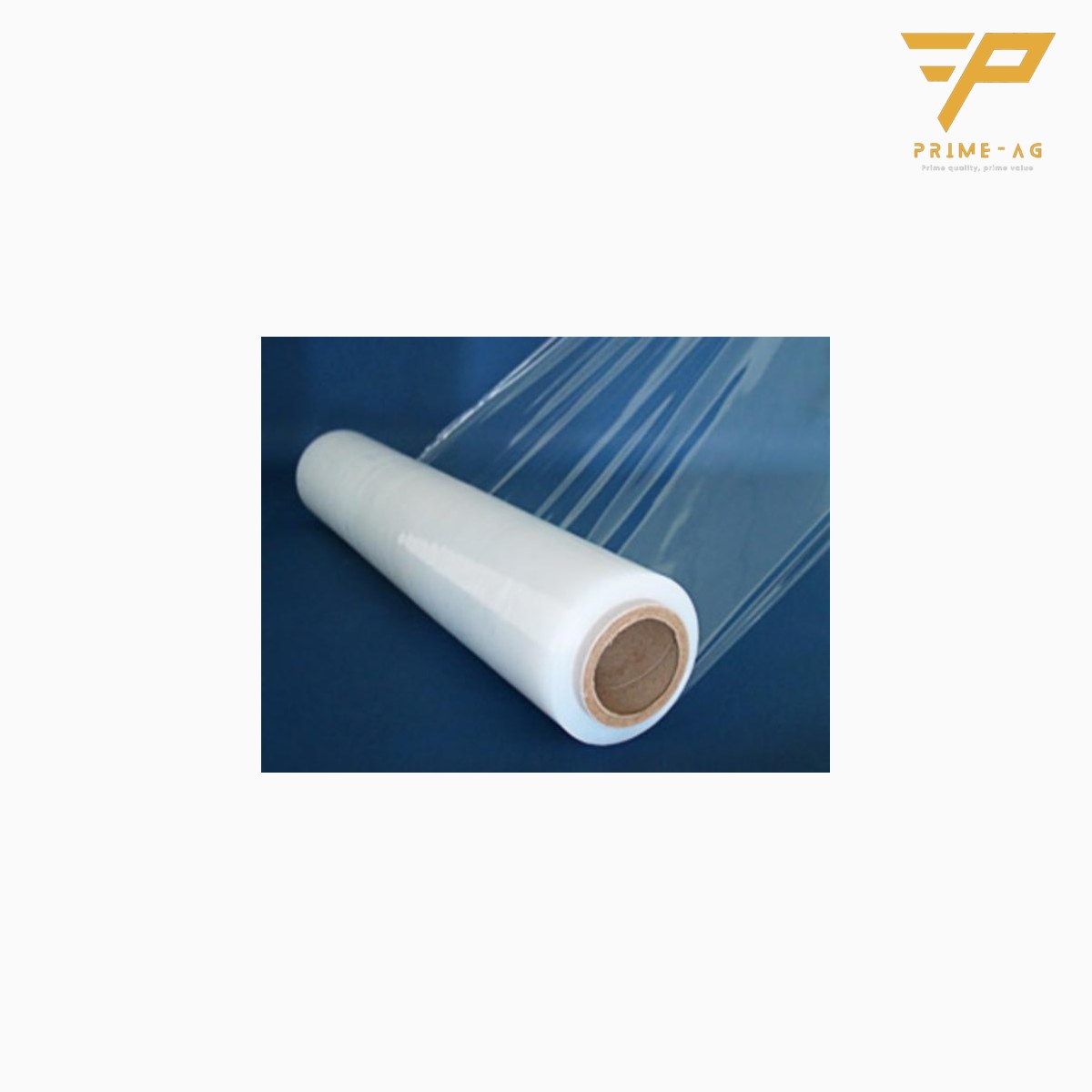
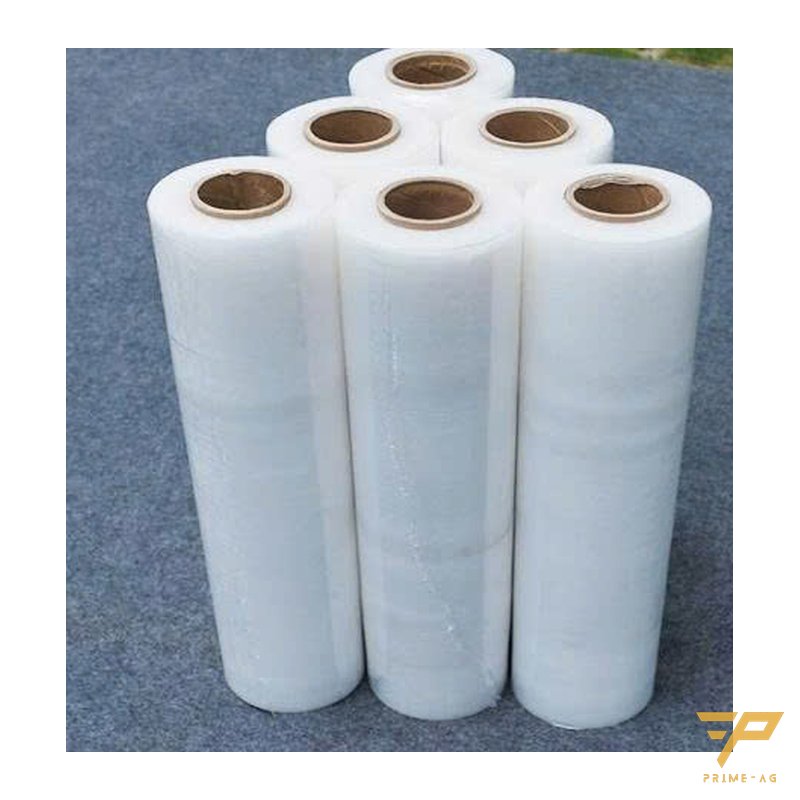
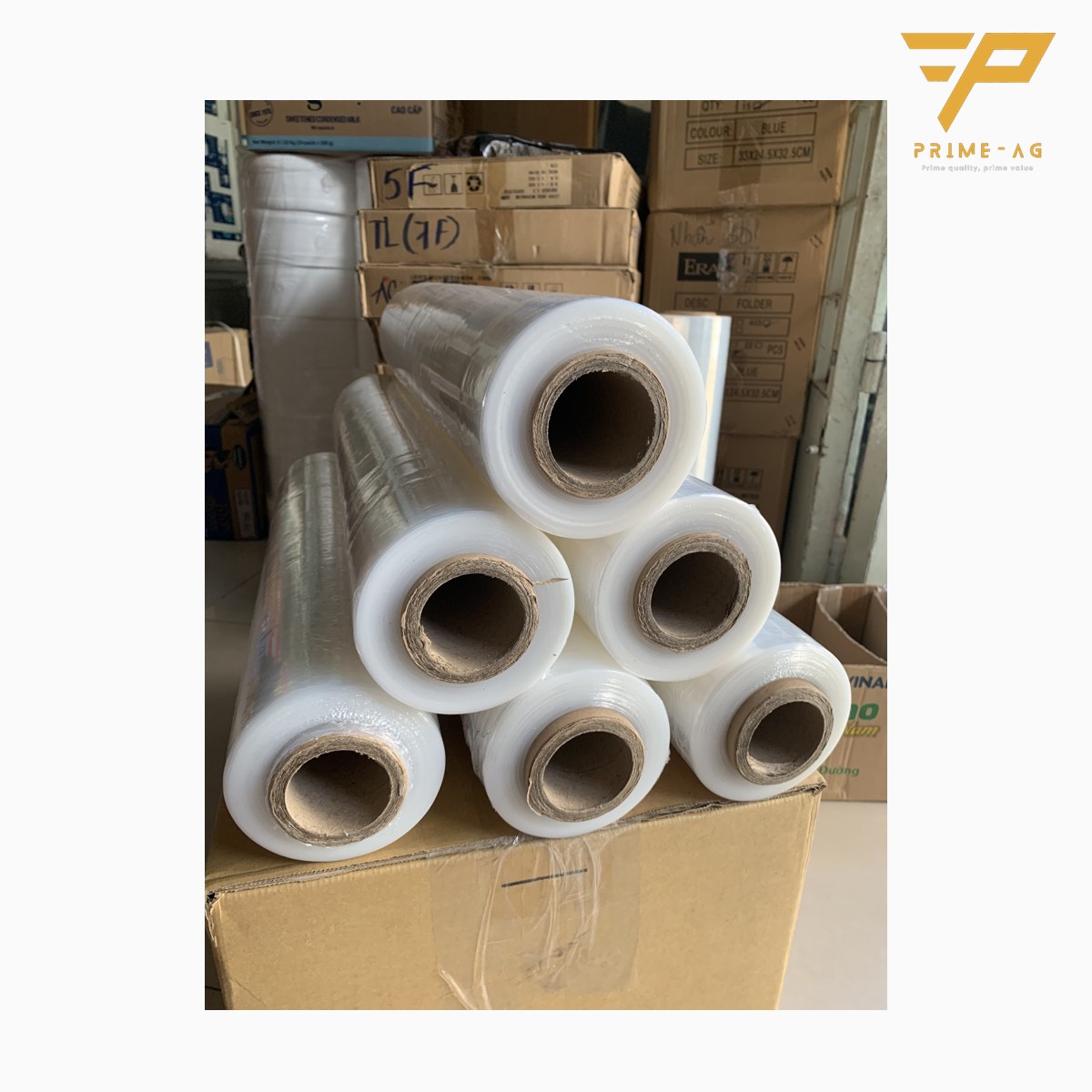
Pallet stretch film breaking: check in this order
After fixing one item, test-wrap a few pallets before moving on to the next.
- Sharp corners on the pallet: wooden crate corners, steel strap ends, nails sticking out of boards. Tensioned film meets a sharp point, gets a small hole and then the tear spreads; repeated breaks at the same corner are the clearest sign.
- Jerky pulling: pulling hard around the corners and slackening on the flat faces overloads the film right at the edge.
- Dented core or roll: a dropped roll or one hit by a forklift gets nicked edges; every wrap pulled off carries a notch, which is exactly where the tear starts.
- Roll storage temperature: rolls kept right under a hot metal roof or in cold storage change toughness and cling, so the film overstretches easily or becomes brittle.
- Thickness and number of layers versus the load: a heavy load wrapped with few layers puts too much force on each layer.
Quick elimination on the spot
Keep the torn piece of film. A small puncture at the start of the tear: caused by a sharp point. Notches repeating evenly along the edge: the roll is dented.
Rewrap that pallet with a roll from a new carton. If it still breaks at the same spot, the fault is the pallet or the technique.
Hand-wrapping again, securely
Preparing the pallet
Hammer protruding nails flat, cut off excess strap ends and make sure the goods do not overhang the pallet edge. Pad sharp corners with cardboard or corner boards.
Wrapping technique
Twist the last few cm of film into a rope and wrap it under the edge of the top deck boards to lock the load to the pallet. Do not wrap down to the pallet feet, because the forklift forks will puncture the film and the tear will spread.
Walk at an even pace, keep hand tension constant and slow down at the corners instead of jerking. Each wrap should overlap the previous one by about half the film width.
Containment force must be even from bottom to top, not thick at both ends and thin in the middle.
Many stretch films only break at around 500 % elongation, but in use they are stretched only 100–300 %. Hand wrapping makes it hard to keep the stretch level constant, so heavy loads need extra layers.
Roll storage
Keep rolls in their cartons, away from sunlight and metal roofs. Rolls with edges chipped from dropping should be kept for secondary jobs.
Choosing the film and equipment
| Situation | Suggestion |
|---|---|
| Light goods, small pallets, tight corners | 25 cm hand-wrap film |
| Standard pallets, daily hand wrapping | 50 cm width, fewer turns |
| Many pallets per shift, even tension needed | Pallet stretch wrapping machine |
| Pallets that only move internally | Reusable pallet wrap cover |
PRIMEAG PE stretch film for pallet wrapping is 17 µm thick, available in 25 cm width (1.2–2 kg, 150–250 m long) and 50 cm width (2.5–3 kg, 250–300 m long). PE film is part of our stocked product range, delivered within 24–48 hours in Ho Chi Minh City, Binh Duong and Dong Nai.
For many pallets per shift, a pallet stretch wrapping machine keeps tension more even than a human hand. Pallets that move internally can use a reusable pallet wrap cover.
Number of wraps and preventing loads from toppling on the truck are covered in the article wrapping film correctly so pallets do not topple in transit; this article only deals with film breaking during wrapping.
Where to start
- Collect the torn film from one shift and note where each break occurred.
- Deal with corners, nails and straps on the pallet type that breaks most often.
- Retrain operators on even pulling and locking the bottom.
- Send your load specifications and number of pallets per day via the quote request page to choose the film width.
Frequently asked questions
Will switching to a thicker stretch film stop it from breaking? Not necessarily. If the film breaks because of sharp corners or jerky pulling, a thicker film only tears more slowly; protect the corners and pull evenly first.
Why does the film often tear at the bottom after a forklift lifts the pallet? The film was wrapped all the way down to the pallet feet, so the forks puncture it and the tear spreads upward. Lock the film at the edge of the top deck boards and leave the feet clear.
Can stretch film rolls that have been in storage a long time still be used? Yes, if the rolls were kept in a dry, cool place and the edges are not nicked. Rolls that sat right under a metal roof or were dropped should be test-wrapped on one pallet first.
Updated: 01/11/2026 — PRIMEAG engineering team
Email: info@primeag.vn · Phone/Zalo: +84 906 108 292
Written by the PRIMEAG engineering team
Updated: 2026-11-01