
Vinyl or nitrile gloves for food depends on the task: vinyl suits dry packing, light work and frequent glove changes; nitrile is durable, resists oil and grease, and suits meat, fish and long shifts. PRIMEAG recommends long cuffs of about 30 cm when wearing gowns, and changing gloves every time you move from raw to cooked product.
“How many days does a case of gloves last, and why do they always tear around midday?” Packing-area QC at food factories in Vietnam often ask this when glove costs rise yet cross-contamination findings persist. The answer lies in choosing the right material for each workstation, not one type for the whole plant.
- Vinyl: low cost, suits dry, light tasks with frequent changes.
- Nitrile: elastic, oil and grease resistant, suits meat and fish prep and long shifts.
- Long cuff ~30 cm: fully covers the wrist when wearing a gown.
- Change gloves by event: changing tasks, touching dirty items, tears, after breaks.
How vinyl and nitrile differ
Vinyl is PVC film with little elasticity. Stretched over a tray edge or exposed to oil and grease, it cracks easily. On the other hand it is cheap, so changing it several times per shift is affordable. Nitrile fits the hand snugly, stretches and resists oil and grease, so it punctures less often than vinyl when handling meat or fish for long periods; disposable gloves are not cut-resistant. Latex should be avoided because of the allergy risk.
When to choose vinyl
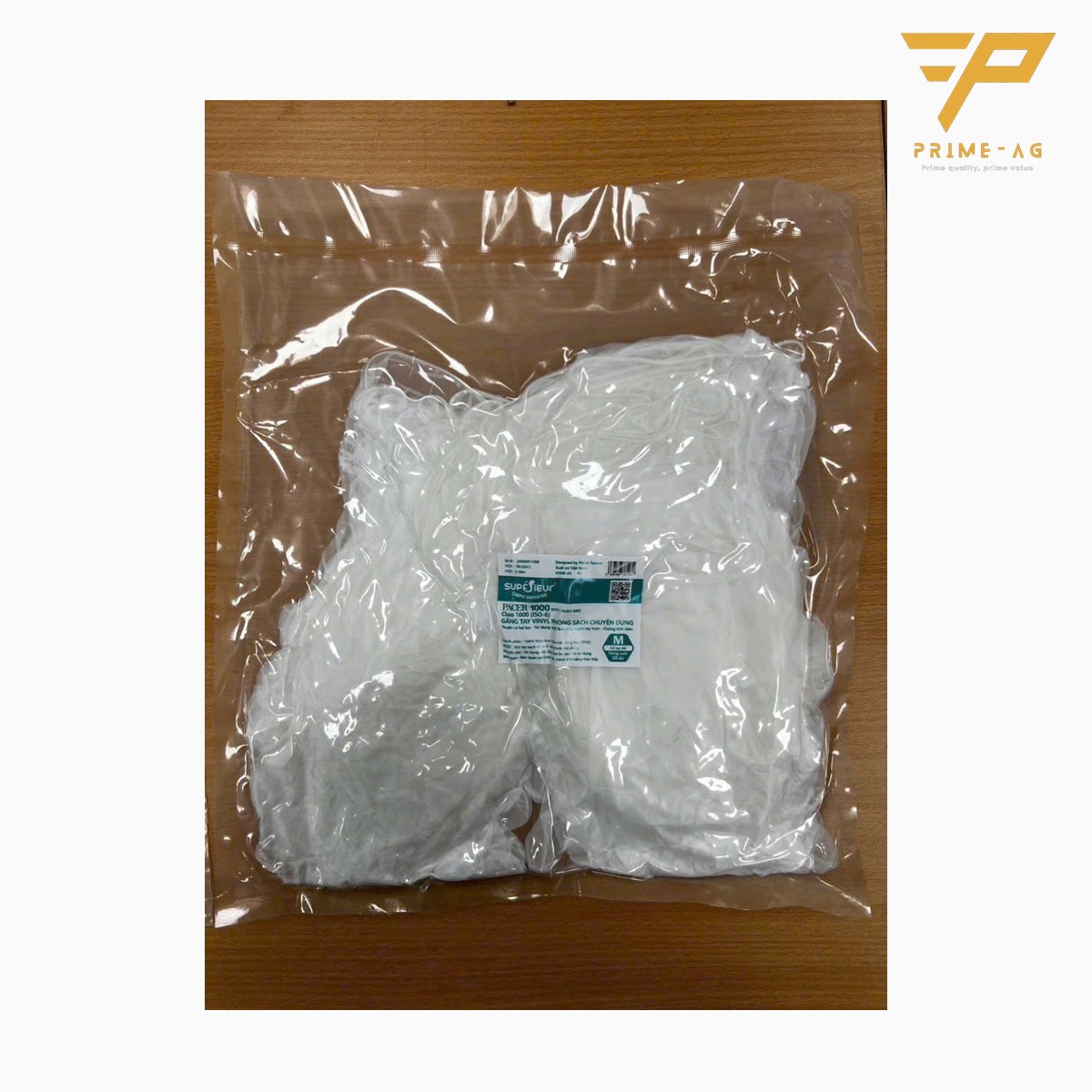
Bagging bakery products, boxing, labeling, weighing dry goods. Supérieur PACER 1000 vinyl gloves are made of 100% PVC, powder-free, with a cuff of about 30 cm, ambidextrous, Class 1000 (ISO 6) per the label, 50 pairs per vacuum-sealed bag, 5-year shelf life, made in Vietnam. The manufacturer states the gloves meet a standard for food use; PRIMEAG sends the specific thickness and documentation together with the manufacturer’s CoA when quoting.
When to choose nitrile
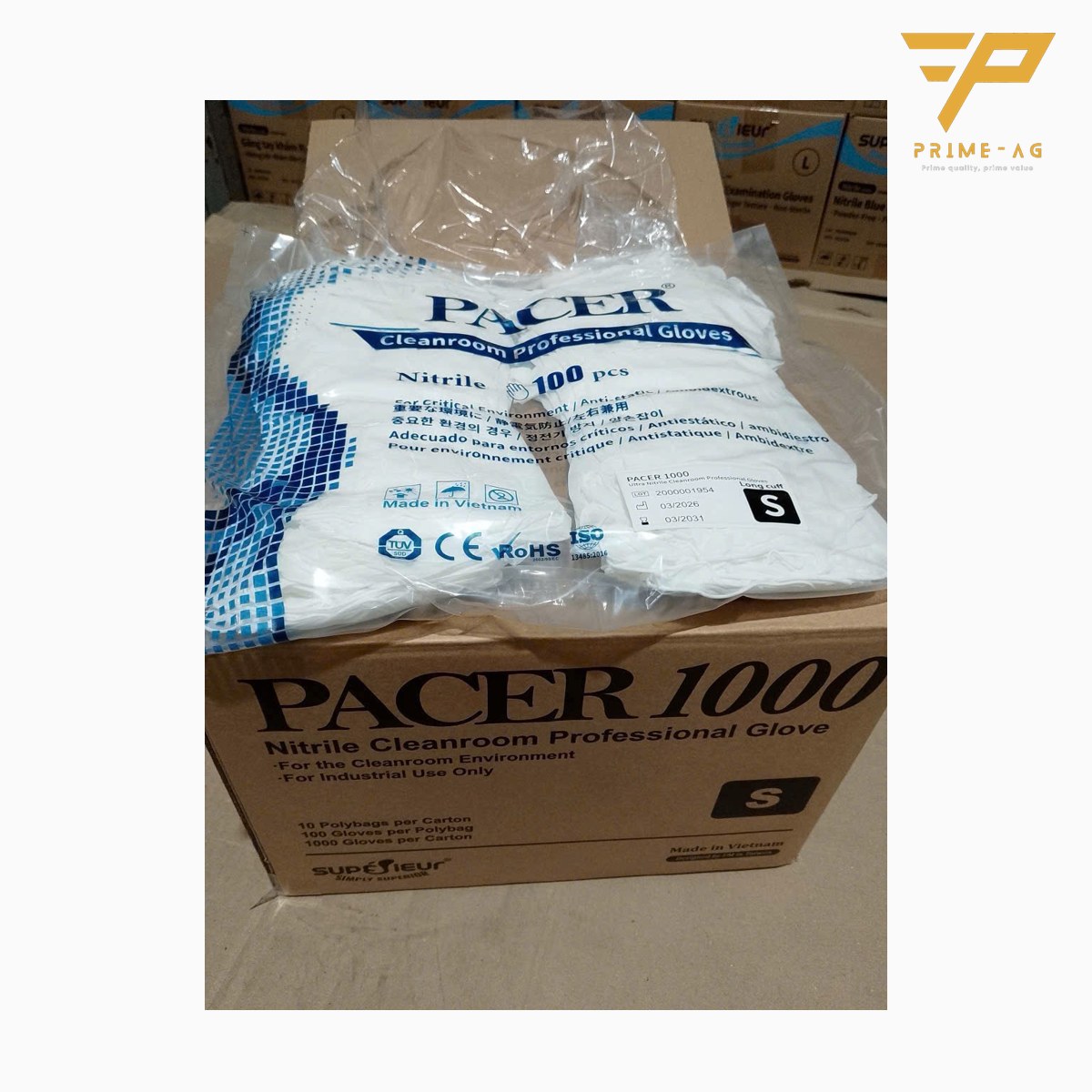
Meat, fish, seafood, sauces, or wearers working continuously for many hours. PACER 1000 has a nitrile version in bags of 100 pieces; for more brand options and sizes S, M, L, there is the 12 inch powder-free nitrile glove range. Before using them in direct food-contact areas, ask for the food-contact documentation of the exact line you plan to buy.
Long cuff or short cuff
A short cuff only reaches the wrist. When workers reach for product, a gap opens between glove and sleeve, and arm hair and sweat can drop through. A long cuff pulls over the gown sleeve and keeps that section covered.
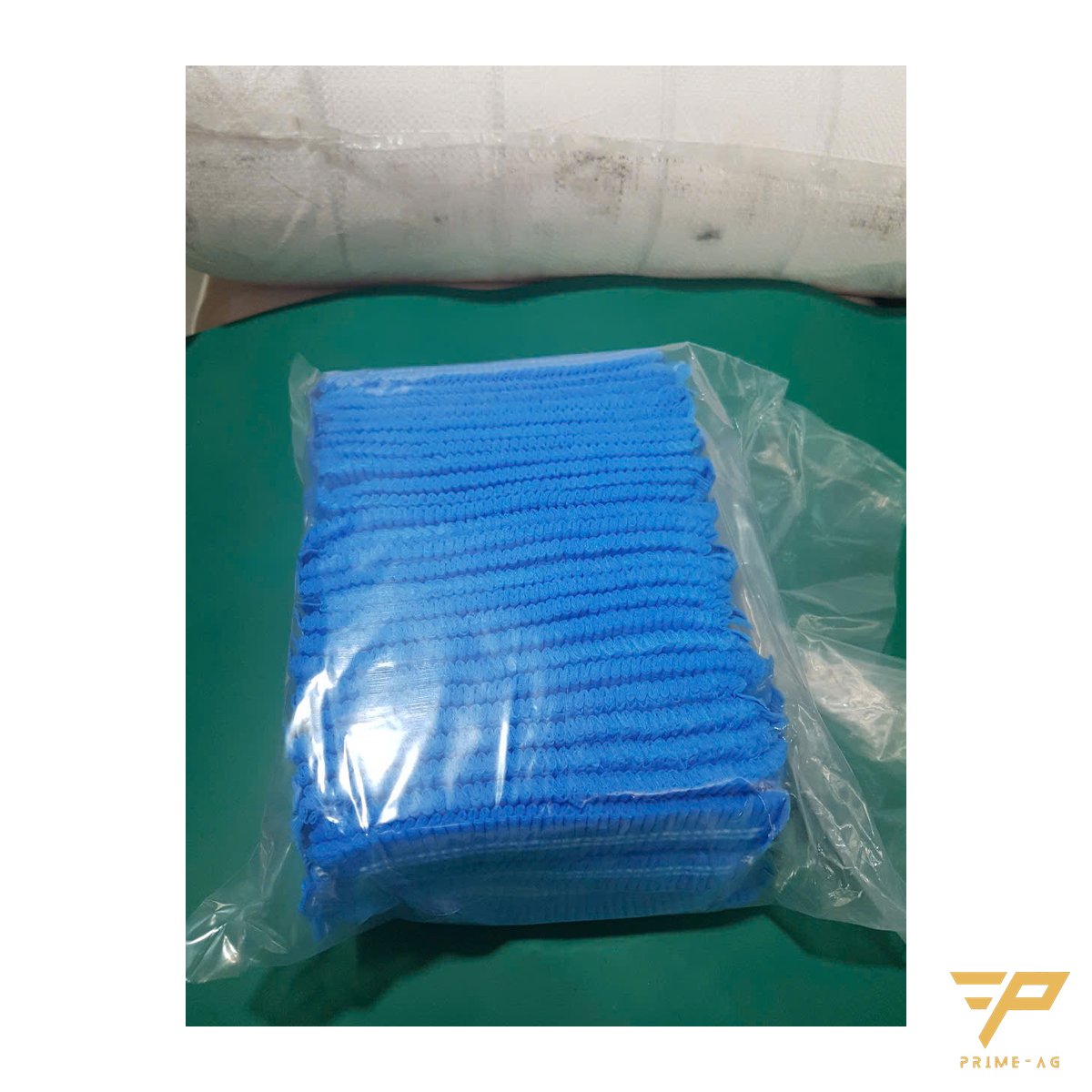
Hair escaping from the cap edge is an equally common foreign-matter defect, see the article hair found in product in food packing areas. Disposable non-woven mesh caps are in the cleanroom head covers range, packed 100 pieces per bag.
When to change gloves to prevent cross-contamination
- Moving from raw ingredients to cooked finished product.
- After touching phones, cartons, door handles, waste bins.
- Gloves punctured, torn or slippery with oil.
- After breaks, toilet visits, or leaving the clean area.
Wash hands before putting on a new pair; do not wash gloves to keep using them. Zoning works the same way as in the article preventing cross-contamination in pharma and cosmetics packing areas.
| Process step | Recommended glove | Reason |
|---|---|---|
| Boxing, labeling, dry goods | Long-cuff vinyl | Change per batch, low cost |
| Meat, fish, seafood prep | Nitrile | Oil resistant, fewer punctures |
| Mixing oily sauces | Nitrile | Vinyl cracks easily in contact with oil |
| Continuous long shifts | Nitrile | Snug fit, less hand fatigue |
Self-check in the packing area
- Record the number of gloves torn mid-shift at each table for one week.
- Tables with many tears and oil present: switch to nitrile.
- Bare wrist skin showing when reaching for product: switch to long cuffs.
- Post the glove-change rules at the entrance to the cooked-product area.
Gloves are stock items, delivered within 24–48 hours in Ho Chi Minh City, Binh Duong and Dong Nai; ordered items take 3–7 working days. Send your process steps and headcount per shift via the consultation page, and PRIMEAG recommends a glove type with a quotation within 30 minutes.
Frequently asked questions
- Can vinyl gloves be used for oily or greasy food? — Not recommended. Vinyl has poor oil resistance and cracks easily when stretched; for meat, fish and oily sauces use nitrile.
- How long can one pair of disposable gloves be worn? — There is no fixed time limit. Change them when switching tasks, after touching anything unclean, when torn or after breaks, and never wash gloves to wear again.
- Why choose long-cuff gloves for the packing area? — Long-cuff gloves cover the sleeve edge and leave no bare skin when workers reach out, so arm hair and sweat are less likely to fall into the product.
Updated: 29/10/2026 — PRIMEAG engineering team
Email: info@primeag.vn · Phone/Zalo: +84 906 108 292
Written by the PRIMEAG engineering team
Updated: 2026-10-29