
Stocked item: delivered in 1–2 working days in Ho Chi Minh City, Binh Duong and Dong Nai; free delivery for orders from VND 20,000,000; defective items exchanged within 7 days. Shipping & return policy
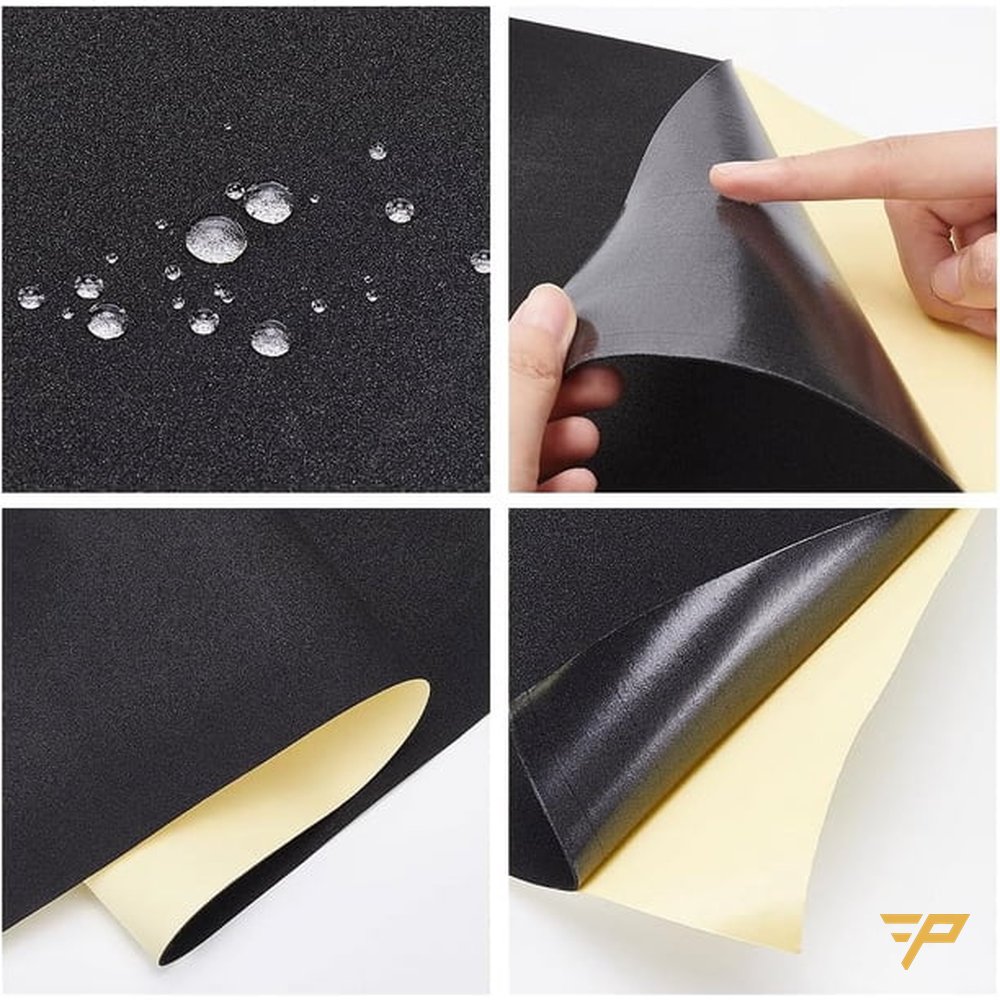
Product code: ES-EVA · Specification: ESD EVA foam / foam & ESD plastic liner sheets
ESD EVA Foam, PE Foam & Plastic Liners
Common sizes: EVA roll 1.2×100×1 mm, sheet 2.4 m×2 mm.
Delivery: stocked items are delivered in 24–48 hours (Ho Chi Minh City, Binh Duong, Dong Nai), made-to-order items in 3–7 working days; custom-shaped foam inserts 5 days; availability is confirmed with the quotation.
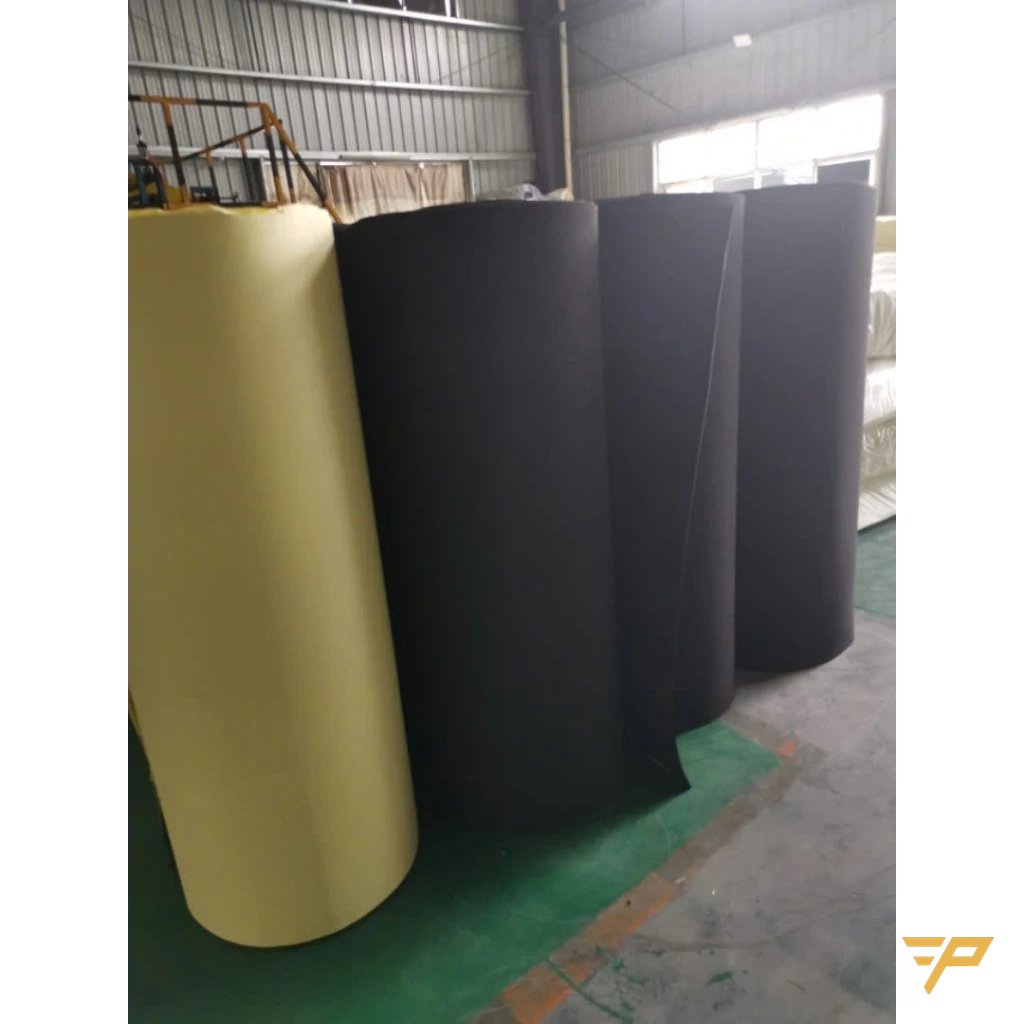
ESD EVA (black carbon-loaded foam): thin 1 mm rolls with adhesive backing (insulating adhesive) for lining tray bottoms, drawers and bench tops; 2–10 mm sheets cut to line boxes and trays as impact protection for modules and displays; ESD PE foam in pink/black, CNC-cut to the shape of the product (foam inserts); ESD plastic liner sheets (black PP) cut to size, printed with labels, with magnets — used as box dividers and stop plates.
| Type | Size | Resistance | Used for |
|---|---|---|---|
| EVA roll with adhesive | 1.2 m × 100 m × 1 mm | 10⁶–10⁹ Ω | Lining trays, drawers |
| EVA sheet | 1.2 × 2.4 m × 2 / 3 / 5 / 10 mm | 10⁶–10⁹ Ω | Lining boxes, dividers |
| ESD PE foam | Sheet 1 × 2 m × 10–50 mm, CNC-cut | 10⁶–10⁹ Ω (black) / <10¹¹ (pink) | Shaped foam inserts |
| ESD plastic liner sheet | Cut to size, 2–3 mm | 10⁶–10⁹ Ω | Dividers, stop plates |
MOQ 1 roll/1 sheet; shaped foam inserts from 50 sets.
FAQ
– Does black EVA dissipate charge? — Yes, it is carbon-loaded and measurable; ordinary (coloured) EVA is not.
– Can you make foam inserts to a drawing? — Yes; send a drawing or a product sample.
Materials: EVA, PE and how foam is made antistatic
EVA is an ethylene–vinyl acetate copolymer (vinyl acetate content typically 1–40 %). EVA foam has a closed-cell structure, is soft, resilient, tough at low temperatures and inexpensive — which is why it is used as cushioning for trays, boxes and shaped inserts. EVA and PE themselves are insulators; for use in an EPA, the manufacturer must add one of two mechanisms:
- Carbon loaded into the bulk material (black foam): creates conductive paths for charge throughout the foam. This property is permanent and independent of humidity. For example, a Desco qualification report for black lead-insertion foam measured a surface resistance of about 1.0–2.5×10³ Ω at both 12 % RH and 50 % RH.
- Amine-based antistatic additive (pink PE foam): the additive migrates to the surface and attracts moisture to form a very thin conductive layer. Its effectiveness depends on humidity and declines over time.
Note: EVA melts at about 90 °C — do not use EVA foam to cushion parts straight out of a drying oven or reflow oven, or near a soldering iron.
Three properties of ESD packaging materials
According to ESDA and Desco, materials that contact or package static-sensitive components are assessed on three independent properties:
- Low charging (antistatic): limits the charge generated when components slide or rub against the foam. ESDA notes that this property cannot be inferred from resistance alone.
- Dissipative or conductive: allows charge to drain to ground when the foam is placed on a grounded surface.
- Shielding: blocks discharges and external electric fields. Foam and PE film usually do not have this property.
Classification according to ANSI/ESD S541 (surface resistance measured per ANSI/ESD STM11.11): conductive < 1×10⁴ Ω; dissipative from 1×10⁴ to < 1×10¹¹ Ω. S541 recommends that materials in direct contact with components be dissipative. The 10⁶–10⁹ Ω range of PRIMEAG’s black EVA and ESD PP liner sheets falls within the dissipative range.
Black foam or pink foam?
| Criterion | Black foam (carbon) | Pink PE foam/film (amine) |
|---|---|---|
| Mechanism | Carbon in the bulk material | Antistatic agent on the surface |
| Humidity dependence | Negligible | Yes — worse in dry air |
| Durability of the property | Permanent, reusable | Temporary; Desco recommends it mainly for single use in shipping |
| Risks | Choose a non-sloughing grade | Amines can contaminate components and corrode solder joints; Desco reports that pink PE can charge above 300 V when rubbed |
| Recommended for | Trays, drawers and foam inserts for long-term use in the factory (black EVA 10⁶–10⁹ Ω) | Short-term packing cushioning |
ESD foam does not replace shielding bags
A test summarised on Wikipedia: a 1,000 V pulse applied to an ordinary plastic bag drops to about 800 V with an added layer of pink PE, to about 600 V with carbon-loaded black PE, and to only about 20 V with a metallised shielding bag. Therefore:
- Inside the EPA: a tray lined with black EVA foam placed on a grounded ESD bench top is sufficient.
- Leaving the EPA (transfer to the warehouse, delivery to customers): put components in shielding bags or closed ESD boxes with lids; the foam is only mechanical cushioning.
Incoming and periodic testing
- Measure surface resistance with a meter using a concentric-ring or two-point probe at 100 V, at several points on each sheet/lot.
- For a meaningful assessment, samples must be conditioned at low humidity (test labs usually condition for 48–72 hours at 12 % RH before measuring). Pink foam that passes in the rainy season may fail in the dry season.
- For adhesive-backed EVA rolls stuck into drawers and trays: also measure the resistance from the foam surface to the ground point after application — the adhesive on EVA rolls is an insulating adhesive, so charge cannot drain through the bonded face, and a separate ground path is needed for the foam layer (ground snap or ground cord).
- CNC-cut foam inserts: blow off cutting dust before taking them into clean areas; visually check for black particles on light-coloured products.
Common mistakes
- Using ordinary coloured EVA foam (blue, white, red) for components just because it “looks like” ESD foam — this type has no measurable resistance.
- Storing components in pink foam for long periods, especially in dry air-conditioned warehouses.
- Placing ESD foam trays on ungrounded wooden benches or painted racks — the charge has no path to drain.
- Treating ESD foam as the only protection when shipping outside the EPA.
Technical references
- Desco – Choosing ESD bags: risks of pink poly
- Desco – Pink vs black ESD foam (Q&A)
- Desco – Qualification Report: Black Lead Insertion Grade Conductive Foam
- ESDA – Fundamentals of ESD, Part 3 (packaging materials, ANSI/ESD S541)
- Wikipedia – Antistatic bag
- Wikipedia – Ethylene-vinyl acetate
Price: from 4,800,000 VND (excl. 8% VAT).
REQUEST A QUOTE: send the quantity and specifications you need — PRIMEAG quotes within 30 minutes.
Hotline/Zalo +84 906 108 292 · info@primeag.vn
Written by the PRIMEAG engineering team.
Related guides:Calipers and Micrometers Reading Wrong Within Calibration: Causes and…ESD EVA Foam Tray Liners Flattened, Shedding or Peeling:…CNC Tool Storage Beside the Machine: Tool Carts, Foam…
Updated: 2026-10-23
Giao tận nhà máy TP.HCM, Bình Dương, Đồng Nai, Long An, Tây Ninh · Kèm biên bản đo điện trở ESD theo lô · Hotline 0906 108 292