
Anti-static (ESD) EVA foam tray liners that flatten, crumble or peel usually come from a sheet too thin for the load, open cut edges, oil and solvents softening the adhesive, or parts still hot (EVA softens at about 90 °C). For factories in Vietnam, PRIMEAG recommends checking in that order, replacing the foam when dents no longer recover, and re-testing to 10⁶–10⁹ Ω.
When first applied, the black foam layer in the tray is flat and soft. Three or four months later, the spots where heavy parts sit are deeply dented, the edges curl up and operators’ gloves pick up black dust. The fault usually lies not in the material but in the specification, the way it is cut and applied, and the cleaning method.
- Permanent dents: a 1 mm layer carrying heavy parts; use a thicker sheet.
- Peeling edges: blunt knife, sheet stretched while applying, oil seeping into gaps.
- Black dust: sharp edges or strong solvents abrade the foam surface; replace it.
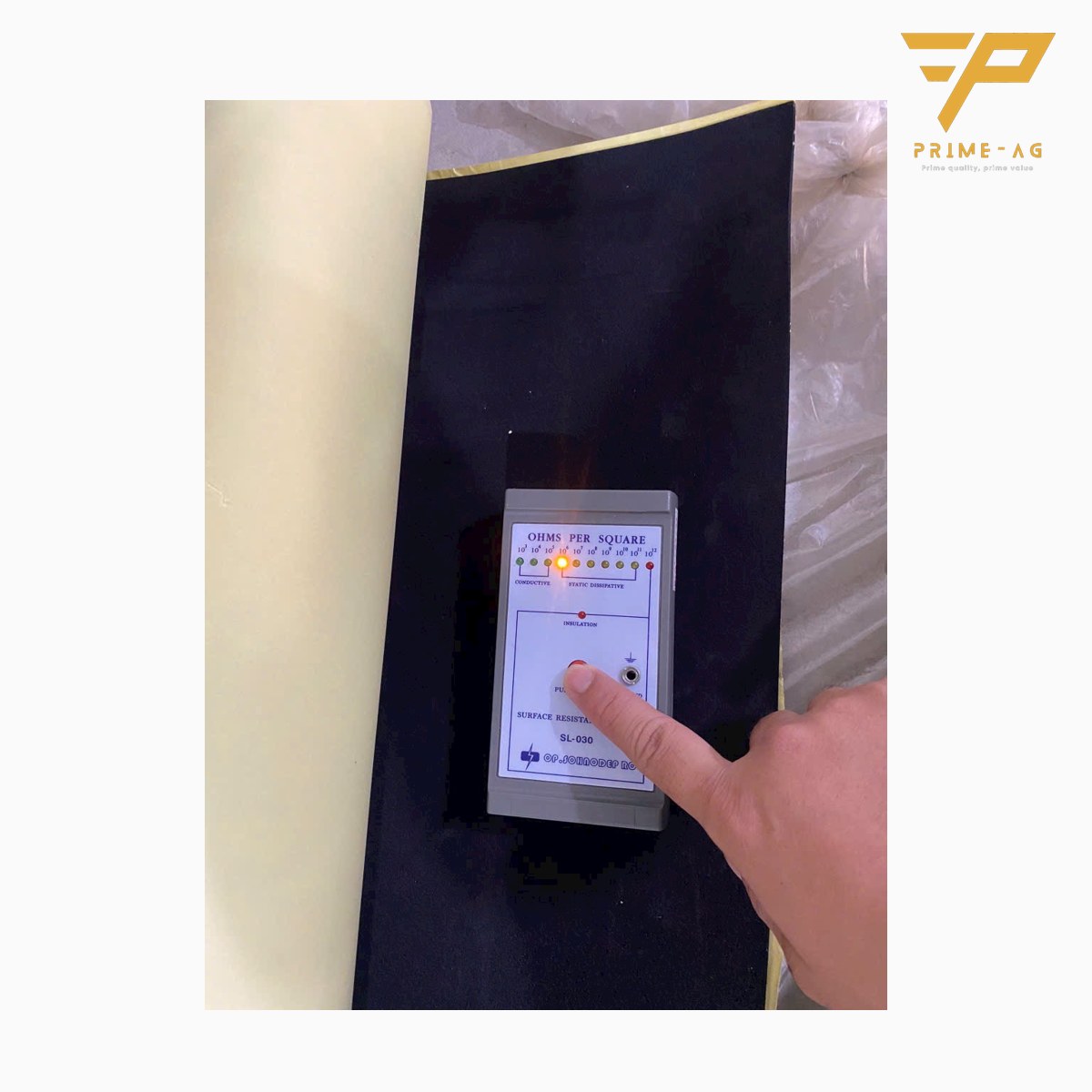
- After replacing: measure both the foam surface and foam-to-ground, because the adhesive is insulating.
Causes in the order to check
1. Thickness does not match the load
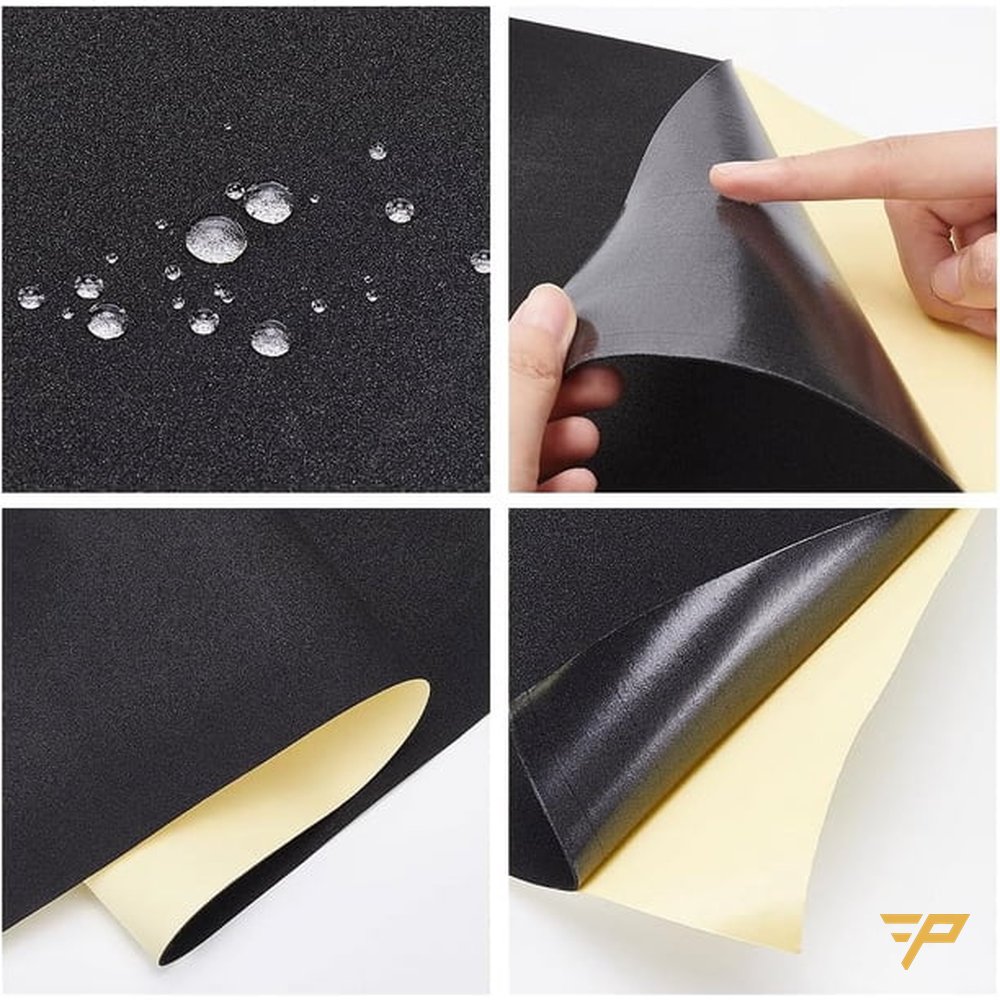
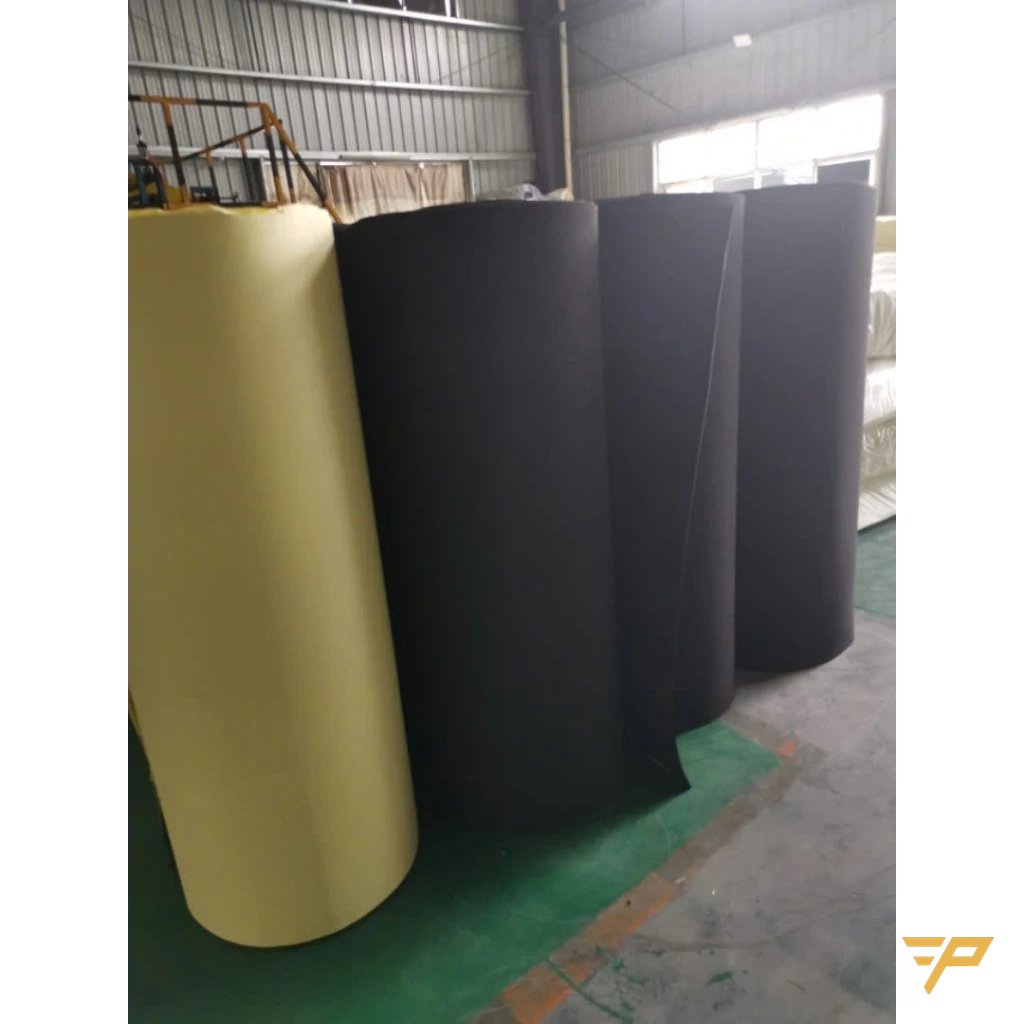
Anti-static EVA foam in adhesive rolls is only 1 mm thick, suitable for PCBs and light components; sheets come in 2, 3, 5 and 10 mm. Heavy gears and shafts resting on a 1 mm layer crush the foam cells permanently; if the dent is still there a day after the part is removed, the load is the cause. Switch to a 5–10 mm sheet, or place a 2–3 mm ESD plastic liner sheet under the contact point.
2. Open cut edges, sheet stretched while applying
A blunt knife leaves ragged edges, an undersized cut leaves gaps, and stretching the sheet while applying makes it shrink back. Dust and oil then work their way into the adhesive layer. Lift the edge gently: if the adhesive has lost its grip along a strip at the edge, this is the fault. When replacing, the tray bottom must be clean and dry; cut oversize, trim flush with a sharp knife, round the corners, apply from the center outward and press the edges down.
3. Oil, heat and solvents
Coolant seeping in at the edges makes the adhesive slide; at oily stations, use loose sheets. EVA starts to soften at around 90 °C, so parts fresh from the oven must cool down completely. Acetone and aromatic thinner make the foam brittle and powdery; wipe only with a damp cloth or a neutral solution, and if alcohol must be used, test it on an offcut first.
4. Sharp edges and burrs
Burrs dragged across the foam scrape the surface into black particles; deburr edges first and set parts straight down. For choosing the liner in the first place, see the article on preventing rust and scratches on machined parts; this article only deals with foam that is already damaged.
Quick elimination table
| Symptom | Common cause | Fix |
|---|---|---|
| Deep dent in the exact shape of the part | Sheet too thin for the load | 5–10 mm sheet or add a 2–3 mm liner sheet |
| Edges curl, a strip peels off | Open edges, sheet stretched while applying | Recut with a sharp knife, round corners, press edges |
| Adhesive sliding, oil streaks | Coolant seeping in at the edges | Use a loose sheet, do not glue |
| Brittle surface, black dust | Solvents, sharp edges | Replace, change the cleaning agent |
When to replace completely
- The dent does not recover after one day without load.
- A white glove wiped across the foam leaves a black mark.
- Peeling in several places, and re-gluing does not hold.
- Surface resistance outside 10⁶–10⁹ Ω, or foam-to-ground above 1×10⁹ Ω.
Check the support as well: if a carbon-filled PP anti-static plastic tray has a cracked bottom, replace the whole tray. On a 3-tier mechanical tool cart, a sheet cut to fit the tray and laid in loose is the easiest to replace.
Re-testing resistance after replacement
The adhesive on EVA rolls is insulating, so glued foam does not necessarily have a discharge path. Measure the foam surface, then from the foam surface to the ground point of the bench or cart; if it fails, add a dedicated ground snap or ground cord. Ordinary painted mechanical tool carts have no grounding path, so they need a dedicated cord when used for ESD components. Workshops without a meter can book free ESD resistance measurement: PRIMEAG sends a technician to factories in Ho Chi Minh City, Binh Duong and Dong Nai from Monday to Saturday, using a TR1800 with 5 lb electrodes, with no limit on points, including items bought elsewhere and with no purchase required; the appointment is confirmed the same day the request is received, the visit takes place within 3–5 working days, and a PDF report with readings per location and photos follows within another 3–5 working days — the data are for the ESD team’s reference and are not to be submitted as audit documents.
15-minute self-check
- Take the three most damaged trays and note the parts and stations they serve.
- Lift the parts off and photograph the dents; photograph them again the next day.
- Send the photos and tray dimensions via the consultation page.
Standard-size sheets and rolls are stock items (delivered in 24–48 hours to Ho Chi Minh City, Binh Duong and Dong Nai); foam cut to tray size is custom work with its own lead time.
Frequently asked questions
Can peeling ESD EVA foam be re-glued with a different adhesive? Yes, if the foam is still flat, not brittle, and the edges have been wiped free of oil. At stations that often get oily, a loose sheet lasts longer than a glued one.
Does crumbling black EVA foam lose its anti-static properties? The carbon is distributed through the whole material, so resistance usually still passes, but black particles sticking to products are a cosmetic defect; replace foam that has turned brittle.
How often should ESD foam tray liners be re-tested? S20.20 does not set a frequency; many factories measure benches and mats every 6 months and immediately after each foam replacement.
Updated: 31 Oct 2026 — PRIMEAG engineering team
Email: info@primeag.vn · Phone/Zalo: +84 906 108 292
Written by the PRIMEAG engineering team
Updated: 2026-10-31