
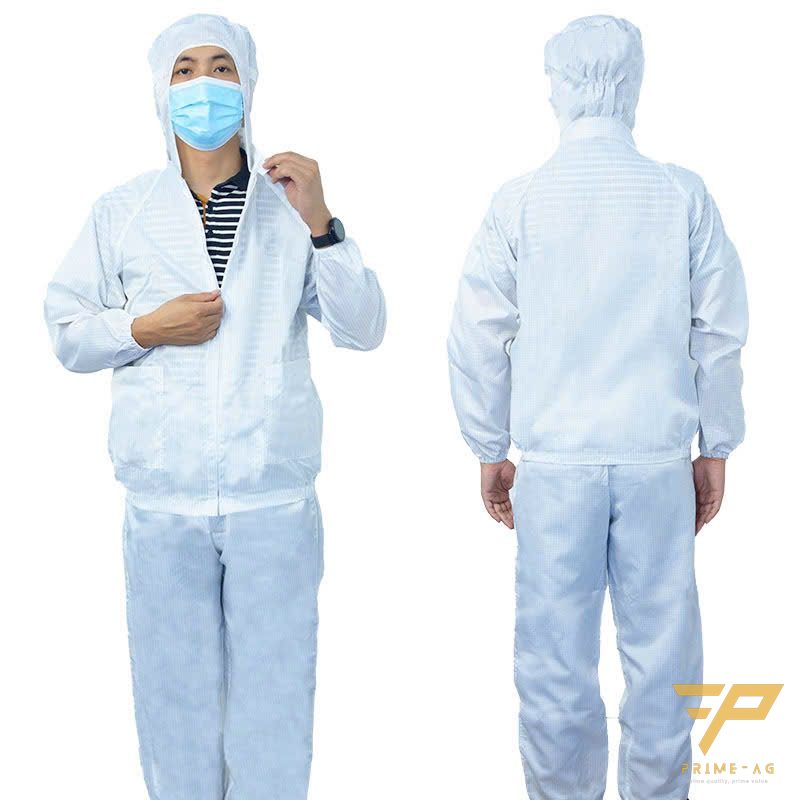
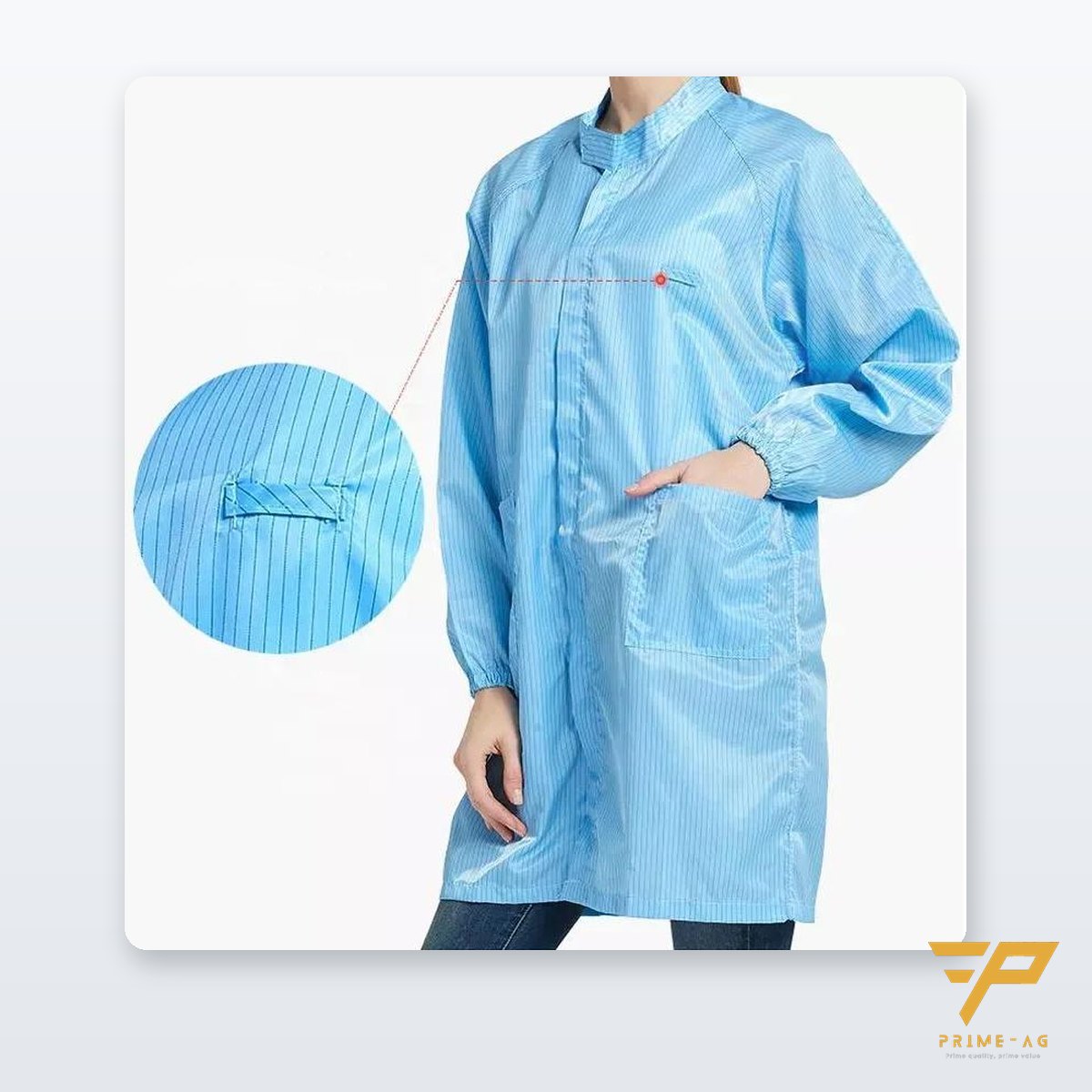
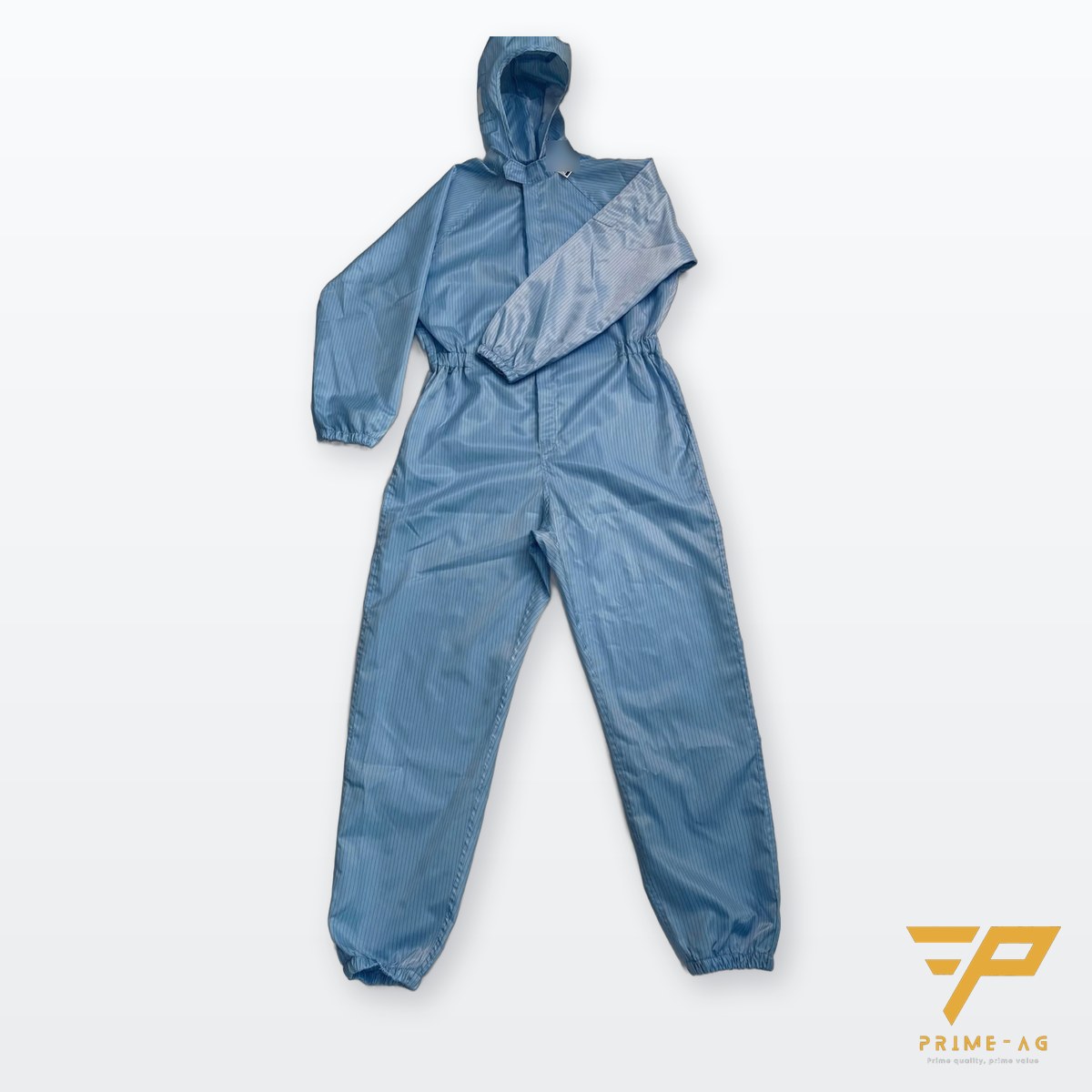
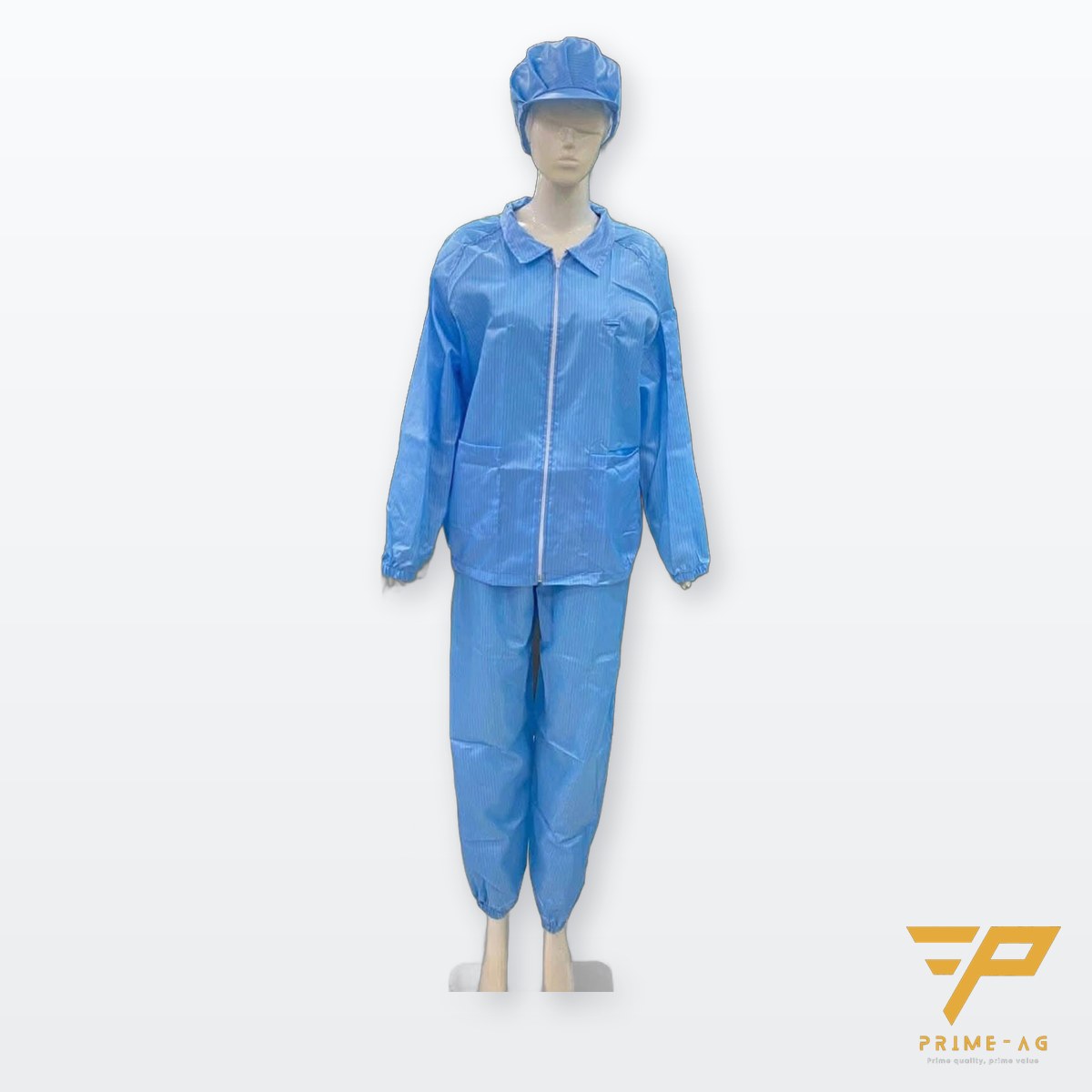
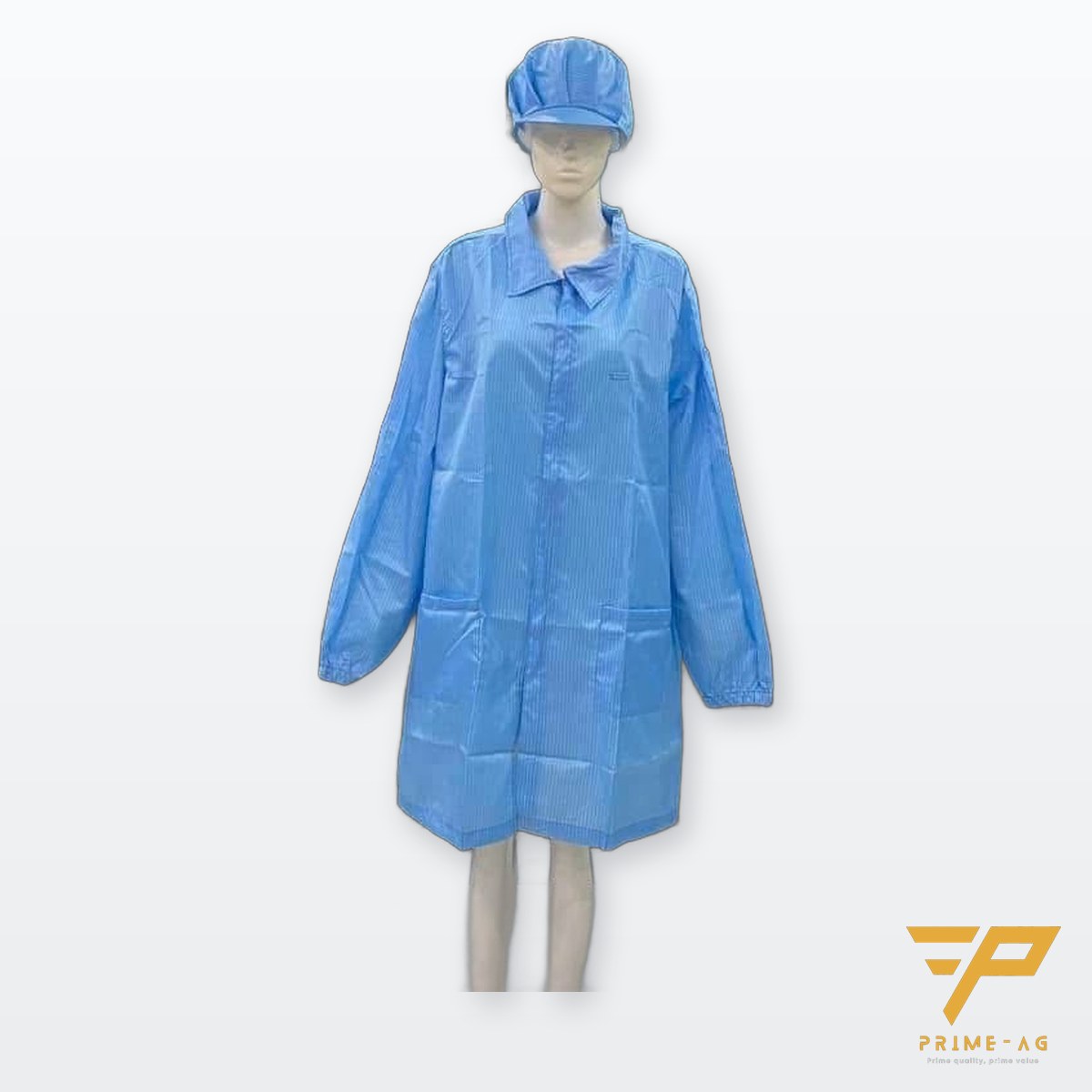
Cleanroom and ESD garments only work when they are clean, the right size and still conductive. Under ANSI/ESD S20.20, static control garments must have a point-to-point resistance below 10¹¹ Ω (measured per STM2.1). PRIMEAG supplies ESD garments in carbon-stripe fabric at 10⁶–10⁹ Ω, with a resistance report per lot.
- Change per area rules: cleanrooms usually change daily or per shift; write it into the procedure.
- Launder correctly: no fabric softener, no chlorine bleach, temperature per the manufacturer’s instructions.
- Test periodically: use a resistance meter to check sample garments after laundering.
- Retire: torn, shedding, broken zipper, or measuring above the limit.

Why garments lose their effectiveness
Cleanroom fabric is continuous-filament polyester that sheds little; carbon fibers are woven in stripes or a grid to dissipate charge. Three things ruin them: incorrect laundering (fabric softener coats the fibers, harsh detergents damage the carbon fibers), wearing too long (dust, lint and sweat build up) and mechanical damage (tears, fraying, broken zippers exposing the clothing underneath).
1. Change frequency
There is no single figure for every factory; each area sets its own rule based on cleanliness class and test results. ISO 6–8 cleanrooms usually issue a clean set every day or every shift. EPAs without cleanliness requirements may change less often, but garments must still be laundered regularly. Each person should have at least 2–3 sets in rotation: one being worn, one in the laundry, one spare.
2. Laundering correctly
- Wash separately, never together with ordinary clothing.
- No fabric softener, no chlorine bleach.
- Washing and drying temperatures per the manufacturer’s care label.
- Higher-class cleanrooms should use a cleanroom laundry service with clean bagging after washing (see IEST-RP-CC003 on cleanroom garment systems).
- Close zippers fully and turn garments inside out to reduce fraying.
3. Gowning correctly
Gown in the changing room, from top to bottom: the hood with bib first, then the coverall, with the hood bib tucked inside the collar, and shoes last. The garment must not touch the floor while being put on. Take it off when leaving the clean area – never wear it to the canteen or restroom – which is why many sites choose two-piece jacket and trouser sets for ISO 7–8 areas to make shift breaks easier.
4. Periodic resistance testing
After a number of wash cycles, take sample garments and measure point-to-point resistance (sleeve to sleeve, sleeve to body) with a surface resistance meter. Record results by lot. A lot whose resistance is trending upward is a sign that the whole lot will soon need replacing.
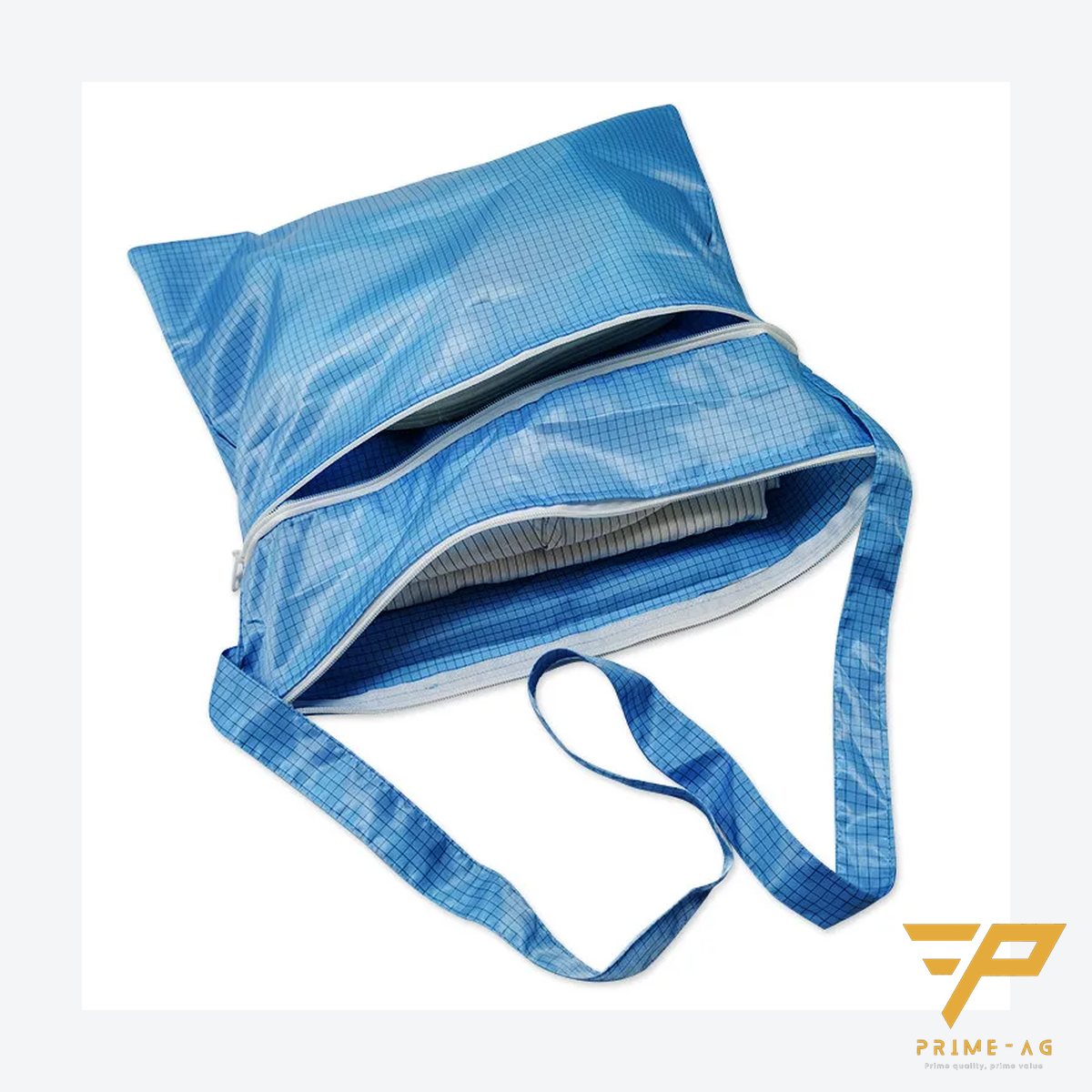
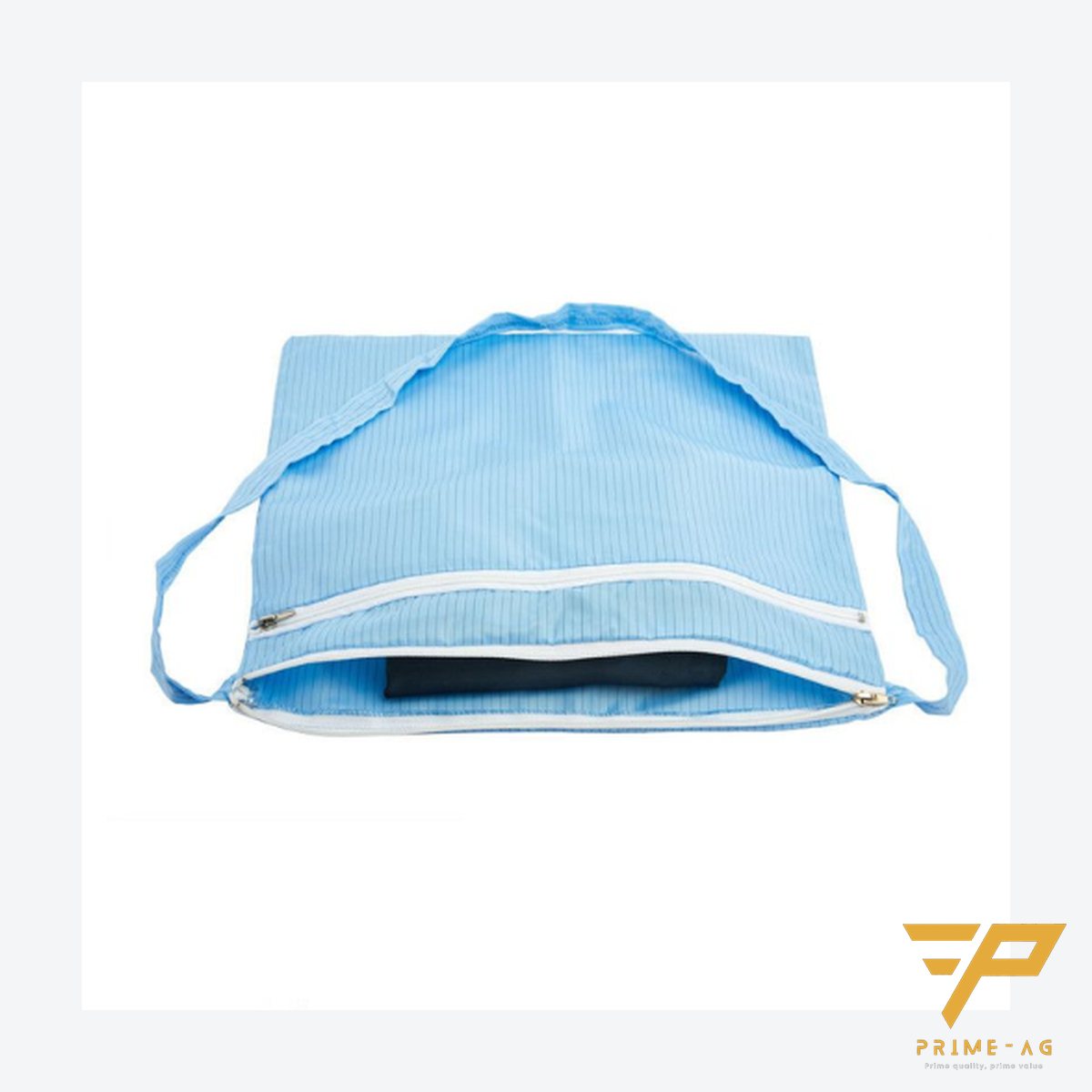
Carry clean garments from the laundry to the changing room in a zipped ESD fabric shoulder bag, keeping separate bags for clean garments and garments waiting to be washed.

When to retire a garment
| Sign | Action |
|---|---|
| Torn, holed, frayed seams | Retire (cleanroom); in an EPA it may be patched if the conductive stripes are not affected |
| Broken zipper or snaps | Repair or retire – an open garment exposes ordinary clothing underneath |
| Resistance above the specified limit | Retire the whole lot after a confirmation re-test |
| Stains that will not wash out, shedding lint | Retire |
| Exceeded the number of wash cycles in the manufacturer’s instructions | Replace as planned |
Food and pharmaceutical industries
Food and pharmaceutical production areas focus on controlling contamination from people: hair fully covered, color coding by area to prevent cross-traffic, garments removed when leaving the area. ESD is usually not required, but the principles of laundering, changing and retiring are the same.
How to get started
- Write change rules for each area and post them in the changing room.
- Calculate the number of sets per person from the laundry cycle.
- Number garments or lots to track wash cycles.
- Test sample resistance periodically and keep the records in the ESD file.
All colors and sizes are stocked and delivered within 24–48 hours in Ho Chi Minh City, Binh Duong and Dong Nai. See also: resistance testing for incoming inspection of ESD supplies and dust control at clean area entrances.
Instead of measuring each garment by hand, plants in Ho Chi Minh City, Binh Duong and Dong Nai can call PRIMEAG to measure resistance free of charge, including the garments, shoes, chairs and work surfaces in that area.
Frequently asked questions
How often must cleanroom garments be laundered? It depends on the cleanliness class and factory rules; ISO 6–8 cleanrooms typically issue a clean set every day or every shift. Each person should have 2–3 sets in rotation.
Can fabric softener be used when laundering ESD garments? No. Fabric softener coats the fibers and changes their conductive properties; chlorine bleach must not be used either. Launder according to the manufacturer’s care label.
How do we know ESD garments still comply? Measure point-to-point resistance periodically per ANSI/ESD STM2.1; S20.20 requires less than 10¹¹ Ω. Replace any lot that measures above the limit.
Updated: 23 October 2026 — PRIMEAG engineering team
Mon–Sat, 8:00–17:00 (GMT+7) · Phone/Zalo: +84 906 108 292 · Email: info@primeag.vn
Start where it suits you: Free technical advice · Send a drawing or layout · Get a quote within 30 minutes
Written by the PRIMEAG engineering team
Updated: 2026-10-23