
Injection-moulded plastic parts become charged the moment they leave the mould, so they attract dust all the way to the packing area. Neutralise them with an ionizing blower or ionizer bar at the mould exit, then protect them with PVC curtains and lidded bins. PRIMEAG recommends measuring surface voltage before and after with a 0–20 kV meter.
Injection-molded parts become charged the moment they leave the mold, so they attract dust all the way from the molding machine to the packing area. PRIMEAG tackles this in two layers: ionizing static elimination at the mold exit and before painting or printing, and shielding with PVC curtains, bin lids and covers so dust cannot settle on the parts. Measure the voltage with a 0–20 kV meter before and after.
- Where the charge comes from: mold release, friction against chutes, conveyors and bins.
- Neutralizing: an overhead ionizing blower above the molding machine or an ionizing bar over the conveyor; an ionizing air gun before painting, printing or bonding.
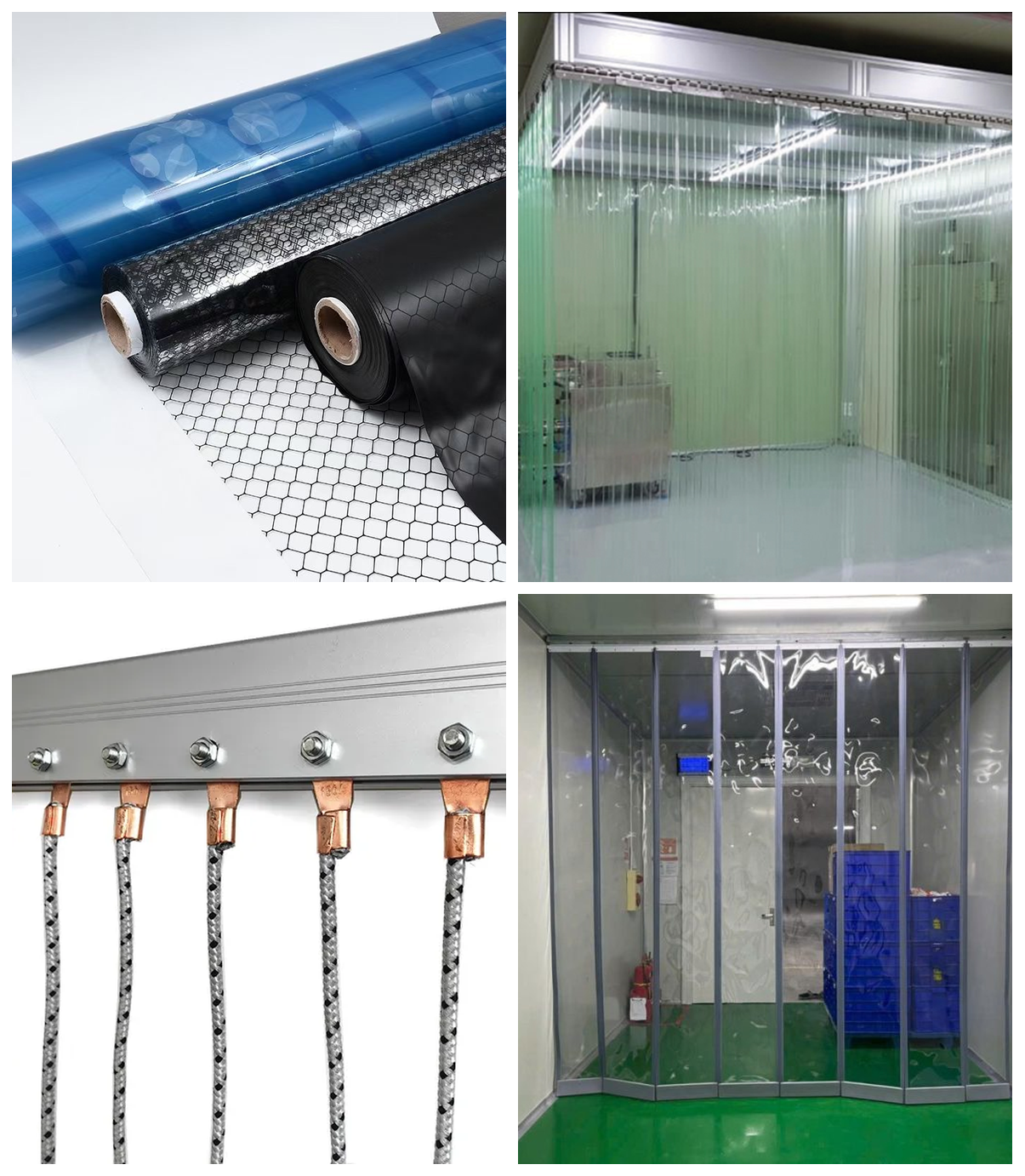
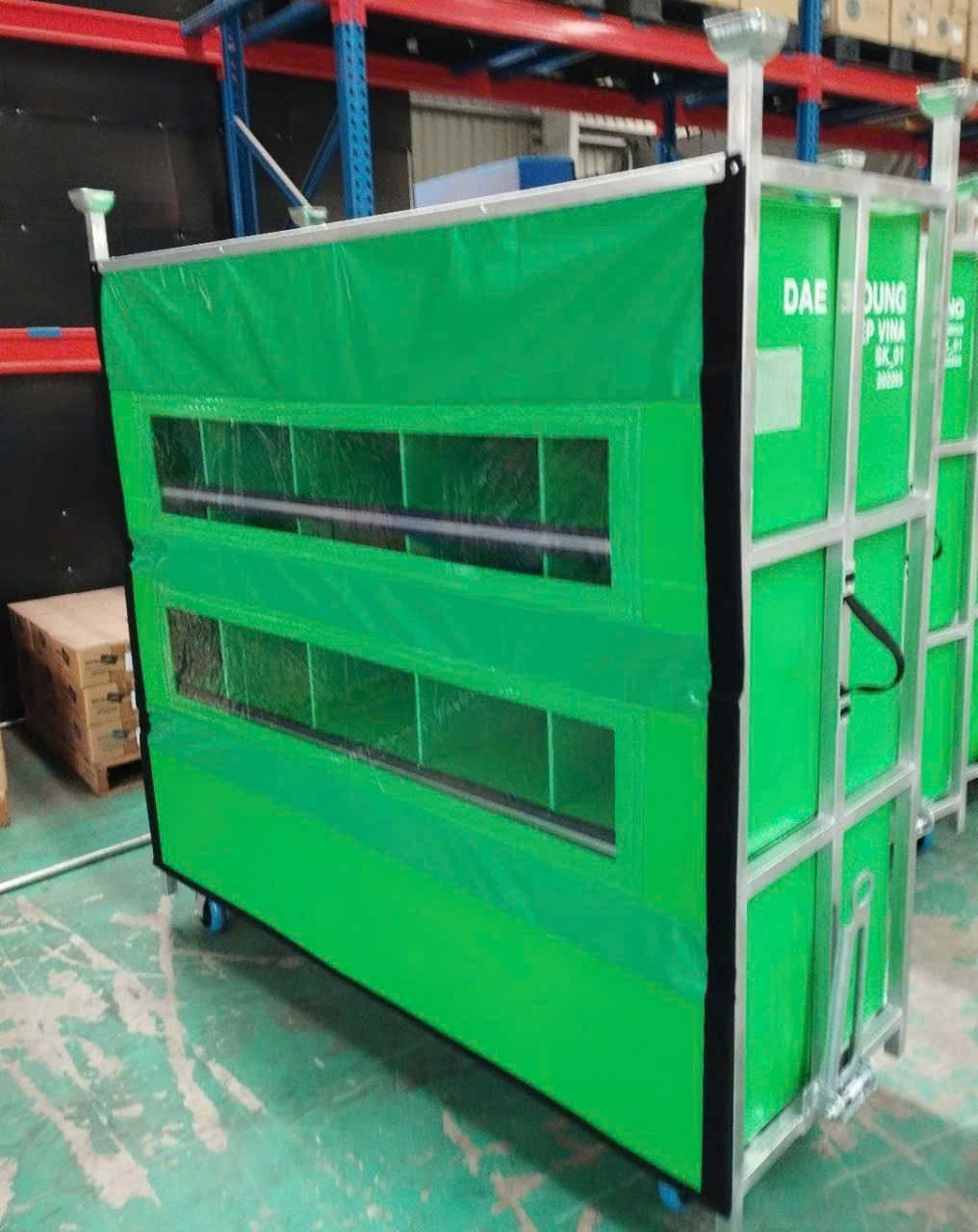
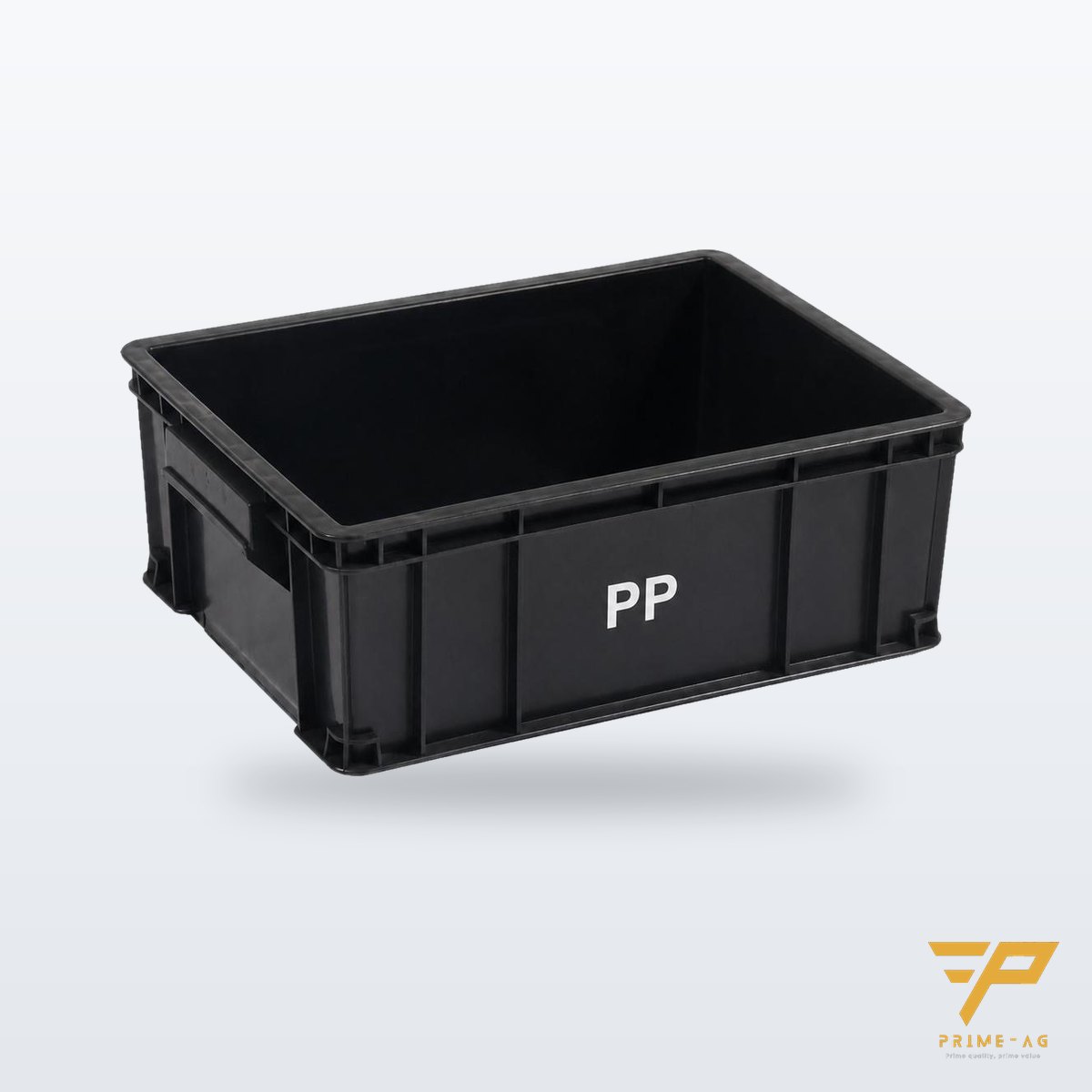
- Shielding: PVC curtains and partitions around the molding and packing areas; lidded bins; covers for trolleys.
- Cleaning: an ionizing air gun or a silicone roller, not a dry cloth (dry wiping generates charge again).
1. Why plastic parts attract dust
Thermoplastics such as PP, ABS, PC and PS are insulators. When a part separates from the mold surface, drops onto a chute, runs along a conveyor or rubs against the wall of a bin, charge is generated and stays on the surface. That charge pulls in airborne dust, fibers and plastic flash. On glossy cosmetic parts, clear housings, and parts to be painted, printed or plated, every particle is a defect: a speck under the paint, a pinhole, a hazy mark. Dust held by static cannot be removed with ordinary compressed air, because it is attracted back as soon as it is blown off.
2. Neutralizing static at the molding machine
- Mold exit and chute: an overhead (ceiling-mounted type) ionizing blower blowing down onto the area where parts drop, or an ionizing bar across the chute.
- Conveyor after the molding machine: an ionizing bar across the belt width, placed before the point where a robot or operator picks the parts.
- Before painting, printing or bonding: a compressed-air ionizing gun removes dust and neutralizes charge at the same time; for large parts and narrow gaps, blow along a fixed path.
SL-1104 overhead blowers, SL-004 ionizing guns and KESD KE-36X ionizing bars (300–1,500 mm) are available in the ionizing blowers, guns and bars range. For how to choose between them, see ionizing blower, gun or bar.
3. Shielding the product path
Neutralized parts left in dusty air will still get dirty. Three points need shielding:
- Molding and packing areas: separate them from the regrind area, deflashing area and forklift aisles with PVC strip curtains and PVC film partitions. Where ESD control is required, use carbon-loaded curtains rated 10⁶–10⁹ Ω.
- Bins: use lidded plastic bins and close them as soon as they are full; never leave bins open overnight. Cartons shed paper dust and should not be used for cosmetic parts.
- Trolleys between processes: an anti-static fabric trolley cover sewn to size, with a PVC window for reading labels; use it instead of ordinary PE sheeting, because PE sheeting also builds up charge.
4. Cleaning the right way
Wiping with a dry cloth is friction and creates more charge. For flat parts, use a silicone roller with stainless steel handle and clean the roller on a DCR pad; for ribbed or slotted parts, use an ionizing gun. If wiping is necessary, use an IPA-dampened cloth as instructed by the quality department.
Quick selection table
| Location | Problem | Solution |
|---|---|---|
| Mold exit, chute | Parts charge up the moment they leave the mold | Overhead ionizing blower or ionizing bar |
| Conveyor | Dust settles before picking and stacking | Ionizing bar across the belt width |
| Before painting, printing, bonding | Dust stuck firmly, narrow gaps | Compressed-air ionizing gun |
| Packing area | Dust from regrind area and forklifts | PVC curtains and partitions; lidded bins |
| Transfer between processes | Dust falling onto loaded trolleys | Fabric trolley cover |
Self-check within one shift
- Measure the surface voltage of parts at the mold exit, at the end of the conveyor and in the bin with an electrostatic field meter (Supra 518, FMX-004).
- Record room humidity; voltages are usually higher in the dry season.
- Count the dust defect rate before and after installing ionizers and shielding, over the same number of shifts.
PRIMEAG supplies SL-001 and SL-002 ionizing blowers; stocked items are delivered within 24–48 hours in Ho Chi Minh City, Binh Duong and Dong Nai, ordered items in 3–7 working days; ionizing bars and overhead blowers in 5–7 working days. Equipment is covered by a 12-month warranty. Quote within 30 minutes.
Want to know whether the mats, ESD conveyor belts and trays around the molding machine are still conductive before investing in ionizing bars? Request a free resistance measurement from PRIMEAG – no purchase required.
Frequently asked questions
Does blowing compressed air clean dust off plastic parts? Only partly. A part that is still charged attracts dust again immediately; use a compressed-air ionizing gun to blow off dust and neutralize the charge at the same time.
Where should an ionizing blower be installed on an injection molding machine? Above the area where parts drop out of the mold or above the chute; if there is a conveyor, add an ionizing bar across the belt width before the pick-up point.
Should trolleys of plastic parts be covered with PE sheeting? No. PE sheeting also builds up charge and attracts dust; use an anti-static fabric cover sewn to the trolley size, with a PVC window for reading labels.
Updated: 29/10/2026 — PRIMEAG engineering team
Mon–Sat, 8:00–17:00 (GMT+7) · Phone/Zalo: +84 906 108 292 · Email: info@primeag.vn
Start where it suits you: Free technical advice · Send a drawing or layout · Get a quote within 30 minutes
Written by the PRIMEAG engineering team
Updated: 2026-10-23