
Stocked item: delivered in 1–2 working days in Ho Chi Minh City, Binh Duong and Dong Nai; free delivery for orders from VND 20,000,000; defective items exchanged within 7 days. Shipping & return policy
Product code: GL-IND · Specification: Silicone sealants, Sikaflex, two-part (AB) adhesives & general-purpose workshop adhesives
General Industrial Adhesives & Sealants
Brands: Sika (Sikaflex), Apollo, Titebond.
Delivery: stocked items are delivered in 24–48 hours (Ho Chi Minh City, Binh Duong, Dong Nai); made-to-order items 3–7 working days.
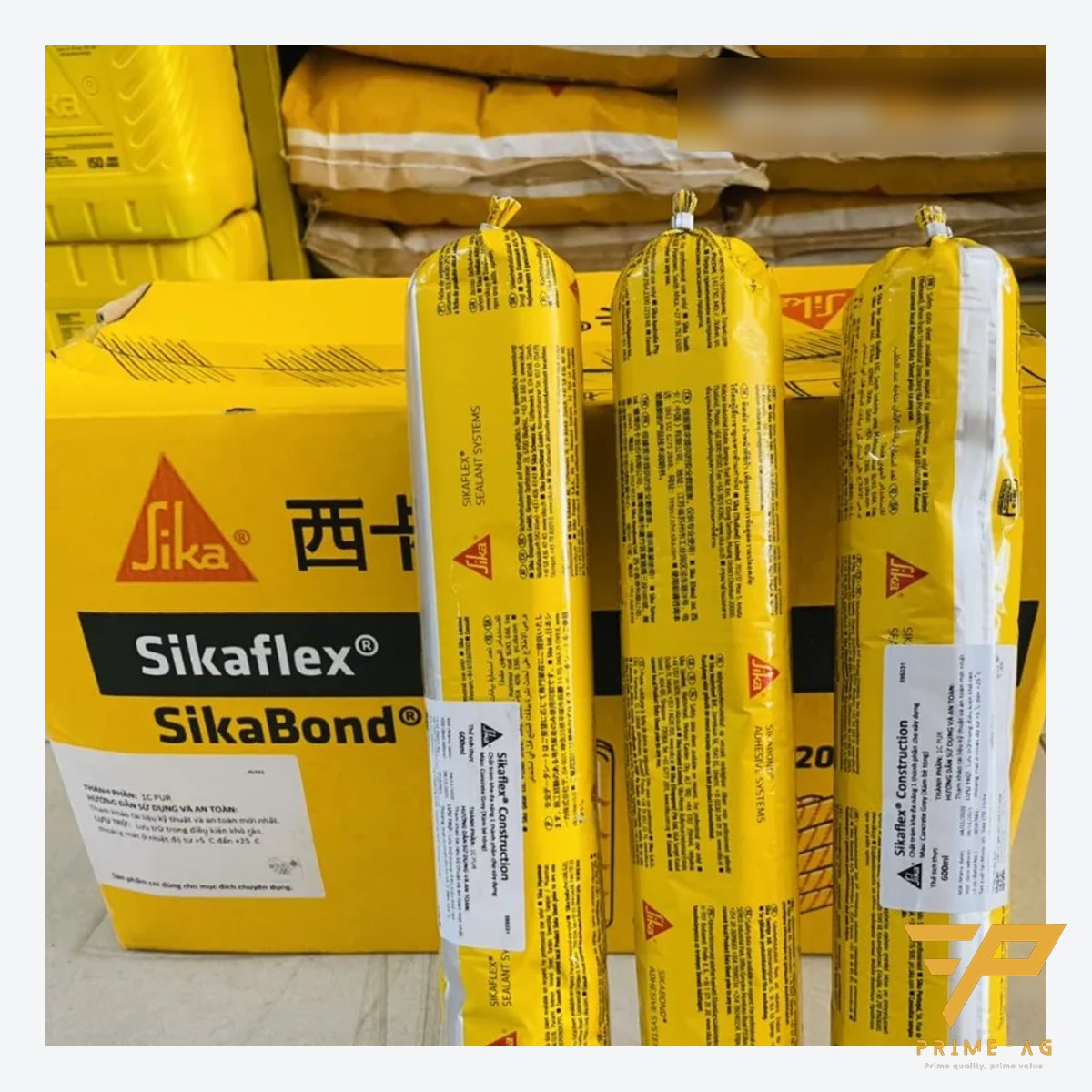
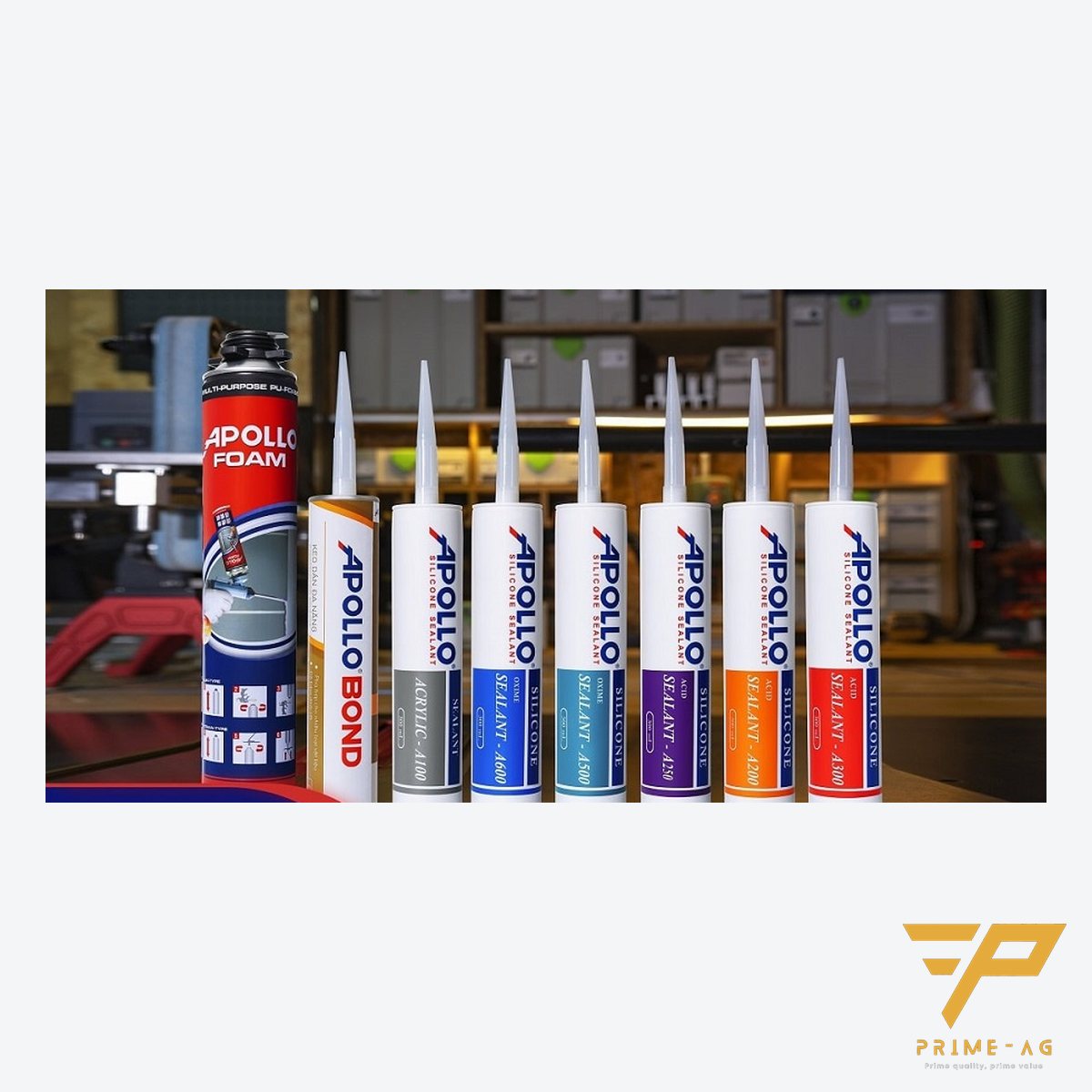
Everyday workshop adhesives, often bought together with Loctite. Neutral-cure silicone (odourless, does not attack metal — glass, aluminium, electrical cabinets) or acid-cure (low cost, glass to glass); clear/white/black/grey. Sika: Sikaflex 11FC elastic PU for bonding + sealing (floors, joints, metal to concrete), Sikaflex Construction 600 ml sausage for joint sealing, Sikaflex 112 Crystal Clear 290 ml clear bonding and sealing, Sikaflex 291 310 ml (marine bonding and sealing). Apollo: neutral silicone A500, A600 (oxime), acid silicone A200, A300, Acrylic A100, Apollo Bond, Apollo Foam PU expanding foam. AB epoxy 5-minute / 30-minute, clear/grey: metal, ceramics, repairs. Titebond wood glue; hot-melt glue sticks + 20/60 W guns for temporary bonding and securing wires; “502” Type 999 cyanoacrylate super glue; PVC flooring adhesive (non-conductive — ESD floors use conductive adhesive as recommended by the flooring manufacturer); white PVA glue, contact adhesive (multi-purpose).
| Type | Specification | Used for | Packing |
|---|---|---|---|
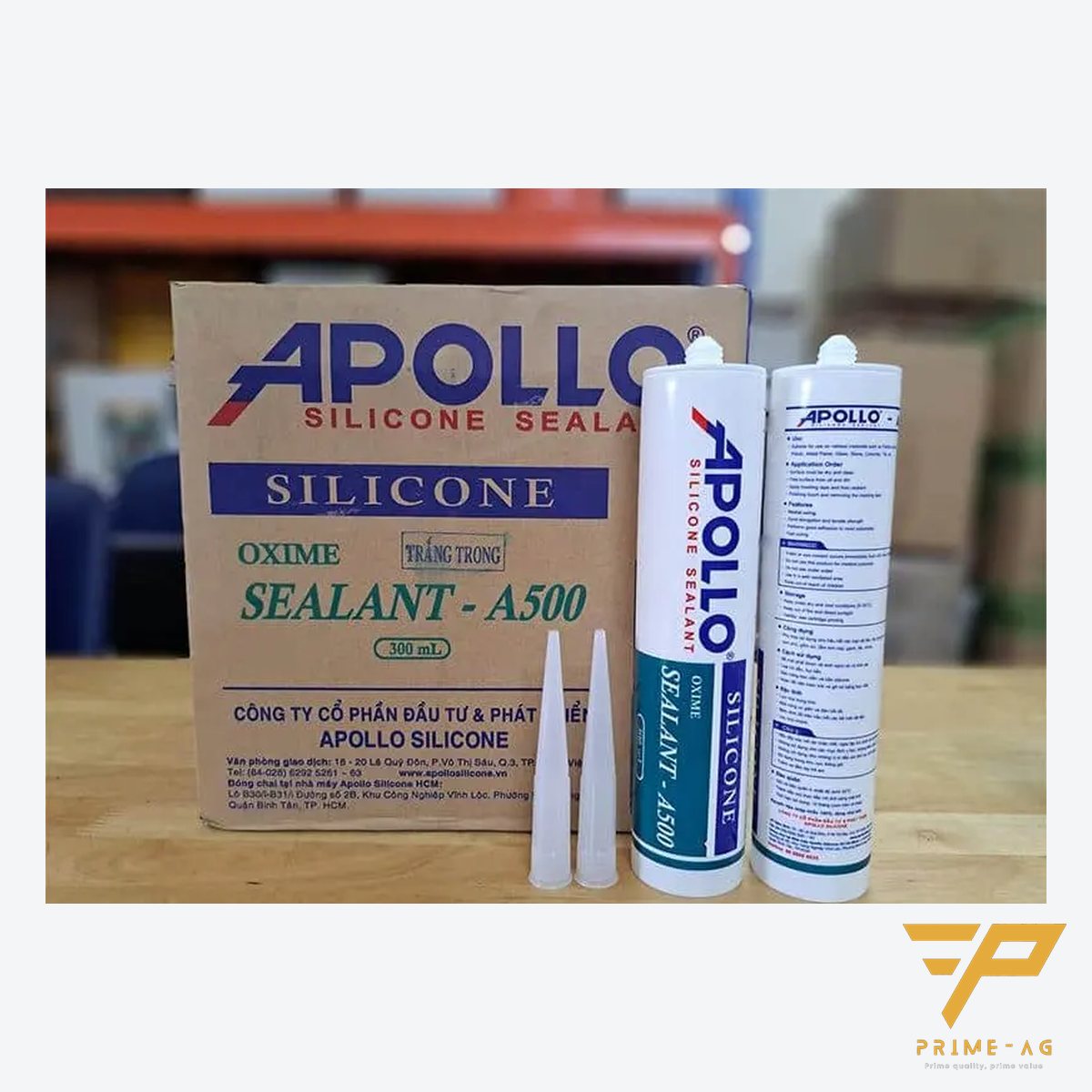
| Neutral-cure silicone | 300 ml, clear/white/black/grey | Glass, aluminium, electrical cabinets | 25 tubes/carton |
| Acid-cure silicone | 300 ml | Glass to glass | 25/carton |
| Apollo A500 / A600 silicone (oxime, neutral) | A500: 300 ml, clear white | Aluminium, glass, metal, near electrical equipment | Carton |
| Apollo A200 / A300 silicone (acid) | Tube, with nozzle | Glass to glass; not for copper or electrical cabinets | Carton |
| Apollo Acrylic A100, Apollo Bond, Apollo Foam | Tube / aerosol can | Paintable wall joint sealing, multi-purpose bonding, PU expanding foam for wall penetrations | Carton |
| Sikaflex Construction | 600 ml sausage | Construction joints, floor joints | Carton |
| Sikaflex 112 Crystal Clear | 290 ml, transparent | Bonding and sealing where a colourless bead is needed | Carton |
| Sikaflex 291 | 310 ml | Marine bonding and sealing, parts under vibration | Carton |
| Sikaflex 11FC | 300 ml, white/grey/black | Floors, joints, metal | 12/carton |
| AB epoxy | 2 × 20 g (5 minutes) / 2 × 250 g | Metal, ceramics | Set |
| Titebond II / III | 237 ml / 3.8 L | Wood, MDF | Bottle |
| Hot-melt glue sticks Φ11 | 1 kg (~40 sticks) + 60 W gun | Temporary bonding | Kg |
| “502” Type 999 super glue | 20 g | Low-cost general purpose | 20/box |
| PVC flooring adhesive | 18 kg | Standard PVC flooring | Pail |
MOQ 1 carton/set.
FAQ
– Neutral or acid-cure silicone for electrical cabinets? — Neutral (acid-cure releases acetic vapour that corrodes copper).
– Is AB adhesive heat-resistant? — It depends on the brand and grade; take the working temperature from the datasheet of the specific AB adhesive supplied.
– Can ESD flooring be laid with ordinary flooring adhesive? — No, conductivity is lost.
Silicone: distinguish by cure system
One-component (RTV) silicone cures with atmospheric moisture. During curing, the crosslinker releases a small molecule; depending on this substance, the silicone is called acid-cure, neutral or alkaline:
| Type | Released during cure | Advantages | Avoid on |
|---|---|---|---|
| Acetoxy (acid-cure silicone) | Acetic acid (vinegar smell) | Fast cure, good adhesion to glass, low cost | Copper, plated metals, electrical cabinets, electronic circuits |
| Oxime / alkoxy (neutral) | Oxime or alcohol, low corrosivity | Usable on aluminium, metals and near electrical equipment | Cures more slowly than acid-cure types |
Examples from the Henkel range: LOCTITE SI 596 is an acetoxy silicone, while SI 5699 is an oxime type explicitly labelled “non-corrosive”. Cured silicone is an elastic rubber with good heat resistance; the exact temperature range depends on each grade — check the datasheet of the actual product.
Note for electronics factories: silicone can migrate and form a thin film on nearby surfaces, so paint and adhesives bond poorly. Do not use silicone in SMT areas or on workbenches unless approved by the quality department.
Elastic PU sealant (Sikaflex 11FC)
A one-component polyurethane that cures with moisture; it both bonds and seals joints. After curing it stays elastic to take up movement in joints between metal, concrete and wood. Compared with silicone, PU is usually paintable and adheres better to concrete, so it suits floor joints, wall bases and rack feet. Take skin time, permissible joint movement and application temperature from Sika’s Product Data Sheet for the actual batch.
AB epoxy: metal and ceramic repairs
- Two-component epoxy cures by a chemical reaction between resin and hardener, so it must be mixed in the correct ratio; with the wrong ratio the polymer network is incomplete, reducing mechanical properties and heat resistance.
- The reaction is exothermic: mixing a large amount at once makes the adhesive heat up and set early, shortening working time. Mix only what you need.
- Room-temperature-cure epoxies usually have lower heat and chemical resistance than heat-cured types. Example: LOCTITE EA 3463 (kneadable stick, steel-filled): working time 4 minutes, cure 10 minutes at 25 °C, application temperature 15–30 °C, cures underwater.
- Uncured epoxy resin causes contact dermatitis and sensitisation — wear nitrile gloves; do not mix with bare hands.
Hot-melt glue sticks
Common hot-melt glue sticks are EVA-based (ethylene-vinyl acetate). Standard EVA grades have adequate strength at about 30–50 °C, but their limit is around 60–80 °C and they perform poorly under long-term load (creep). Use hot melt only for temporary fixing, holding wires and packaging — not for parts near heat sources, in vehicles/containers exposed to the sun, or for joints carrying long-term loads.
Storage and general safety
- Close tubes and bottles tightly after use; silicone and PU cure with moisture, so an open nozzle will harden.
- Store in a cool, dry place out of the sun; use by the date printed on the packaging; first in, first out.
- Ventilate when using solvent-based adhesives (flooring adhesive, contact adhesive); keep away from ignition sources.
- Keep the safety data sheet (SDS) of each product at the point of use.
Common mistakes
- Using acid-cure silicone in electrical cabinets, cable trays or equipment containing copper — the acid vapour corrodes contacts.
- Sealing with silicone and then painting over it — the paint does not adhere; use PU for joints that need painting.
- Mixing AB adhesive “by eye” or mixing a whole large tube at once.
- Using hot melt for joints that must bear heat or load.
- Laying ESD flooring with ordinary PVC flooring adhesive — this breaks the conductive path to the copper grid; use a dedicated conductive adhesive.
Technical references
- Wikipedia – Silicone rubber (acid/neutral/alkaline cure systems)
- Henkel – LOCTITE SI 596 RED (acetoxy silicone) Technical Data Sheet
- Henkel – LOCTITE SI 5699 (oxime silicone) Technical Data Sheet
- Henkel – LOCTITE EA 3463 Technical Data Sheet
- Wikipedia – Epoxy (mixing ratio, exotherm, skin sensitisation)
- Wikipedia – Hot-melt adhesive (EVA glue sticks, temperature limits)
Price: from 180,000 VND (excl. 8% VAT).
REQUEST A QUOTE: send the quantity and specifications you need — PRIMEAG quotes within 30 minutes.
Hotline/Zalo +84 906 108 292 · info@primeag.vn
Written by the PRIMEAG engineering team.
Related guides:Industrial Adhesives for Factories: Choosing by JobWhy Does 3M VHB Tape Fall Off Nameplates and…Acid vs Neutral Silicone, Sikaflex or Epoxy: Sealants for…
Updated: 2026-10-24
Giao tận nhà máy TP.HCM, Bình Dương, Đồng Nai, Long An, Tây Ninh · Kèm biên bản đo điện trở ESD theo lô · Hotline 0906 108 292