
3M VHB tape that comes off after a few days is mostly caused by surfaces not wiped with IPA, PP, PE or powder-coated substrates without primer, pressure below about 15 psi, or loading too early. According to 3M technical data, VHB needs 72 hours to reach full strength; PRIMEAG suggests 4910 or 9448 depending on the surface.
A furniture workshop in Vietnam delivers a batch of kitchen cabinets in the morning; the next afternoon the customer calls to say the decorative trim on a painted cabinet door has come loose at one end. The same week, at a metalworking shop, a nameplate stuck on a machine body falls to the floor after the oil is wiped off. Both suspect the tape roll, while the fault usually lies in how it was applied.
- Most failures start at the surface: oil, dust, or hard-to-bond plastics.
- Pressure and temperature during application decide whether the adhesive contacts the whole surface.
- VHB builds strength over time; loading it immediately tends to lift the edges.
- 9448 for light, flat parts, VHB 4910 for heavier loads; raw porous wood calls for adhesive instead.
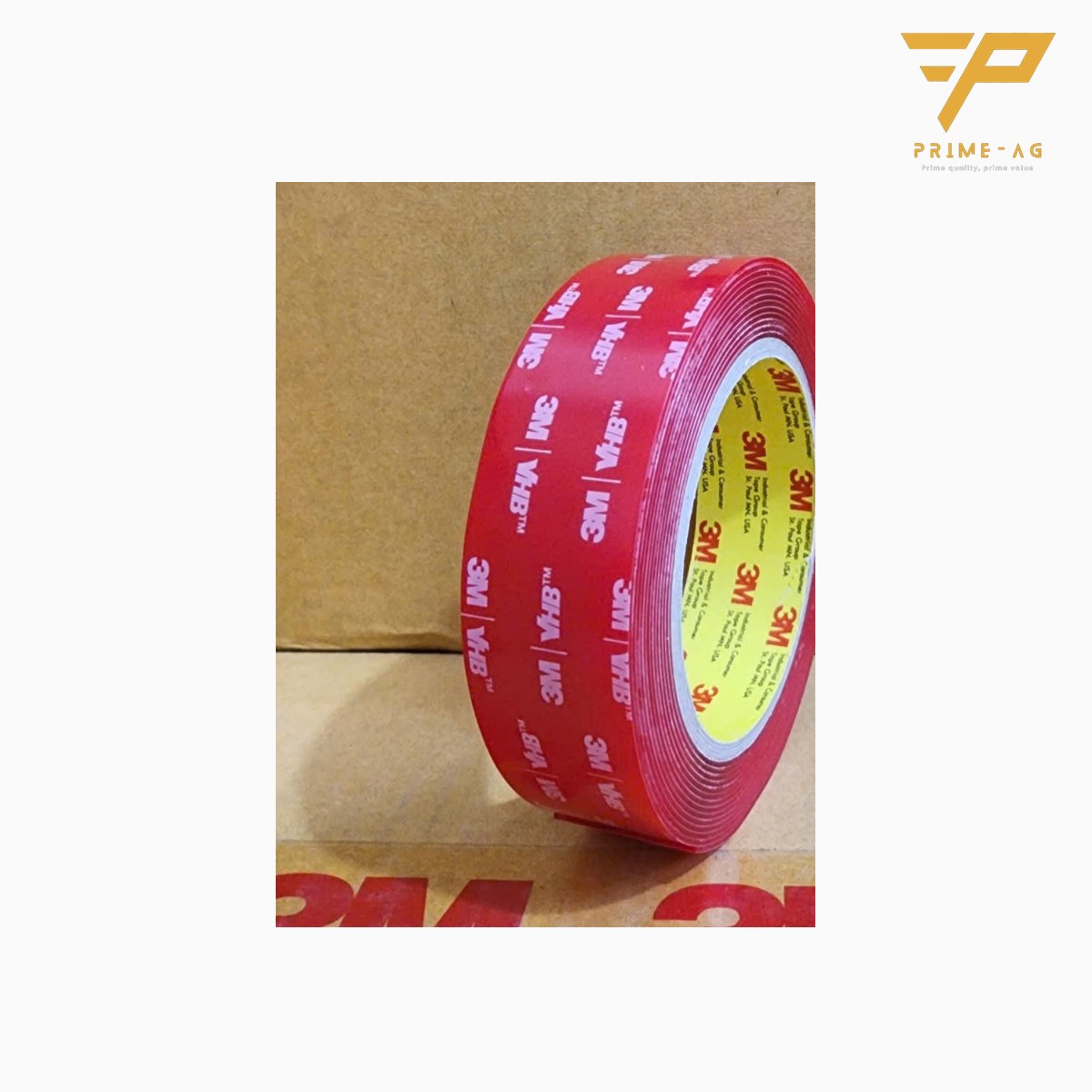
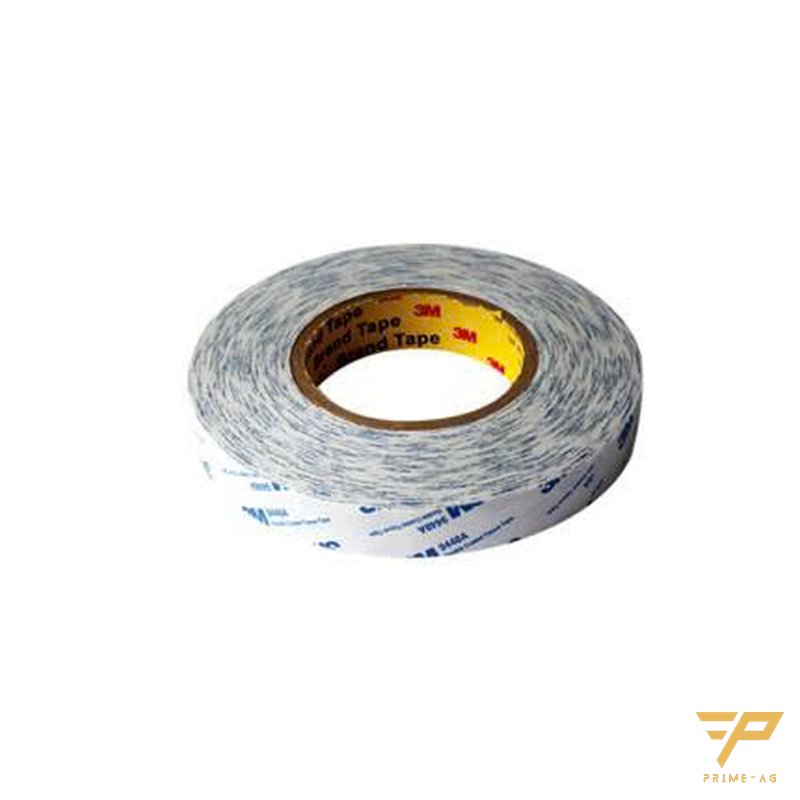
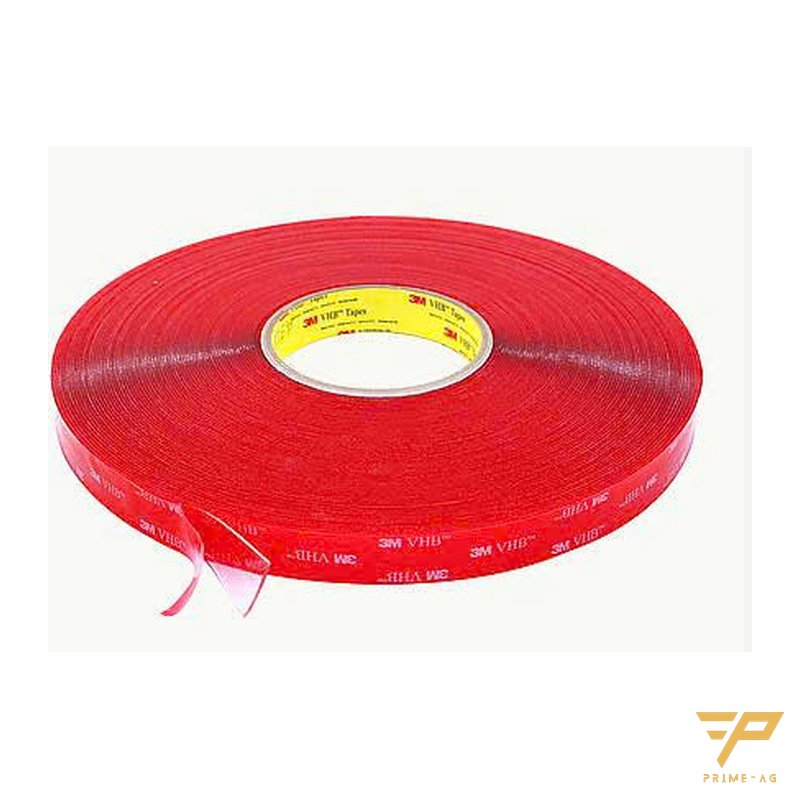
Why 3M VHB tape comes off: six causes, checked in order
1. Oil or dust left on the surface
Wood shavings, sanding dust, hand oil and cutting oil form a barrier between the adhesive and the substrate. According to 3M’s published guidance, wipe with a mix of IPA and water at about 50:50 and wait until fully dry before applying.
2. Low-surface-energy substrates
PP, PE and powder coating are surfaces the adhesive struggles to grip. On these substrates, apply a primer first or switch to a different tape.
3. Not enough pressure
Acrylic adhesive needs pressure to make full contact. 3M recommends applying an even pressure of about 15 psi (~100 kPa). Run a roller along the full length of the trim, especially both ends, instead of pressing with your fingers.
4. Application temperature too low
According to 3M technical data, the application temperature should be within 21–38 °C; avoid applying below 10 °C. Parts just taken out of cold storage should be brought to room temperature first.
5. Loaded too early
Also according to 3M technical data, at room temperature VHB reaches about 50% of its bond strength after 20 minutes, 90% after 24 hours and 100% after 72 hours. Boxing, stacking or hanging cabinet doors right after taping puts peel forces on the tape while it is still weak.
6. Wrong tape type
3M 9448 double-sided tape has a thin tissue carrier, suited to nameplates and flat, light plastic panels. 3M VHB 4910 is an acrylic foam that carries heavier loads and compensates for slightly uneven surfaces. Neither suits raw wood or uncoated porous board.
| Substrate | Surface preparation | Suggested tape |
|---|---|---|
| Conventionally painted metal, stainless steel, aluminum | Wipe with IPA/water mix, let dry | 4910 for trim and covers; 9448 for thin nameplates |
| Glass, acrylic (mica) | Remove fingerprints, press with a roller | Clear 4910 |
| Painted wood, melamine-faced board | Vacuum sanding dust, then wipe with IPA | 9448 for light parts; 4910 when the surface is slightly uneven |
| PP, PE, powder coating | Clean, apply primer | Send a sample so our engineers can choose before large-volume taping |
| Raw wood, porous board | Not suitable for tape | Switch to adhesive |
For porous substrates or joints that need gap filling, use silicone, Sikaflex or AB epoxy adhesive; how to choose between them is covered in acid or neutral silicone, Sikaflex or AB epoxy for furniture workshops. Thorough cleaning and enough pressure are also the key when dealing with floor marking tape peeling after 1 week.
Tapes are stocked items, delivered within 24–48 hours in Ho Chi Minh City, Binh Duong and Dong Nai, in all sizes. A comparison table of the codes is on the 3M industrial tapes page.
Where to start
- Turn over the part that fell and see which side the adhesive still sticks to; the side left clean is the one to treat.
- Record the substrate, the workshop temperature during application and the time before loading.
- Photograph the roll core or label of the tape in use and send it to PRIMEAG with photos of where it came off, to get a suitable code recommendation.
Frequently asked questions
- How long after applying VHB tape can it take a load? — Wait at least 24 hours, when the tape reaches about 90% of its strength; full strength comes after 72 hours, according to 3M technical data.
- Can VHB tape be applied to PP plastic? — PP is a low-surface-energy material; it needs a primer or a different tape, and direct application tends to peel off.
- What is the difference between 9448 tape and VHB 4910? — 9448 has a thin tissue carrier for flat, light parts; 4910 is an acrylic foam that carries heavier loads and bonds to slightly uneven surfaces.
Mon–Sat, 8:00–17:00 (GMT+7) · Phone/Zalo: +84 906 108 292 · Email: info@primeag.vn
Start where it suits you: Free technical advice · Send a drawing or layout · Get a quote within 30 minutes
Written by the PRIMEAG engineering team
Updated: 2026-10-25