
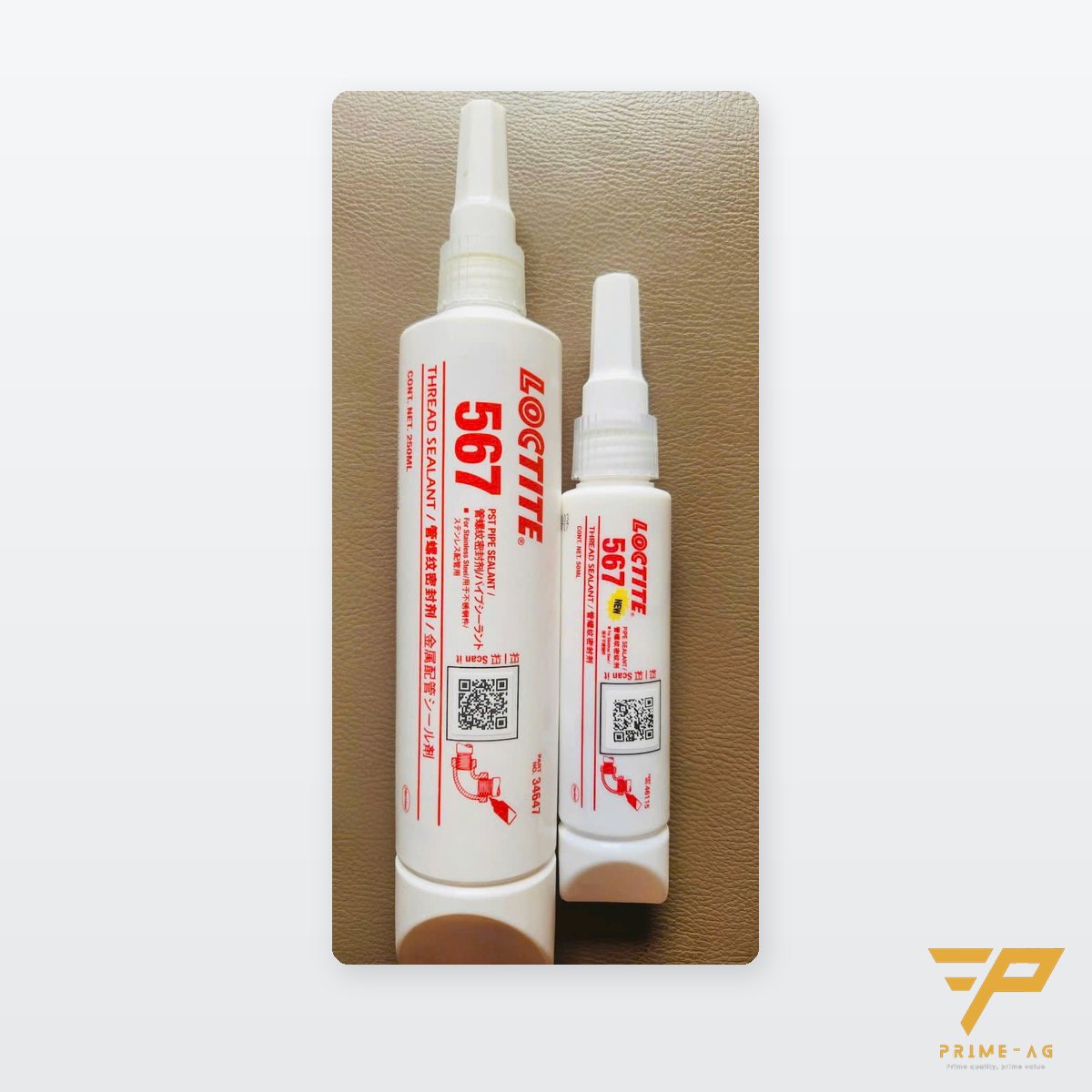
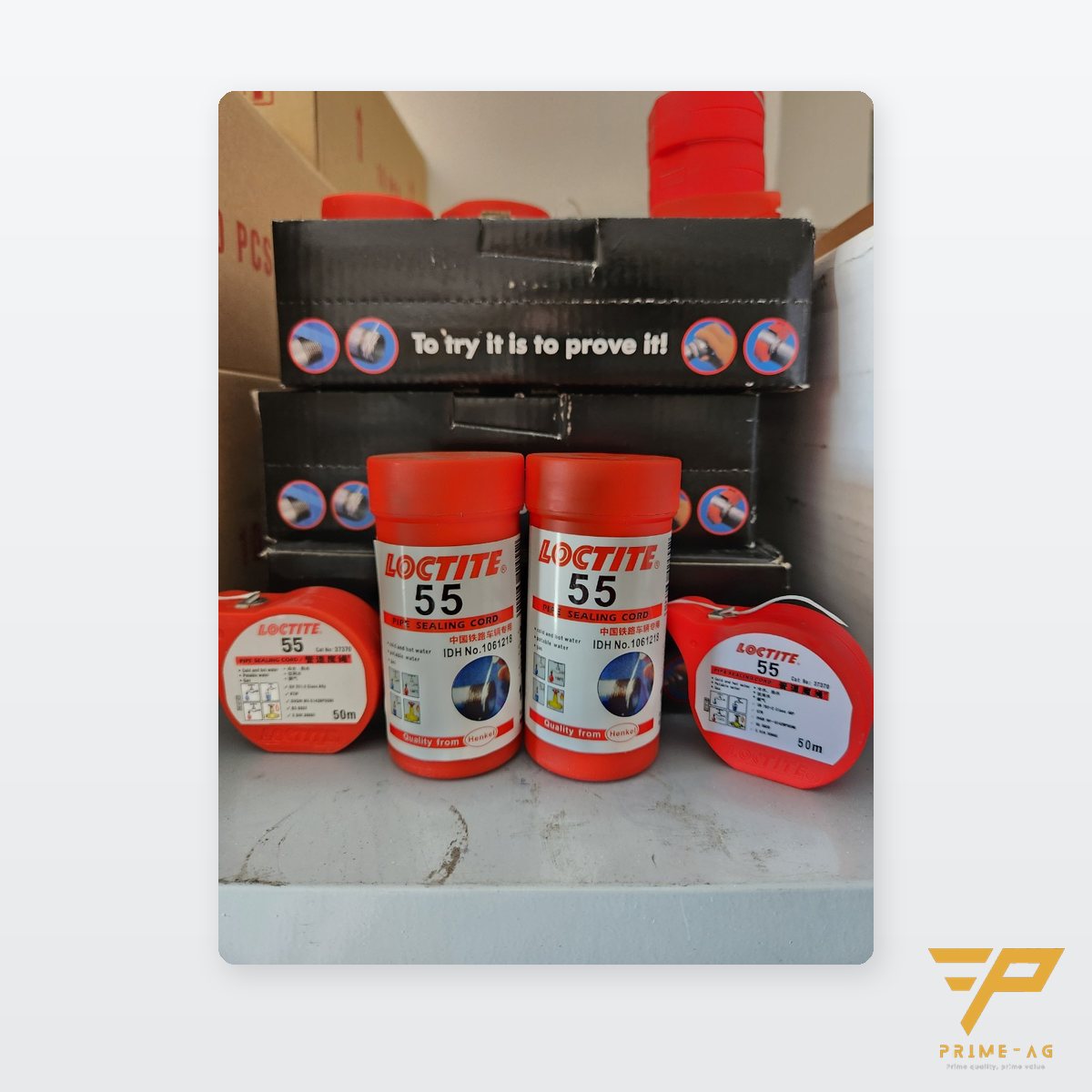
For oil or air leaks at pipe threads in a factory in Vietnam, replace PTFE tape with Loctite anaerobic thread sealant: 577 for threads up to 3″, 567 for stainless steel threads, or 55 thread sealing cord for instant sealing; rigid metal flanges with gaps up to 0.25 mm take 518. The PRIMEAG engineering team notes: degrease thoroughly before applying sealant.
- PTFE tape and hand-cut gaskets gradually open up under vibration and heat.
- Anaerobic sealants cure between two close-fitting metal surfaces; RTV silicone cures with moisture.
- Acetoxy silicone 596 corrodes copper; near electrical cabinets use oxime.
- Sealants are different from threadlockers and anti-seize.
Why PTFE tape and hand-cut gaskets still leak
PTFE tape wrapped against the thread direction slips when the fitting is tightened; too many wraps tear, and shreds fall into the pipe. The test run looks tight, but after a few weeks of vibration the joint starts weeping oil again.
Paper and rubber gaskets cut by hand shift when bolts are tightened and gradually harden. Scratched or slightly warped flanges still leave a gap.
Two cure mechanisms to tell apart
Anaerobic sealants (518, 515, 577, 567, 572, 545) stay liquid in contact with air and only cure when confined between two close-fitting metal surfaces. Squeeze-out does not cure and can be wiped off.
RTV silicones (5699, 5910, 596) cure with moisture into an elastic rubber, fill larger gaps and follow thin flanges.
Sealing pipe threads
- 577 (yellow): general purpose, threads up to 3″, 150 °C, slow cure; cures on brass, stainless steel and plated surfaces without activator.
- 567 (off-white, low strength): contains PTFE, 200 °C, prevents thread galling on stainless steel and aluminium.
- 572 (white, paste): medium strength, removable.
- 565 (white): PTFE-based, specifications per Henkel TDS.
- 545 (purple): hydraulics, pneumatics, fine threads up to 3/4″.
- Cord 55: coated polyamide cord, no cure wait, for water and gas; tapered metal and plastic threads up to 4″ NPT.
Sealing flanges
518 is a red gel for rigid metal flanges, gaps up to 0.25 mm, 150 °C; cures on aluminium. Immediately after assembly, Henkel allows pressure testing below 0.05 MPa. 515 is more flexible, suitable for pumps, compressors and gearbox housings.
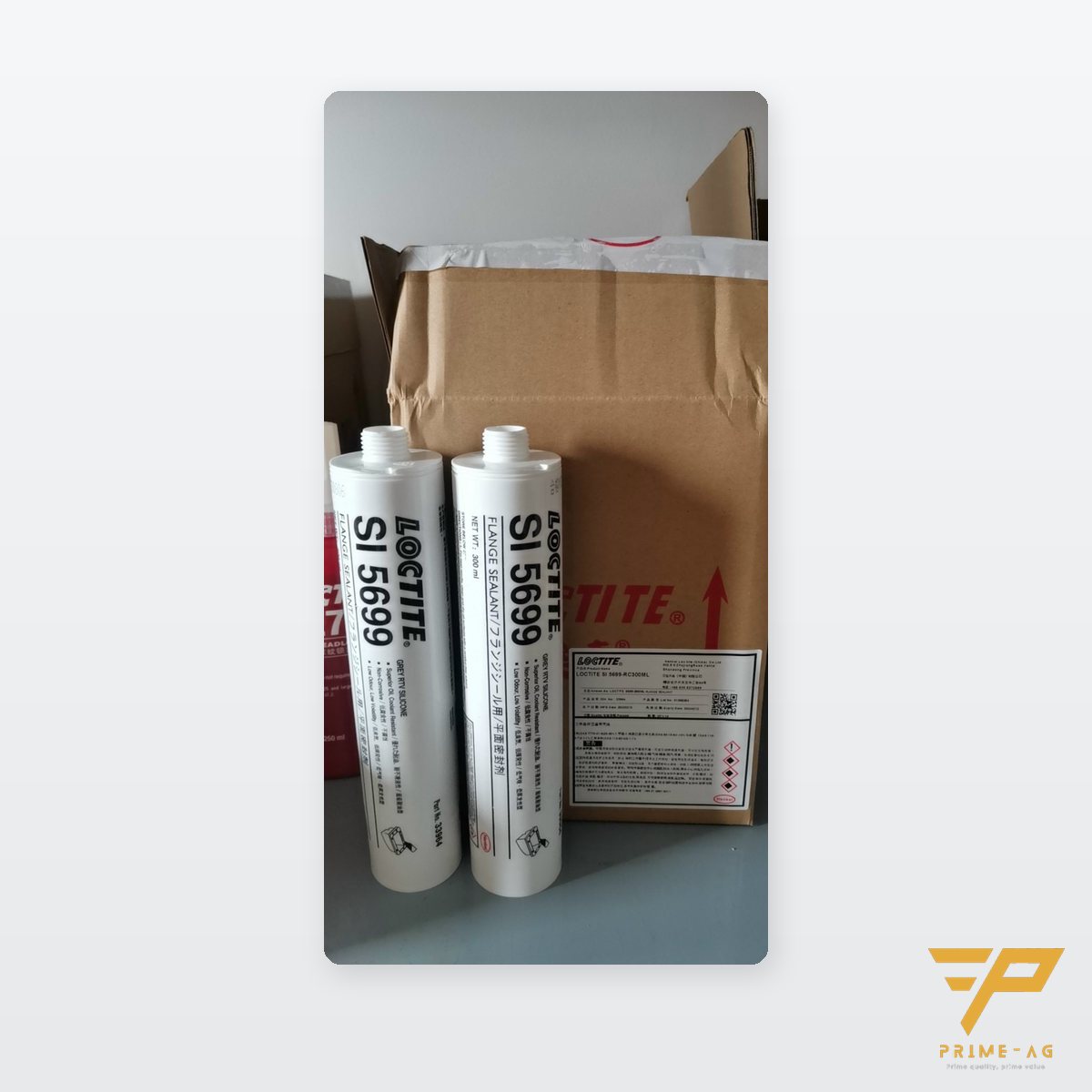
SI 5699 is a non-corrosive oxime silicone for cast housings and gearboxes. 5910 is for stamped sheet-metal covers such as oil sumps, with elongation from 400 %. 596 is acetoxy and releases acetic acid while curing; keep it away from copper and sealed electrical cabinets.
These codes belong to the Loctite pipe thread and flange sealants range: Henkel, CO per batch, orders from 1 bottle.
Selection table by leak location
| Leak location | Old method | Loctite product | Note |
|---|---|---|---|
| Steel pipe threads up to 3″ | PTFE tape | 577 | Slow cure |
| Stainless steel, aluminium pipe threads | Thick PTFE tape wraps | 567 | Low strength, anti-galling |
| Water, gas lines needed in service immediately | PTFE tape | Cord 55 | No cure wait |
| Rigid metal flanges | Paper gasket | 518 | Gaps up to 0.25 mm |
| Stamped sheet covers, oil sumps | Rubber gasket | 5910 | Follows deformation |
| Cast housings near electrical equipment | Acid-cure silicone | SI 5699 | Non-corrosive |
Application procedure
- Wipe off old oil and gasket residue with cotton wiping cloth or Scotch-Brite cloth, degrease and let dry.
- Apply a continuous bead, just enough, around the male thread or on the flange face.
- With silicone, assemble the parts within a few minutes, then tighten evenly.
- Allow curing as instructed: silicone becomes tack-free after about 10–50 minutes; for silicone, Henkel recommends waiting about 7 days before heavy loading.
Do not confuse with threadlockers and anti-seize
Bolts under vibration need a Loctite threadlocker; how to choose the grade is covered in the article bolts loosening from vibration: choosing a Loctite threadlocker.
Furnace flange and exhaust bolts that must be removed again need Loctite anti-seize: LB 8008 C5-A for carbon steel, LB 8009 for stainless steel. Anti-seize does not seal pipe threads; mineral-oil-based grease must not be used on oxygen systems.
Where to start
- Record each leak point: thread size, material, medium, temperature, flange type.
- Arrange sealants by code in the maintenance team’s 5S tool cabinet.
- Send the list via the form to receive a quotation within 30 minutes; prices listed on the website exclude 8% VAT.
Frequently asked questions
Can Loctite 577 replace PTFE tape on pipe threads? On metal pipe threads up to 3″, 577 seals, lasts longer and does not shed shreds into the pipe. If the line must run immediately, use cord 55.
Which sealant for a flange gap larger than 0.25 mm – is 518 still OK? Not recommended. For large gaps on rigid flanges and cast housings choose SI 5699 silicone; for thin sheet-metal flanges with a lot of movement choose 5910.
Why not use 596 silicone inside an electrical cabinet? 596 releases acetic acid while curing and corrodes copper; near electronic circuits choose oxime-based SI 5699.
Updated: 21/10/2026 — PRIMEAG engineering team
Mon–Sat, 8:00–17:00 (GMT+7) · Phone/Zalo: +84 906 108 292 · Email: info@primeag.vn
Start where it suits you: Free technical advice · Send a drawing or layout · Get a quote within 30 minutes
Written by the PRIMEAG engineering team
Updated: 2026-10-21