
How do you stop CNC tools from chipping and getting mixed up at the machine? Most damage happens because tools are left together on the machine table or in a plastic bin, edge against edge. PRIMEAG recommends one tool cart per machine parked next to the machine door, 590 × 360 mm trays lined with cut-out foam, a code label at every pocket and a tool-return rule at the end of each shift.
Two in the morning, night shift. The operator needs a Φ10 end mill to replace one that has just worn out and digs through the plastic bin under the machine. The first one he pulls out has a chipped corner. The second one is Φ12. The machine sits waiting.
- Most chipped tools are damaged by knocking against each other in storage, not by cutting.
- Every tool gets its own fixed pocket in a foam-lined tray, with a code label.
- Wipe the tool holder taper before mounting and return every tool to its pocket before shift handover.
Why a CNC tool cart belongs right next to the machine
Carbide end mills are very hard but brittle. Two cutting edges touching when they are tipped into a bin is enough to chip a corner. A small chip only shows up when the part has marks on it or the tool breaks mid-program.
Tool holders left lying on the machine table have another problem: chips and coolant stick to the taper. A dirty taper fitted into the spindle causes runout and fast wear.
Mix-ups happen when tools a few millimetres apart in diameter sit side by side and the marking on the shank has faded under oil.
Lay out the cart and trays around the machine’s tool set
Choosing the cart
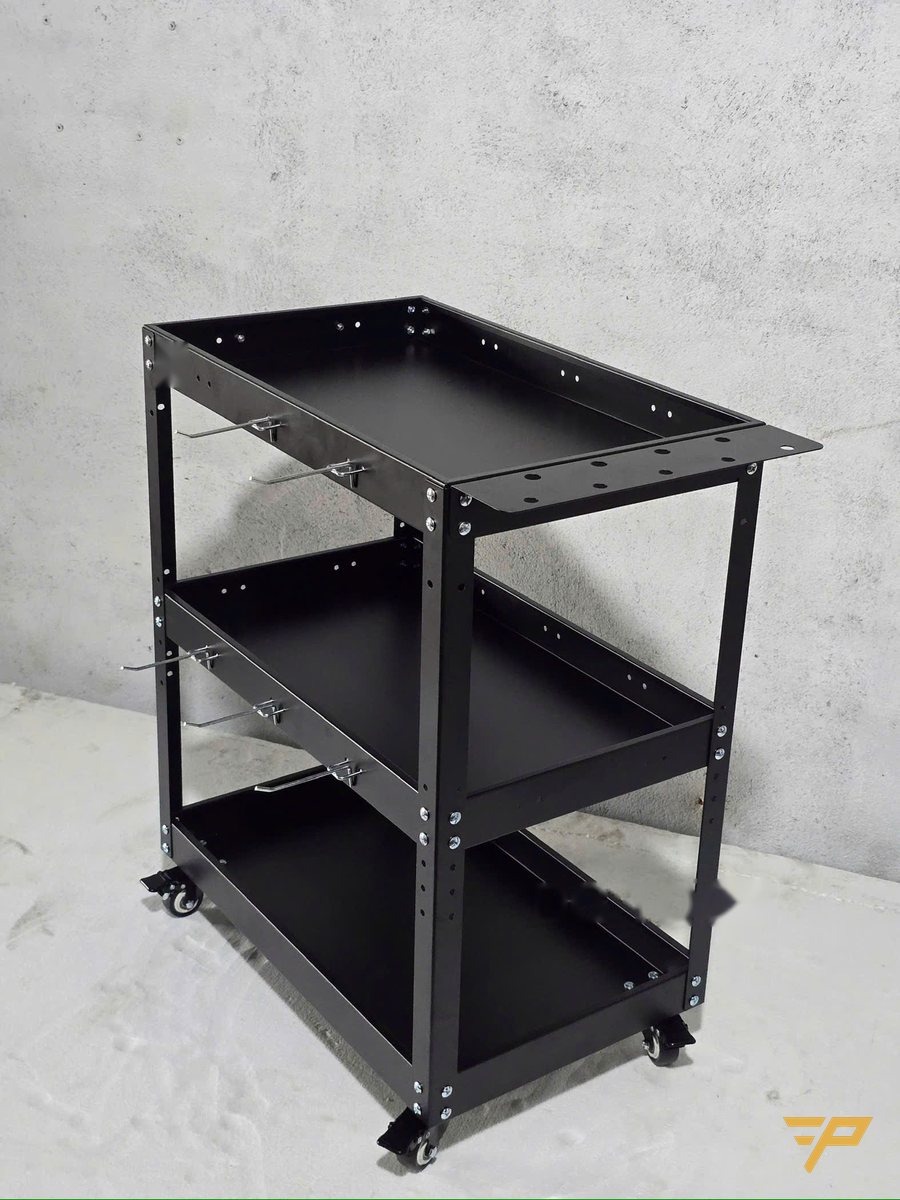
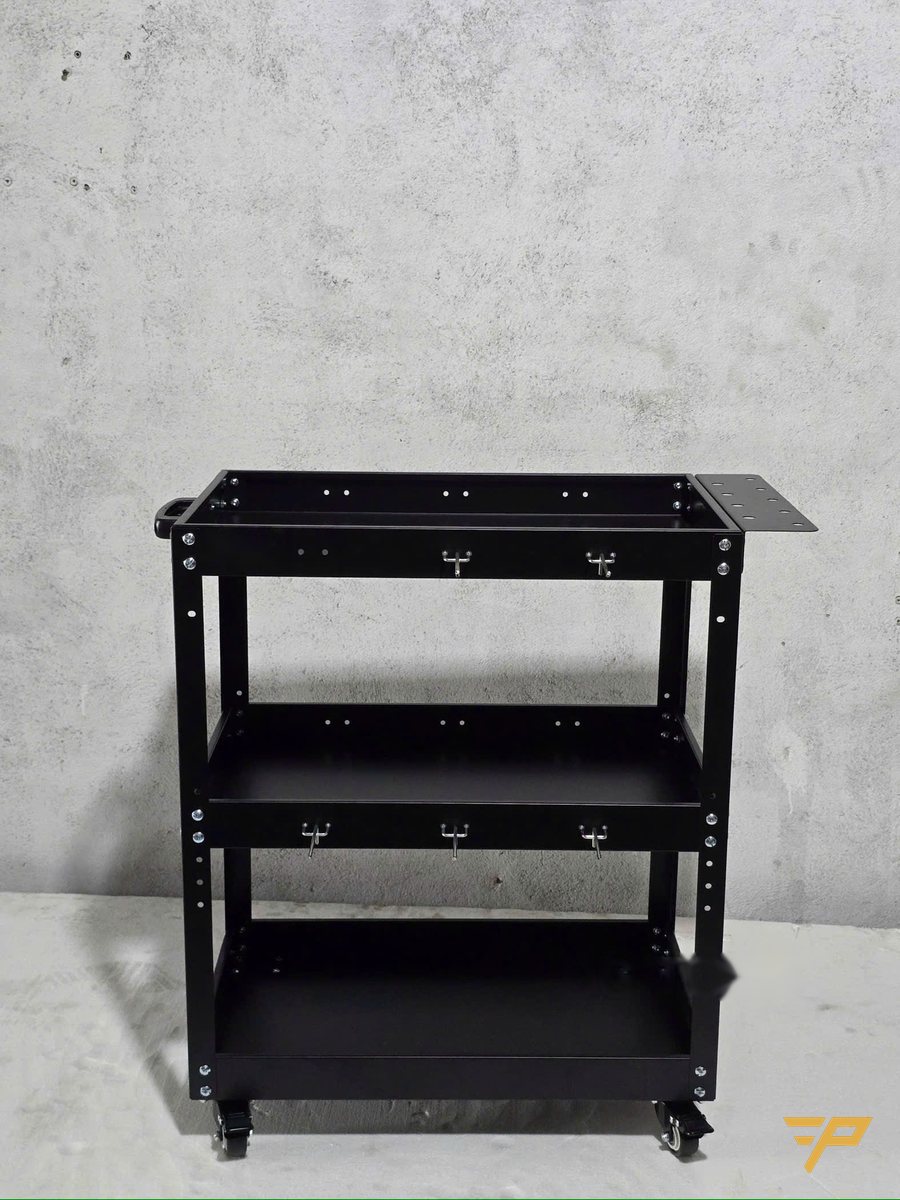
The 3-tier mechanical tool cart has 590 × 360 mm trays with retaining lips, a total load of 150–180 kg and 70 mm hard rubber casters with brakes. Hooks hold wrenches; the side holder takes screwdrivers and test pens. Chipped paint rusts quickly once coolant gets on it, so touch it up early.
Line the trays with cut-out foam
For tools standing upright, use 30–50 mm PE foam CNC-cut to a layout drawing (formed tooling from 50 sets) so that a tool can be lifted out without touching the edge next to it; 2–10 mm EVA foam is only for lining the tray bottom. EVA melts at about 90 °C, so let tools cool before putting them back.
Labels and order
- Put the tool code and tool number (T) label at the edge of the pocket, not on the tool shank.
- Arrange tools in program tool-number order.
- An empty pocket means the tool is in the machine or out for regrinding.
If a label has faded, measure the shank with a caliper before putting the tool back; a 150 mm digital caliper is accurate to about ±0.02 mm; wipe the jaws and set it to 0 before measuring.
Spare tools and fixtures: store them away from the cart
Boxed tools, tools waiting for regrinding and damaged tools go into a tool cabinet with divided compartments and an issue/return log. Vises and heavy fixtures go on a fixture rack, never piled onto the tool cart.
| Item | Where it goes | Who is responsible |
|---|---|---|
| Tool set in use, tool holders | Trays on the cart next to the machine | Machine operator on each shift |
| Spare tools, new tools | Tool cabinet, with log | Team leader or storekeeper |
| Chipped tools waiting for regrinding | Red-label compartment in the cabinet | Whoever finds it records it in the log |
| Fixtures, vises | Fixture rack next to the machine group | Setup team |
Tool-return and taper-cleaning rules
- When a tool comes out, it goes straight into its own pocket, never set down temporarily on the machine table.
- Wipe the tool holder taper with a clean, dry cloth before mounting.
- Any tool suspected of being chipped goes to the red-label compartment.
- At the end of the shift, count the empty pockets and record them in the handover log.
Getting started in one week
- Pick the machine that runs the most part numbers as the pilot.
- Draw the pocket layout to the tray size and mark a cart parking box next to the machine door.
- After two weeks, compare the number of chipped tools with before.
For mechanical plants that are export-processing enterprises (EPE), orders from VND 20 million are invoiced at 0% VAT, and PRIMEAG also handles the on-the-spot import-export customs declaration at no extra charge.
For organising the maintenance team’s tools, see tool cabinets, tool carts and 5S for the maintenance team; for compartments and labelling along the same lines, see divided trays and labels to prevent component mix-ups.
Frequently asked questions
- How many tool carts does each CNC machine need? — One cart per machine. Sharing a cart between two machines easily leads to mixed-up tools; if you must share, split the trays by machine and label the machine name on the tray edge.
- Does the foam tray insert need replacing periodically? — Yes. When the pockets have widened so tools wobble, or the foam has soaked up a lot of oil, cut a new sheet.
- Should spare CNC tools be kept on the cart or in a cabinet? — In a lockable tool cabinet with an issue/return log so you know the stock of each code. The cart only holds the tools in use.
Email: info@primeag.vn · Phone/Zalo: +84 906 108 292
Written by the PRIMEAG engineering team
Updated: 2026-10-26