
Garments that arrive moldy or musty when the buyer opens the carton were usually still damp when packed, plus condensation inside the container. PRIMEAG recommends measuring moisture before packing, placing desiccant packs for garments inside a sealed PE bag, sizing them to the carton volume, and adding a 6-spot humidity indicator card.
A lot of T-shirts is packed in the middle of the rainy season, waits for the vessel, then goes by sea. The buyer opens the cartons and finds mold spots on the collars, a damp smell clinging even to the PE bags, and files a claim for the whole lot. Desiccant packs for garments help, but only if the earlier steps are done right.
- Goods go into the bag only when dry and cooled.
- Desiccant packs only work inside a sealed barrier.
- The number of packs depends on the carton and the route.
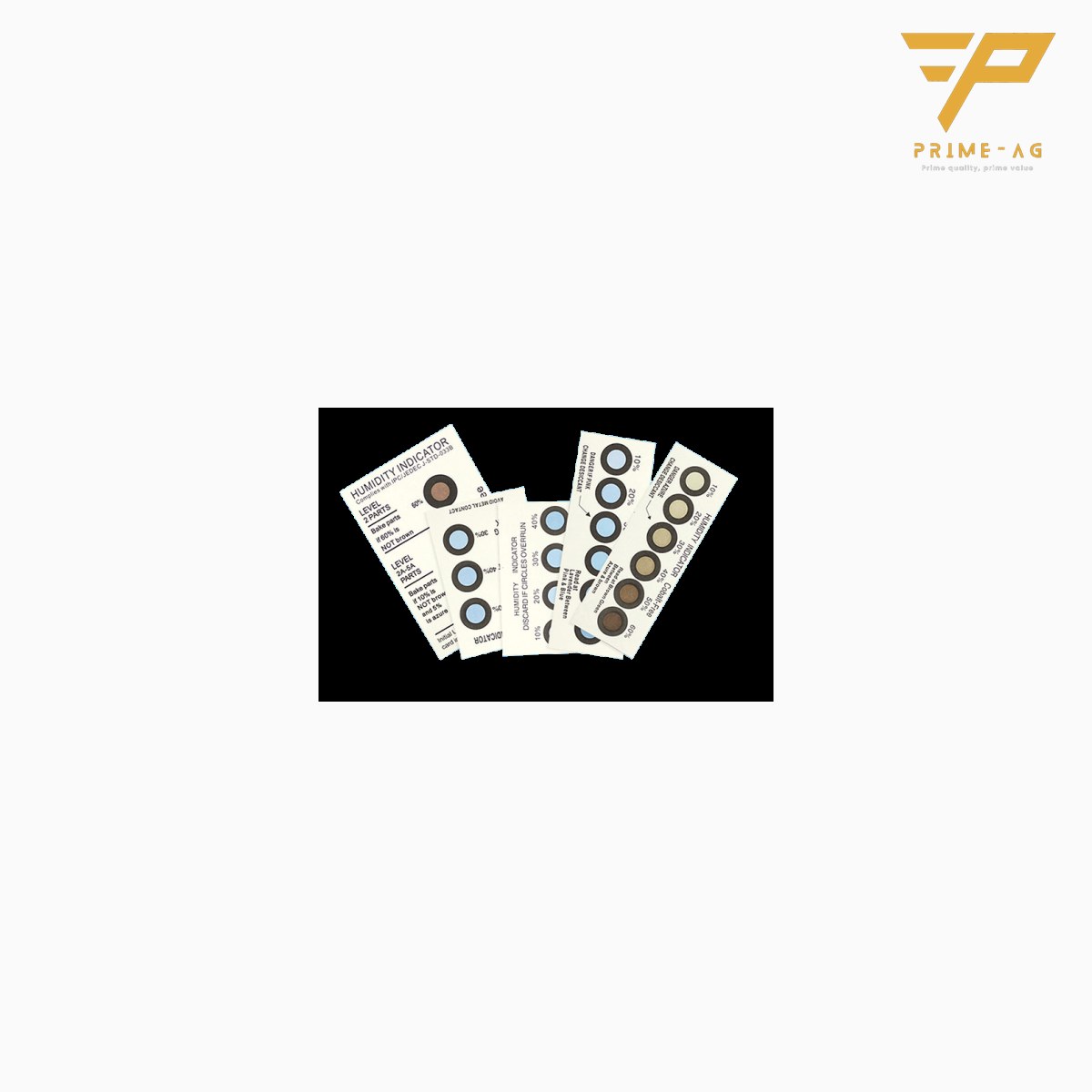
- An indicator card in a sample carton shows whether the barrier is sealed.
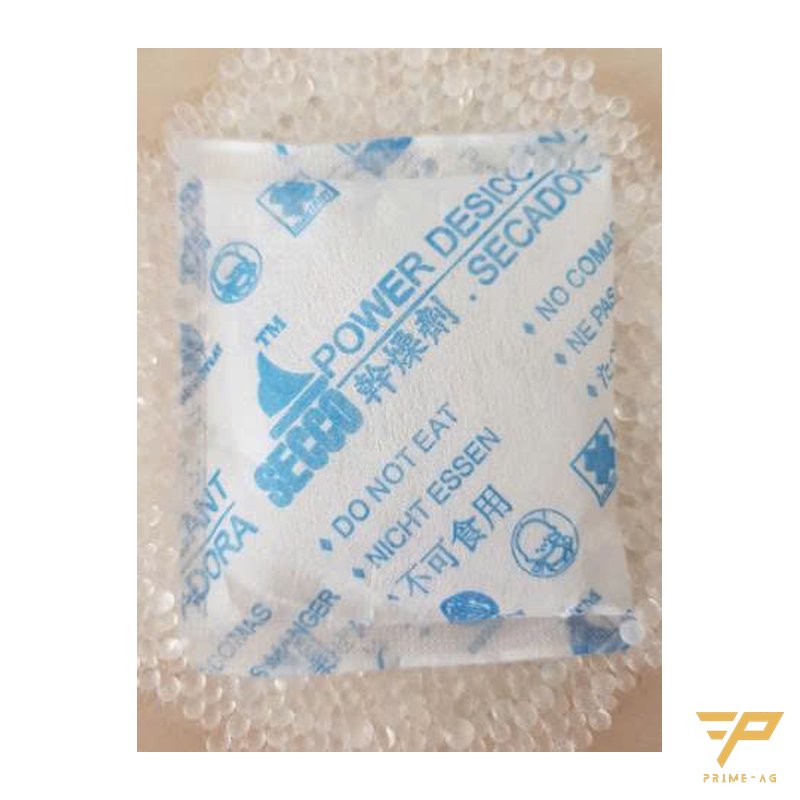
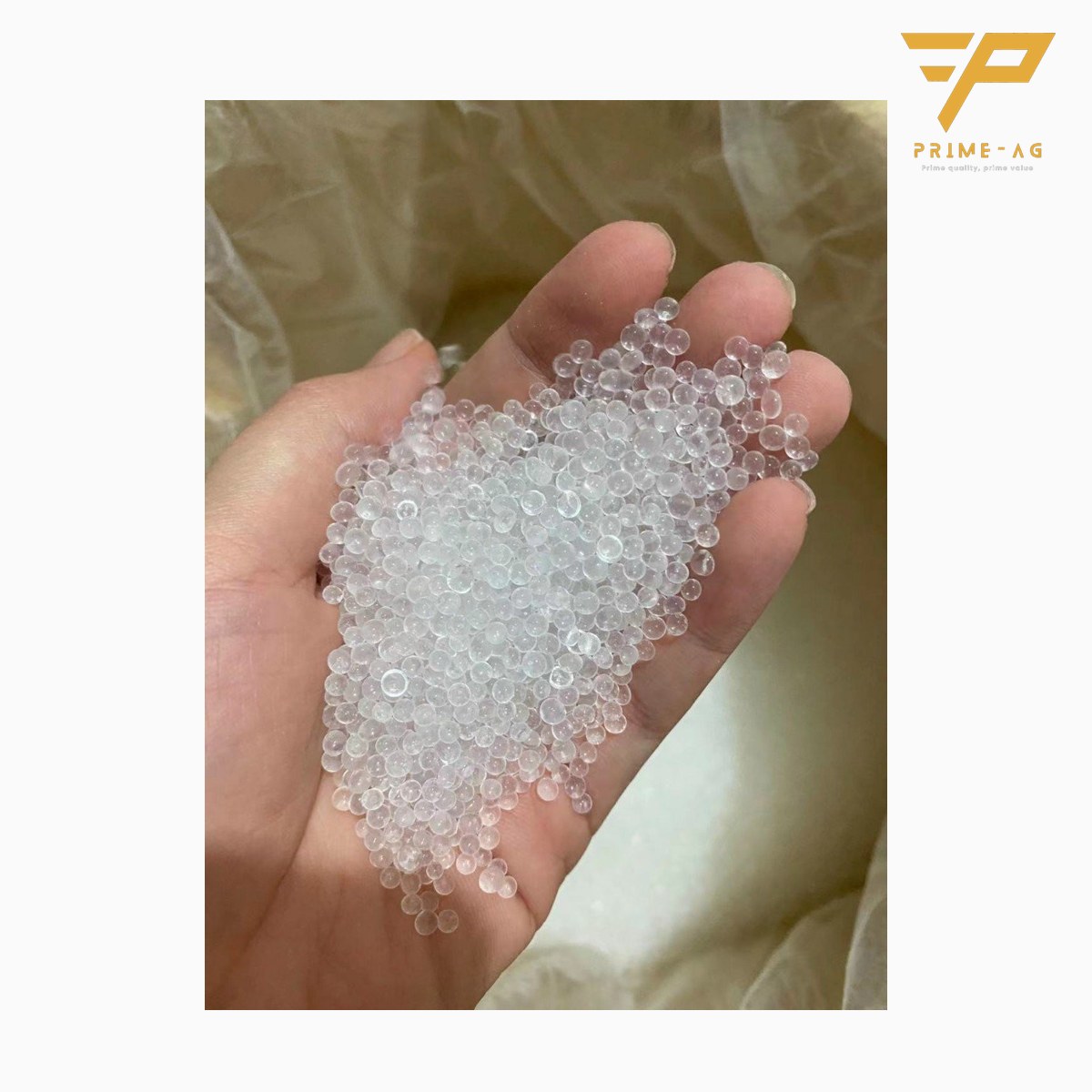
Desiccant packs for garments cannot save goods packed damp
Silica gel holds water vapor on the surface of its pores, up to about 37 % of its own weight. A stack of shirts still holding steam after ironing saturates the packs very quickly; the excess moisture stays in the fabric.
Causes, checked in order
- Goods not dry: folded right after steam ironing, washed goods not evenly dried.
- Damp cartons: empty cartons stored against the floor or walls.
- Open barrier: PE bags not sealed, desiccant packs placed loose outside the sealed barrier.
- Saturated packs: a desiccant carton opened and left open on the table for the whole shift.
- Condensation in the container: day-night temperature swings make water collect on the ceiling and drip onto the top cartons.
Check moisture before packing
Pick a few pieces at random from each lot and measure them with the factory’s fabric moisture meter. The pass threshold follows the buyer’s requirement; record it on the lot sheet.
Let ironed goods cool and air-dry on an open rack before bagging. Keep empty cartons on pallets. How to keep stock off the floor and issue by lot is in moisture- and mold-proof fabric roll storage. For warehouses that are humid all year, also consider a dehumidifier.
Choosing pack size and quantity
| Size | Casing | Suggested placement |
|---|---|---|
| 1 g / 5 g | Paper sachet | Small boxes, accessories |
| 10 / 20 / 25 g | Non-woven sachet | PE bag per item or per bundle |
| 100 g | Non-woven sachet | Large liner bag inside the carton |
There is no single gram figure for every carton: the amount needed depends on volume, bag tightness, transit time and moisture at packing. The packaging industry uses the “unit” per MIL-D-3464: 1 unit adsorbs 3.00 g of water at 20 % RH and 6.00 g at 40 % RH, at 25 °C. PRIMEAG calculates the number of packs for each item once it receives the carton dimensions. Specifications are on the silica gel desiccant packs and humidity indicator cards page.
Placing packs in the right spot
- Packs sit inside the sealed barrier together with the product, never loose outside the PE bag.
- Multi-layer cartons: distribute packs between layers.
- Once a box of desiccant packs is opened, use it up before opening the next.
Verify with a humidity indicator card
Put one card in a sample carton of each lot. The cobalt-free 6-spot HIC humidity indicator card has levels of 10–20–30–40–50–60 % RH and does not use cobalt chloride, so it suits European buyers with REACH requirements. Read it immediately on opening and compare with the color scale printed on the card. Several spots changing color means the barrier is open or there are too few packs.
Wooden furniture awaiting export faces the same issue; the article finished wooden furniture getting moldy in the warehouse covers stacking and packing.
Quick self-check
- Measure the moisture of a few pieces from the lot about to be packed and compare with the buyer’s requirement.
- Check whether the PE bags are sealed.
- Check how long the desiccant packs on the table have been open.
- Send the carton dimensions via the quote request page to get a recommended number of packs.
Desiccant packs and indicator cards are stocked trading goods, delivered in 24–48 hours in Ho Chi Minh City, Binh Duong and Dong Nai; quote within 30 minutes.
HIC cards and the unit measure come from electronic component packaging (J-STD-033, MIL-D-3464); here they are used only for indication and estimation.
Frequently asked questions
Does silica gel kill mold on garments? No. Silica gel only absorbs water vapor, lowering humidity inside a sealed bag or carton. Goods that are already moldy must be treated separately.
How many desiccant packs does a carton of garments for export need? There is no single figure. The amount depends on carton volume, bag tightness, days in transit and moisture at packing; send the carton dimensions and route for PRIMEAG to calculate.
Can used desiccant packs be dried and reused? Packs with non-woven casing can be dried at about 120 °C for 2 hours and reused; paper-cased packs cannot.
Updated: 01/11/2026 — PRIMEAG engineering team
Email: info@primeag.vn · Phone/Zalo: +84 906 108 292
Written by the PRIMEAG engineering team
Updated: 2026-11-01