
Choose electrical safety equipment by the maximum working voltage, not the figure on the label, which is the test voltage. Low-voltage MSB panels use 4 mm thick mats, LV gloves and boots. 22 kV substations need mats tested from 24 kV, plus 35 kV hot sticks and earthing sets. PRIMEAG recommends checking the test certificate of each batch.
When safety inspectors or customers audit the electrical rooms of an FDI factory, three things are usually missing: an insulating rubber mat in front of the MSB (main switchboard), insulating gloves and insulating boots of the right class for the operators, and test certificates for the equipment. PRIMEAG supplies complete electrical safety equipment from low voltage up to 220 kV; stock items are delivered within 24–48 hours in Ho Chi Minh City, Binh Duong and Dong Nai. This guide summarizes how to choose by voltage class.
- Choose by the maximum working voltage, not by the “10 kV, 22 kV” name on the label — that figure is the test voltage.
- Low voltage (MSB, 400 V DB panels): 4 mm low-voltage insulating rubber mat + low-voltage insulating gloves + low-voltage insulating boots.
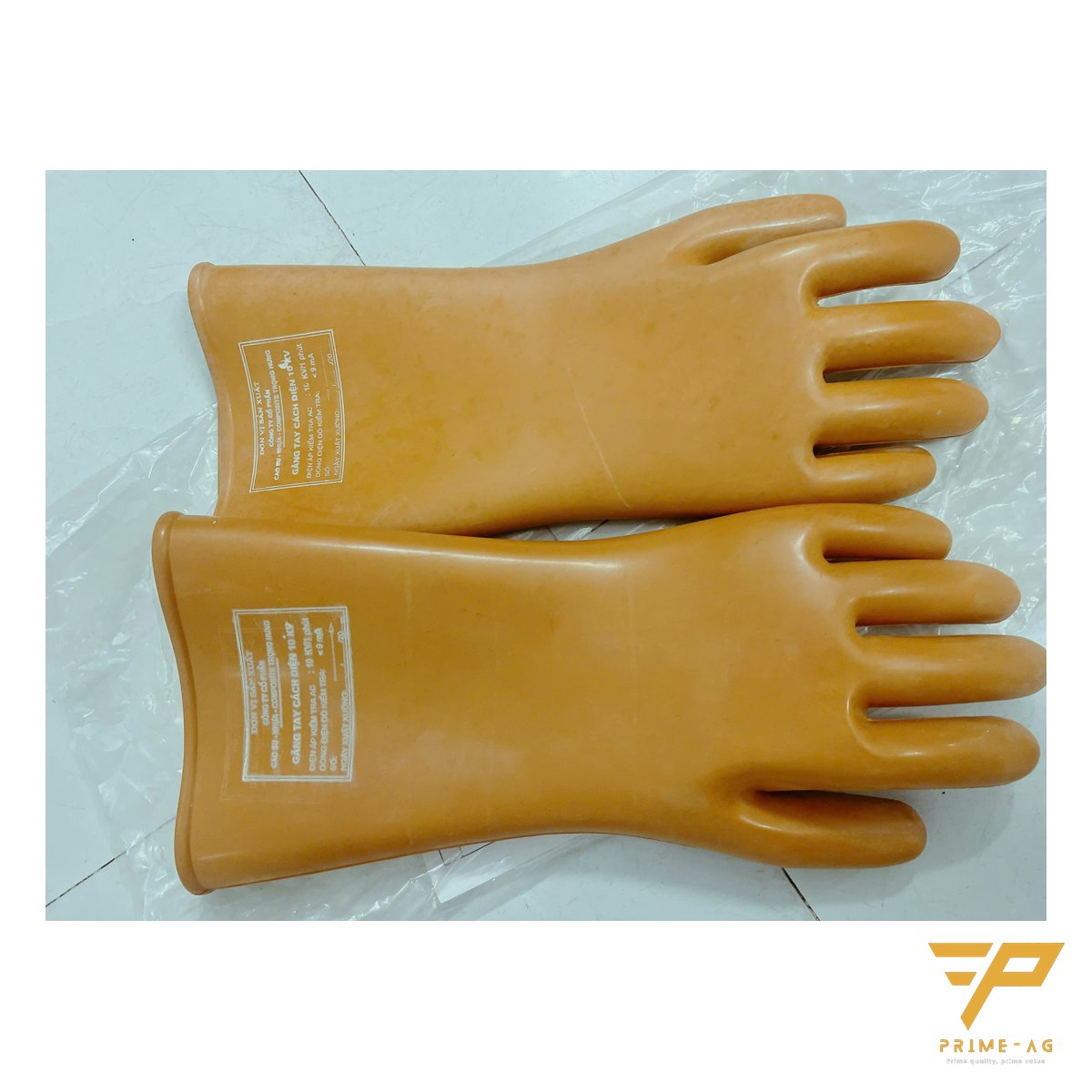
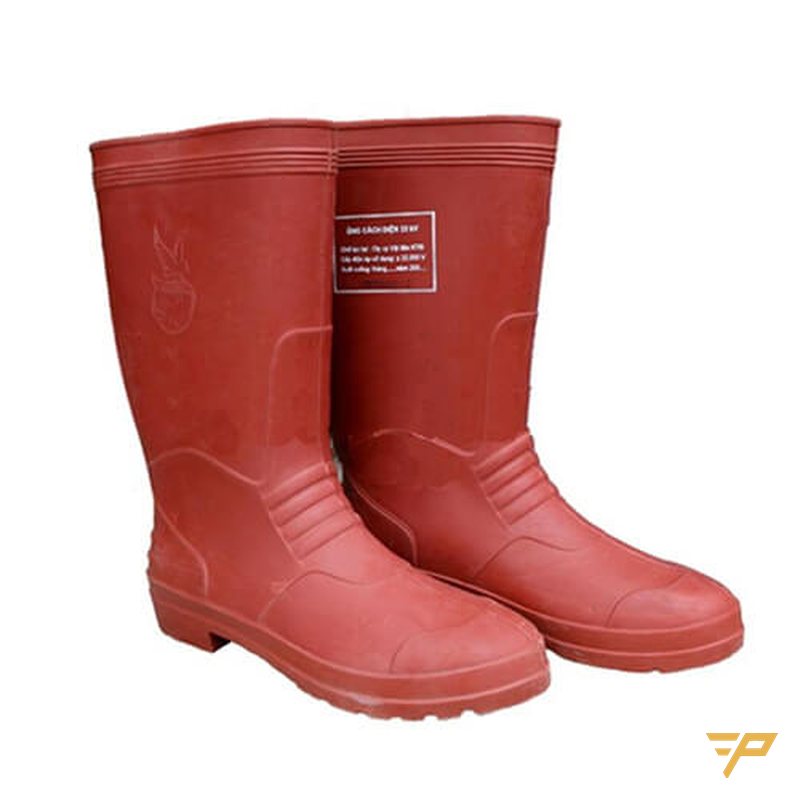
- Medium voltage 22 kV (RMU, in-plant substation): mat tested at 24 kV or higher, 22 kV gloves, 22–24 kV boots, 35 kV insulating hot stick, 35 kV portable earthing (grounding) set.
- Insulating ≠ ESD: never lay insulating rubber mats in an EPA.
1. Read the voltage class correctly
Insulating rubber equipment (mats, gloves) is classified under OSHA 1910.137, ASTM D178/D120 and IEC 61111/60903. Each class has a test voltage and a considerably lower maximum use voltage:
| Class | Maximum use voltage (AC) | Test voltage (AC) |
|---|---|---|
| 00 | 500 V | 2,500 V |
| 0 | 1,000 V | 5,000 V |
| 1 | 7,500 V | 10,000 V |
| 2 | 17,000 V | 20,000 V |
| 3 | 26,500 V | 30,000 V |
| 4 | 36,000 V | 40,000 V |
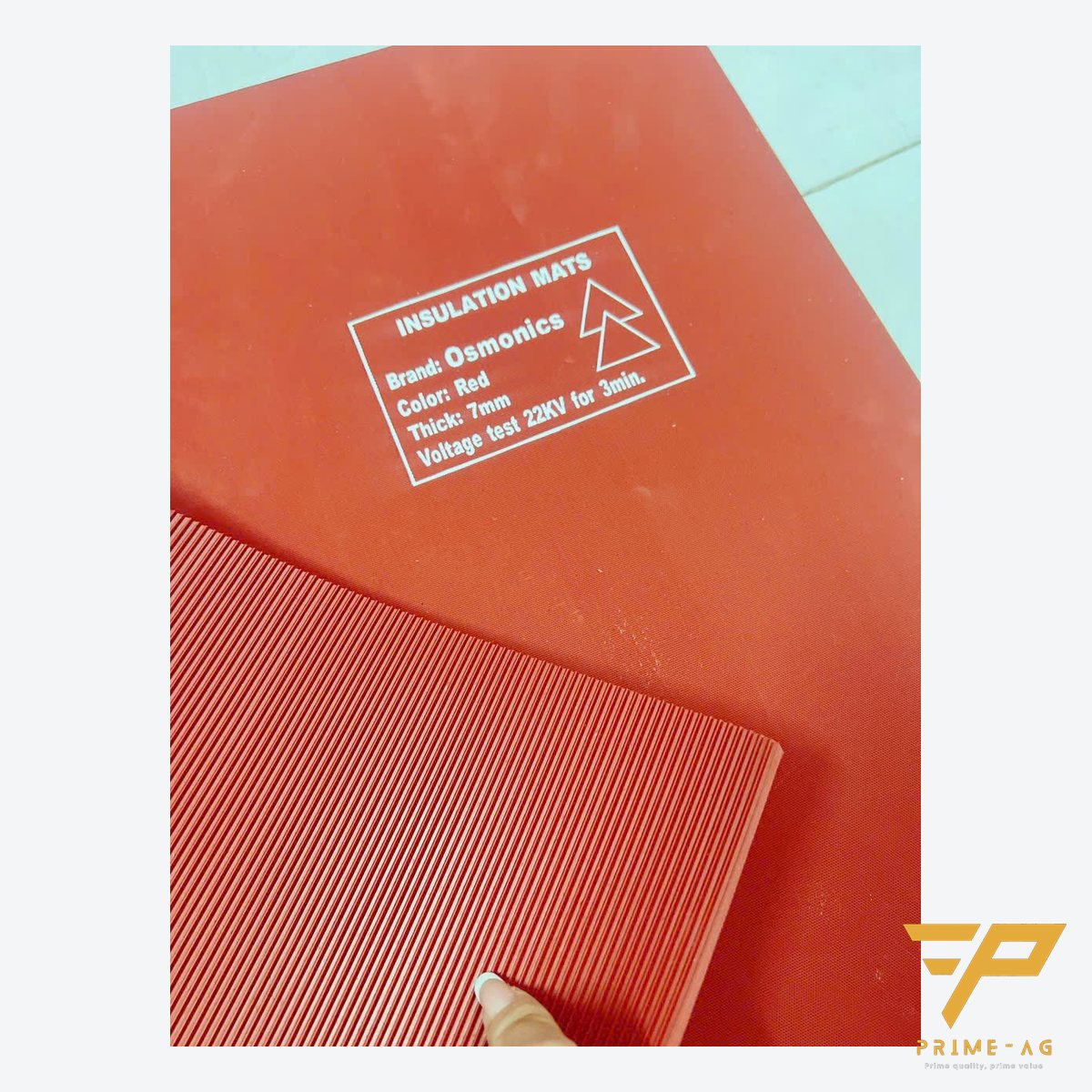
A mat labelled “tested 22 kV/3 min” meets the Class 2 test level, which means a maximum use voltage of 17 kV. So for a 22 kV network, choose a mat tested at 24–35 kV for a safety margin, or check the batch test certificate with your electrical safety management unit. For details of each class, see the insulating rubber mat page.
2. Minimum equipment set by location
| Location | Mat | Gloves / boots | Operating tools | Other |
|---|---|---|---|---|
| MSB, 380/400 V low-voltage DB panels | Low voltage, 4 mm thick, laid along the full front of the panels (1 m width) | Low-voltage gloves; low-voltage boots if the floor is damp or outdoors | Low-voltage tester pen, lockout – “do not switch on” signs | Single-line diagram, CO₂ fire extinguisher |
| RMU panels, in-plant 22 kV substation | Tested at 24 kV or higher (7–8 mm) | 22 kV gloves + leather over-gloves; 22–24 kV boots | 35 kV insulating hot stick, 4 m long; 35 kV portable earthing set; medium-voltage tester | 24 kV insulating stool if the floor is damp |
| 35 kV substations, 110–220 kV grid work | Tested at 35 kV (9 mm) | 35 kV gloves; 35 kV boots | 110/220 kV hot sticks, 5–6 m long; 110/220 kV earthing sets with 16–35 mm² cable | Per the work permit of the power utility |
Typical quantities: 1 set of gloves and boots for each person assigned to switching, plus 1 spare set; mats are calculated by the length of the panel front (1 m width, 10 m roll). An electrical room with 6 m of panels needs 1 roll of 1 m × 10 m, cut into sections.
3. Accompanying documents — what inspectors ask for first
- Batch test certificates for mats, gloves and boots: PRIMEAG supplies the manufacturer’s test certificates; inspection at an electrical testing laboratory is arranged on request.
- Issue log and the latest test date marked on the glove and boot stamps. OSHA reference: gloves re-tested every 6 months, mats/blankets every 12 months.
- Pre-shift checks: air-test gloves, inspect mats and boots for cuts and ozone cracking; record in the electrical team’s start-of-shift checklist.
4. Two common mistakes
- Laying insulating rubber mats in an EPA. Insulating mats have a resistance above 10¹² Ω, so a person standing on them cannot dissipate static; an EPA needs ESD rubber mats of 10⁶–10⁹ Ω. Conversely, ESD mats give no protection against electric shock.
- Buying gloves by the “22 kV” name without a test certificate. During inspections, only the values on the test certificate are accepted; the label printed on the glove is not enough.
Products supplied by PRIMEAG
- Insulating rubber mats by Osmonics and Vicadi: low voltage, 10, 22, 24, 35 kV — from 456,000 VND per 0.65 × 1 m sheet.
- Insulating gloves by Trong Hung, Vicadi and imported brands — from 114,000 VND per pair.
- Insulating boots from low voltage to 35 kV, sizes 40–43 — from 240,000 VND per pair.
- Insulating hot sticks, telescopic, 35/110/220 kV — from 1,860,000 VND per stick.
- Portable earthing (grounding) sets from low voltage to 220 kV — from 3,240,000 VND per set.
- Insulating stools 10–15, 24, 35 kV — from 3,840,000 VND per piece.
Prices exclude 8% VAT. Export processing enterprises: 0% VAT invoices, and PRIMEAG handles the on-the-spot import/export customs declaration for orders from 20,000,000 VND. Send the working voltage, the number of operators and the length of the panels, and PRIMEAG will quote the complete set within 30 minutes. For ESD equipment on production lines, see solutions by problem.
Frequently asked questions
What is the minimum for a 400 V low-voltage electrical room? A low-voltage insulating rubber mat (tested at 5 kV, 4 mm thick) laid in front of the MSB/DB panels, low-voltage insulating gloves and low-voltage boots for the operators, and warning signs and a single-line diagram posted in the room.
What more does an in-plant 22 kV substation need? A mat tested at 24 kV or higher, 22 kV gloves worn with leather over-gloves, 22–24 kV boots, a 35 kV insulating hot stick (4 m), a 35 kV portable earthing set and a medium-voltage tester; an insulating stool if the floor is damp.
Can an insulating rubber mat replace an ESD mat? No. An insulating mat blocks electric current (resistance above 10¹² Ω); an ESD mat drains charge to ground (10⁶–10⁹ Ω). Using an insulating mat by mistake in an EPA prevents people from dissipating static.
How often must insulating equipment be re-tested? OSHA 1910.137 reference: gloves every 6 months, blankets/mats every 12 months; boots, hot sticks and earthing sets per the interval set by your electrical safety management unit. Inspect visually before every shift and keep the batch test certificates.
Updated: 19/10/2026 — PRIMEAG engineering team
Mon–Sat, 8:00–17:00 (GMT+7) · Phone/Zalo: +84 906 108 292 · Email: info@primeag.vn
Start where it suits you: Free technical advice · Send a drawing or layout · Get a quote within 30 minutes
Written by the PRIMEAG engineering team
Updated: 2026-10-21