
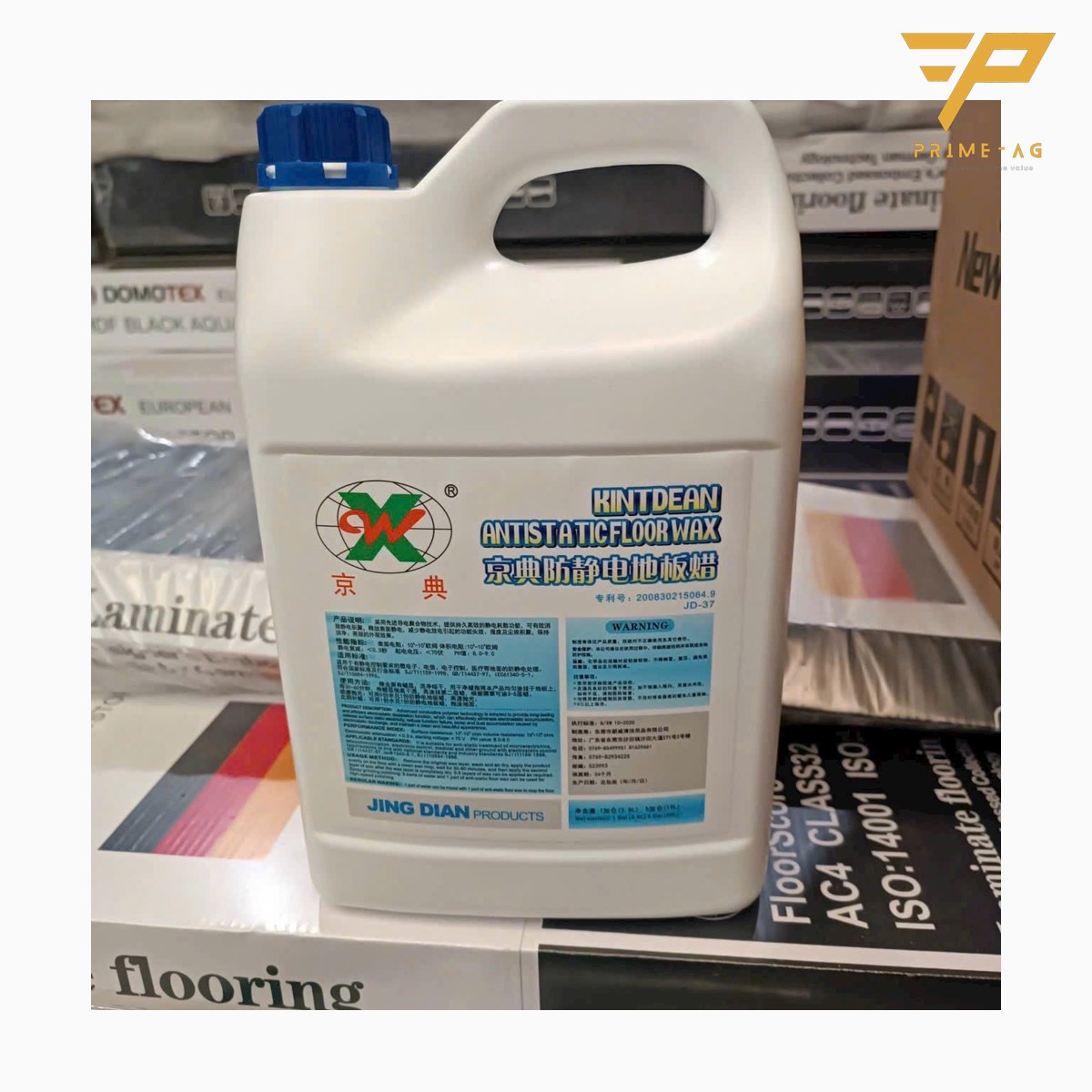
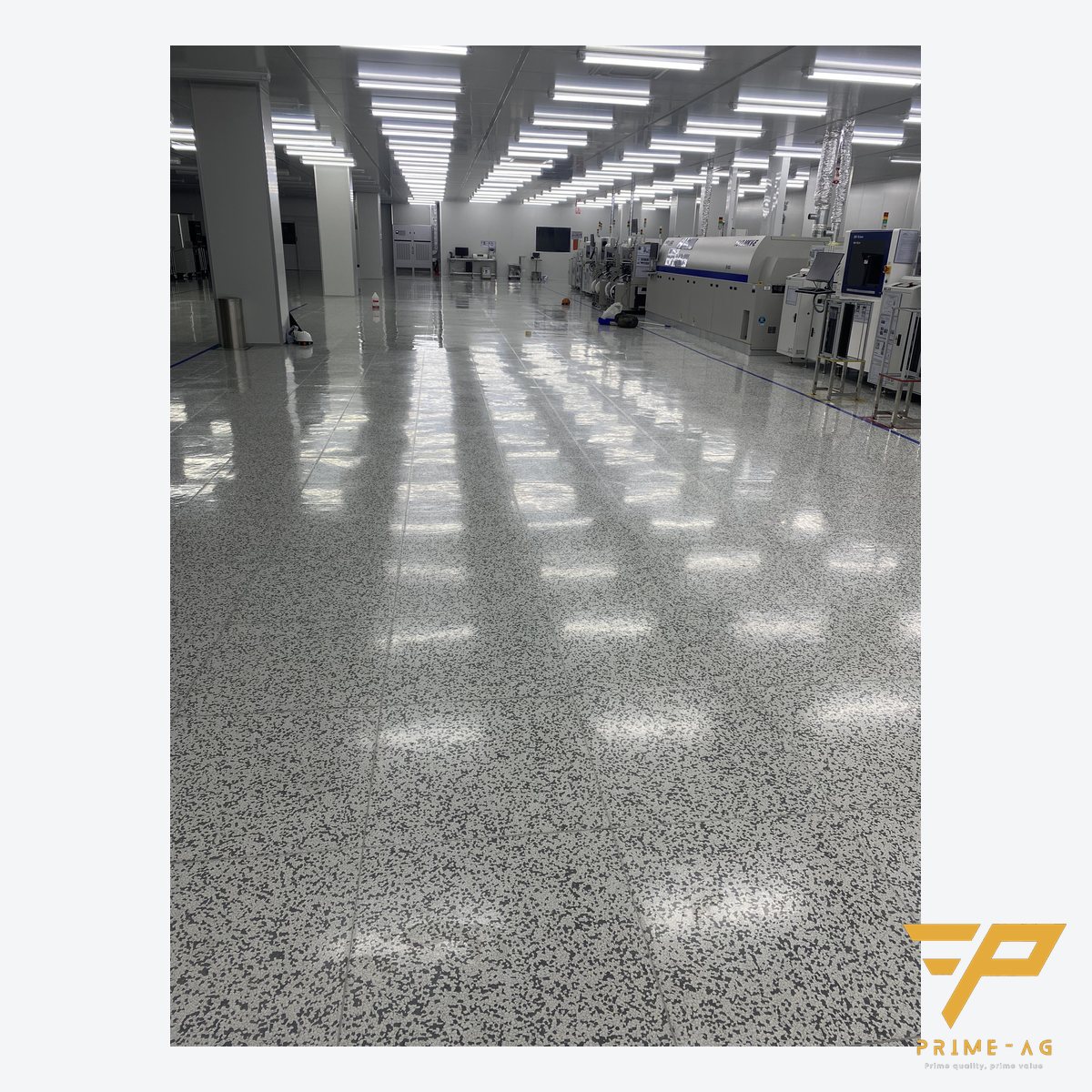
An ESD floor finish is a dissipative or conductive gloss coating (JD-37 finish gives 10⁶–10⁹ Ω), used when an ESD PVC or epoxy floor needs gloss and wear resistance. For factories in Vietnam, PRIMEAG recommends a written clean, coat and buff schedule and a point-to-ground test after every coat, passing below 1×10⁹ Ω.
An ESD floor is handed over with a good test report, then passed to the cleaning crew without any procedure. A few months later the walkways look dull, there are caster marks, and someone suggests “adding a coat to make it shine”. What needs deciding is what to coat with, when, and how to re-test. International literature calls this group of materials “ESD floor finish” and “ESD sealer”.
- An ESD coating wears away gradually along walkways and must be restored periodically.
- Homogeneous PVC floors do not require coating.
- Ordinary wax is usually insulating; use only the coating specified by the floor manufacturer.
- Keep baseline readings and re-test after every coating or stripping.
What ESD floor finish is and how it differs from ordinary wax
Office wax forms an insulating polymer film that blocks the path for charge from shoe soles to the floor tile, even though the tile itself still passes. An ESD finish is also a polymer film, but formulated with conductive or dissipative components.
- Finish: the top layer; gives gloss, resists wear and is restored periodically.
- Sealer: seals surface pores; an ordinary type becomes an insulating layer underneath.
- Conductive wax: when higher gloss is needed.
The ESD floor coating and maintenance materials range includes JD-37 dissipative gloss finish (10⁶–10⁹ Ω), conductive WAX, EAR-11 stripper and maintenance chemicals. Number of coats and mixing ratio follow the manufacturer’s instructions.
When coating is needed
Homogeneous ESD PVC floors
Anti-static PVC floor tiles 600×600 are conductive through their full thickness, so they keep their ESD properties even as the surface wears. Coating is optional, for when a brighter surface is wanted or cart lanes get dirty quickly.
ESD epoxy floors
ESD epoxy consists of several layers. Before scrubbing or coating, find out how the floor system is built up and ask the epoxy contractor which coating is compatible.
Periodic cleaning, coating and buffing schedule
| Task | When | Note |
|---|---|---|
| Vacuuming, damp mopping | Daily or every shift | Neutral cleaner or ESD maintenance chemical |
| Machine scrubbing of main walkways | Caster marks or mud appear | Vacuum up dirty water, let dry |
| Re-buffing | Finish dull but not worn through | Measure a few points |
| Recoating over existing finish | Walkway worn down to bare floor | Same finish as before, on a scrubbed clean surface |
| Full strip and recoat | Finish built up thick, discolored | Strip with EAR-11, test bare floor, then coat |
Frequency depends on traffic; each area settles its own interval after a few monitoring cycles.
Re-testing resistance after every coat
ANSI/ESD S20.20 does not set a frequency. Floors are typically tested every 12 months, high-risk areas monthly or quarterly; with a coating, also test after every coating, stripping or change of chemical.
- Test the bare floor on a grid and keep the results as the baseline.
- Wait for the finish to dry as instructed.
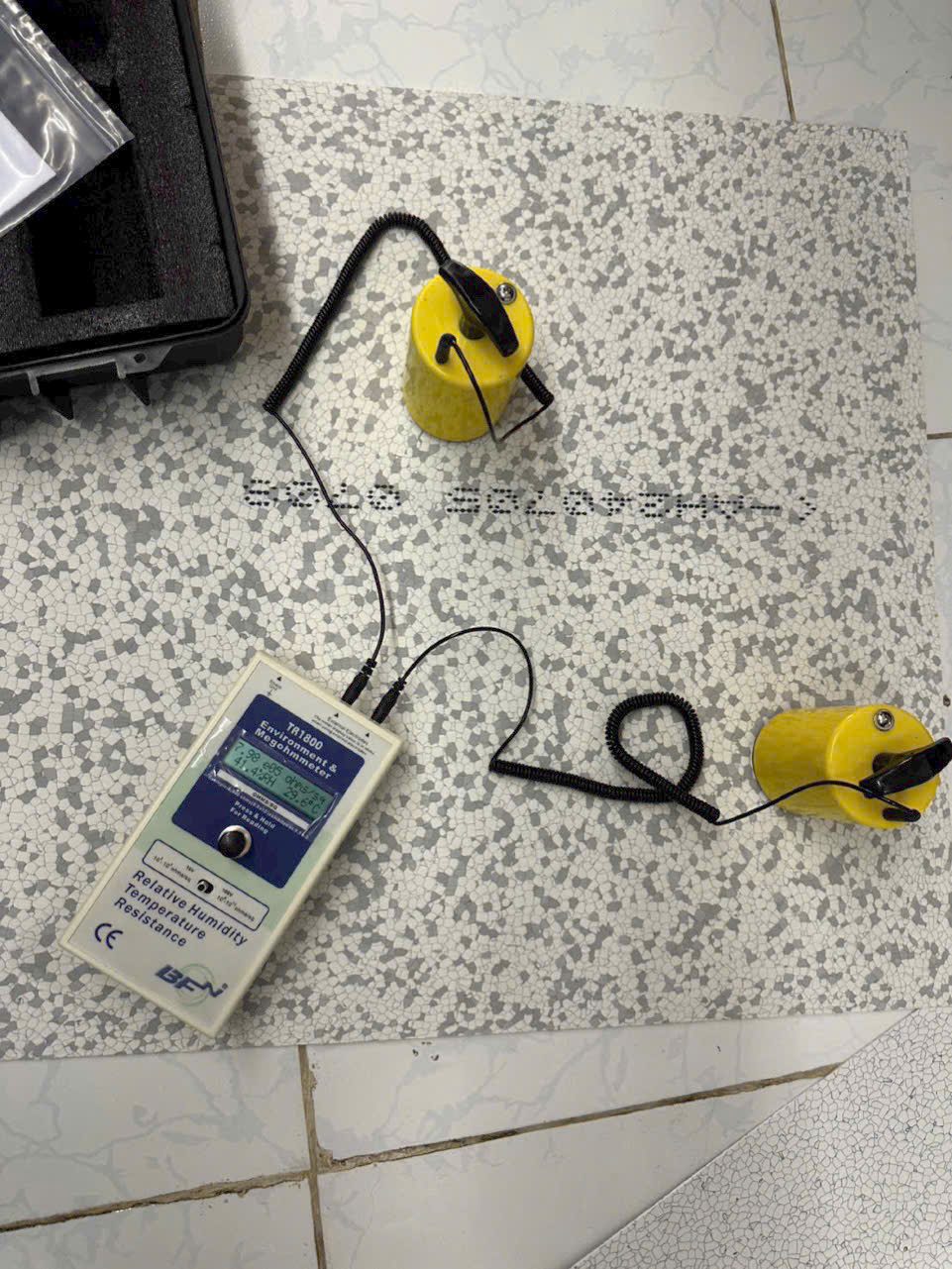
- Test point-to-ground at the same locations, recording %RH and temperature.
- Check person–footwear–floor on main walkways: below 3.5×10⁷ Ω, or below 1×10⁹ Ω together with walking voltage below 100 V.
For in-house testing, use the TR1800 digital surface resistance meter (10–100 V, 10³–10¹² Ω, with 2 × 5 lb electrodes, shows temperature and humidity). If the workshop has no meter, book PRIMEAG technicians for free on-site floor measurement at your factory before and after the coating work: available in Ho Chi Minh City, Binh Duong and Dong Nai (Mon–Sat), appointment confirmed the same day, visit within 3–5 working days, measured with a TR1800 and 5 lb electrodes, any number of points, floors laid by other contractors also accepted, no purchase obligation; a PDF report with photos of each location is sent 3–5 working days later, for reference only and not a substitute for audit documents.
Self-check of the maintenance procedure
- Is the list of approved chemicals posted in the tool store?
- Is there a log of coating dates, finish type and before/after readings?
- Does the cleaning contractor know which areas have ESD floors?
A floor that drifts out of range after cleaning or buffing is an incident; see the article on an ESD floor failing tests after cleaning or buffing. For a floor about to be laid, see installation and acceptance of anti-static PVC flooring. To set up a schedule for a specific floor area, send the details via the consultation page.
Frequently asked questions
What is the difference between ESD floor finish and ESD sealer? Finish is the top gloss layer and is restored periodically; sealer seals the base surface before coating. Both must be ESD types.
Should a newly installed ESD PVC floor be coated right away? Not necessary. Complete acceptance and keep the bare-floor readings first; coat only when gloss is needed, then re-test to compare.
Will a gloss finish change the resistance range of a conductive ESD PVC floor? It can. A conductive floor of 10⁴–10⁶ Ω coated with JD-37 often measures in the dissipative range; re-test and check against the area’s requirement before coating the whole floor.
Updated: 31 Oct 2026 — PRIMEAG engineering team
Email: info@primeag.vn · Phone/Zalo: +84 906 108 292
Written by the PRIMEAG engineering team
Updated: 2026-10-31