
ESD bench mats in factories in Vietnam usually bulge or curl at the edges because the roll was not laid flat for a full 4 hours, soldering-iron heat, strong solvents such as acetone, incorrectly applied tape, a ground snap pulling the mat, or a warped bench top. PRIMEAG recommends checking in exactly that order, then re-testing point-to-ground resistance, which must be below 1×10⁹ Ω.
On the afternoon shift, the soldering line leader sees chip capacitors rolling off the bench. A mat corner has lifted and the ground cord is taut as a guitar string. A bulging ESD rubber mat is not just unsightly: components fall, and the ground snap can pop off.
- Check first: newly unrolled mat, heat sources, bench cleaning chemicals.
- Check next: tape, ground snap position, bench top flatness.
- Risk: cord pops off, discharge path lost.
- Replace: when hardened, delaminating, torn, or measuring above 10⁹ Ω.
Why ESD rubber mats bulge
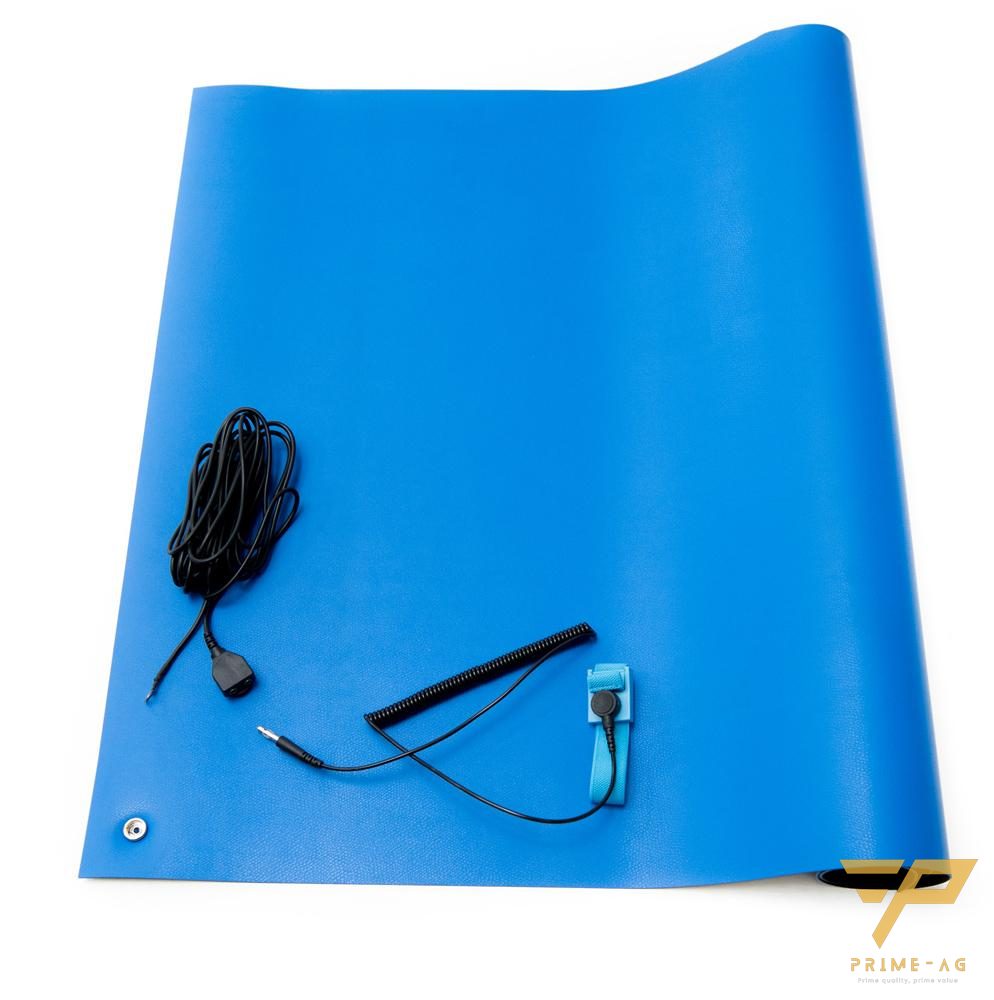
PRIMEAG’s 2-layer ESD rubber mat has a 0.5 mm dissipative layer heat-bonded to a black conductive layer, 2.0 mm thick in total. If one side shrinks or swells differently from the other, the whole sheet lifts.
Check order from easiest to hardest
1. Mat just unrolled
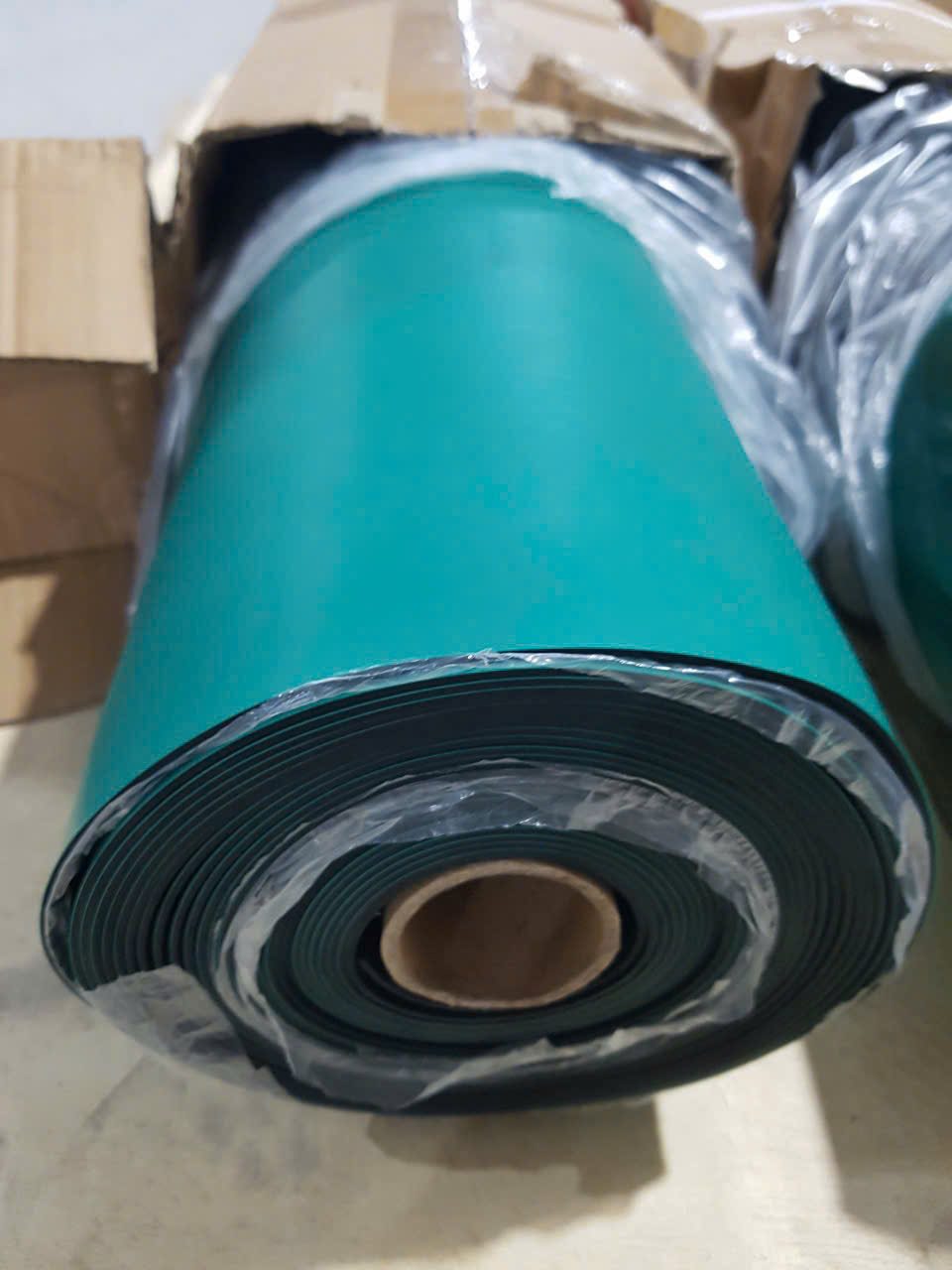
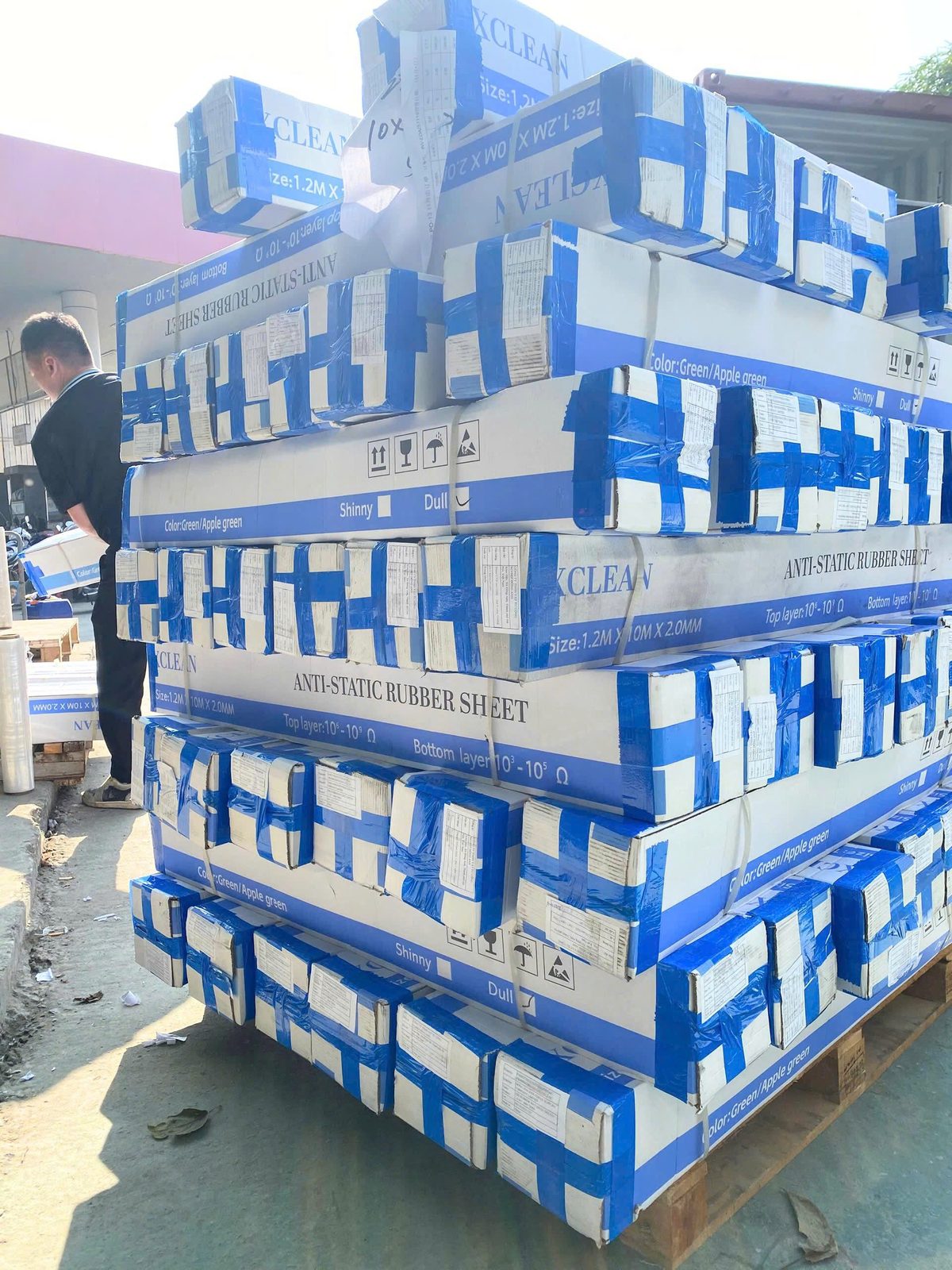
A 1.2 m × 10 m roll is packed tightly in its carton, so it keeps its roll shape. Lay it flat for at least 4 hours before cutting.
2. Soldering irons, lamps, hot-air guns
The mat withstands brief soldering-iron contact at around 300 °C. Resting the iron on the mat, or a drying lamp aimed at one spot for long periods, hardens and bulges that area.
3. Solvents other than IPA and ethanol
Xylene and concentrated acetone dry out and age the rubber, reduce conductivity and curl the edges. Areas where flux is often wiped off usually curl first.
4. Double-sided tape applied incorrectly
Tape stuck to a dusty or damp bench pins the mat at a few points while the middle expands and contracts, causing ripples. Peel off the tape, clean the bench and lay the mat again.
5. Ground snap in the wrong position
The 10 mm snap is fitted at a mat corner, through both layers. If the snap is far from the ground point and the cord is short, it gradually pulls the corner out of place; move the snap and leave the cord slack.
6. Bowed or warped bench top
Place a straightedge on the bench. If the wooden top is swollen from moisture or sagging mid-span, fix the bench first. For readings that vary by position, see ESD bench top failing in some areas.
| Sign | Cause | Fix |
|---|---|---|
| Sheet ends curl up | Roll memory | Lay flat for at least 4 hours |
| Hardened area next to soldering spot | Heat | Soldering iron holder |
| Edges dry out and gradually curl | Strong solvents | Clean only with IPA or ethanol |
| Ripples between tape strips | Incorrect taping | Peel tape, lay again |
| Mat corner pulled | Taut ground cord | Move the snap |
| New mat still bulges | Warped bench | Fix the bench top |
How curled edges affect grounding
The lifted part makes components slide and fall; if the snap loosens and the cord pops off, the mat is just a sheet of rubber. After fixing, measure point-to-ground with the TR1800 digital surface resistance meter and 5 lb electrodes: test at 10 V, switch to 100 V from 10⁶ Ω upward; bench surface to ground must be below 1×10⁹ Ω. Measure before cleaning. For quick checks every shift, see the wrist strap testers and resistance meters range.
Factories in Ho Chi Minh City, Binh Duong and Dong Nai can invite PRIMEAG to bring a TR1800 and 5 lb electrodes for free on-site ESD resistance testing (Monday–Saturday), with no limit on test points, including mats bought elsewhere, and no purchase obligation; a PDF with photos and readings for each location is sent within 3–5 working days, for reference only, not for audit use.
When to replace the mat
ESD service life is typically 2–3 years. Replace when the mat is hardened, torn, the two layers separate, or point-to-ground exceeds 10⁹ Ω after ruling out the faults above. For gradually rising resistance, read ESD mat measuring above 10⁹ Ω after 6 months.
PRIMEAG cuts mats to your bench size and supplies them with ground snaps; rubber mats are stock items, delivered within 24–48 hours in Ho Chi Minh City, Binh Duong and Dong Nai.
Where to start
- Photograph the bulged area and compare it with the iron and snap positions.
- Ask the cleaning team which solution they use on the benches.
- Lift the mat and check the tape and flatness.
- Lay it again, ground it, measure and log the result.
For replacement mats, send the number of benches and dimensions through the ESD mat quote request; PRIMEAG replies within 30 minutes.
Frequently asked questions
- Will a curled ESD mat flatten by itself? — A new mat with roll memory flattens after being laid flat for at least 4 hours. A mat curled by solvents or heat has already aged and is hard to restore.
- Should we glue the whole underside of the mat? — No need. On a flat bench with the snap correctly placed, a 2 mm mat stays put on its own; full gluing only makes replacing the mat harder.
- What should we use to clean flux off an ESD mat? — Use IPA, ethanol or an ESD mat cleaner. Avoid acetone, xylene and cleaners containing wax or silicone.
Updated: 30 Oct 2026 — PRIMEAG engineering team
Email: info@primeag.vn · Phone/Zalo: +84 906 108 292
Written by the PRIMEAG engineering team
Updated: 2026-10-30