
For reflow ovens and wave soldering, choose Kapton polyimide tape rated 260 °C continuous. Blue PET tape only goes to 200 °C for 30 minutes and suits adhesive curing and conformal coating. Glass-cloth Teflon tape is for covering heat-seal bars. PRIMEAG recommends removing the tape within 24 hours and peeling slowly under an ionizer airflow to avoid adhesive residue and reduce static.
All three rolls use silicone adhesive; they differ in the backing film. Pick the wrong backing and the defect shows on the first pass through the oven: the tape shrinks, adhesive sticks to pads, edges lift.
- Reflow, wave soldering: Kapton, 260 °C continuous.
- Adhesive curing, coating, painting: blue PET, cheaper, up to 200 °C.
- Heat-seal bars: glass-cloth Teflon, abrasion resistant.
- Peeling from boards: slowly, at a low angle, under an ionizer airflow.
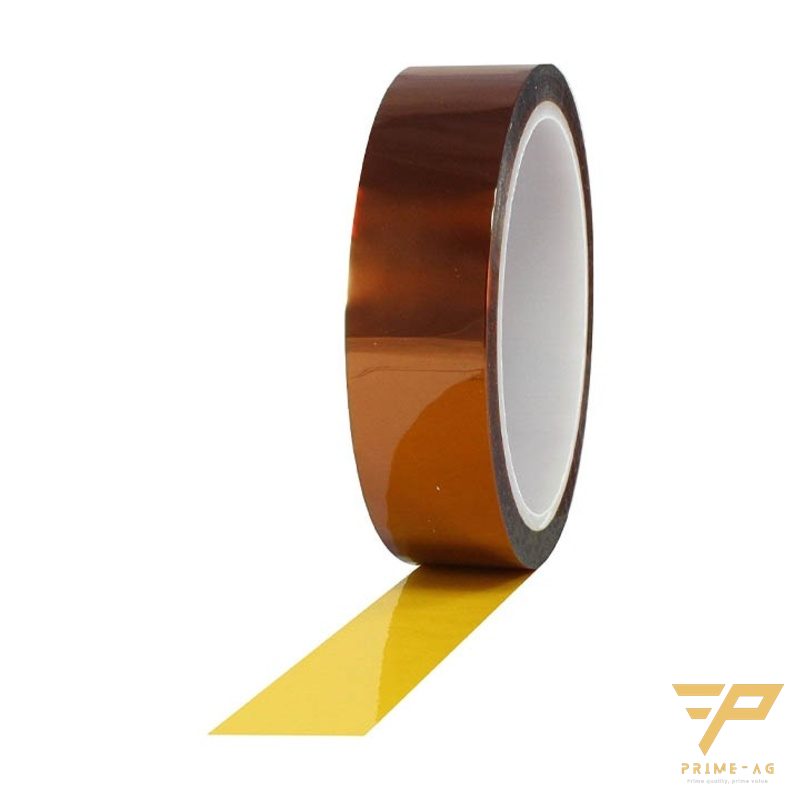
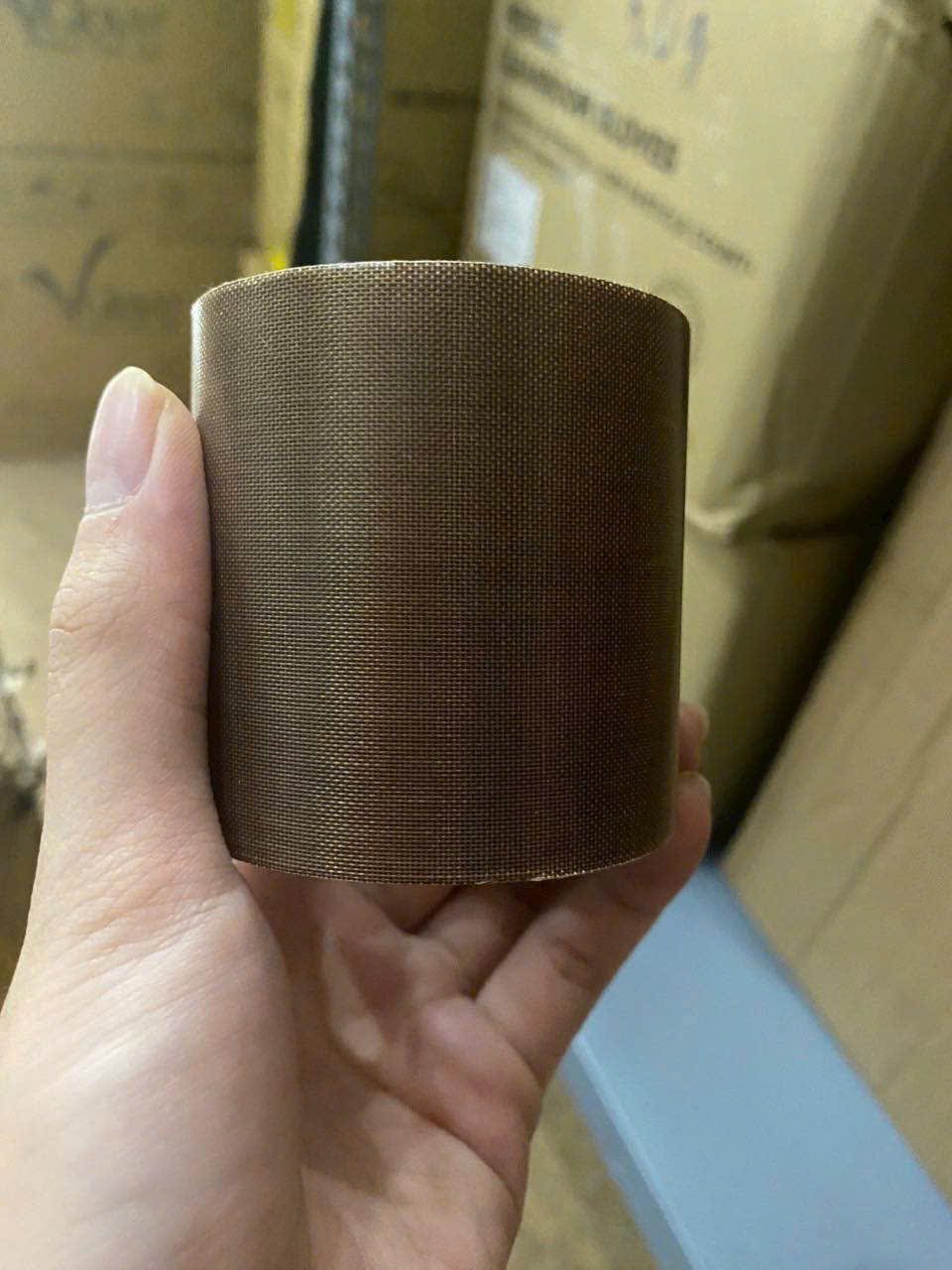

1. High-temperature tape for reflow ovens: Kapton polyimide
In the oven, tape masks connectors, holds light parts in place and secures thermocouple tips when running a profile. Kapton polyimide high-temperature tape has a 25 µm backing with 35 µm silicone adhesive, rated 260 °C continuous and 300 °C for no more than 30 minutes. A reflow cycle of 5–10 minutes leaves a comfortable margin. The rating on the tape is the adhesive’s limit; exceed it and the adhesive burns and stays behind.
2. Wave and selective soldering: masking gold fingers and holes that must stay unsoldered
A lifted edge lets molten solder in. Apply on a surface free of flux and skin oil, and burnish the edges with a plastic stick. For gold fingers and small pads, use 5 mm width. For multiple thermal passes, take the 0.08 or 0.10 mm version and check the adhesive after each pass.
3. Conformal coating, adhesive curing, painting: blue PET is enough
Blue PET heat-resistant tape has a 25 µm PET backing with silicone adhesive, rated 180 °C continuous and 200 °C/30 minutes. It is cheaper than Kapton but not for soldering: PET melts at around 260 °C. Apply it flat without stretching; stretched film shrinks in the oven and the edges pull back.
4. Heat sealers and bag sealers: Teflon over the heating bar
Heating bars rub against the tape and Kapton tears quickly. Heat-resistant Teflon tape is PTFE-coated glass cloth, 0.13 or 0.18 mm thick, rated −70 to 260 °C, with a non-stick surface. Replace it when scorched or when fibers show; keep the area ventilated because overheated PTFE gives off fumes.
Residue, lifting, scorching: read the defect to fix it
Adhesive residue: tape left on for weeks, or cheap “Kapton” that is actually yellow-dyed PET. Flame test: polyimide does not shrink, PET shrinks and melts.
Lifting mid-oven: flux or moisture left on the board, or edges not burnished.
Scorching, curling: almost always PET taken into the 260 °C zone; switch to Kapton.
Peeling Kapton next to static-sensitive components
Polyimide is an excellent insulator, around 10¹⁷ Ω·cm. Ripping tape off quickly generates charge right next to ICs and MOSFETs. Peel slowly, at a low angle, under an ionizing blower, and do not leave the roll sitting next to bare components. The Kapton tape above is not ESD-rated; if you need black ESD Kapton, ask PRIMEAG before ordering. For the whole line, see ESD supplies for SMT lines.
Comparison of the three tapes
| Criteria | Kapton | Blue PET | Teflon |
|---|---|---|---|
| Backing | Polyimide 25 µm | PET 25 µm | PTFE-coated glass cloth |
| Temperature | 260 °C; 300 °C/30 minutes | 180 °C; 200 °C/30 minutes | −70 to 260 °C |
| Width | 5–50 mm × 33 m | 10–100 mm × 33 m | 13–100 mm × 10 m |
| Used for | Reflow, wave soldering | Adhesive curing, coating, painting | Heat-seal bars |
Start ordering tape
Send the process, peak temperature, width and rolls per month; PRIMEAG quotes within 30 minutes, with a 1-roll sample available. Tape belongs to our stocked product range; plants around Ho Chi Minh City, Binh Duong and Dong Nai receive it within 24–48 hours. For export processing enterprises (EPEs), PRIMEAG issues 0% VAT invoices and handles the on-the-spot import/export customs declaration free of charge for orders from VND 20 million. For the benches and mats in the tape-peeling area, our engineers offer free ESD resistance measurement: TR1800 meter with 5 lb electrodes, Mon–Sat, covering Ho Chi Minh City, Binh Duong and Dong Nai, including items bought elsewhere, with no purchase obligation, and a PDF of results within 3–5 working days, for reference only and not for audit use. For solder temperatures, see soldering tips, solder temperature and solder paste storage.
Frequently asked questions
- Can blue PET tape go through a reflow oven? — Not recommended. Blue PET is rated up to 200 °C for 30 minutes and PET film melts at around 260 °C, so it shrinks and leaves adhesive. Use Kapton.
- How do I stop Kapton tape leaving residue after reflow? — Peel while the board is still warm, at a low angle. If residue remains, check the peak temperature and number of oven passes, and test for suspected yellow-dyed PET.
- Can Teflon tape be used to mask pads for wave soldering? — No. Glass-cloth Teflon is meant for heat-seal bars; for masking pads and gold fingers, use 5–10 mm Kapton.
Email: info@primeag.vn · Phone/Zalo: +84 906 108 292
Written by the PRIMEAG engineering team
Updated: 2026-10-23