
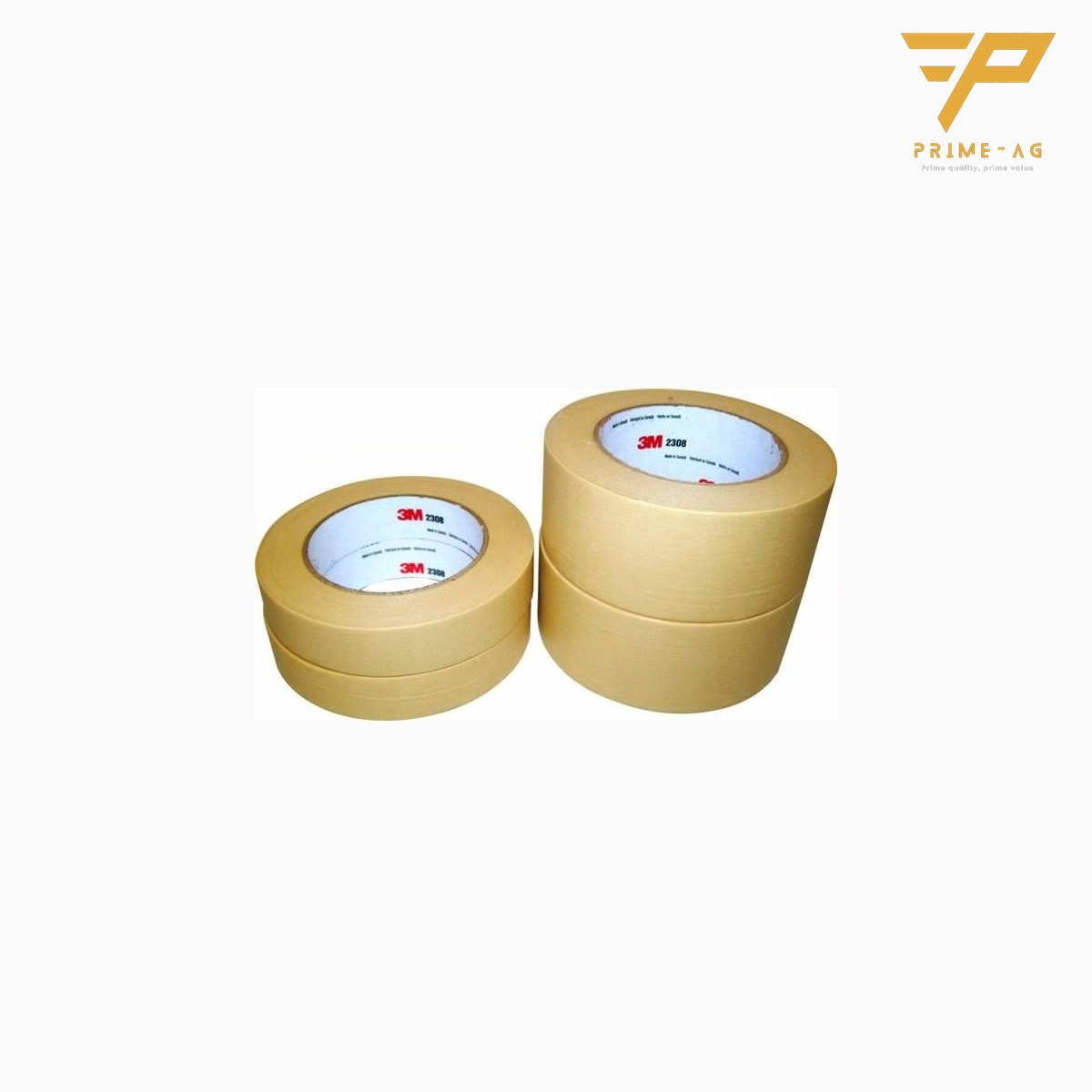
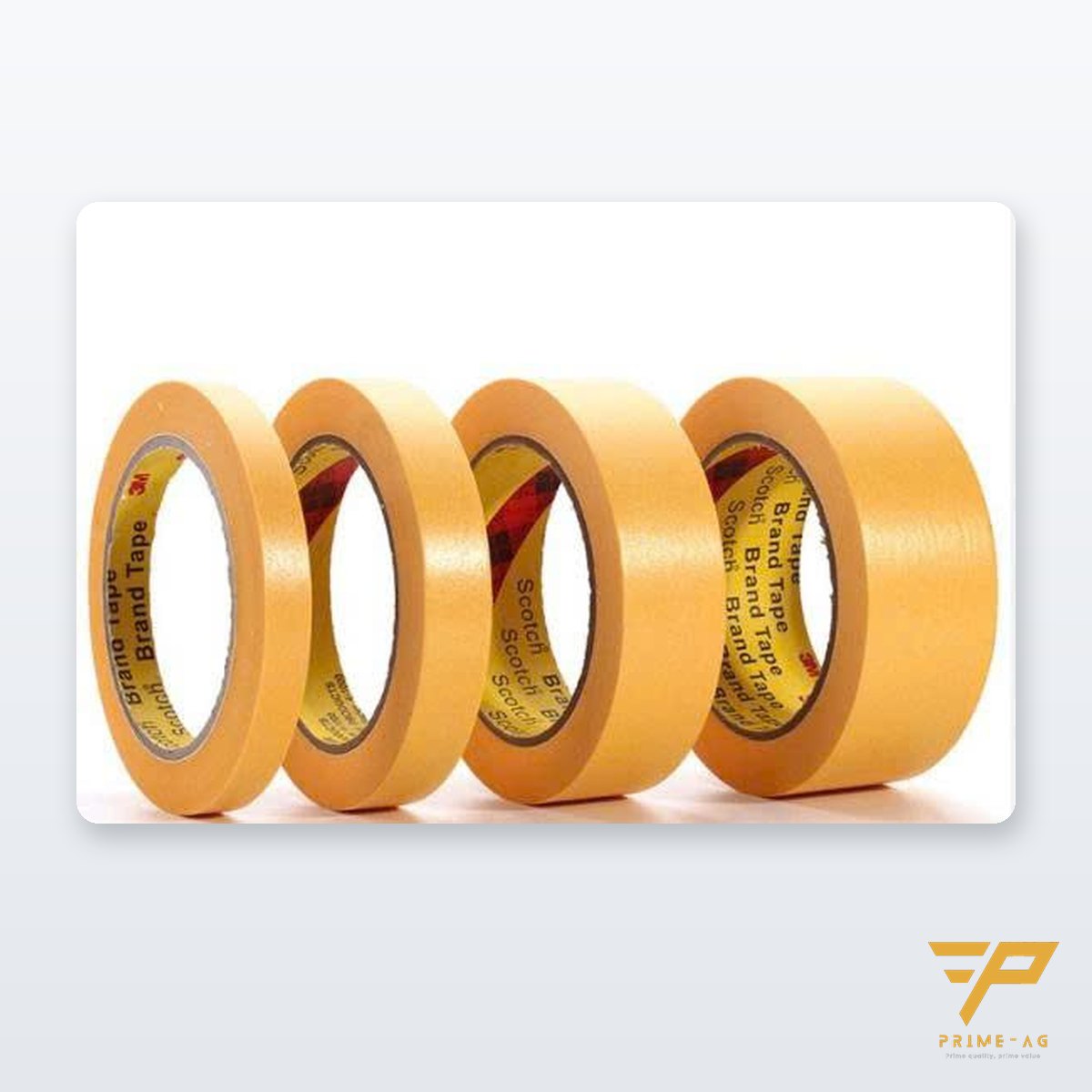
Paint masking tape that leaves adhesive residue or lets paint bleed under the edge on wood furniture in Vietnam furniture plants usually comes from a tape mismatched to the oven temperature, tape applied over paint that is not dry, edges not burnished, or removal at the wrong time. PRIMEAG recommends 3M 2308 (121 °C for 30 minutes, conforms to curves) or Washi-backed 3M 244, which removes more cleanly from finish coats.
From the same roll of tape, one cabinet gets a crisp paint line while another is left with a yellow adhesive streak along the edge. The difference lies in the oven cycle, how dry the coat underneath is, and the hand that peels the tape.
- Adhesive residue: check oven temperature, number of bake cycles, and how many days the tape stays on the part.
- Paint bleed: remove dust, burnish the edges tight, do not stretch the tape.
- Primer lifting: let the primer dry, peel back on itself, pull slowly.
- Choosing the code: 2308 for curved edges; 244 for fine finish coats.
1. Masking tape leaves residue because it does not match the oven temperature
Adhesive that gets too hot or stays on the part too long softens and bonds to the paint film more strongly than to its paper backing. According to 3M, 2308 withstands up to 121 °C for 30 minutes, i.e. one short bake cycle; 244 is rated at 100 °C for 30 minutes. Two or three bake cycles, or leaving the tape on for a week, already exceeds that rating. For 2308 specifically, 3M warns it can be very difficult to remove after several days of outdoor exposure.
2. Applied over paint that is not fully dry
A still-soft primer sticks to the adhesive more strongly than to the wood; on removal the tape pulls off patches of paint. Press a fingernail into a hidden corner and apply only when fully dry. On fresh paint, prefer the low-adhesion 244: 2.0 N/25 mm on steel per the 3M datasheet.
3. Edges not burnished, tape stretched
Thinned PU and NC paints easily creep into tiny gaps under the edge. Stretched tape shrinks back and the edge lifts. Lay the tape lightly, then burnish along the edge with a plastic card. For straight edges that need a sharp line use the flat Washi backing of 244; for rounded edges use the crepe backing of 2308, as 244 only stretches about 5–6 %.
4. Peeling at the wrong time or angle
Peel while the paint is still wet and it runs with the tape; wait until the film is fully hard and it bridges the edge and tears off jagged. Peel when the surface is just dry to the touch, fold the tape back close to the surface and pull slowly. If the film has already hardened, lightly score along the edge with a sharp knife first.
5. Porous veneer, sanding dust
Unprimed veneer has open grain pores, so thin paint wicks along the grain under the edge. Leftover sanding dust means the adhesive bonds to dust. Vacuum, wipe clean, prime, then mask; brush a thin coat of the base color along the tape edge to seal the gap before spraying a contrasting color.
3M 2308 or 3M 244: selection table
| Criterion | 3M 2308 | 3M 244 |
|---|---|---|
| Backing / adhesive | Crepe paper / synthetic rubber | Washi paper / acrylic |
| Thickness | 0.13 mm | 0.09 mm |
| Temperature per 3M | 121 °C / 30 min | 100 °C / 30 min |
| Width × length | 12–48 mm × 55 m | 16 mm × 50 m; 35 / 40 / 50 mm |
| Best for | Curved edges, primer masking, masking joints for silicone caulking | Color coats and gloss coats that need clean removal |
| Avoid | Outdoor masking for several days | Tight curves |
| Price | About 30 % cheaper than 244 | Higher |
Typical values per 3M; test on a sample panel.
Details for each code: 3M 2308 paper masking tape, 3M 244 paper masking tape; for other codes see the 3M industrial tape selection table.
Getting started: masking in 5 steps
One: vacuum, wipe clean, wait for the primer to dry. Two: choose the code for the hottest bake cycle. Three: apply without stretching and burnish the edges tight. Four: spray, then bake once within the tape’s temperature rating. Five: peel when the paint is dry to the touch, folding the tape back.
Masking joints when applying sealant: apply 2308 on both sides and peel while the sealant is still wet; see choosing acetoxy or neutral-cure silicone for furniture workshops. When painted parts move on to assembly, read how to prevent scratches on wood furniture during assembly and packing.
Frequently asked questions
- Can 3M 2308 masking tape go through a paint drying oven? — Yes, if it is only one short bake cycle within 121 °C / 30 minutes per 3M; after multiple cycles the adhesive tends to leave residue.
- Why does peeling masking tape pull off the primer coat? — The primer is not fully dry, or the adhesive grips harder than the primer bonds to the wood; let the primer dry, switch to 244, and peel back on itself very slowly.
- How do I remove masking tape residue from a painted surface? — Wipe with a cloth dampened with a mild solvent, testing first in a hidden corner because some paint films turn hazy on contact with solvent.
Email: info@primeag.vn · Phone/Zalo: +84 906 108 292
Written by the PRIMEAG engineering team
Updated: 2026-10-23