
How do furniture factories in Vietnam stop scratches on painted and veneered panels during assembly and packing? Block them at four points: the bench top, panel stacks, transport carts and packing. PRIMEAG recommends lean pipe (plastic-coated steel pipe, Φ28) benches lined with 2–5 mm EVA foam, padded trolleys, surface protection film and clean cotton gloves.
- Scratches come mainly from dust particles, metal edges and dragging panels.
- Flat bench top covered with soft foam instead of rough boards.
- Padded carts with edge guards; long panels stand upright.
- Protection film, bubble wrap and clean gloves keep the finished surface intact until it reaches the customer.
At which stages do scratches on painted and veneered surfaces appear
Panels usually leave the paint booth in good condition; defects come from placing, lifting and moving them. Long scratches in one direction usually come from dragging; small dot marks come from hard particles trapped between two surfaces.
| Where scratches occur | Cause | How to prevent |
|---|---|---|
| Placing panels on the assembly bench | Rough boards with splinters, dried glue, wood chips | Flat top with edge trim, EVA foam lining |
| Stacking panels awaiting packing | Surfaces rubbing together, trapped dust | Foam or film between each panel |
| Moving panels on bare steel-frame carts | Steel edges, welds, vibration | Padded plastic-coated pipe trolleys; panel trolleys |
| Packing, carton taping | Box cutters, carton corners | Protection film, bubble wrap |
| Handling by hand | Hand oil, rings, watches | Clean cotton gloves, remove jewellery |
Assembly and packing benches: a flat surface and a soft lining
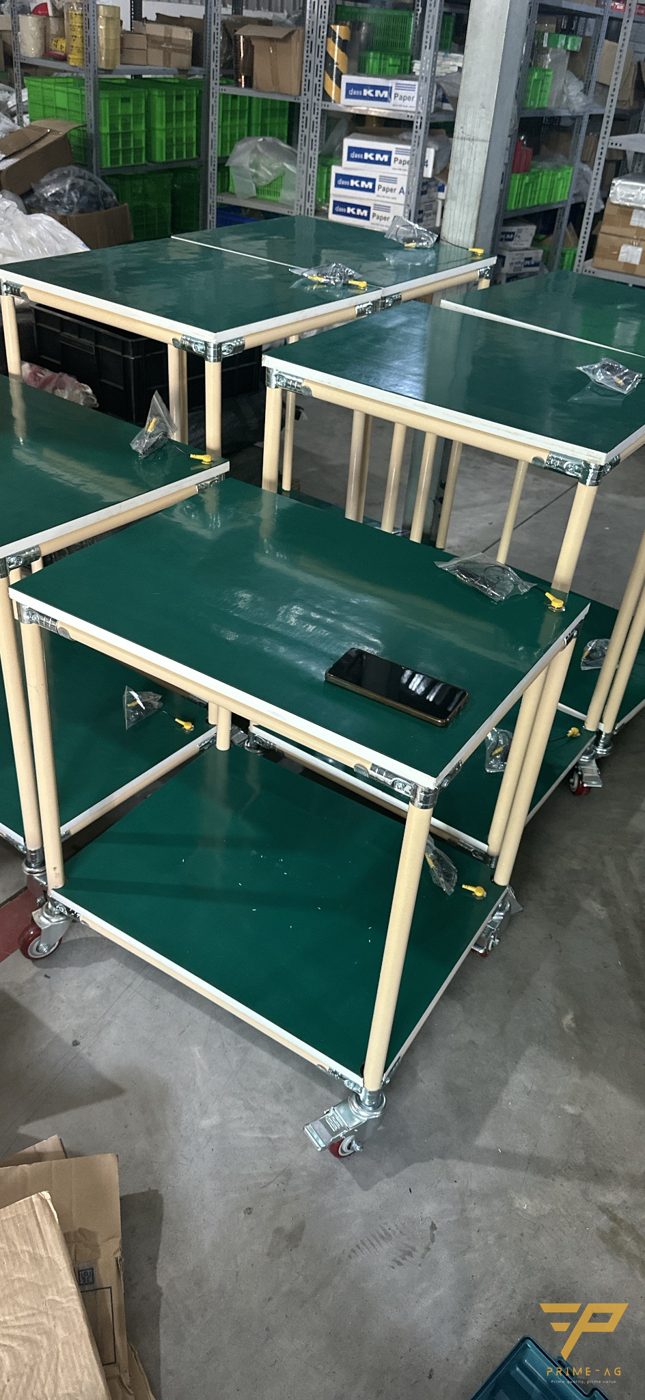
The lean pipe workbench uses Φ28 pipe, 1.0 mm wall, ABS coated, with a 15–17 mm MDF or moisture-resistant board top with plastic edge trim, load 150 kg. Length is customisable from 600–1800 mm to suit the panel size.
Adjustable feet ±20 mm level the bench on uneven floors so panels do not rock and slide. Standard-design benches are produced in 5–7 working days, frame warranty 3 years.
Choosing the foam lining
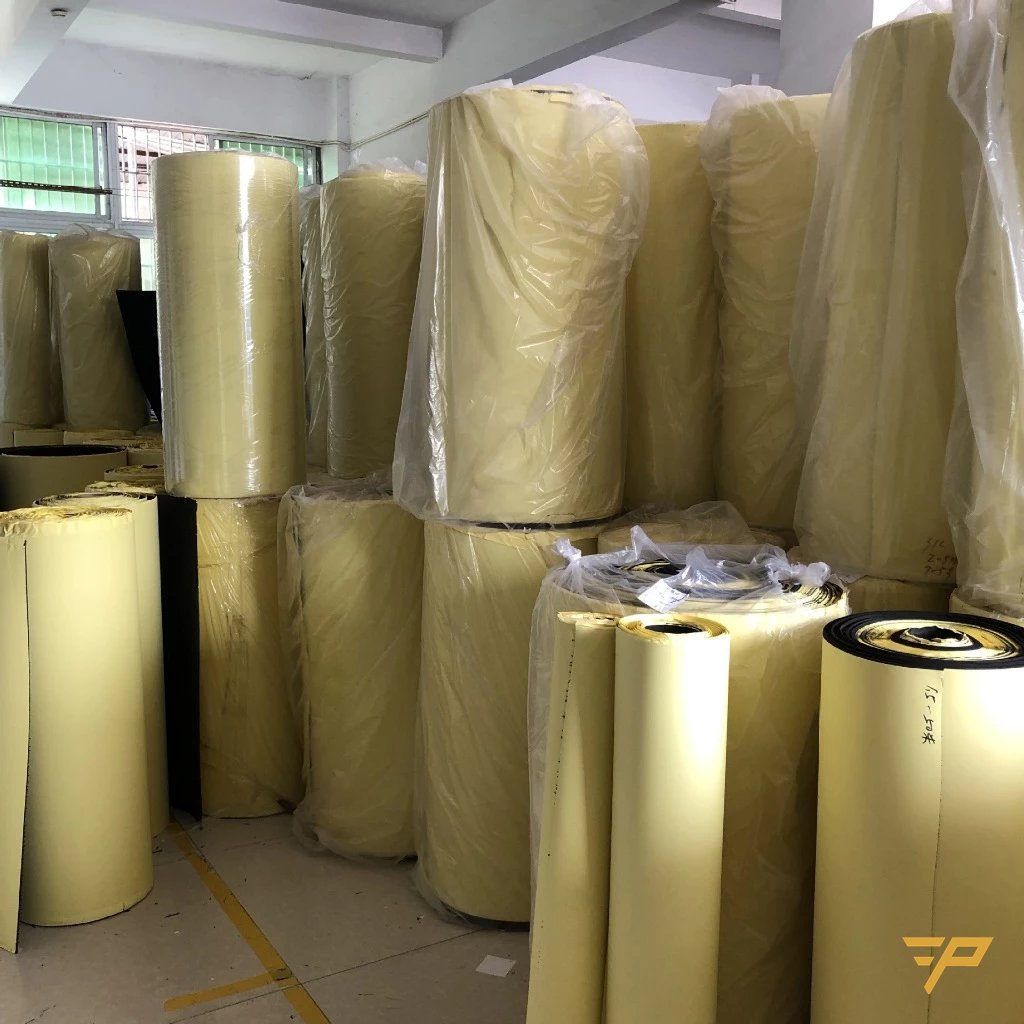
EVA foam in self-adhesive rolls 1.2 m × 100 m × 1 mm sticks directly onto the bench top; packing benches for heavy panels use 1.2 × 2.4 m sheets, 2–5 mm thick.
EVA melts at around 90 °C, so do not place panels still hot from the drying oven on it.
Panel carts: padding, tiers and upright storage
The multi-tier lean pipe trolley measures 1500 × 600 × 1600 mm, three tiers, 100 kg/tier, with optional lipped deck boards. Line the boards with EVA foam so panels never touch bare wood.
PU casters leave no floor marks; for heavy loads choose casters of Φ100 or larger.
Long panels and large table tops should not be stacked flat; use a panel trolley with side frames so panels stand upright, resting only on padded edges. Layouts are covered in the article on cantilever racks and panel trolleys for long, bulky goods.
Protection film and bubble wrap at packing
Surface protection film 1.25 m × 200 m, 50–80 µm thick, adhesion 30–80 g/25 mm: choose low tack for glossy surfaces, high tack for textured ones.
Apply only when the paint is fully cured, onto a surface free of oil and dust; do a peel test on a sample panel to make sure the film does not lift the paint.
Bubble wrap 1.5 m × 100 m, Φ10 mm bubbles: one layer against abrasion, several layers against impact.
Gloves and standing mats at the packing station
Cotton gloves absorb sweat and stop hand oil leaving marks on glossy surfaces; change when dirty, wash at 40 °C and reuse 5–10 times.
Standing a whole shift on concrete causes fatigue, and rushed handling easily knocks panels; CCOHS recommends using mats. A 14 mm anti-fatigue rubber mat suits most positions. Gloves and mats are stock items, delivered in 24–48 hours in Ho Chi Minh City, Binh Duong and Dong Nai.
Where to start
- Count the panels needing touch-up in one week and mark where the scratches are.
- Find the stage causing the most defects using the table above.
- Line the benches and carts at that stage with foam first.
- Send your largest panel size so PRIMEAG can propose bench and trolley dimensions.
Frequently asked questions
Does an EVA foam lining make the bench top hard to clean? No. EVA is closed-cell foam, so wood dust stays on the surface and is removed by vacuuming or dry wiping. If the foam picks up hard particles or tears, cut and replace it.
When should protection film go on a painted panel? Only when the paint is fully cured, and do a peel test on a sample panel first, because depending on drying conditions the film may lift the paint.
How many cabinet door panels can a lean pipe trolley carry? About 100 kg per tier, evenly distributed; the number of panels depends on the weight of each panel.
Updated: 21/10/2026 — PRIMEAG engineering team
Mon–Sat, 8:00–17:00 (GMT+7) · Phone/Zalo: +84 906 108 292 · Email: info@primeag.vn
Start where it suits you: Free technical advice · Send a drawing or layout · Get a quote within 30 minutes
Written by the PRIMEAG engineering team
Updated: 2026-10-21