
Stocked item: delivered in 1–2 working days in Ho Chi Minh City, Binh Duong and Dong Nai; free delivery for orders from VND 20,000,000; defective items exchanged within 7 days. Shipping & return policy
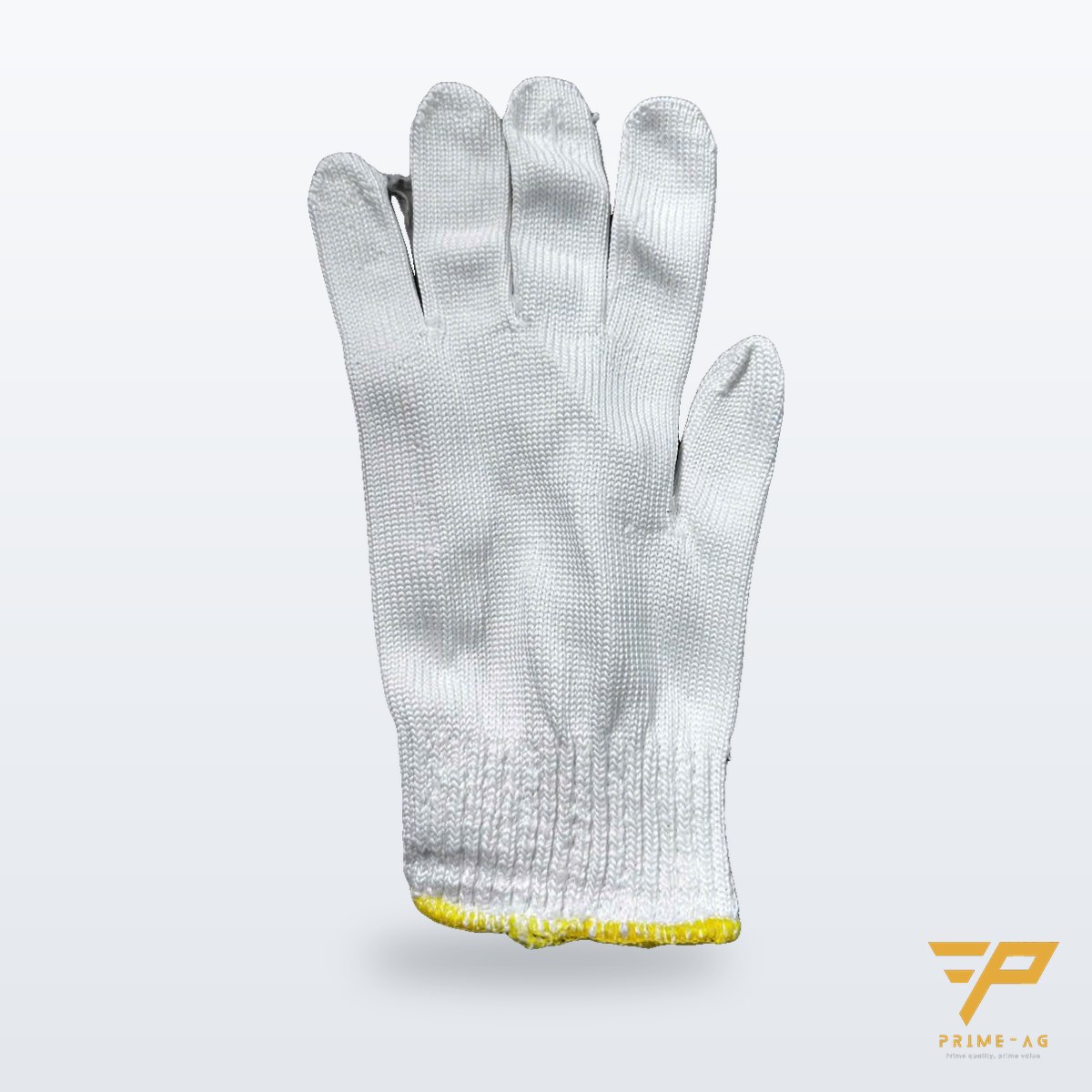
Product code: GS-COT · Specification: Cotton gloves, knitted string gloves, heavy knit gloves & fingerless gloves
Cotton / Knit / Fingerless Work Gloves
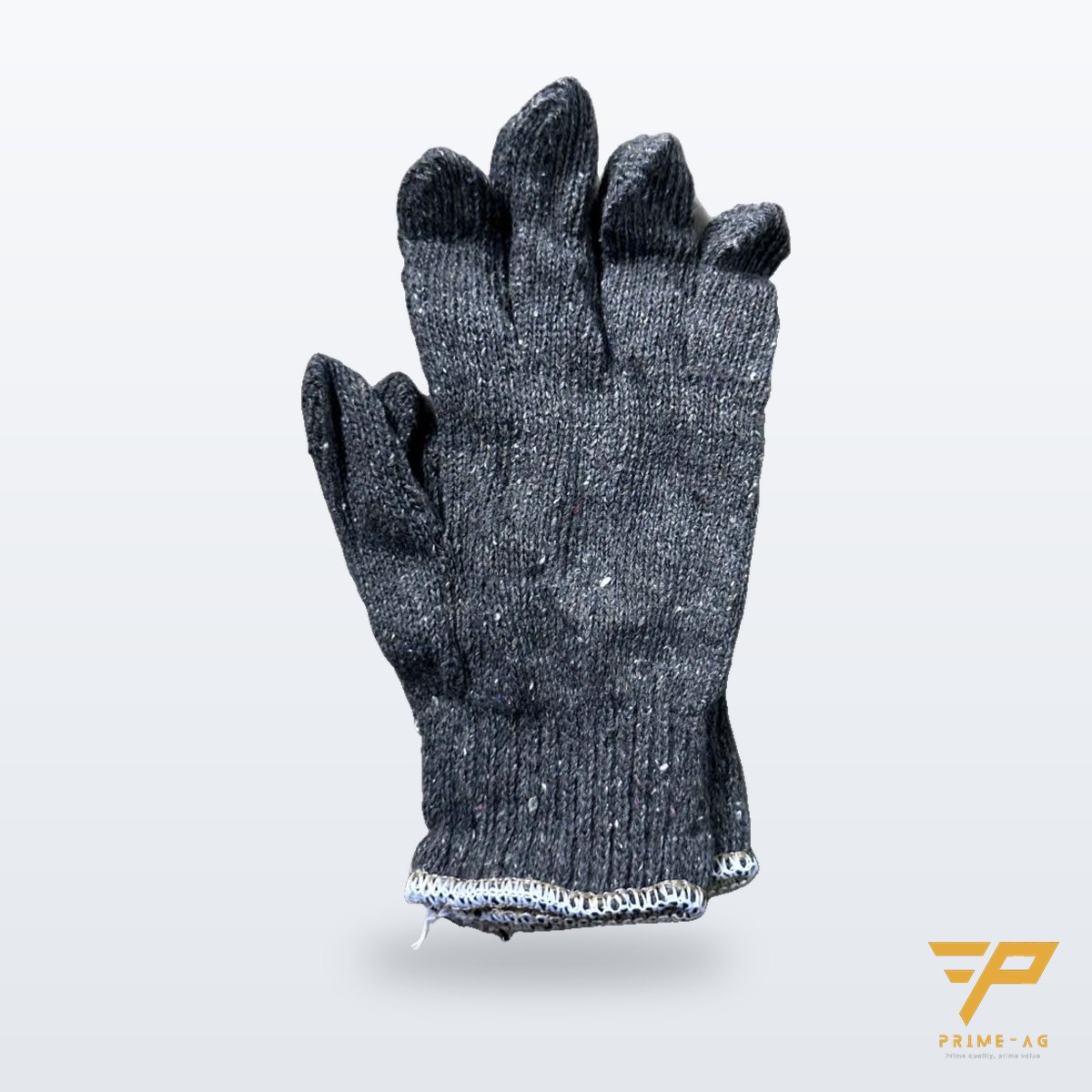
Also known as: “white cotton fabric gloves”, “80 gram knit gloves”, “grey string knit gloves”, “fingerless gloves” — the difference: all 6 types on one page so purchasing can combine orders, standard carton packing, tiered pricing by quantity.
Common specifications: cotton 19-tube, white string knit, 80g knit.
Delivery: in stock, delivered within 24–48 hours (Ho Chi Minh City, Binh Duong, Dong Nai); lead time for bulk orders is confirmed with the quotation.
A group of low-cost knitted gloves for processes that need no coating or ESD: white cotton 19/21-tube for inspection, packing and reception; close-fitting stretch cotton for light assembly; white/grey string knit gloves for transport and mechanical work; thick 80 g knit gloves for handling heavy, sharp-edged items; fingerless gloves when bare fingertips are needed (touchscreens, part inspection); red paint-coated knit gloves for low-cost anti-slip grip.
| Type | Material | Used for | Packing |
|---|---|---|---|
| Cotton 19 / 21-tube | 100 % knitted cotton | Inspection, packing, reception | 12 pairs/bag · 600/carton |
| Stretch cotton white / blue | Stretch cotton | Light assembly, handling goods | 12 pairs/bag |
| String knit white / grey | Polyester-cotton | Transport, mechanical work | 12 pairs/bag |
| Knit 80 g | Thick synthetic knit yarn | Heavy, sharp-edged handling | 12 pairs/bag |
| Fingerless | Polyester, open fingertips | Part inspection, machine keypads | 10 pairs/bag |
| Red paint-coated knit | Knit + PVC dots | Anti-slip, construction | 12 pairs/bag |
Common standards: EN ISO 21420:2020 (replaces EN 420; supplier certificates checked), RoHS; MOQ 1 carton/type; tiered pricing at 1 / 5 / 20 cartons.
Selection by process
– Dry goods, low cost needed → string knit or coarse (GS-THO).
– Sweat absorption, long wear → cotton.
– Heavy items, sharp edges → 80 g knit (ask PRIMEAG if cut resistance is needed).
– Easily scratched surfaces → ultra-fine (GS-SM).
– Grip needed → PU-coated (GP-GP).
Documents per lot: RoHS; 5-pair sample of each type.
Recurring orders: price held for 6 months.
FAQ
– What do “19-tube” and “21-tube” mean? — Common Vietnamese market terms for classifying cotton gloves by yarn and thickness; fineness varies between workshops, so request samples to compare before choosing.
– Does cotton shed lint? — Yes, do not use it near exposed PCBs; use polyester/nitrile there.
– How do 80 g knit gloves differ from 60 g? — Heavier, thicker and more durable against sharp items; 60 g is cheaper for light goods.
– Are they washable? — Cotton/knit can be machine-washed at 40 °C and reused 5–10 times.
Cotton fibre: pros and cons for gloves
Cotton is almost pure cellulose (about 91 % according to Wikipedia). Three properties determine how cotton gloves are used:
- Good moisture absorption: cotton’s moisture regain is about 8.5 %, and it can absorb up to 15–25 % at saturation — the gloves soak up sweat and are more comfortable over long wear than polyester gloves.
- Does not melt under heat: cotton only decomposes after prolonged exposure at 150 °C or above; polyester and nylon fibres risk melting and dripping onto the skin. So cotton gloves suit handling warm parts, but they are not heat-resistant gloves.
- Short staple fibres → lint shedding: cotton staple is only 2.2–3.3 cm long (typical). According to SHOWA, yarn spun from short staple has many free fibre ends that break and shed lint; continuous filament yarn (polyester, nylon) sheds almost no lint.
One more advantage: cotton fibre is stronger when wet (tenacity 3.3–6.0 g/d wet versus 3.0–5.0 g/d dry), so cotton gloves withstand repeated washing.
Gauge and thickness of knitted gloves
Gauge is the number of needles per inch on the knitting machine. According to SHOWA, 7G gloves use very thick yarn, usually short-staple cotton, giving hand cushioning and light heat resistance but little dexterity — for heavy handling; 13G is the balance point for general work; 18–21G is very thin for precision assembly. Example: the MCR Safety 9507M string knit glove (70 % cotton / 30 % polyester, 7G) is classed by the maker as “heavy weight” and can be used as a liner glove. The thick knit gloves in PRIMEAG’s table belong to this low-gauge group.
Cotton for inspection: use it in the right place
The collection care guidance of the US National Park Service (NPS) lists the drawbacks of cotton gloves when touching sensitive surfaces:
- Cotton fabric is permeable: it can transfer sweat and oil from the skin to the object’s surface.
- It leaves lint and the fabric surface is slightly rough; it easily snags on splinters, ridges and burrs.
- It offers no chemical resistance.
For this reason NPS now prefers nitrile gloves for sensitive objects. Applied to factories: cotton gloves suit inspection of packed goods, handling dry goods and reception; glass, displays and glossy housings should use ultra-fine gloves (GS-SM) or fingertip-coated gloves; exposed PCBs should use nitrile gloves.
Fingerless gloves and paint-coated knit gloves
- Fingerless: bare fingertips for touchscreens and feeling parts — which also means the fingertips are unprotected and skin oils still touch the product. Not for cosmetic surface inspection.
- Paint/PVC-dot coated knit: adds friction when dry, low cost; not oil-resistant, not cut-resistant.
General requirements and employer responsibility
EN 420 has been replaced by EN ISO 21420:2020 — the general requirements for all protective gloves: material pH 3.5–9.5, size chart by hand circumference and length (S: 178 mm / 171 mm; M: 203 mm / 182 mm; L: 229 mm / 192 mm), and labelling. In Vietnam, Circular 25/2022/TT-BLDTBXH requires personal protective equipment to match the hazard and meet quality standards, and employers set the service life according to the job and the manufacturer’s recommendations. Knitted gloves only cover light risks (dirt, scuffs); processes involving sharp edges, chemicals or heat require dedicated gloves.
Washing, storage and common mistakes
- Wash cotton gloves separately from oily or greasy items; dry completely before reissuing — damp gloves get mouldy and smell.
- Do not wear knitted gloves when operating machines with exposed rotating shafts, drill bits or belts: the fabric can be drawn into the machine.
- Do not use cotton gloves to wipe solvents and then keep wearing them — solvent soaks through the fabric to the skin.
- Do not use cotton gloves near exposed PCBs or in cleanrooms: lint falls with every movement.
Technical references
- Wikipedia – Cotton (composition, moisture regain, thermal properties)
- SHOWA – Fiber foundations: staple, filament and gauge
- NPS Conserve O Gram 1/12 – Gloves: protecting collections and yourself
- MCR Safety – 9507M string knit gloves
- Wenaas – EN ISO 21420:2020 (replaces EN 420): general requirements, size chart
- Circular 25/2022/TT-BLDTBXH – provision of personal protective equipment
Price: from 2,300 VND (excl. 8% VAT).
REQUEST A QUOTE: send the types and number of pairs per month — PRIMEAG quotes the whole group together within 30 minutes.
Hotline/Zalo +84 906 108 292 · info@primeag.vn
Written by the PRIMEAG engineering team.
Related guides:Fingerprints on Glossy Molded Parts: Glove Selection by StationSewing Machine Oil Stains in Vietnam Garment Factories: Causes…
Related products:Super-Fine Inspection GlovesPolyester Knitted Work Gloves (White, Grey)
Updated: 2026-10-24
Giao tận nhà máy TP.HCM, Bình Dương, Đồng Nai, Long An, Tây Ninh · Kèm biên bản đo điện trở ESD theo lô · Hotline 0906 108 292