
To eliminate fingerprints on glossy plastic parts, PRIMEAG assigns gloves by station: cotton for still-warm parts at the injection molding machine, White Top with PU on the 5 fingertips for deburring, and ultra-fine polyester gloves ≈ 10 g/pair for inspection and packing of cooled parts. Change gloves when damp with sweat, discolored or stained with mold oil.
“We wear gloves, so why are there still fingerprints on the housings?” – this is the question QC asks most on glossy plastic lines at injection molding plants in Vietnam. The answer is usually: the right glove in the wrong place, or the right place but changed too late.
- One glove type for the whole line almost always fails at one station.
- Parts fresh from the mold and still warm: cotton. Grip needed for trimming: White Top. Inspection, packing: ultra-fine.
- Sweat-damp gloves pass skin oil through the fabric and still leave marks on glossy surfaces.
- Set glove-change rules by shift and by event; do not wait for gloves to tear.
Why gloved hands still leave fingerprints
A fabric glove is a permeable layer. Once it is damp, sweat and skin oil pass through the fabric onto the part surface. A glove that has handled mold oil or ejector grease and then touches a glossy housing also leaves streaks. Only clean, dry gloves block fingerprints.
Choose gloves by station
Unloading at the injection molding machine
Parts fresh from the mold are still warm. Cotton gloves absorb moisture well and do not melt on contact with heat (cotton only degrades after prolonged contact at 150 °C or above), whereas polyester and nylon fibers risk melting. These are not heat-resistant gloves; parts that are too hot need a picking tool. Cotton’s drawback is lint shedding, so use it only at this station.
Deburring (trimming flash)
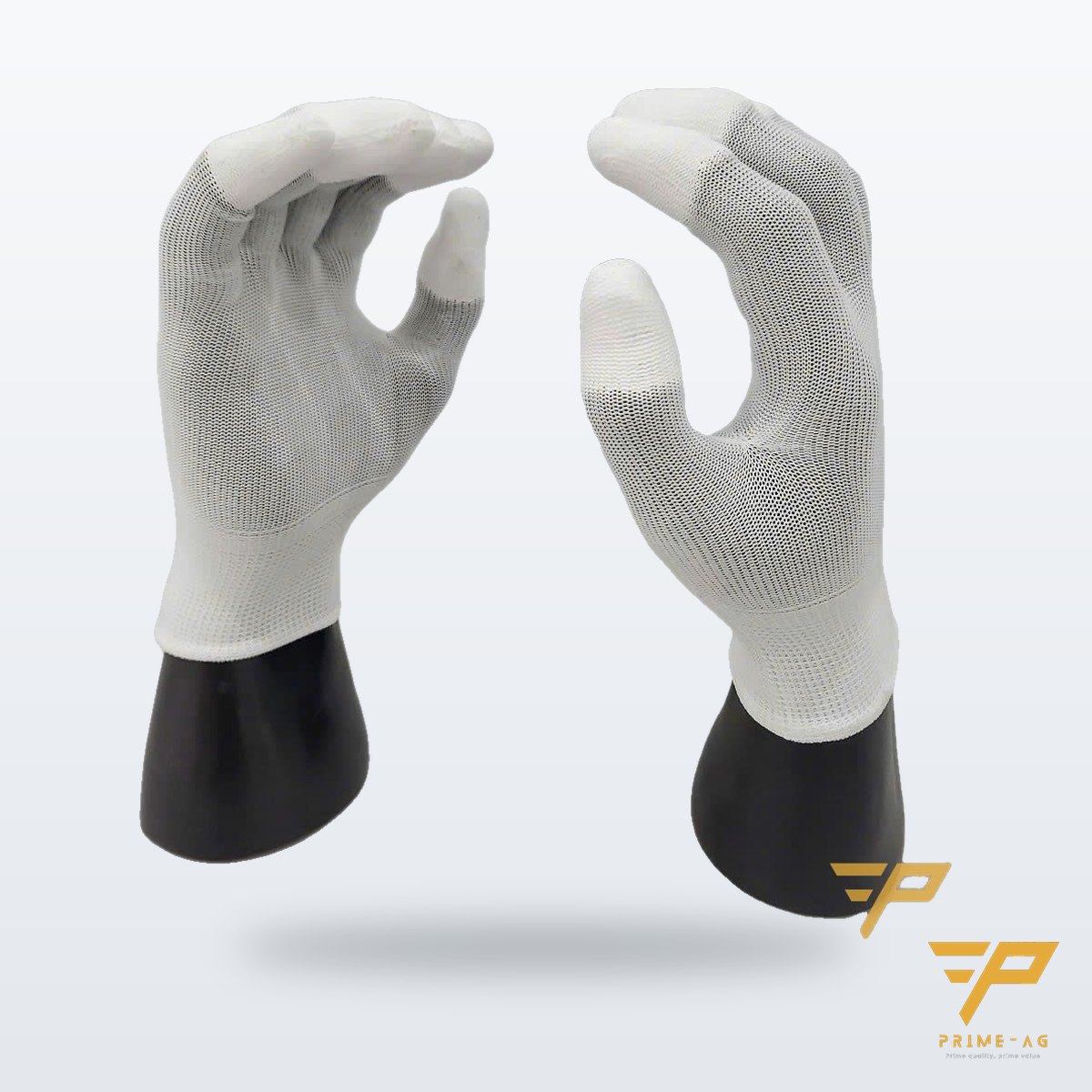
Knives and nippers need grip. White Top PU fingertip-coated gloves have PU on the 5 fingertips, a 13G polyester liner, meet EN 388 3131, sizes XS–XL. The PU-coated fingertips also block skin oil at contact points. Choose the Overlock version so the cuff edge does not shed threads onto the product. These gloves do not replace cut-resistant gloves. For trimming table and lighting layout, see the article deburring and cosmetic inspection of injection-molded plastic parts.
Cosmetic inspection and packing
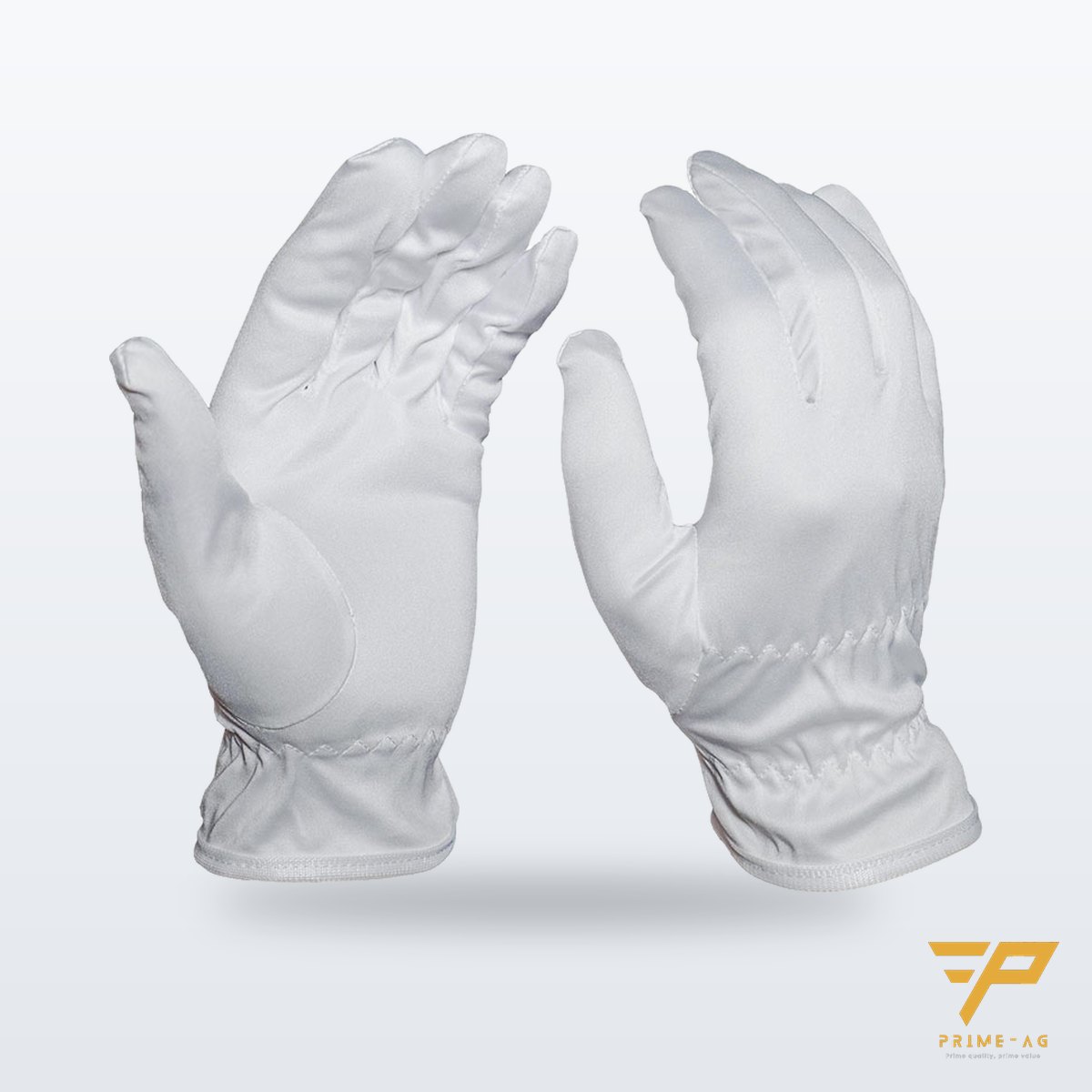
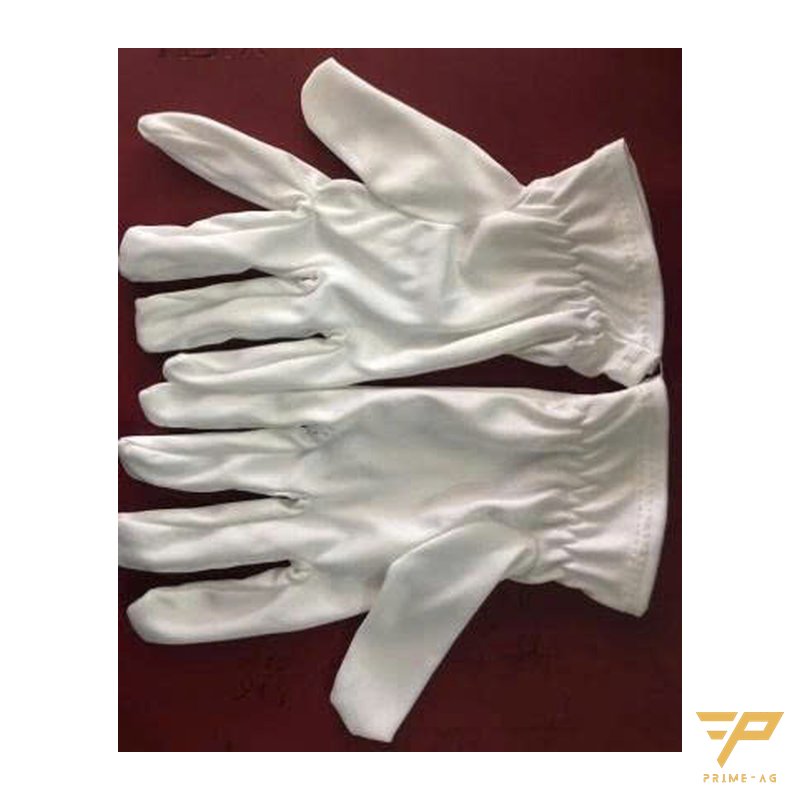
Parts have cooled. Ultra-fine polyester gloves are knitted from fine filament yarn, with a smooth, very low-lint surface, ≈ 10 g/pair, sizes M/L, 1 or 2 elastic bands at the cuff, compliant with EN ISO 21420:2020. They have no grip: they protect the product, not the hand. If operators flip housings a lot, choose 2 elastic bands so the gloves do not slip off. Cartoning also needs anti-scratch liners, see the article glossy plastic housings scratched or dented during cartoning.
| Station | Key requirement | Recommended glove | Change when |
|---|---|---|---|
| Unloading at the molding machine | Warm parts, sweat absorption | Cotton | Damp, stained with mold oil |
| Deburring | Tool grip, minimal fraying | White Top PU-coated, Overlock version | After 1–2 shifts, dirty fingertips |
| Cosmetic inspection | Low lint, smooth surface | Ultra-fine polyester | Discolored, damp |
| Packing | No marks, light handling | Ultra-fine or White Top | After breaks, when moving between stations |
Glove-change rules
- Change at the start of each shift and after every break.
- Change immediately when gloves are damp with sweat or discolored.
- Change after handling mold oil or grease, or adhesive labels.
- Never use dirty gloves to “wipe” a part; if a mark is already printed, wipe it dry with a 8009 microfiber cleanroom wiper.
Where to start
- Walk the line and record which glove each station currently uses.
- Take 20 parts at the end of the line and circle the fingerprint areas to find the station causing the defect.
- Place a box of new gloves right at each table.
Gloves are stock items, delivered within 24–48 hours in Ho Chi Minh City, Binh Duong and Dong Nai; ordered items take 3–7 working days. To trial them on your line first, enter the stations and output per shift in the consultation form – PRIMEAG responds with a quotation within 30 minutes.
Frequently asked questions
- Can ultra-fine gloves be used right at the molding machine? — Not recommended. Polyester fibers risk melting when touching parts that have just come out of the mold and are still hot; use cotton gloves at that station.
- Can White Top gloves be washed and reused? — They can be washed 1–2 times at 40 °C, but the PU layer gradually stiffens, so most factories use them for 1–2 shifts and then replace them.
- Why do white gloves help reduce fingerprints? — Dirt shows clearly on a white background, so the team leader immediately sees which gloves need changing, before the dirt transfers to the product.
Updated: 29/10/2026 — PRIMEAG engineering team
Email: info@primeag.vn · Phone/Zalo: +84 906 108 292
Written by the PRIMEAG engineering team
Updated: 2026-10-29