
Stocked item: delivered in 1–2 working days in Ho Chi Minh City, Binh Duong and Dong Nai; free delivery for orders from VND 20,000,000; defective items exchanged within 7 days. Shipping & return policy
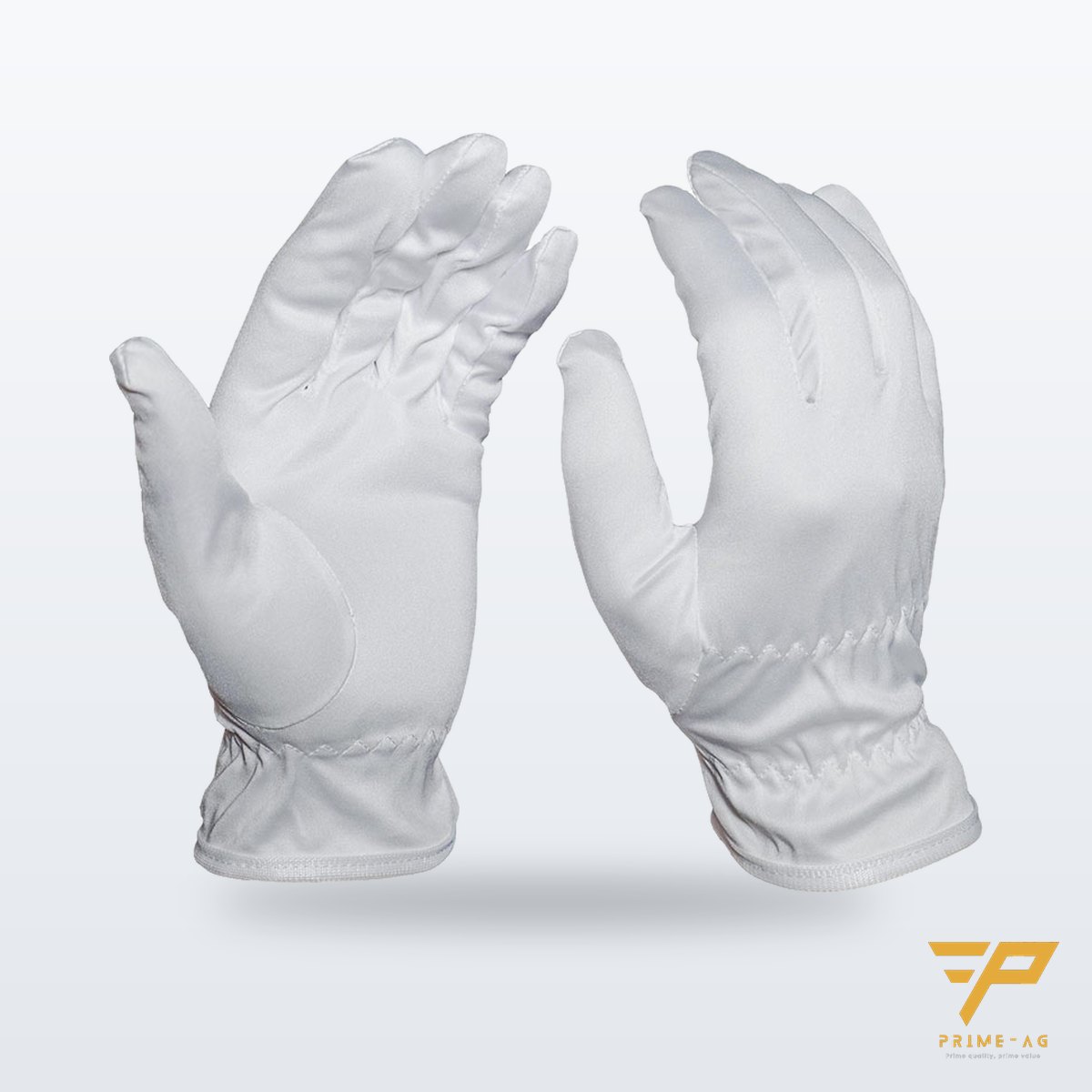
Code: GS-SM · Specification: super-fine polyester gloves. Delivery: in stock, delivered within 24–48 hours (Ho Chi Minh City, Binh Duong, Dong Nai); lead time for bulk orders is confirmed with the quotation.
Also known as: “super-fine gloves”, “visual inspection gloves”, “screen-wiping gloves” — the difference: truly high-density knit (not coarse “fine” gloves), 1 or 2 elastic bands at the cuff that do not slip, cartons of 100 pairs.
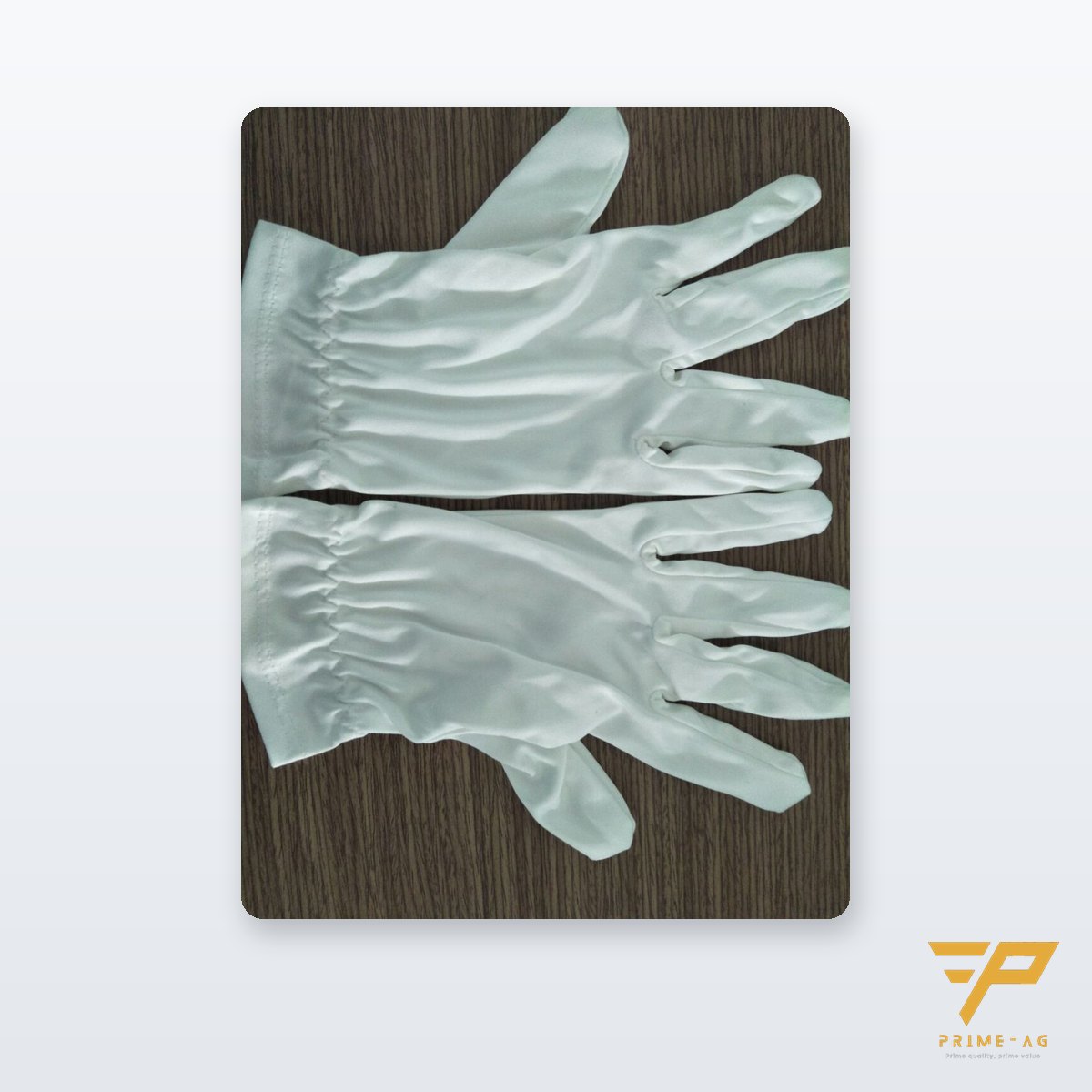
Super-fine gloves are knitted at high density from fine polyester yarn with a smooth surface — used when hands touch surfaces that scratch or mark easily: displays, glass, glossy plastic housings, painted surfaces, lenses, and finished electronics before packing. The 1-band version (1 band at the cuff) is standard; the 2-band version fits tighter for work with a lot of turning and flipping. The gloves are uncoated, so they give no grip and serve only to protect the product surface.
| Item | Value |
|---|---|
| Material | Fine polyester yarn, high-density knit (gauge per supplier specification) |
| Surface | Smooth, very low linting |
| Cuff | 1 band / 2 bands |
| Size | M / L |
| Colour | White |
| Weight | ≈ 10 g/pair |
| Standard | EN ISO 21420:2020 (replaces EN 420; check against supplier certification), RoHS |
| Packing | 10–12 pairs/bag · 100 pairs/carton |
| MOQ | 1 carton |
Choose by process step
– Visual inspection, wiping/inspecting displays, glass, glossy housings → super-fine (this code).
– Grip needed for handling → White Top fingertip-coated (GP-W).
– Just keeping dirt off, dry goods → coarse knit gloves (GS-THO), lower cost.
– ISO 5 cleanroom → 12″ nitrile (GN-12).
Documents per batch: RoHS; samples of 5 pairs.
Recurring orders: price held for 6 months, minimum stock of 5 cartons.
Why do super-fine gloves shed less lint and scratch less?
Super-fine gloves use fine synthetic filament yarn (polyester or nylon). According to SHOWA:
- Continuous filament yarn is long and unbroken with a smooth surface and “virtually no linting” — suitable for electronics and lower-grade cleanrooms.
- Staple yarn such as cotton has many free fibre ends; it is soft and fluffy but breaks easily and sheds lint.
- The higher the gauge (needles per inch), the thinner the glove; the 18–21G range is used when small surface defects must be felt and for precision assembly.
Fine yarn knitted densely gives a smooth fabric face with no stiff fibre ends rubbing the surface — reducing the risk of micro-scratches on glass, paint and glossy plastic. The gloves are uncoated and therefore have no grip; they protect the product, not the hand.
Polyester or nylon?
| Criterion | Polyester | Nylon |
|---|---|---|
| Cost | Low, widely available | Slightly higher |
| Abrasion resistance | Fair (texturised yarn is good value) | Outstanding |
| Chemical resistance | Broad | Poorer than polyester |
| Heat | Moderate, risk of melting – dripping | Moderate, risk of melting – dripping |
(Compiled from ISHN.) For visual inspection, the difference between the two is small; what matters is yarn fineness, knit density and whether the glove is still clean.
What gloves do and do not block
Guidance from the U.S. National Park Service (NPS) on gloves for handling sensitive objects shows that fabric gloves are a permeable barrier — sweat and skin oil can pass through the fabric during long wear or once the glove is damp. Applied to the factory:
- Super-fine gloves prevent direct fingerprints and dust from the skin, but do not block sweat once the glove is soaked — change them when damp or discoloured.
- They do not block solvents or alcohol: if the product must be wiped with IPA, use nitrile gloves or finger cots.
- Do not use dirty super-fine gloves to “wipe” surfaces — that only moves the dirt elsewhere.
ESD and silicone notes
- Polyester and nylon yarns are usually insulating and can charge through friction. Super-fine gloves are usually not ESD gloves; EPAs use carbon-fibre gloves evaluated per ANSI/ESD STM15.1. Gloves do not replace a wrist strap.
- On painting, coating and bonding lines, silicone contamination on surfaces causes paint and adhesive adhesion defects. Some manufacturers (e.g. Superior Glove) state that their inspection gloves are tested “silicone free”. If your line is silicone-sensitive, ask the supplier to confirm per batch and do not wash the gloves with fabric softener.
Sizing and use
- Inspection gloves must fit snugly: excess fabric at the fingertips easily brushes against surfaces. Choose size by hand circumference (EN ISO 21420: M ≈ 203 mm, L ≈ 229 mm).
- The 2-band cuff grips the wrist so the glove does not shift when turning products over.
- Issue new gloves to final inspection; used gloves can be passed down to secondary operations.
- If washing: cold water, low-heat drying (Superior Glove’s recommendation for its knitted inspection gloves); do not use bleach or silicone-containing softener when the gloves go back to surface inspection areas.
Common mistakes
- Using super-fine gloves for loading and unloading: no grip, products are easily dropped.
- Wearing one pair for the whole shift despite sweat — fingerprints still end up on the glass.
- Handling phones, touching the face or hair while wearing inspection gloves.
- Replacing cotton gloves with super-fine gloves in hot areas (near heat presses, soldering irons): synthetic fibres can melt.
FAQ
- What is “Matsa”? — A common name in Japanese/Taiwanese factories for super-fine surface inspection gloves; the same type as this product.
- 1 band or 2 bands? — 2 bands grip the wrist tightly and do not slip when turning products; 1 band comes off quickly and costs ~5 % less.
- Are they anti-static? — No; if needed, use carbon gloves.
- Do they leave fingerprints on glass? — No, as long as the gloves are dry and clean; change them when discoloured.
Technical references
- SHOWA – Fiber foundations: staple, filament and gauge
- ISHN – Anatomy of a glove: knit, dip and fibers
- NPS Conserve O Gram 1/12 – Gloves: protecting collections and yourself
- Superior Glove – KnitActiv low-linting inspector glove
- ESDA – ANSI/ESD STM15.1 (resistance testing of gloves and finger cots)
- Wenaas – EN ISO 21420:2020 (replacing EN 420): general requirements, size chart
Price: from 2,500 VND (excl. 8% VAT).
REQUEST A QUOTE: send pairs per month and cuff type — PRIMEAG quotes within 30 minutes.
Hotline/Zalo +84 906 108 292 · info@primeag.vn
Written by the PRIMEAG engineering team.
Related guides:Fingerprints on Glossy Molded Parts: Glove Selection by StationScratches on Glossy Plastic Parts During Packing: EVA Foam,…Choosing Gloves by Process Step in Electronics Manufacturing: 12…
Related products:Cotton, String Knit and Heavy Knit Work GlovesPolyester Knitted Work Gloves (White, Grey)
Updated: 2026-10-24
Giao tận nhà máy TP.HCM, Bình Dương, Đồng Nai, Long An, Tây Ninh · Kèm biên bản đo điện trở ESD theo lô · Hotline 0906 108 292