
To measure static electricity on an object in a Vietnam factory, use a non-contact meter that reads surface voltage or electric field; this is not the same as a resistance test. PRIMEAG recommends grounding the meter, holding it at 25 mm and logging %RH at the time of measurement; charged insulators should be removed from the work area or neutralized with an ionizer balanced within ±35 V.
Wrist straps and bench mats pass their tests, yet the packing station still produces scattered component failures. The suspects are the tape, plastic bags and plastic trays on the bench. To find out how much voltage they carry, you need to know how to measure static on real objects.
- Static measurement reads V or kV/m without touching the object; resistance measurement reads Ω and requires electrodes.
- Scanning items on a bench: handheld meter; continuous logging: field meter.
- People: touch-discharge at the EPA entrance, walking test for footwear and floor.
- A reading is trustworthy only when the meter is grounded, held at exactly 25 mm and humidity is recorded.
How static measurement differs from resistance measurement
Static measurement tells you how much charge an object is carrying. The meter is held away from the object and reads surface voltage (V, kV) or electric field (V/m, kV/m).
Resistance measurement tells you whether the object can drain charge to ground. It uses the TR1800 digital surface resistance meter (range 10³–10¹² Ω, test voltage 10–100 V) with two 5 lb electrodes placed on the object.
A bench top that passes at below 1×10⁹ Ω can still hold a charged plastic bag: insulators do not discharge through the ground connection.
Choosing a meter for the job
| What to measure | Meter | Key points |
|---|---|---|
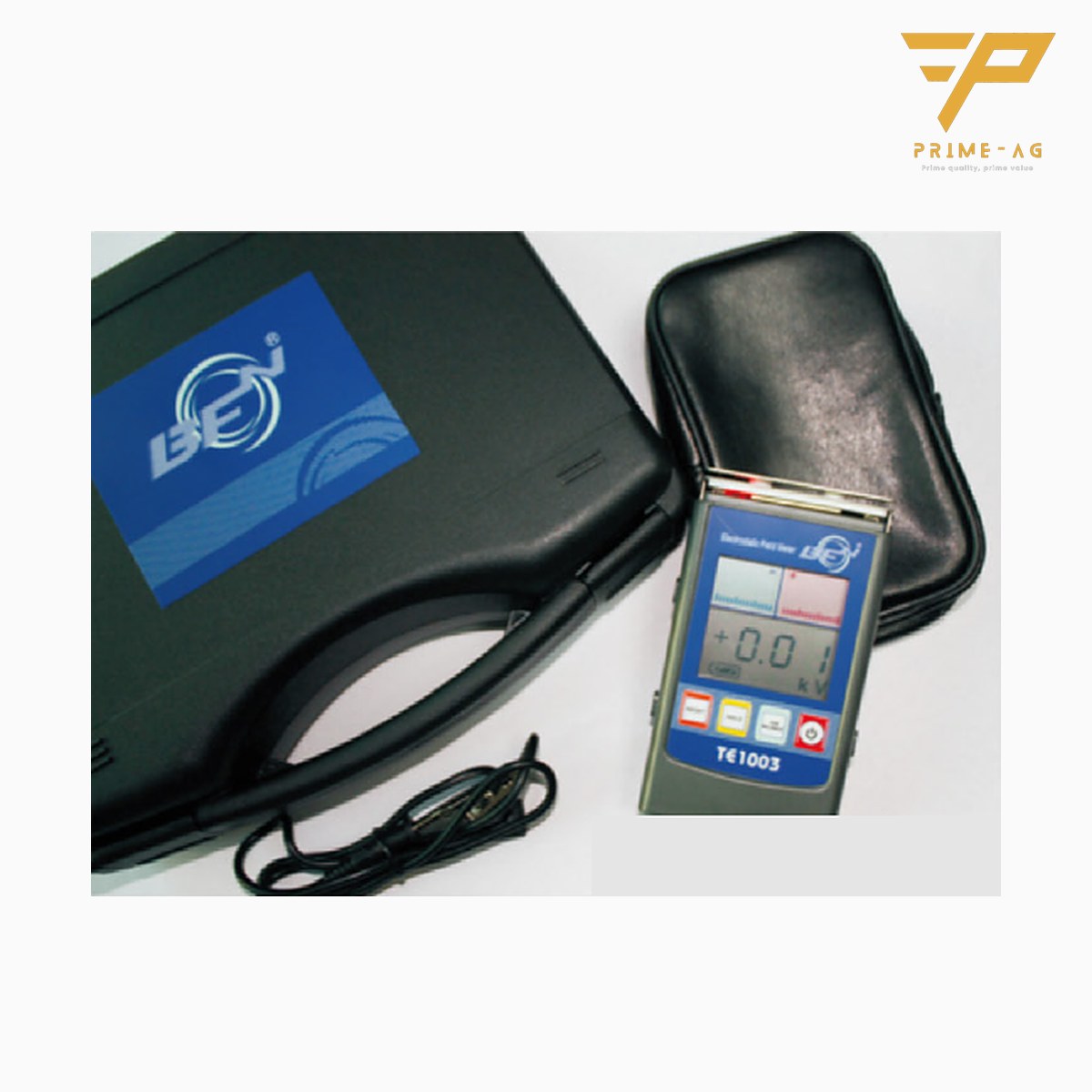
| Bags, trays, tape and film on the bench | TE1003 handheld electrostatic voltmeter | Two ranges up to ±22 kV; LED spots for 25 mm positioning; ground lead |
| Strong fields, recorder output needed | TE1020 LED bar-graph field meter | Up to ±2 MV/m; ±1 V analog output |
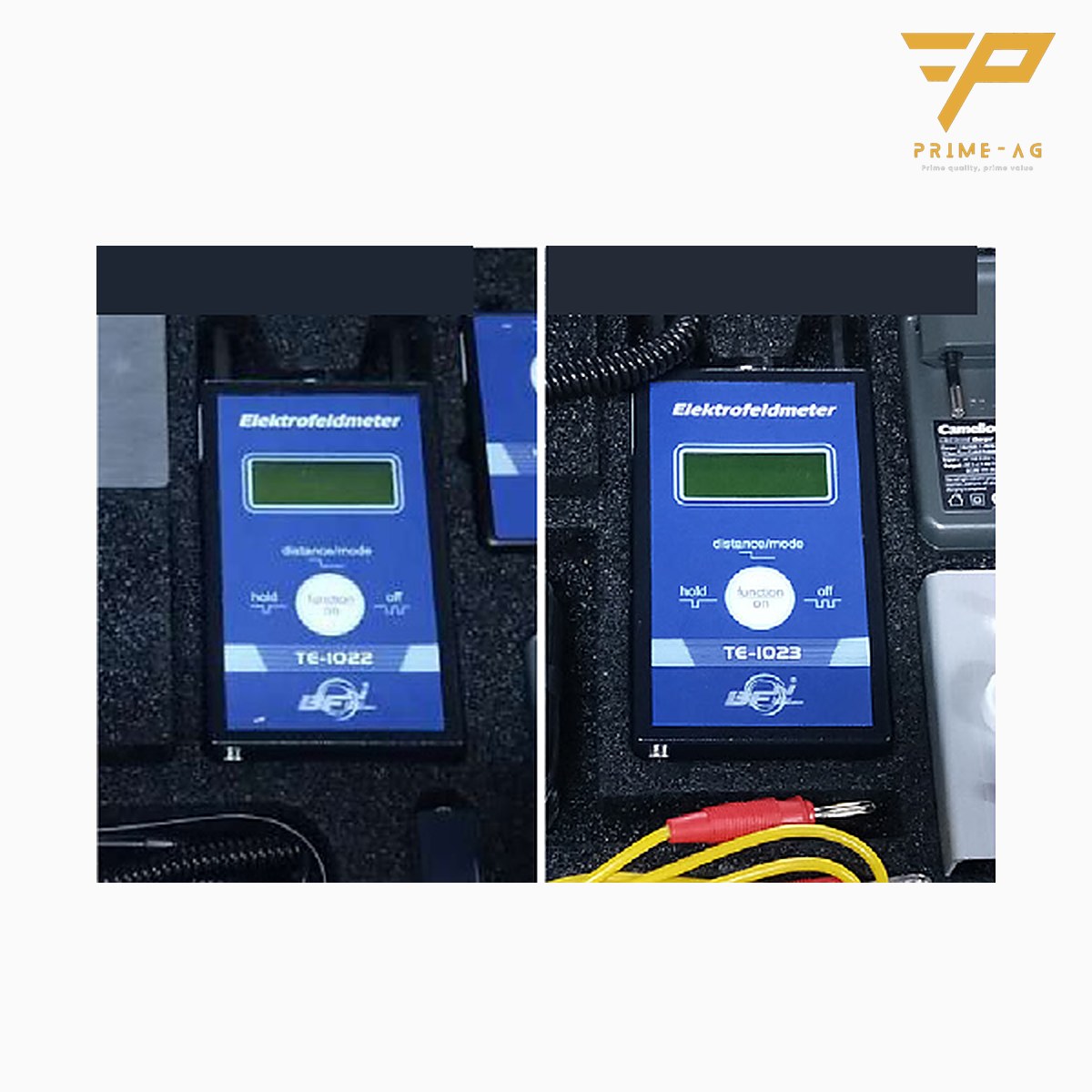
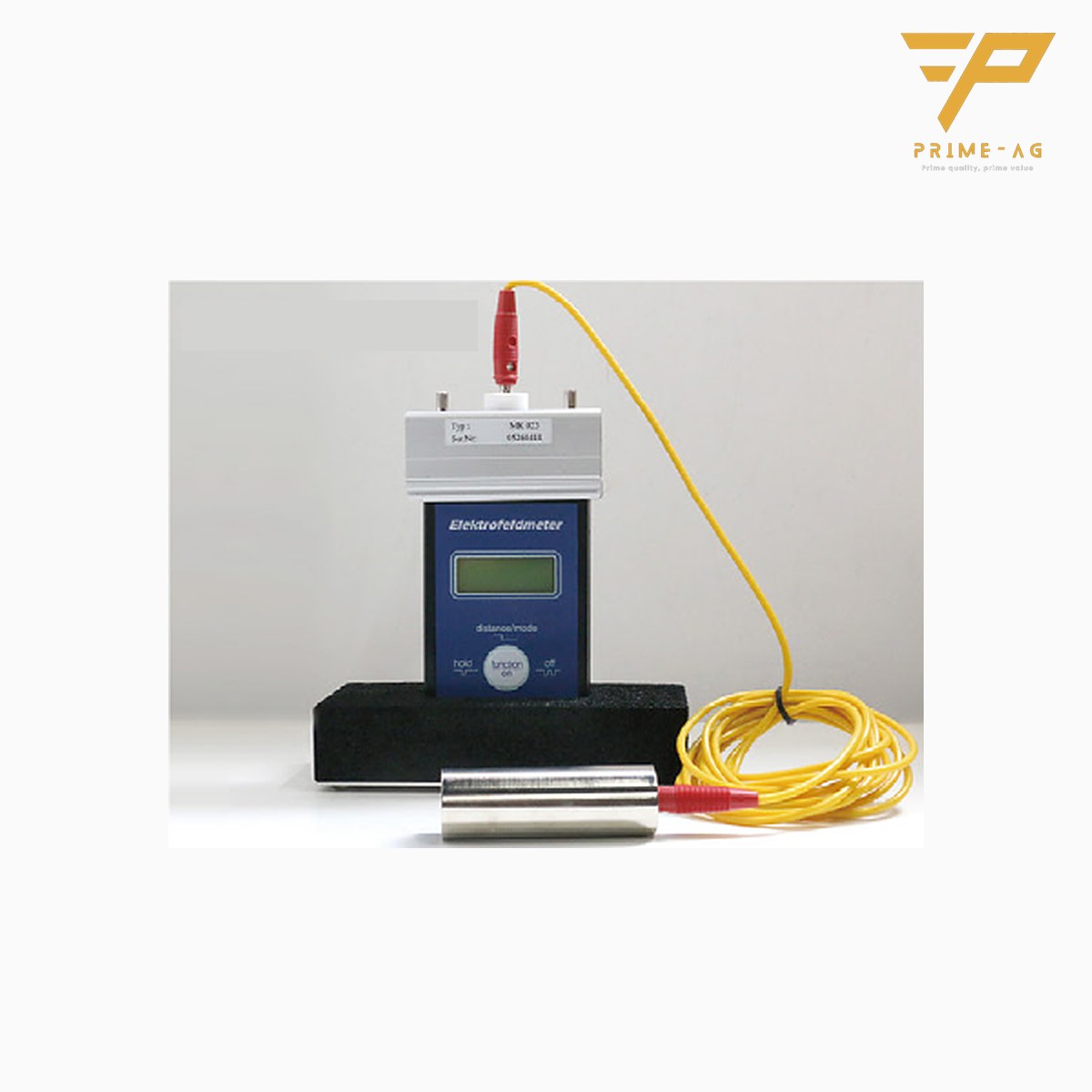
| Handheld field measurement, ionizer checks (CPS) | TE1022/TE1023 LCD field meter | Auto-switches V/m – V; TE1023 connects to a PC |
| Fixed mounting next to a machine | TE1015 USB field sensor | 4 ranges 5–200 kV/m; USB powered |
| Personnel touch-discharge at the EPA entrance | TE1018 body static tester | 0–19,990 V; wall-mounted |
| ESD footwear on the actual floor | TE1023WTS walking test kit | Below 100 V (ANSI/ESD STM97.2) |
Specifications per the manufacturer’s catalogue. Meters are made to order, 7–15 days.
Surface voltage measurement procedure
- Connect the meter’s ground lead to a ground point; without it, the reading will drift.
- Switch the meter on and point it at a grounded metal surface to zero it.
- Hold the meter parallel to the object surface and adjust until the two LED spots coincide (25 mm).
- Measure at the moment of handling: tape just pulled, film just peeled.
- Record the value, polarity, %RH and temperature. Dry air usually gives higher readings.
Take acceptance thresholds from the factory’s ESD control plan.
Measuring people: touch-discharge and walking test
A TE1018 at the entrance shows workers the voltage on their body and discharges them before they enter; it does not replace the wrist strap tester.
The walking test measures body voltage while a person wearing their usual footwear walks on the floor. Even after passing at below 100 V, you still need to measure person–footwear–floor resistance (below 1×10⁹ Ω, ANSI/ESD STM97.1).
Reading the results and taking action
- Non-essential insulators (plastic bags, plastic cups, document folders): remove them from the work area or replace with ESD items.
- Process-essential insulators (plastic housings, protective film, tape): neutralize them with an ionizing blower aimed at the work point.
- Voltage remains in front of the ionizer: check balance with the plate supplied with the TE1003; if it exceeds ±35 V, see how to fix ionizer offset voltage.
- ESD trays, carts or bench tops still carry voltage: suspect a lost ground connection and switch to resistance measurement.
Where to start
Walk the EPA with a handheld meter and log items with high readings together with their location and %RH. Act on them according to the four groups above, then re-measure the same points.
For ESD items that still hold charge, PRIMEAG can visit factories in Ho Chi Minh City, Binh Duong and Dong Nai (Monday–Saturday) to measure the resistance of ESD materials free of charge with the TR1800 and 5 lb electrodes, including items not bought from PRIMEAG, with no limit on the number of points and no purchase obligation; a PDF report by location with photos is sent within 3–5 working days. The data is for reference only and cannot be used as audit documentation.
When receiving new materials: incoming resistance testing of ESD materials.
Frequently asked questions
- Does the static meter need to touch the object? — No. The meter reads from a distance; with the TE1003, the standard distance is 25 mm, set by aligning the two LED spots.
- Can a TR1800 resistance meter measure static charge on a plastic bag? — No. The TR1800 measures resistance (Ω); the voltage on a bag must be measured with an electrostatic voltmeter or field meter.
- Do electrostatic meters need calibration? — Yes, it is advisable, following the factory’s measuring equipment plan; when ordering a meter, calibration with a 12-month certificate can be included.
Email: info@primeag.vn · Phone/Zalo: +84 906 108 292
Written by the PRIMEAG engineering team
Updated: 2026-10-27