
Missing screws and hinges in flat-pack furniture cartons almost always start at the hardware bagging station. For furniture factories in Vietnam, PRIMEAG recommends a Φ28 lean pipe bench with upper shelves (20 kg per shelf) so divided trays sit in packing-list order, plus a sample-kit photo, good lighting and a check-weigh of every bag against its standard weight before it goes into the carton.
A knock-down wardrobe can need a dozen or more hardware part numbers: cam screws, wooden dowels, hinges, drawer slides, handles. The buyer opens the carton, two dowels are missing, the wardrobe cannot be assembled, and the complaint is raised against the whole lot. When you trace it back, the panels are rarely missing; what is short is the hand-packed hardware bag from a corner of the workshop.
- One compartment per part number, in the order of the lines on the packing list.
- A photo of the complete sample kit at eye level.
- Weigh every bag; if it is off, open it and recount.
- Bags go into the carton at a single, confirmed step.
Why hardware bags come up short
Check from the top down; the first item is the most common.
- Picking from a mixed pile: screws and dowels dumped into one bin and counted by eye.
- Pick order differs from the packing list: trays placed wherever there is space, so every operator moves differently.
- Model change mid-shift: trays of the old part numbers are still on the bench.
- Poor lighting: black screws on a dark bench top are almost invisible.
- No final check: finished bags go straight into a basket and are only sorted into cartons later.
Laying out the hardware bagging station
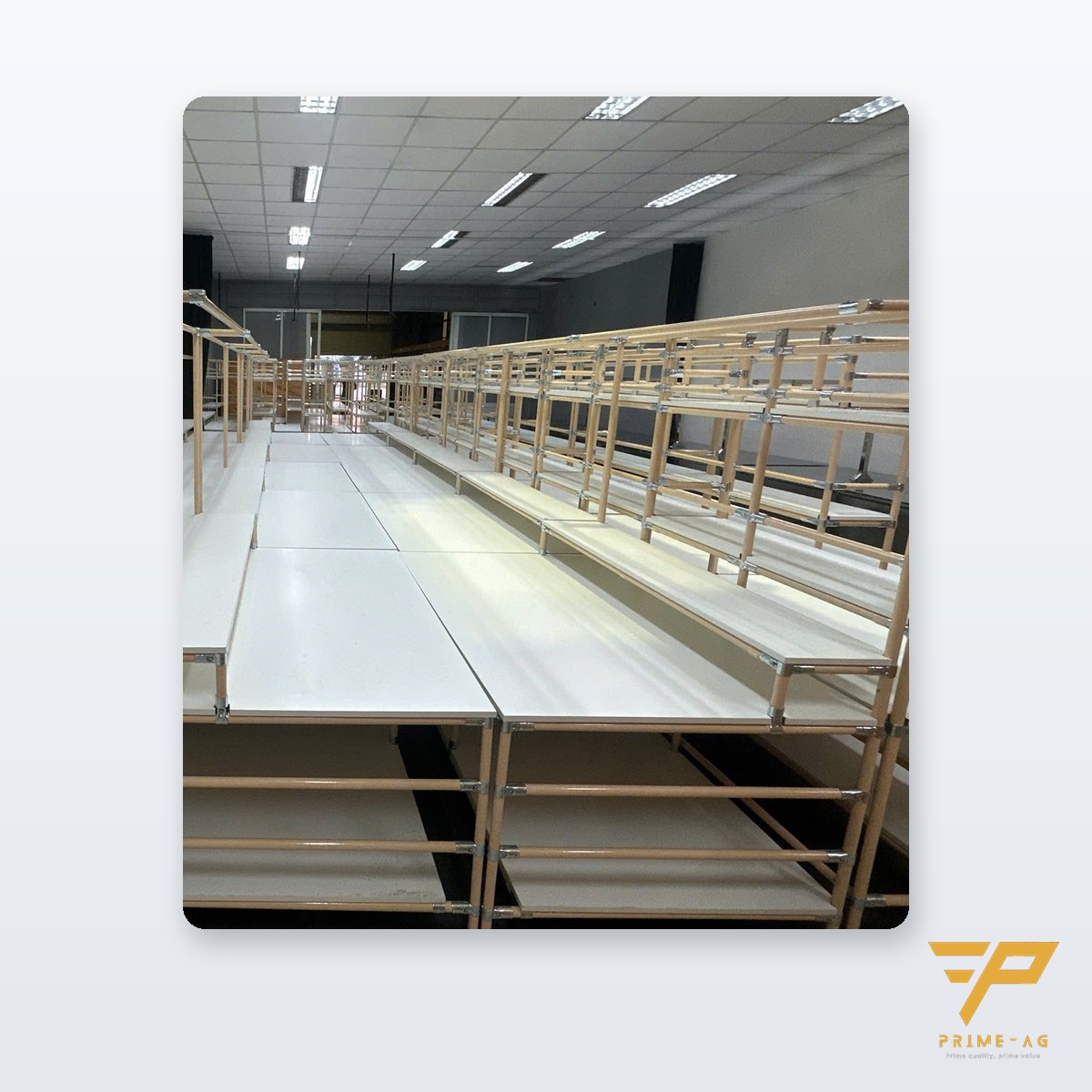
Bench and tray shelves
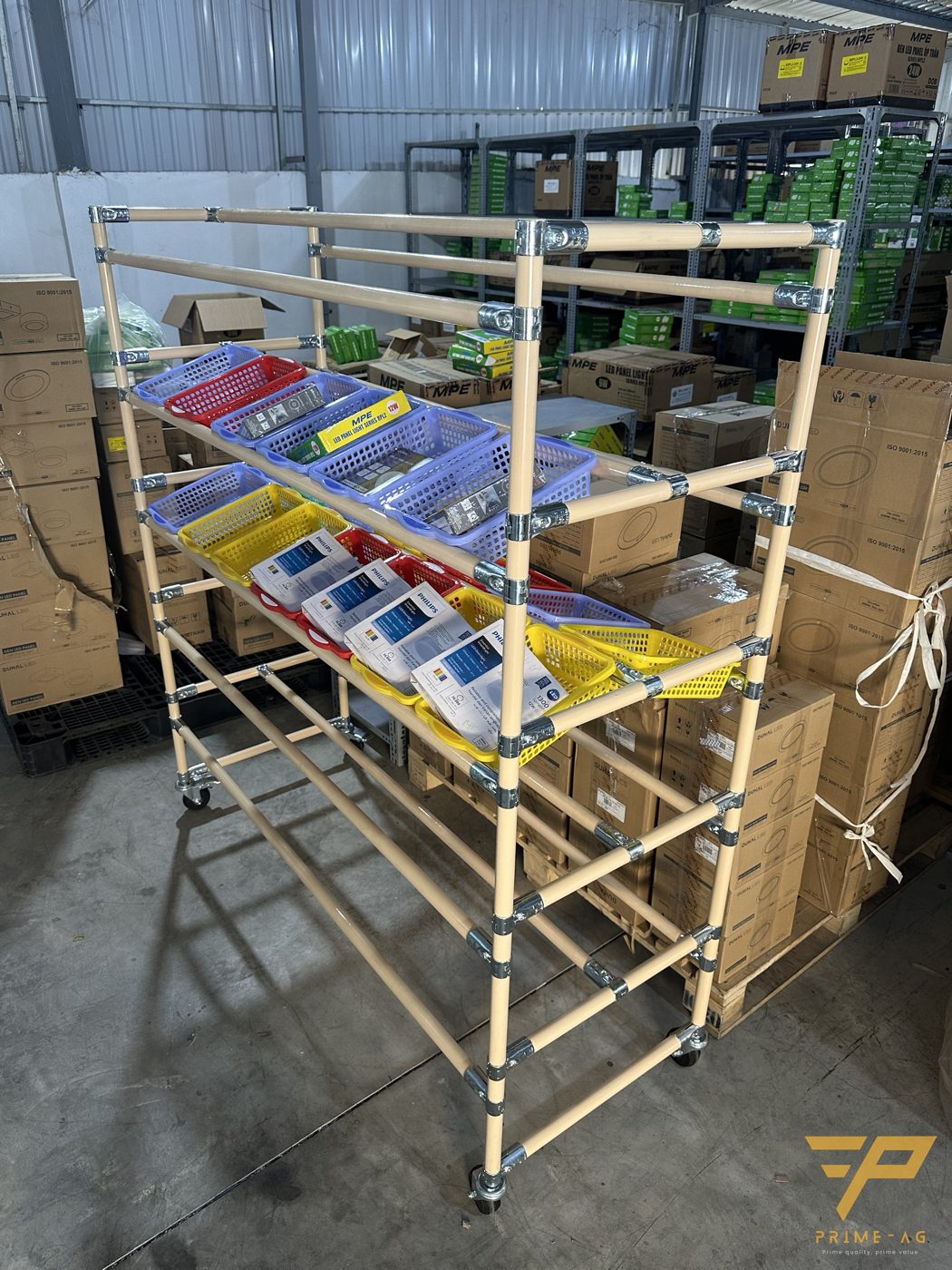
The Φ28 plastic-coated steel pipe workbench has two upper shelves (20 kg each) for trays; level the feet so the bench top is truly flat and a scale placed on it reads steadily. Choose a light-colored top for dark hardware. The frame is assembled with bolted joints, so at a model change you can move a shelf or add a hanging bar.
Divided trays in packing-list order
Line the trays up in one row from left to right in exactly the order of the lines on the packing list, and stick the line number on the front of each tray. A divided plastic tray 450 × 300 × 60 mm, with optional removable dividers for compartments and an 8 kg capacity, suits screws and dowels. For bulky slides and cabinet legs, use an industrial plastic bin such as the PB2 455 × 270 × 120 mm with dividers and a label card. Give each product model its own label color on the trays so a leftover tray from the old part number stands out immediately.
Feeding from the back
A station packing thousands of bags per shift should use a gravity flow rack: 3–5 feed levels and one return level for empty trays, the warehouse team loads from the back and the packer never has to stop. The rack takes 100 kg per level at a 5–8° slope and has A4 card pockets for the packing list.
Lighting and sample photo
Fit a bench lamp or choose the bench version with two 0.6 m LED lights. Photograph the sample kit on a white background, write the quantity next to each item, print it on A4 and mount it at eye level.
Check-weighing hardware bags
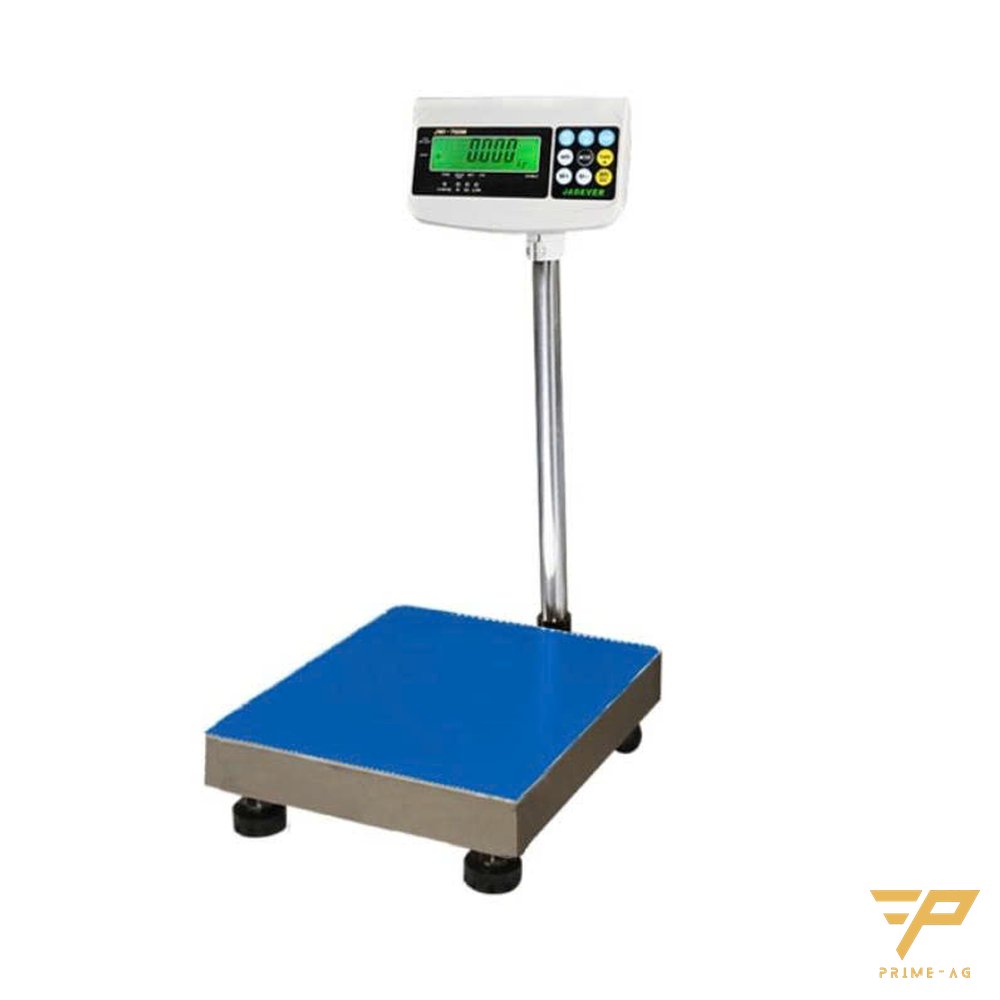
Weigh a number of complete bags to establish the standard weight. The tolerance must be smaller than half the weight of the lightest item in the bag, so the scale’s division must also be small enough relative to that item. The measuring and inspection equipment range includes 0.01 g × 500 g electronic scales and 30–150 kg platform scales; send the weight of each item so PRIMEAG can advise on a suitable model. A platform scale at the end of the line only catches cartons missing a whole bag or a panel.
Choosing by scale of operation
| Output, number of part numbers | Suggested configuration |
|---|---|
| Few bags per shift, under 10 part numbers | Bench with shelves, divided trays, sample photo, bag scale |
| Many bags, 10–20 part numbers | Add a gravity flow rack feeding from the back, color labels by model |
| Several product models changed within a day | A separate tray set for each model, clear the bench completely at each change |
How to prevent part mix-ups on electronics lines is covered in divided trays and labels against wrong picks; this guide focuses on getting the full count into each bag shipped to the customer.
Where to start
- Collect the last three months of missing-hardware complaints, recording the model and the missing item.
- Watch one bagging shift and count how many times operators have to search for a tray.
- Rearrange the trays for the model with the most complaints and add a bag scale.
- Send the packing area dimensions and the hardware list through the layout request page.
Standard-model benches and racks are made in 5–7 working days; a newly designed flow rack takes 10–15 working days. Frames carry a 3-year warranty; lamps and casters 12 months.
Frequently asked questions
Can check-weighing hardware bags replace counting? Not entirely. A scale only catches a short bag when the lightest item is heavy enough relative to the scale division; you still need trays arranged in packing-list order to pick the full kit from the start.
How many furniture models should one bagging bench handle? One model at a time. At a model change, clear away all the old trays before setting out the trays, packing list and photo for the new model.
Can we add tray shelves to the packing bench we already use? Yes, if the bench is a Φ28 pipe frame with joints: add pipes and joints to mount the shelves, no need to replace the bench.
Updated: 31 Oct 2026 — PRIMEAG engineering team
Email: info@primeag.vn · Phone/Zalo: +84 906 108 292
Written by the PRIMEAG engineering team
Updated: 2026-10-31