
Safety glasses fogging up in Vietnam factories are usually due to lenses without an anti-fog coating (marked N under EN 166, X under ANSI Z87.1-2020) or a face mask that leaks at the nose bridge; fast scratching comes from dry-wiping with dirty rags and laying the glasses lens-down. PRIMEAG recommends checking in exactly that order, rinsing with water before wiping, then choosing glasses by process.
The turning line leader hands out new safety glasses at the start of the month. Three weeks later, half of them are hazy and a few workers are wearing them on their foreheads to see better. The glasses are not poor quality; the choice of model, the way they are wiped and where they are stored are the real causes.
- Fogging: check the N/X marking on the lens, then check the top edge of the mask at the nose bridge.
- Fast scratching: habits of dry-wiping, laying glasses lens-down, keeping them in a pocket with tools.
- Do not clean glasses with acetone or gasoline; rinse with clean water, then wipe with a soft cloth.
- Grinding, welding and pouring chemicals each need a different kind of eye protection.
Why glasses fog and scratch quickly
Safety glasses lenses are usually polycarbonate: good impact resistance but softer than glass. Lens durability comes from two coatings: a hard anti-scratch coating (marked K) and an anti-fog coating (marked N; the 2020 US standard uses X). Not every model has both.
Fogged or scratched glasses: go through 6 points in turn
1. Does the lens have an anti-fog coating?
Read the marking on the lens. Without N or X, the glasses will fog in hot, humid areas no matter how carefully they are wiped. In the 3M SecureFit range, only versions with the AF suffix are anti-fog.
2. The mask leaks at the nose bridge
Exhaled air escapes over the top edge of the mask and blows straight onto the inside of the lens. Press the nose clip around the nose bridge with both hands.
3. Dry-wiping with dirty rags or paper
Fine chips and grinding dust are hard particles. Dry-wiping drags them across the K coating, leaving fine scratches; a few weeks later these become a hazy layer.
4. Laying glasses lens-down on the bench, keeping them in a pocket with tools
Chips on the machine table, a ruler in the shirt pocket: every rub is a new scratch.
5. Using sealed goggles where framed glasses are enough
Goggles vent poorly; worn for a whole shift at an enclosed CNC machine, they easily fog and get stuffy. Workers will take them off.
6. Cleaning with solvents
Acetone and gasoline damage the coatings and turn polycarbonate cloudy.
Cleaning, storage and when to replace
- Rinse with clean water to wash away hard particles, and only then wipe with a soft, clean cloth.
- Store in a separate pouch or case; fit a glasses hook next to each machine.
- Replace when scratches blur vision, the lens is cracked, the anti-fog coating is peeling, the frame is loose, or after a heavy impact.
Choosing again by process
| Process | Suggestion | Notes |
|---|---|---|
| Enclosed CNC turning and milling, assembly | 3M SF-401AF or Safety Jogger Sarek | SF-401AF is marked “1 FT KN”: anti-scratch, anti-fog; Sarek meets EN 166 |
| Grinding, cutting with heavy sparks and debris | Goggles combined with a face shield | 3M states the SF400 series is not for grinding or welding |
| Welding | Welding helmet with a filter of the correct shade | Clear or dark anti-glare glasses are no substitute |
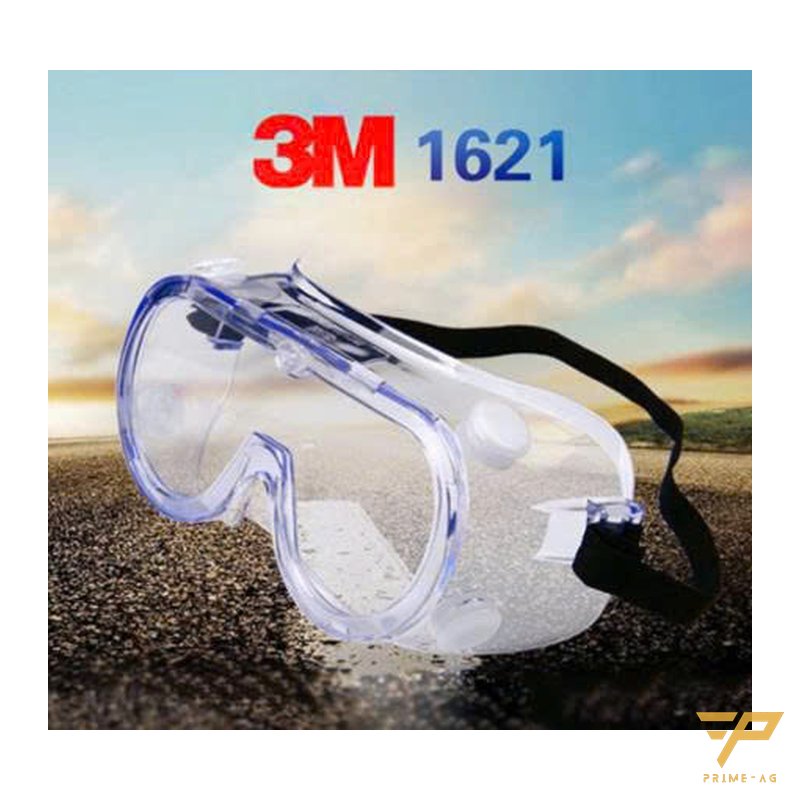
| Mixing coolant, pouring chemicals | 3M 1621 indirect-vent goggles | Can be worn over prescription glasses |
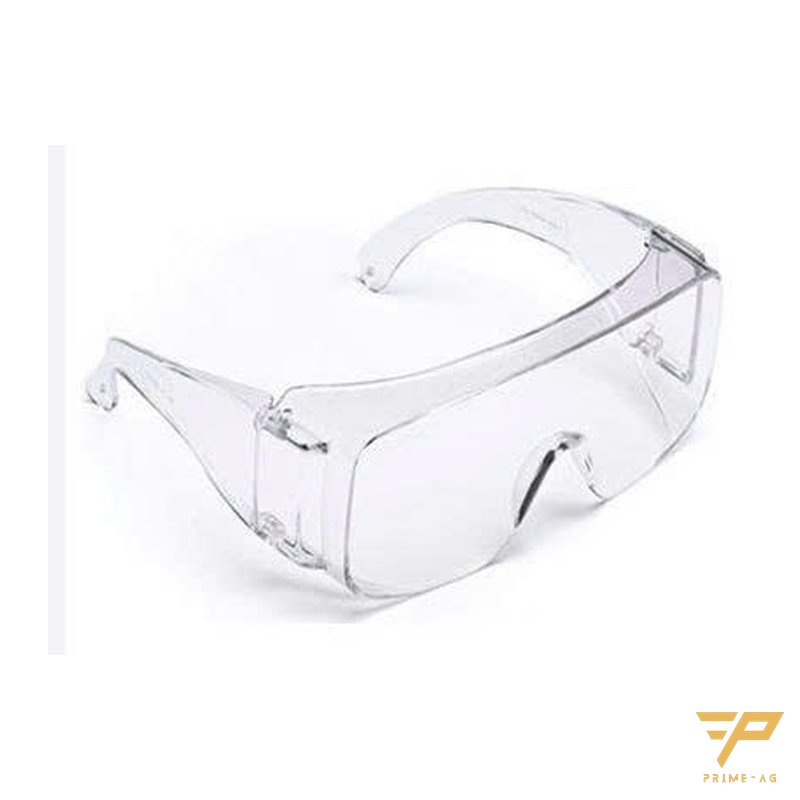
| Warehouse, visitors | TGV01 white frame | Low impact, 12 pcs/box |
Under EN 166, framed spectacles cannot be tested for liquid splash; only goggles carry the markings 3, 4, 5. Under ANSI Z87.1, only Z87+ indicates high impact resistance.
The models above are on the page 3M, Safety Jogger and TGV safety glasses. Grinding areas with a lot of fine dust also need N95, KN95 dust masks; areas with volatile chemicals need a 3M half-face respirator and cartridges.
Personal protective equipment is a stocked product group, delivered within 24–48 hours in Ho Chi Minh City, Binh Duong and Dong Nai. For factories that are export processing enterprises, orders from VND 20 million can be invoiced at 0% VAT, and PRIMEAG also handles the customs procedures (on-the-spot import/export declaration) free of charge.
Protecting hands when handling blanks and sharp sheet metal (no gloves when standing at machines with rotating spindles): EN 388 cut-resistant gloves for machine shops.
Where to start
- Collect a few pairs from each team and read the markings; see what workers wipe them with and where they keep them.
- Switch to AF versions for positions where masks are worn all shift, then review again after one month.
Frequently asked questions
- Can anti-fog spray replace AF safety glasses? — Only as a temporary measure. If the glasses have no N or X marking, switch to a version with an anti-fog coating for positions where masks are worn all shift.
- Do slightly scratched safety glasses need replacing right away? — If the scratches blur your view when looking at parts or measuring marks, replace them; if the glasses are cracked or have just taken a heavy impact, replace them immediately.
- What safety glasses should I use if I wear prescription glasses? — Use goggles worn over prescription glasses, such as 3M 1621, or OTG frames; the 3M SF400 series is not designed to be worn over prescription glasses.
Email: info@primeag.vn · Phone/Zalo: +84 906 108 292
Written by the PRIMEAG engineering team
Updated: 2026-10-27