
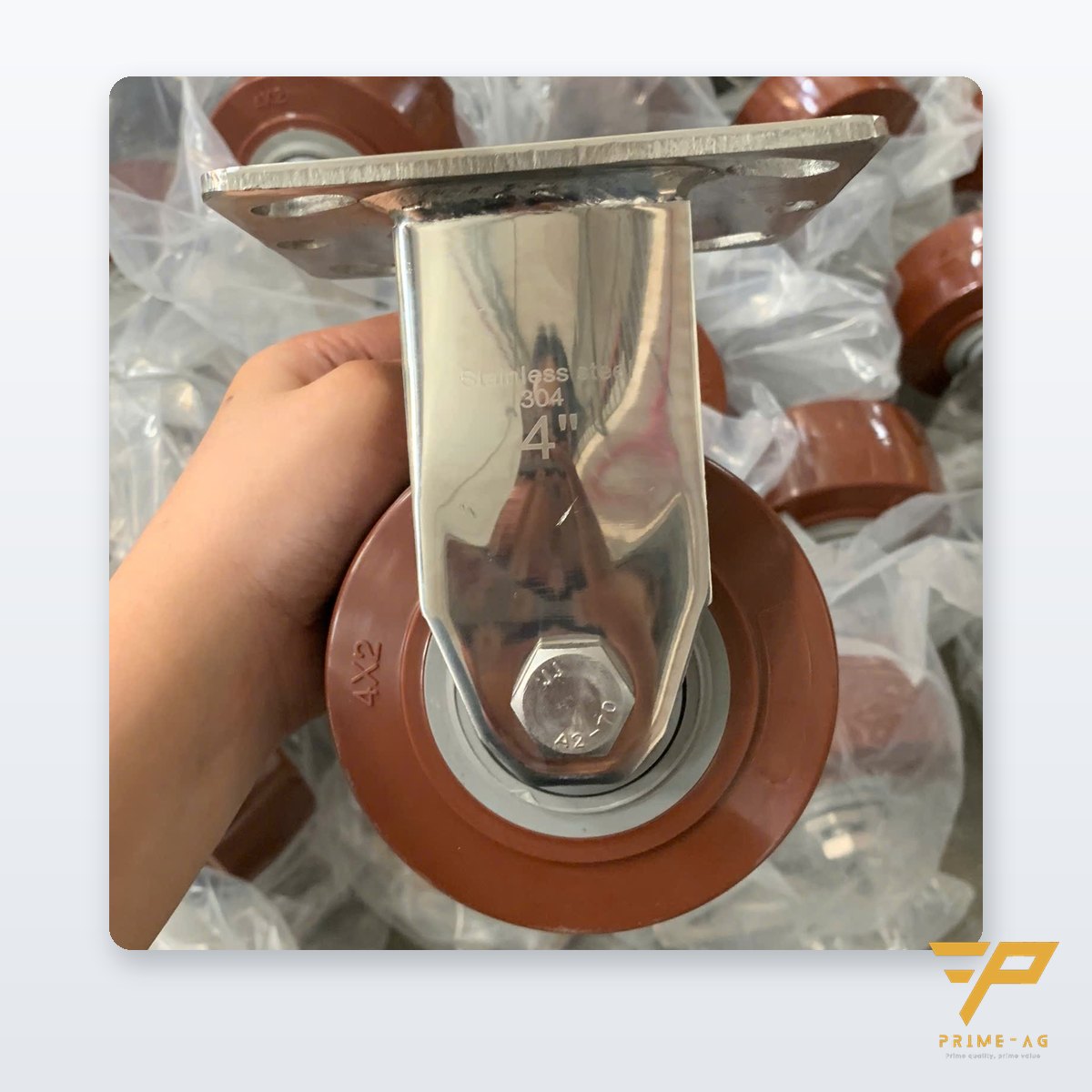
Why do stainless steel casters rust and seize in the wash area of a food plant in Vietnam? Usually because the fork is actually galvanised steel, open bearings have their grease washed out, chlorine or alkali is left sitting in the joints, or the tread is the wrong type or overloaded. PRIMEAG recommends 304 stainless forks, PU treads, sealed bearings, and calculating load per wheel as total load divided by 3.
Brown streaks run from the caster forks onto a freshly washed floor. The trolley squeals every time it is pulled over the drain channel, and workers have to lean their whole body into it to push it along.
- Check in this order: fork, bearings, chemicals, tread, load per wheel.
- Wash areas need 304 stainless forks, PU or grey TPR rubber treads and sealed bearings.
- If the frame is still good, replace the caster set; if the frame is rusted or its plastic coating is peeling, consider replacing the whole trolley.
Why stainless casters rust and seize: check five points in order
1. Is the fork really 304 stainless?
Casters sold as “stainless casters” sometimes still have galvanised steel forks. In a wash area, galvanised forks rust within a few months, starting at the stamped edges and the axle ends. Check the axle, bolts and nuts too: a stainless fork with a plain steel axle will still leave brown streaks.
2. Bearings and grease
Open bearings hit by a hose every shift let water in and grease out; the wheel squeals and then the axle seizes. The same goes for the swivel bearing between the plate and the fork: the fork swivels jerkily and no longer turns to follow the push direction. Wet areas should use sealed bearings, for example 6202RS.
3. Cleaning chemicals and pressure washers
Chlorine and alkali collect in fork gaps and around bolt heads if not rinsed off; a pressure jet aimed at the bearings drives water deeper inside.
4. Tread unsuited to the environment
PVC becomes more brittle in the cold, flat-spots when standing for long, and often cracks in cold stores. PU is quiet, durable and resistant to oil and grease. Nylon/PP resists chemicals but is noisy and slippery on hard floors.
5. Overload per wheel
Load per wheel = (trolley weight + heaviest load) ÷ 3, because no floor is perfectly flat (wash areas also slope toward the drain), so usually only 3 wheels carry the load. Example: a 40 kg trolley carrying 200 kg of goods: 240 ÷ 3 = 80 kg per wheel, choose a D100 caster (100–130 kg). If it regularly crosses drain covers, go up one size.
| Symptom | Common cause | Fix |
|---|---|---|
| Brown streaks from forks and bolts | Fork or axle is plated steel | Switch to casters with 304 stainless forks, stainless bolts |
| Squealing, hard to push, seized axle | Open bearings with grease washed out; thread or PE film wound round the axle | Remove wound material, grease; switch to sealed-bearing casters |
| Tread cracked or separating from the core | PVC, ordinary rubber; overload | Switch to PU tread, recalculate load per wheel |
| Flat-spotted tread, trolley pulls to one side | Soft tread carrying heavy loads, standing for long periods | Choose PU, go up a wheel size |
Re-selecting casters for wash areas and wet processing areas
Recommended configuration: 304 stainless fork, PU tread (or grey TPR), sealed bearings. Trolleys get 2 swivel casters with brakes and 2 fixed casters; next to wash sinks use total-lock brakes. When replacing, measure the plate hole centre distance or the existing thread size (M10, M12). Sizes of wheels, treads and forks are on the industrial PU casters: swivel, braked, fixed page; casters supplied with PRIMEAG trolleys and racks carry a 12-month warranty.
Replace the casters or the whole trolley?
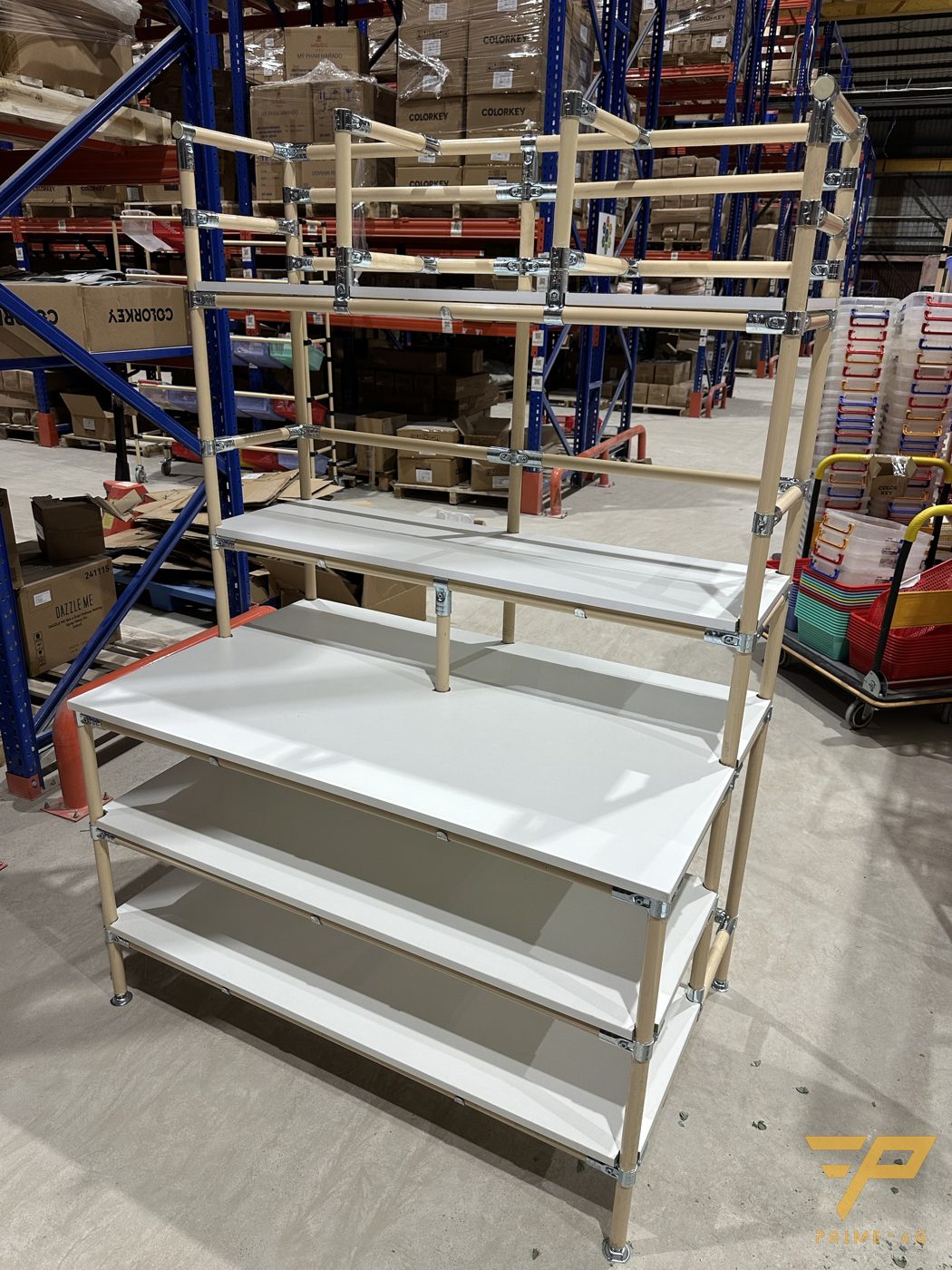
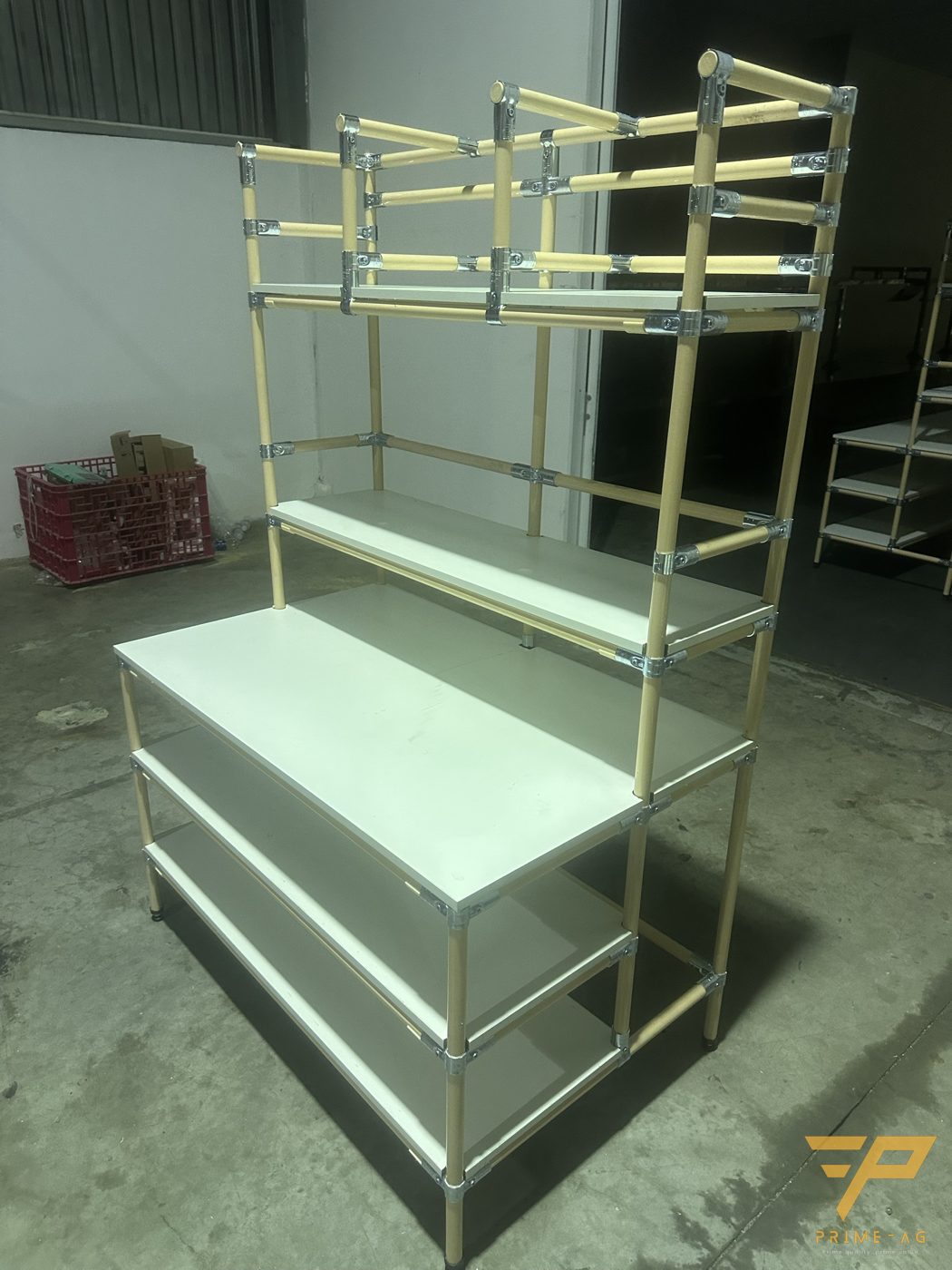
If the frame is still solid, just replace the caster set (MOQ 4 casters) when treads are cracked, separating from the core, worn flat, or the brake no longer holds the trolley. If a plastic-coated steel pipe frame has peeling coating or rusted pipe ends, or a 201 stainless frame has yellow staining, new casters only buy a few months; at that point consider a complete 304 stainless trolley or 304 stainless rack.
Weekly maintenance
- Remove thread, hair, PE film and tape wound around the wheel axles.
- Rinse with clean water after using chlorine or alkali; do not spray pressure jets directly at the bearings.
- Grease the swivel and wheel bearings.
- Re-tighten the plate bolts or threaded stems.
Related problems in the same area: plastic-coated steel pipe peeling and rusting at the ends in wash areas and choosing 201 or 304 stainless for food and pharma benches, racks and trolleys.
Frequently asked questions
- Do we need 304 stainless casters in every area of the factory? — No. Only where trolleys often contact water or chemicals or in areas with high hygiene requirements; in dry areas galvanised forks are enough and cheaper.
- Why do brand-new stainless casters still show rust streaks? — Usually because the axle, bolts or bearings are plain steel; check every component, not just the fork.
- How do I calculate the load rating per caster for a trolley? — Add the trolley weight to the heaviest load and divide by 3, because no floor is perfectly flat so usually only 3 wheels carry the load; if the trolley often crosses ledges or drains, choose one rating higher.
Email: info@primeag.vn · Phone/Zalo: +84 906 108 292
Written by the PRIMEAG engineering team
Updated: 2026-10-26